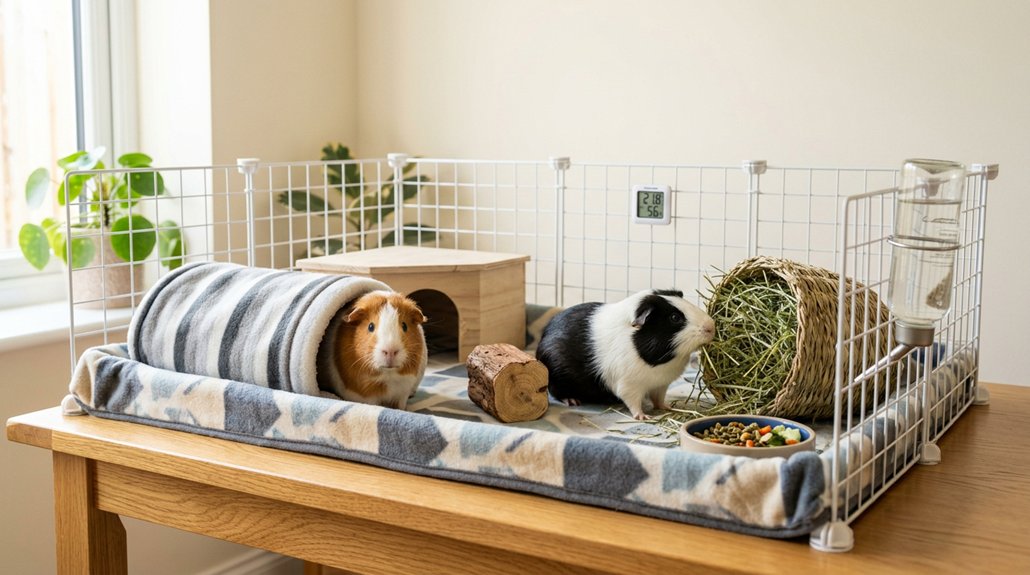
To set up the perfect guinea pig cage, choose a quiet location away from sunlight and disturbances. Make certain the cage’s size adheres to the number of pigs you have; a single pig needs at least 7.5 square feet. Opt for safe bedding like kiln-dried pine or fleece and provide engaging toys and shelters. Prioritize hygiene with regular cleaning and adjust the environment seasonally. Explore further tips to create a stimulating haven for your furry friends.
Key Takeaways
- Choose a quiet location away from direct sunlight and disturbances for the guinea pig cage.
- Ensure the cage meets the minimum size requirements: 7.5 square feet for one pig, 16 square feet for four.
- Use recommended bedding materials like kiln-dried pine or fleece, maintaining a 2-3 inch depth for moisture absorption.
- Include toys, tunnels, and hideaways to provide mental and physical enrichment.
- Clean and disinfect the cage regularly to maintain hygiene and prevent disease or odor.
Optimal Placement for Your Guinea Pig’s Habitat
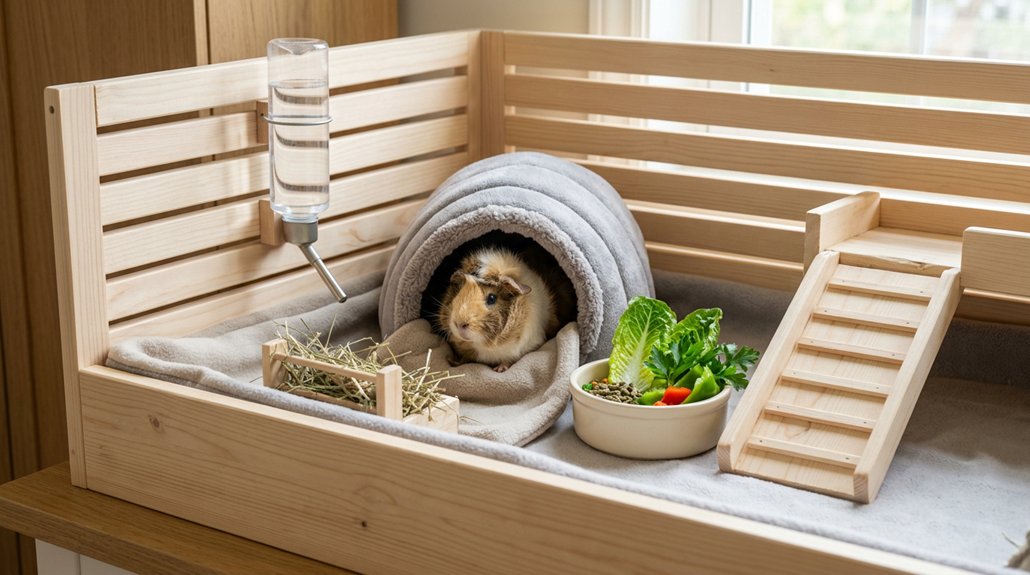
Choosing the ideal location for your guinea pig’s habitat is essential for their well-being and happiness. Start by positioning the cage in a quiet area, away from direct sunlight, drafts, and noisy environments to maximize guinea pig comfort. Maintaining the best temperature between 65°F and 75°F will promote their health and prevent stress. Elevate the cage if you have pets like dogs or cats, ensuring a sense of security while preventing accidents. Avoid high-traffic areas; instead, place the cage in a tranquil corner of a family room where they can enjoy habitat enrichment without frequent disturbances. Remember, a peaceful environment not only enhances their quality of life but also encourages activity and bonding with their furry companions.
How Big Should Your Guinea Pig’s Cage Be?
Now that you’ve found the perfect spot for your guinea pig’s habitat, it’s important to secure their cage is big enough to accommodate their needs. Understanding suitable cage dimensions and space requirements is vital for your pets’ well-being. Here’s a simple guide:
- Single Pig Size: A minimum of 7.5 square feet provides essential space for one guinea pig.
- Two Pigs Together: Allocate at least 10.5 square feet to guarantee comfort for two guinea pigs.
- Three-Pig Pen: For three, a cage size of at least 13 square feet is recommended.
- Four and More: You’ll need to provide at least 16 square feet for four guinea pigs.
Opt for C&C designs that allow customizable layouts. Avoid small cages like hutches and aquariums to prevent stress and disputes.
Choosing Bedding for Comfort and Cleanliness
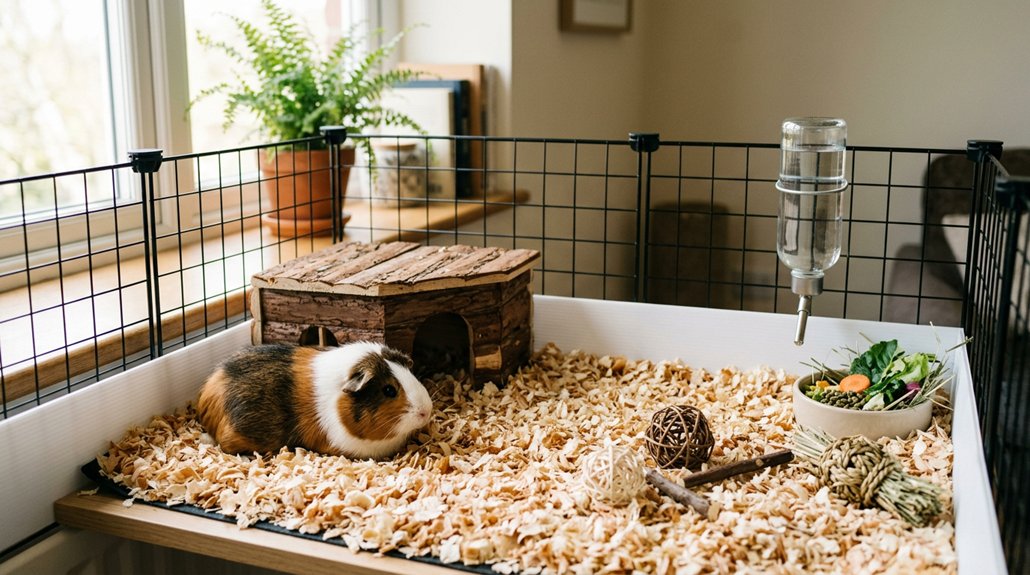
When selecting bedding for your guinea pig’s comfort and cleanliness, prioritize kiln-dried pine shavings, aspen, or fleece to guarantee safety and promote a cozy environment. Maintain a bedding depth of 2-3 inches to effectively absorb moisture and provide a soft resting place. Implement daily spot cleaning and a thorough weekly cleaning to ensure a hygienic habitat that contributes to your pet’s overall health.
Optimal Bedding Materials
Selecting the right bedding for your guinea pig is essential for ensuring their comfort and cleanliness. There are several bedding types that excel in providing comfort and efficient moisture control. Here’s a list to guide you:
- Kiln-dried pine shavings: Known for their safety and cushioning, they offer a pleasant environment but should be changed regularly to maintain hygiene.
- Aspen: A dust-free option, aspen offers excellent moisture control without harmful chemicals or oils.
- Fleece: Popular for its moisture-wicking properties, fleece must be layered over absorbent materials to stay dry and needs regular washing.
- Avoid cedar shavings: These are toxic to guinea pigs and can cause respiratory issues.
Ensure a bedding depth of 2-3 inches for ideal cushioning and moisture absorption.
Effective Cleaning Strategies
A crucial aspect of guinea pig care involves effective cleaning strategies that enhance both comfort and cleanliness in their living environment. For best results, select absorbent, nontoxic bedding options like kiln-dried pine shavings, aspen shavings, or fleece, avoiding cedar and harmful fabrics. Maintain a depth of 2-3 inches to guarantee comfort and prevent moisture buildup. Integrate a consistent bedding frequency with daily spot cleaning, efficiently removing wet bedding and uneaten food. Implement a weekly thorough cage cleanse using appropriate cleaning tools to replace the bedding and wash food and water containers. Designate a “kitchen” area for hay and bathroom needs within the cage, promoting organization and simplifying routine maintenance, making sure your guinea pig’s habitat remains a clean haven.
Must-Have Guinea Pig Toys and Shelters
To create a stimulating and secure environment for your guinea pigs, it’s vital to include a variety of toys and shelters that cater to their active nature. These items not only promote exploration but also reduce boredom. Here’s what you need:
- Tunnel Types: Offer collapsible fabric tunnels or sturdy plastic options to encourage exploration and movement.
- Hideys: Choose wooden or plastic houses where your guinea pigs can retreat for safety, essential for a comfortable habitat.
- Chew Toys: Provide chew toys made from safe materials like untreated wood or hay-based products to maintain their dental health.
- Interactive Toys: Use foraging toys or treat balls to stimulate mental activity and promote natural foraging behavior.
Regularly rotating these items keeps the environment engaging.
Building a Homemade C&C Cage: Step-by-Step Guide
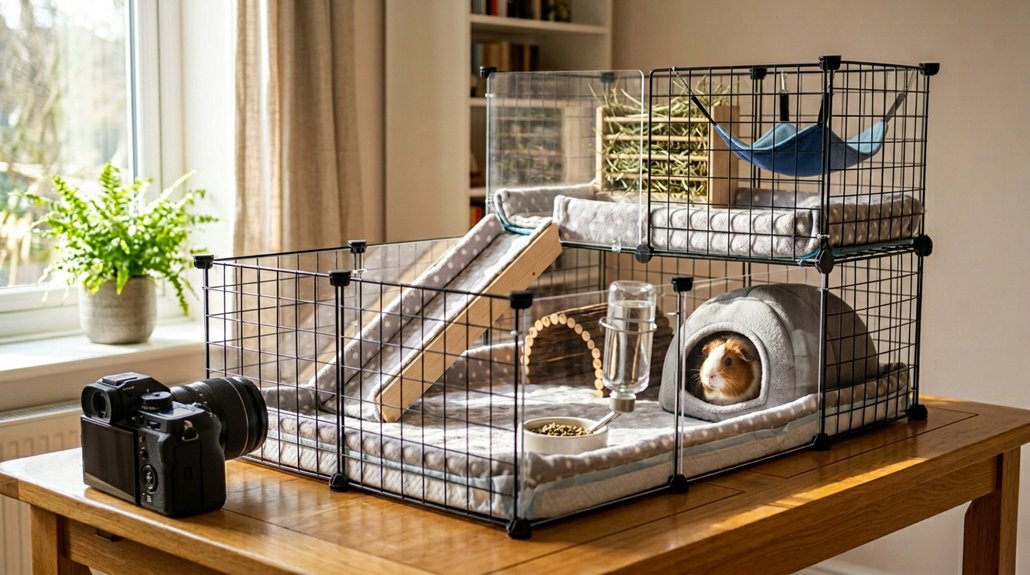
Creating a homemade C&C cage for your guinea pigs requires gathering essential materials, like coroplast and grids, to form a sturdy and spacious habitat. You’ll begin by cutting the coroplast to fit your chosen dimensions and then assemble the grids to guarantee a secure and escape-proof structure. Incorporate practical features such as a hay rack, cozy hideys, and a designated kitchen area to keep the environment clean and organized, and refer to online video tutorials for detailed assembly and customization tips.
Materials and Tools Needed
Here’s what you’ll need:
- Coroplast sheet: Choose a color and thickness that complements your space; size depends on the desired cage dimensions.
- Grids: Pick according to your desired layout (2×3 needs 10, 2×4 needs 12).
- Tools: Include a utility knife, measuring tape, and connectors like zip ties.
- Panel height: Make certain they’re at least 12 inches to prevent escapes.
Assembly Instructions
Before you begin assembling your homemade C&C cage, verify all materials are ready and laid out for convenience. Start by arranging your grids and coroplast. Use accurate assembly techniques by following video instructions for measurement precision. Remember, cage safety is paramount—construct stable walls with connectors and ascertain the enclosure is escape-proof.
| Grid Requirement | Cage Size | Safety Feature |
|---|---|---|
| 12 grids | 2×4 cage | Escape-proof design |
| 10 grids | 2×3 cage | Stable walls |
| Coroplast base | Smooth surface | Easy cleaning |
Cut coroplast to fit your cage’s dimensions, providing a durable and cleanable base. Be mindful of the cage’s size requirement—minimum 10.5 square feet for two guinea pigs. This methodical approach verifies a safe haven for your pets.
Customization Tips
Once your basic C&C cage structure is securely in place, personalization becomes the exciting next step that allows flexibility and innovation to shine. Elevate your guinea pig’s habitat with these customization tips, keeping in mind the benefits of maximizing vertical space for a dynamic living environment. Here’s how you can customize beautifully:
- Cage Themes: Choose a theme, like a forest paradise integrating natural elements, to create a cozy atmosphere.
- Accessory Options: Add fun accessories such as tunnels or mini platforms for guinea pigs to explore.
- Color Choices: Reflect your personal style by selecting vibrant or calming hues to enhance aesthetic design.
- Vertical Space: Utilize grid panels to build additional levels, optimizing limited home space efficiently.
These thoughtful touches guarantee a stimulating, comfortable home for your furry friends.
Adapting the Cage for Seasonal Changes
As the seasons change, it’s vital to adapt your guinea pig’s cage to secure their health and comfort. Seasonal adjustments like temperature control are significant. In summer, make sure shaded areas are available since guinea pigs can stress at temperatures above 24°C and face danger above 27°C. In winter, enhance warmth with extra bedding and, if possible, move their hutch indoors or to a warm shed or garage. Regularly check the enclosure for dryness, avoiding muddy conditions which could lead to health problems. For the best ventilation or warmth, strategically relocate the hutch as needed. During colder months, maintain an ample indoor exercise space to keep your guinea pigs active, mitigating the risks associated with limited mobility.
How to Maintain a Clean and Hygienic Cage
Maintaining a clean and hygienic guinea pig cage is essential for the well-being of your pets. Consistent cleaning prevents odors, disease, and discomfort. Here’s an effective cleaning schedule:
- Daily Tasks: Remove wet bedding and uneaten food to avoid odors. Confirm proper cage ventilation by positioning the cage in a well-aired location.
- Weekly Routine: Replace all bedding and disinfect the hutch using pet-safe cleaners. This prevents bacteria buildup and keeps your guinea pigs healthy.
- Monthly Deep Clean: Empty the cage completely. Clean all accessories, such as food containers, water bottles, toys, and hideouts. This assures overall cleanliness.
- Spot Clean: Regularly attend to the “kitchen” area to control waste and use 2-3 inches of kiln-dried pine shavings or fleece for bedding.
Creating a Safe Environment for Your Pets
Fostering safety within a guinea pig’s environment is essential to their tranquility and health. Guaranteeing guinea pig safety involves providing an enclosure with a minimum of 10.5 square feet for two pets. A solid bottom cage is vital to prevent injuries from wire gaps and potential falls. Keep this habitat indoors, away from drafts, maintaining a temperature between 65°F and 75°F to promote comfort. Regularly survey the area for toxic plants or small objects that could pose risks. To enhance habitat enrichment, make sure that the enclosure is escape-proof by avoiding steep ramps and securing all possible exits. These precautions not only safeguard your guinea pigs but also facilitate a nurturing environment where they can thrive and explore confidently.
Adding Personal Touches to Your Guinea Pig’s Habitat
Once you’ve established a safe environment for your guinea pigs, it’s time to infuse the space with personality and warmth. By integrating decorative accents and themed decorations, you can create a unique habitat that is both appealing and enriching for your pets. Here’s how you can creatively personalize their space:
- Colorful Fleece Liners: Choose liners with fun patterns that double as comfy bedding.
- Postcards and Photos: Use safe clips or lightweight magnets to display keepsakes, adding a personal touch.
- Edible Plants: Incorporate non-toxic herbs, offering beauty and a natural foraging activity.
- Soft, Non-Toxic Toys: Regularly refresh them to maintain a lively environment, ensuring they’re safe and enjoyable.
These touches make your guinea pigs’ habitat a delightful sanctuary.
Frequently Asked Questions
What Is the Best Setup for a Guinea Pig Cage?
You’ll want a spacious, cozy cage, at least 10.5 square feet, in a quiet, stable environment. Guarantee escape-proofing and furnish with tunnels, hides, and suitable bedding. Maintain cleanliness with regular spot and weekly thorough cleaning.
What Is the Best Thing to Put on the Bottom of a Guinea Pig Cage?
Imagine a cloud cushions your guinea pig’s steps—fleece bedding offers this comfort. Use quality kiln-dried pine or aspen shavings for a clean, cozy base. Avoid cedar for cage cleanliness and maintain it diligently for health.
Can Guinea Pigs Get Lonely in a Run?
Yes, guinea pigs can get lonely in a run. Ascertain guinea pig companionship by housing them in pairs. Enhance run enrichment with tunnels, toys, and hiding spots to prevent stress and promote natural social behaviors.
What Annoys a Guinea Pig?
Imagine it’s the 1800s, and your guinea pig despises loud noises akin to a steam engine’s roar. Sudden movements are another annoyance, so guarantee interactions are gentle. Maintain tranquility, avoiding causing unnecessary stress and anxiety.
Conclusion
By setting up the perfect guinea pig cage, you’re ensuring a happier, healthier life for your pets. Remember, a guinea pig needs at least 7.5 square feet to thrive—imagine a space larger than a typical coffee table! Prioritize comfortable bedding, engaging toys, and seasonal adaptations. Keep things clean, safe, and add personal touches to create a cozy environment. With these thoughtful guidelines, you’re not just constructing a cage; you’re building a sanctuary.