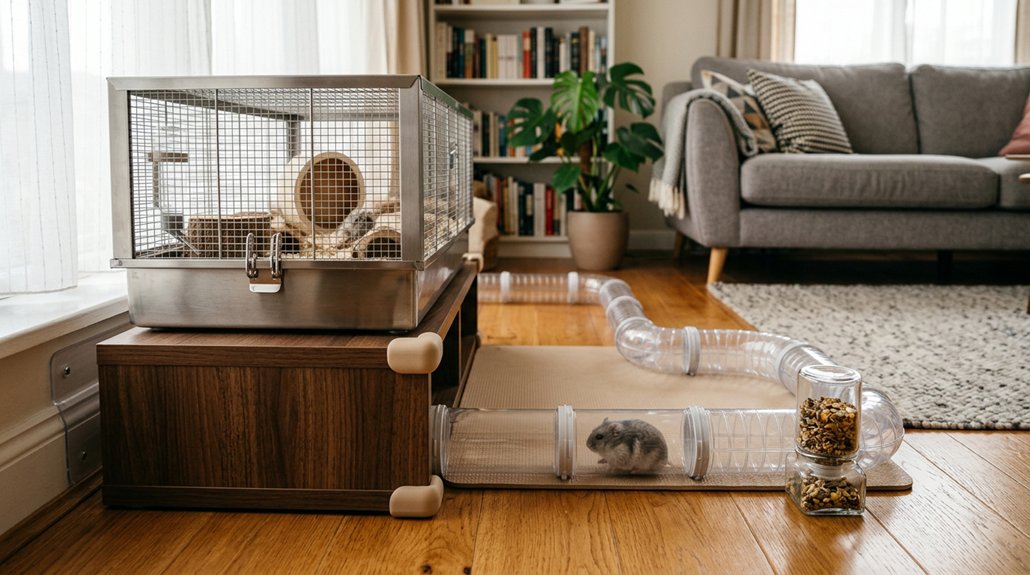
To hamster-proof your home, guarantee your curious pet stays safe and damage-free. Designate a hazard-free play area and use secure barriers to prevent escapes. Protect furniture with chew-proof materials and manage cables using covers. Elevate wires and apply pet-safe deterrents. Choose durable, non-toxic materials for their environment. Supervise playtime, introduce varied toys for enrichment, and consider DIY projects for mental stimulation. For a detailed guide on guaranteeing your hamster thrives, explore further.
Key Takeaways
- Ensure electrical cords are covered and elevated to prevent chewing hazards.
- Use barriers or playpens to secure a designated hamster-safe area for exploration.
- Apply pet-safe deterrents on furniture to discourage chewing and protect your belongings.
- Regularly inspect the play area for potential hazards and remove anything unsafe.
- Introduce a variety of toys and DIY projects to keep your hamster mentally engaged and prevent boredom.
Understanding Hamster Behavior
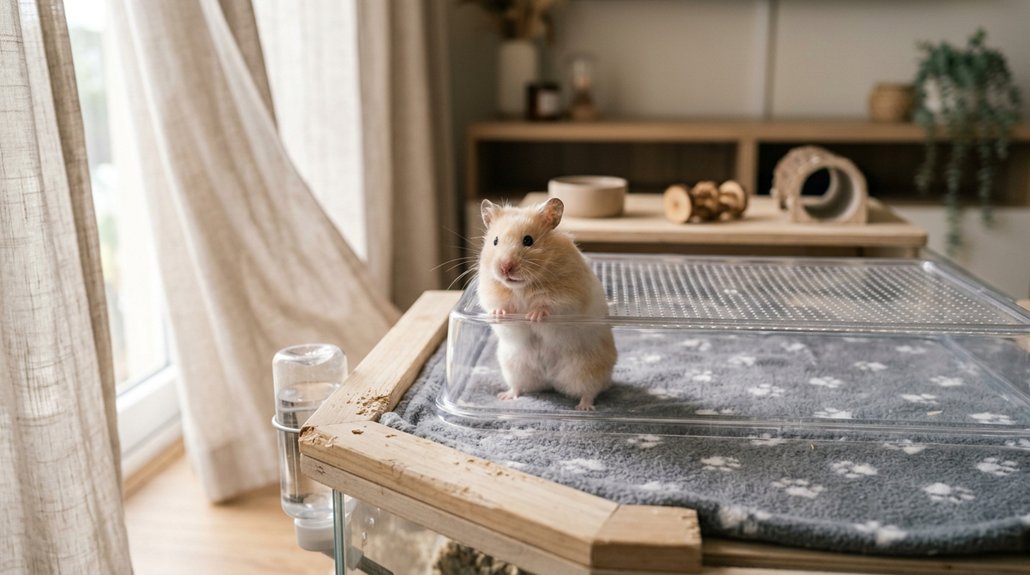
Understanding hamster behavior is essential for ensuring the safety and well-being of your pet. Hamsters have unique instincts and behavioral patterns that guide their daily activities. Their natural curiosity drives them to explore small spaces, which is why securely containing your hamster is imperative to prevent escape. Strong chewing instincts mean they can easily damage household items, so removing access to electrical cords and tempting objects is crucial. As solitary creatures, hamsters can become stressed or aggressive when interacting with other pets, so it’s best to keep them separate. They are crepuscular, meaning they’re most active during quieter household hours, engaging in explorative behavior. With a sensitive nose, they’re easily affected by unfamiliar scents or sudden noises, highlighting their environmental sensitivities.
Setting Up a Safe Play Area
Creating a secure play area for your hamster involves attention to several key aspects to guarantee their safety and happiness. Start by designating a specific space free from hazards like electrical cords and small gaps. It’s essential to use barriers or playpens to enhance play area safety and minimize any risk of escape. Cushions or towels can provide a soft, comfortable environment that encourages exploration. Consistent hamster supervision during playtime is vital for quickly addressing potential issues. Make a habit of frequently inspecting the area for overlooked dangers, such as small openings or spots where your hamster might climb and escape. Keep this area organized, removing enticing items that encourage chewing or digging, ensuring a safe and secure play zone.
Protecting Furniture and Baseboards
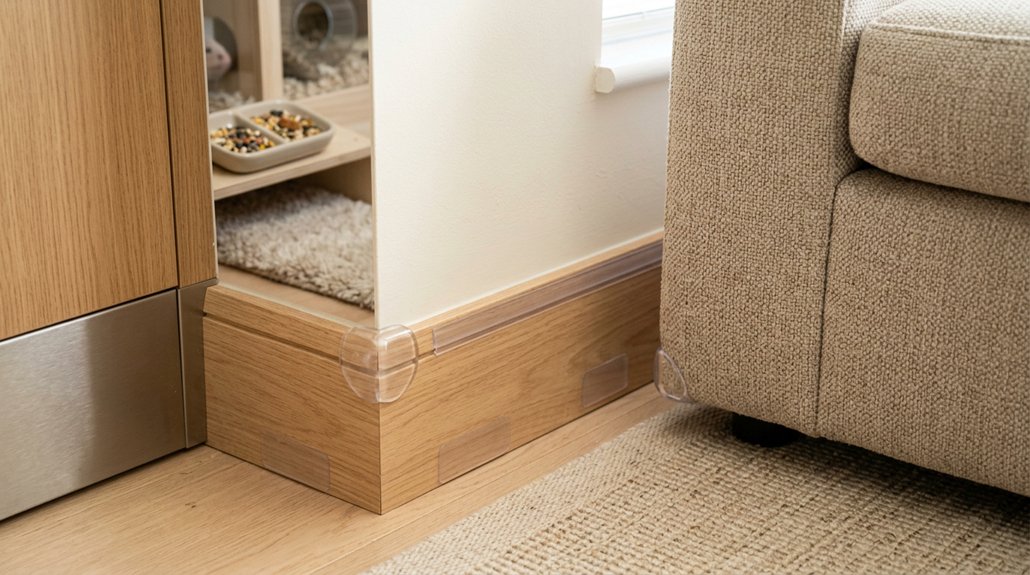
While hamsters make delightful pets, they can also be quite destructive if left to their own devices. To safeguard your home, start by using chew proof coatings and safe materials to cover furniture and baseboards. Install natural scratchers or guards to protect baseboards from chewing damage. Assess your furniture’s stability and height to guarantee there are no inviting edges for curious climbing. Regular inspections will help identify chew marks, allowing you to replace any damaged or vulnerable pieces promptly. Consider applying pet-safe deterrents, like bitter sprays, on accessible surfaces to discourage unwanted nibbling. Use the table below for quick tips:
| Task | Solution |
|---|---|
| Protect baseboards | Natural scratchers/guards |
| Cover furniture | Chew proof coatings |
| Assess furniture stability | Check height and stability |
| Inspect for damage | Regularly examine and replace |
| Use deterrents | Bitter-tasting sprays |
Keeping Cables Out of Reach
As delightful as your hamster’s antics may be, securing your home’s electrical cords is essential to keeping them safe. Utilize cord management techniques, like cord covers or tubing, to prevent curious teeth from causing harm. These safety tips help protect your hamster from severe injury or electrocution. Elevate or reposition cords away from the ground, particularly where your hamster can explore. Use adhesive cable clips to secure loose cables to walls or furniture, keeping them completely out of reach. Consider replacing some traditional chargers with wireless ones or using battery-operated devices in areas accessible to your furry friend. Regularly inspect your home for exposed wires, addressing any potential hazards promptly since hamsters can squeeze through the tightest spaces in their quest for adventure.
Blocking Escape Routes
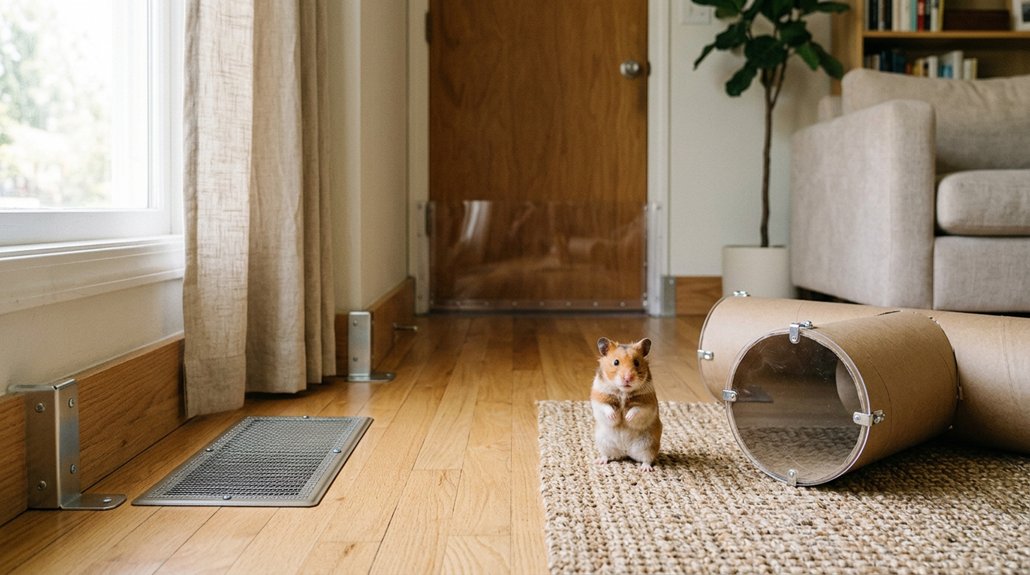
To guarantee your hamster’s safety, it’s crucial to be vigilant about blocking escape routes. Begin with meticulous gap detection; hamsters can squeeze through spaces as small as ½ inch. Regularly inspect your home for small openings, especially near doors and windows. Use door sweeps and draft stoppers to securely seal under-door gaps, ensuring escape prevention.
Check that all vents, ducts, and pipes are tightly covered to keep your curious pet out of dangerous areas. Install mesh or solid barriers over any gaps in furniture or baseboards they might chew or wiggle through. Don’t forget to protect electrical wires and cords; utilize cord protectors or tuck them safely away. With these precautions, you’re giving your hamster a safer home to explore.
Picking Materials Your Hamster Can’t Chew Through
To hamster-proof your home effectively, opt for durable materials like stainless steel or hard plastics for cages and furniture, as these resist even the most determined chewers. It’s essential to safeguard electrical cords with protectors or flexible tubing since hamsters can easily gnaw through them, posing a safety hazard. For furniture, choose varnished or sealed finishes to deter chewing and guarantee any accessible items are non-toxic and free from small, chewable parts that could become choking hazards.
Durable Chew-Proof Materials
Selecting the right materials is vital when you’re making sure your home is hamster-proof. Hamsters are determined chewers, making durable materials essential for preventing unwanted damage. You should consider chew proof options that effectively restrict their gnawing habits.
- Stainless Steel and Glass: Use these for enclosures or play areas, as these hard surfaces resist chewing while withstanding a hamster’s strong incisors.
- Heavy-duty Rubber or Silicone Mats: Place these on the floor where your hamster roams. These mats are durable and provide a safe surface, keeping your furry friend happy and your floor intact.
- Non-Toxic Containers and Barriers: Confirm they’re made from strong chew-proof materials to keep your supplies secure, providing peace of mind that your hamster won’t access anything they shouldn’t.
Safe Coverings for Wires
When hamsters are on the loose, their curious nature often leads them to nibble on things they shouldn’t, especially electrical wires. Ensuring wire durability is key to keeping your home safe. Opt for PVC tubing or plastic wire loom as effective protection methods—both deliver a chew-resistant barrier. Consider fabric wire sleeves or silicone coverings, which offer superior durability against nibbling. Spiral cable wraps made from steel or reinforced plastic also provide robust defense while maintaining flexibility. Avoid flimsy materials like cardboard or thin rubber; they’re easily compromised, posing serious risks. Regularly inspect these coverings for damage and replace them promptly to protect your furry friend.
| Material | Durability | Flexibility |
|---|---|---|
| PVC Tubing | High | Moderate |
| Silicone Covering | High | High |
| Steel Spiral Wrap | Very High | Moderate |
| Fabric Sleeve | High | High |
| Plastic Wire Loom | Moderate | High |
Effective Furniture Protection
Curious about how to protect your furniture from your hamster’s relentless nibbling? Start by making informed furniture choices. Opt for materials such as metal, glass, or treated wood, which are more resistant to your hamster’s teeth. Smooth surfaces and tight seams are crucial to keep your tiny friend from finding weak spots to exploit. Use the following chew proofing methods to secure your home:
- Protective Barriers: Cover exposed wooden surfaces with guards to deter chewing and minimize damage.
- Pet-Safe Replicas: Swap out wood, fabric, or plastic items for hamster-friendly décor to keep them out of your pet’s reach.
- Regular Inspections: Consistently check for wear and reinforce any vulnerable sections to mitigate new chew challenges.
Your furniture will thank you!
Monitoring and Interacting Safely
To guarantee your hamster’s safety during playtime, always keep a watchful eye on them, as this is essential in preventing accidents and safeguarding their wellbeing. Effective playtime supervision means actively monitoring your hamster’s behavior, especially if you have other pets. Watch for signs of stress or agitation, certifying all interactions remain calm and positive. Create a secure play area by eliminating hazards like gaps or exposed cords, and barricade escape routes such as door thresholds. Set up engaging, safe enrichment options, like toys and climbing structures, which allow your hamster to explore under your careful observation. Regularly reassess and update hamster-proofing measures throughout your home to maintain a safe environment. Your keen attention certifies a healthy, happy hamster during their adventures.
Hamster Enrichment Through Toys and Games
To provide your hamster with a stimulating environment, it’s important to introduce a diverse range of toys, from chewables and tunnels to climbing structures, all designed to keep them mentally and physically engaged. Interactive play, including the use of exercise wheels and puzzle feeders, encourages natural behaviors while strengthening your bond through shared activities. Don’t overlook DIY enrichment projects; simple homemade creations can offer safe and entertaining alternatives that will keep your hamster happily occupied.
Diverse Toy Selection
While hamsters might be small, their need for mental stimulation and environmental enrichment is anything but. Providing them with a diverse toy selection is essential in preventing boredom and promoting their well-being. Here’s how you can enrich your hamster’s life:
- Toy Rotation: Regularly changing the toys in their habitat guarantees continuous engagement. It keeps the environment fresh and intriguing.
- Interactive Play: Invest in treat-dispensing devices or plush items. These not only promote exploration but also strengthen the bond between you and your pet.
- Chew Options: Safe materials like applewood and Timothy hay are ideal. They help manage your hamster’s growing incisors while providing satisfying mental stimulation.
Interactive Play Ideas
An array of interactive play ideas can greatly enhance your hamster’s habitat, guaranteeing both mental stimulation and physical activity. Begin by introducing tunnel exploration—a favorite among hamsters, offering them pathways to navigate, hide, and climb. Tunnels come in configurations that can challenge your hamster’s agility, stimulating their innate curiosity. Pair tunnels with puzzle challenges to foster problem-solving skills. Puzzle toys can be filled with treats, encouraging hamsters to engage in foraging behavior while keeping them mentally active. It’s vital to rotate these enrichment items regularly, providing fresh textures and scenarios to prevent boredom. For balanced playtime, select safe chew options, keeping their teeth healthy and satisfying their instinctual needs. Always supervise play to guarantee a safe and engaging environment.
DIY Enrichment Projects
Discovering creative ways to enrich your hamster’s environment can greatly enhance their quality of life and keep them mentally stimulated. DIY climbing structures made from untreated wood or sturdy cardboard create a playground of sorts, encouraging your hamster to explore and exercise. Customizable tunnels crafted from cardboard tubes to fit your space will evoke your little friend’s natural burrowing instincts. Additionally, recycled items like egg cartons turn into foraging challenges, making mealtime an adventurous engagement. Maintain a rotation of these enrichment projects to keep your hamster intrigued. Here are three DIY enrichment ideas:
- DIY Climbing Structures: Use untreated wood or cardboard to encourage physical exploration.
- Customizable Tunnels: Design adaptable cardboard tunnels for instinctive burrowing.
- Foraging Toys: Recycle materials to create treat-finding games.
Sharing Tips With Fellow Hamster Enthusiasts
Some may find it challenging to guarantee their homes are entirely safe for their small, curious companions. Connecting with fellow hamster enthusiasts can offer invaluable insights into hamster communication and behavioral signals. Sharing stories about how your hamster curiously eyed those concealed electrical wires or attempted to squeeze through a seemingly impenetrable barrier can bring understanding and empathy to fellow caretakers. You might discover creative solutions others have found for common household hazards like covering exposed baseboards or using barriers to block potential escape routes. Remember, regularly evaluating your environment from your hamster’s perspective is essential. By collaboratively sharing and receiving practical advice, you can foster a supportive community focused on keeping these tiny adventurers safe and your living spaces intact.
Frequently Asked Questions
How to Hamster Proof Your Room?
Make it secure by sealing doors and reducing gaps. Create safe spaces by sectioning off areas with barriers. Remove hazardous items and cords. Keep floors clear to guarantee no dangerous temptations. Construct cozy habitats for playful exploration.
How Do You Say “Hi” in Hamster Language?
Picture your hamster flicking its ears while twitching whiskers. That’s hamster communication in action—a cute greeting. Encouraging this behavior with gentle strokes or treats strengthens the bond and says “hi” in their language.
Will a Hamster Make My House Smell?
Yes, a hamster can make your house smell, but with effective hamster odor management, it doesn’t have to. Regular cleaning tips include changing soiled bedding, spot-cleaning waste, and ensuring proper ventilation to maintain freshness.
Can I Leave a Hamster Alone for 4 Days?
You shouldn’t leave a hamster alone for 4 days. It’s essential for their well-being to guarantee daily hamster care. Arrange a reliable temporary setup with someone to feed, provide fresh water, and monitor your pet’s health.
Conclusion
So, you’ve transformed your home into Fort Knox for your furry escape artist, haven’t you? While you’re trapping your cables and barricading those tempting corners, your hamster’s likely plotting its next escapade with a twinkle in its eye. Remember, the irony is that in protecting your home, you’re actually enriching theirs. By sharing your trials and triumphs with others, you guarantee that every little Houdini can lead a safe, albeit slightly less exciting, life.