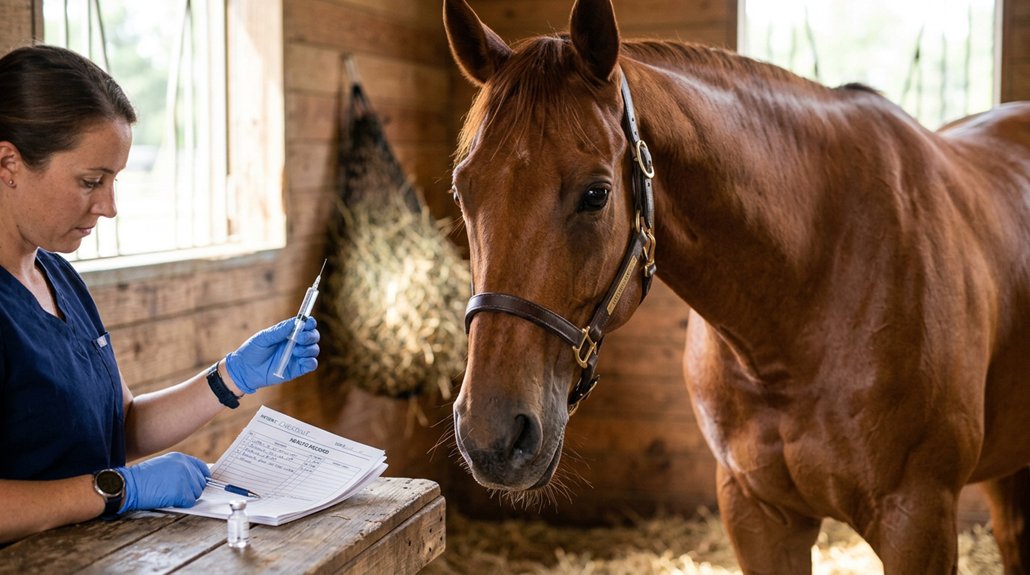
Your horse’s health relies on core vaccines like rabies, tetanus, Eastern and Western Equine Encephalomyelitis (EEE/WEE), and West Nile Virus, which are essential for immunity against fatal diseases. Risk-based vaccines such as equine influenza and strangles depend on factors like exposure and region. Spring vaccination is key for mosquito-related illnesses, while combo vaccines streamline the process. Consult your vet annually for tailored plans addressing lifestyle and local threats. Discover detailed strategies for ideal protections next.
Key Takeaways
- Core vaccines include rabies, tetanus, EEE, WEE, and West Nile Virus for essential equine protection.
- Risk-based vaccines like equine influenza and strangles depend on exposure and regional risks.
- Annual vaccination schedules are crucial, with spring ideal for mosquito-borne disease vaccines.
- Combination vaccines reduce injections, simplifying the process while ensuring broad disease coverage.
- Regular vet consultations tailor vaccination strategies to individual horses’ needs and environments.
Scheduling Vaccines for Optimal Protection
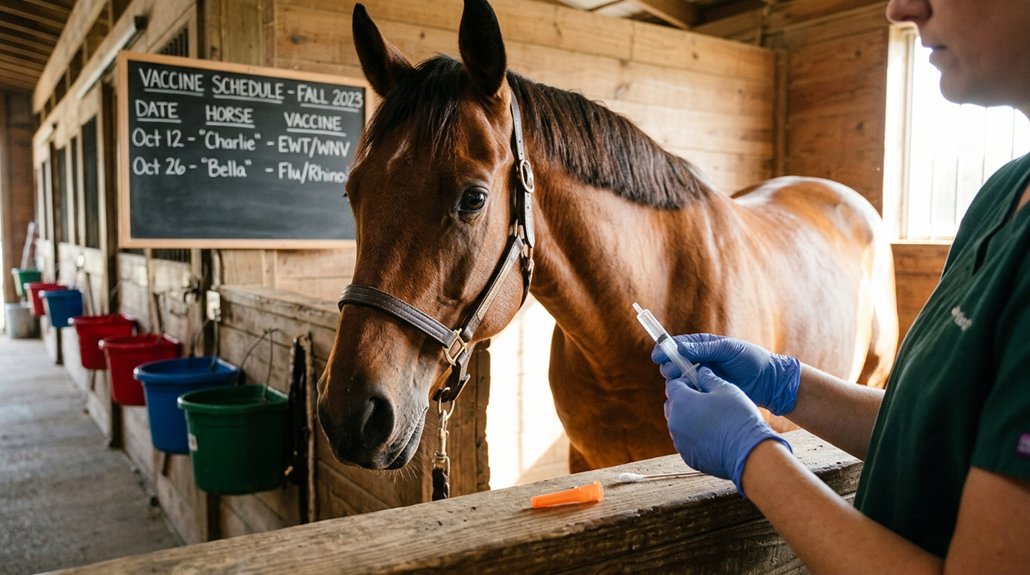
When planning your horse’s vaccination schedule for optimal protection, timing is essential to guarantee effective immunity. Spring is the prime period for administering vaccines, particularly for mosquito-borne diseases like West Nile Virus and Eastern/Western Equine Encephalomyelitis. This guarantees peak immunity as the riding season kicks off, crucial for maintaining horse health. Annual core vaccines, regardless of your horse’s lifestyle, should include rabies, tetanus, and EEE/WEE. Meanwhile, risk-based vaccines such as Equine Influenza might require more frequent scheduling, every 6-12 months, if your horse is exposed to high-risk environments. Always schedule vaccinations in advance of anticipated exposure, as they require several weeks to reach full effectiveness. Using multi-vaccine options can streamline the vaccine timing process.
Understanding Core Equine Vaccines
Understanding core equine vaccines is essential for guaranteeing your horse’s health and longevity. By vaccinating against specific diseases, you’re bolstering equine immunity and protecting against fatal outcomes. While some vaccine misconceptions suggest over-vaccination is possible, core vaccines are imperative for all horses due to their exposure to deadly pathogens:
Core equine vaccines are crucial for enhancing your horse’s immunity and preventing fatal diseases.
- Rabies: It has a 100% fatality rate post-onset, highlighting the need for an annual shot.
- Tetanus: This soil-borne bacteria demands yearly vaccination, plus boosters for injuries, given its 75% fatality rate.
- Eastern and Western Equine Encephalomyelitis (EEE/WEE): Annual vaccines are critical against these mosquito-borne threats with high mortality rates.
- West Nile Virus (WNV): Depending on mosquitoes in your area, vaccinate annually or biannually to counter its 33% fatality rate.
Proper vaccination guarantees a healthier, longer-lived horse.
Exploring Risk-Based Vaccines and Their Benefits
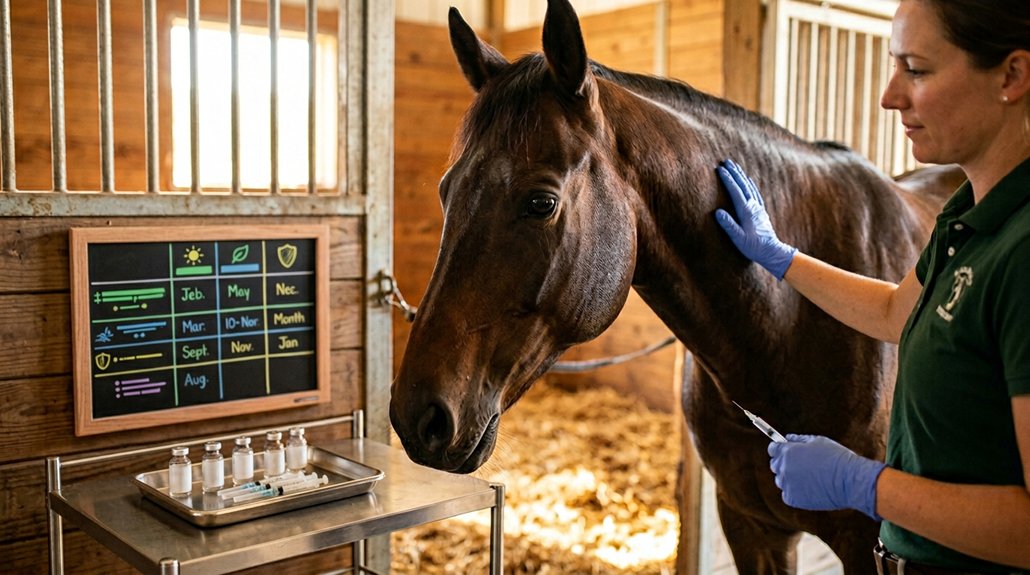
To optimize your horse’s health, you’ll need to accurately identify specific exposure risks based on its lifestyle and environment. By evaluating regional disease threats, you can guarantee your horse receives the most appropriate risk-based vaccines, such as those for Equine Influenza or Potomac Horse Fever. Tailoring vaccination strategies not only maximizes efficiency but also provides targeted protection against diseases most likely to affect your horse.
Identifying Specific Exposure Risks
Given the myriad of environments and lifestyles that horses experience, identifying specific exposure risks is crucial for making informed decisions about risk-based vaccines. This involves an exposure assessment based on the horse’s lifestyle factors and setting. For instance, horses that travel frequently or are in high-density environments may require:
- Equine influenza vaccine: Important for horses regularly attending shows or crowded areas to prevent disease spread.
- Strangles vaccine: Recommended for horses frequently in close contact with others at events.
- Equine herpesvirus (EHV) vaccine: Significant every 6-12 months due to exposure risks and considerable respiratory implications.
- Potomac Horse Fever vaccine: Critical for horses near water in warm climates to mitigate regional disease threats.
Consultation with a knowledgeable veterinarian guarantees personalized vaccination strategies.
Evaluating Regional Disease Threats
Recognizing and evaluating exposure risks for horses naturally leads to contemplating regional disease threats, where risk-based vaccines play a key role. These vaccines address significant regional risks, tailored by geographical factors and local disease prevalence. For instance, if you’re in warmer climates near water sources, vaccinating against Potomac Horse Fever is essential due to heightened risk from ingested insects. Similarly, Equine Influenza vaccines are important in areas with crowded equine populations, while Strangles protection is recommended for horses frequently exposed to others. Equine Herpesvirus demands attention with boosters every 6-12 months, especially where horses congregate closely, mitigating the risk of respiratory issues. Evaluating regional disease threats guarantees you optimize vaccination efforts, safeguarding equine health via targeted protection.
Tailoring Vaccination Strategies
When planning an effective vaccination strategy for horses, it’s vital to take into account the benefits of risk-based vaccines tailored to individual circumstances. Personalized strategies enhance individual health by considering specific factors such as lifestyle, geographic location, and exposure risks. With the aid of a veterinarian, you can identify necessary vaccines like Equine Influenza and Equine Herpesvirus, essential for:
- Horses in high-density environments
- Frequently traveling horses
- Regions with rising infectious diseases
- Customized vaccination schedules (every 6-12 months)
These risk-based approaches guarantee peak disease prevention, maintaining equine health by addressing unique risk factors. Consultation with veterinary professionals allows for precise recommendations, catering to your horse’s specific needs while safeguarding them against potential threats in their environment.
Multi-Vaccine Solutions for Efficiency and Ease
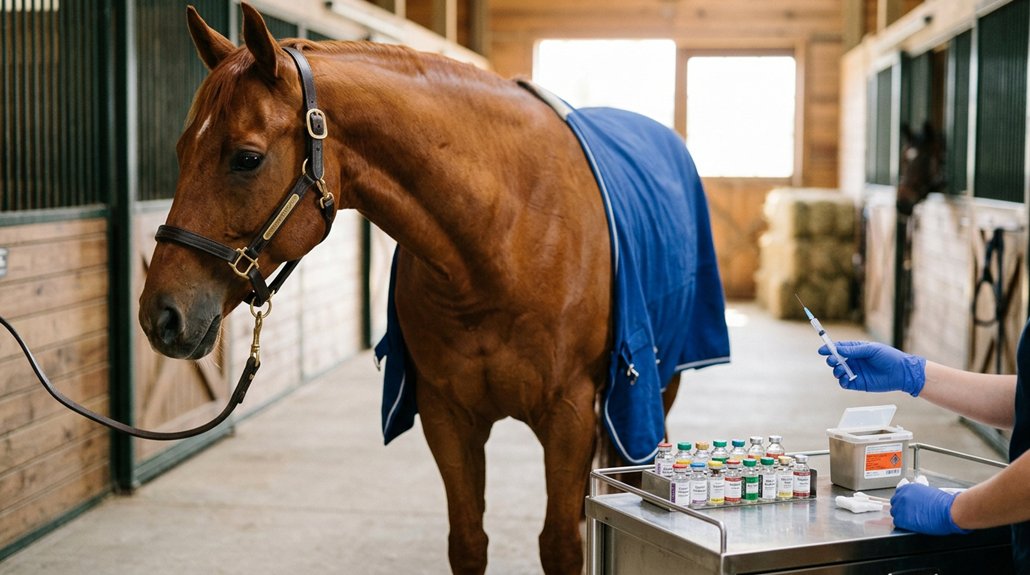
You’ll find that multi-vaccine solutions like PRESTIGE® 4 offer a streamlined approach to equine vaccination by combining protections against core diseases such as Eastern and Western equine encephalitis and tetanus into a single shot. These combination vaccines not only simplify health management but also reduce the number of veterinary visits, enabling you to maintain an efficient and effective vaccination protocol. By opting for solutions with high efficacy ratings, such as EQUI-JEC® 6 & 7, you guarantee thorough protection while minimizing stress for both the horse and the owner.
Streamlining Vaccination Protocols
Streamlining vaccination protocols for horses can greatly enhance efficiency and ease by integrating multi-vaccine solutions into regular veterinary care. By combining vaccines, you considerably improve vaccine efficacy and guarantee better vaccination compliance. Multi-vaccine options, such as PRESTIGE® vaccines, offer numerous advantages:
- Reduced Injections: Administer multiple vaccines in a single shot, minimizing stress on horses and handlers.
- Comprehensive Protection: The PRESTIGE® 3 covers Eastern and Western equine encephalitis and tetanus effectively.
- Simplified Scheduling: Using options like the PRESTIGE® 4 guarantees your horse is covered against EEE/WEE, influenza, and tetanus all at once.
- Efficient Disease Management: Products like EQUI-JEC® 6 & 7 address a wide array of diseases, making regular vaccinations manageable.
Streamlined protocols help maintain regular schedules, guaranteeing horses are consistently safeguarded against key threats.
Simplifying Health Management
Integrating multi-vaccine solutions into routine veterinary care enhances the efficiency and ease of horse health management. By using combination vaccines like PRESTIGE® 3, PRESTIGE® 4, and EQUI-JEC® 6 & 7, you guarantee your horse receives thorough protection against diseases like EEE, WEE, tetanus, and equine influenza in fewer visits. This approach reduces stress for both you and your horse, providing a streamlined vaccination schedule. It also addresses vaccine misconceptions by simplifying the process, making it easier for you to remain compliant with recommended health protocols. Owner education is essential, as understanding the benefits of multi-vaccine options can save time and money while promoting ideal health. Ultimately, these solutions facilitate better adherence to vaccination guidelines, enhancing overall horse wellbeing.
Tailoring Vaccination Plans With Vet Consultations
When developing a vaccination plan for your horse, a consultation with a veterinarian becomes indispensable in crafting a strategy tailored to individual needs. Such personalized plans guarantee high vaccine efficacy by addressing your horse’s unique environment, lifestyle, and specific risk factors, ultimately optimizing horse health. During these consultations, vets will evaluate core vaccines—such as rabies, Eastern and Western equine encephalomyelitis, and tetanus—which are essential for all horses. Additionally, they’ll assess the need for risk-based vaccines like equine influenza, depending on exposure risks.
Consult veterinarians for personalized equine vaccination plans addressing unique environments, lifestyles, and risks for optimal horse health.
Annual vet discussions support not only immunization strategies but also overall healthcare, considering dietary and dental needs. Key elements include:
- Understanding geographical disease threats
- Determining suitable vaccine schedules
- Addressing lifestyle-specific risks
- Integrating thorough health planning
How Vaccines Enhance Overall Equine Health and Safety
While vaccines serve as a foundation of equine health, their role extends beyond disease prevention. By stimulating a horse’s immune system, vaccines promote robust immune responses, generating antibodies to fight specific pathogens efficiently. This vaccine efficacy lowers illness risks and mitigates infection severity. Core vaccines, such as those for rabies, EEE, WEE, tetanus, and West Nile virus, defend against fatal diseases endemic in the U.S. Additionally, vaccinations halt zoonotic disease spread, safeguarding both equine and human health. Maintaining a regular vaccination schedule, which considers each horse’s lifestyle and environment, is essential. Such schedules are especially important for horses in high-density environments or those frequently on the move. Combination vaccines streamline administration, ensuring thorough protection, optimizing horse health and safety.
Frequently Asked Questions
What Shots Do Horses Need and How Often?
Your horse’s core vaccinations include rabies, tetanus, EEE/WEE, and WNV, given annually or semi-annually. Customize the vaccination schedule for risk-based shots like influenza and herpesvirus based on lifestyle. Consult a vet for specific needs.
Do Muslims Get Their Children Vaccinated?
Yes, Muslims do get their children vaccinated. Cultural beliefs often support immunization, and vaccination rates in Muslim-majority countries are generally high. Scientific understanding aligns with Islamic principles, highlighting vaccination’s role in public health and disease prevention.
Do Horses Really Need Vaccines?
Indeed, like knights wielding shields in battle, vaccines are crucial for equine health. They fortify against diseases, enhancing immunity. Your horse’s wellbeing hinges on these benefits, safeguarding them from threats like rabies, ensuring long-term vigor and life.
What Is the 1/2/3 Rule in Horses?
The 1/2/3 Rule guarantees vaccine safety and ideal horse health by recommending one core vaccine annually, two risk-based vaccines if needed, and three environment-specific vaccines for high-risk horses. Always consult your veterinarian for a customized vaccination plan.
Conclusion
Just like a well-tuned instrument in an orchestra, your horse’s vaccination schedule guarantees harmony in their health. With core vaccines as the foundation and risk-based options offering customized defense, the melody of protection is complete. By consulting with a vet, you tailor this harmonious plan, making it efficient and safe. Remember, vaccines are your horse’s shield in a world of potential threats, enhancing their overall well-being and assuring they lead a long, healthy life.