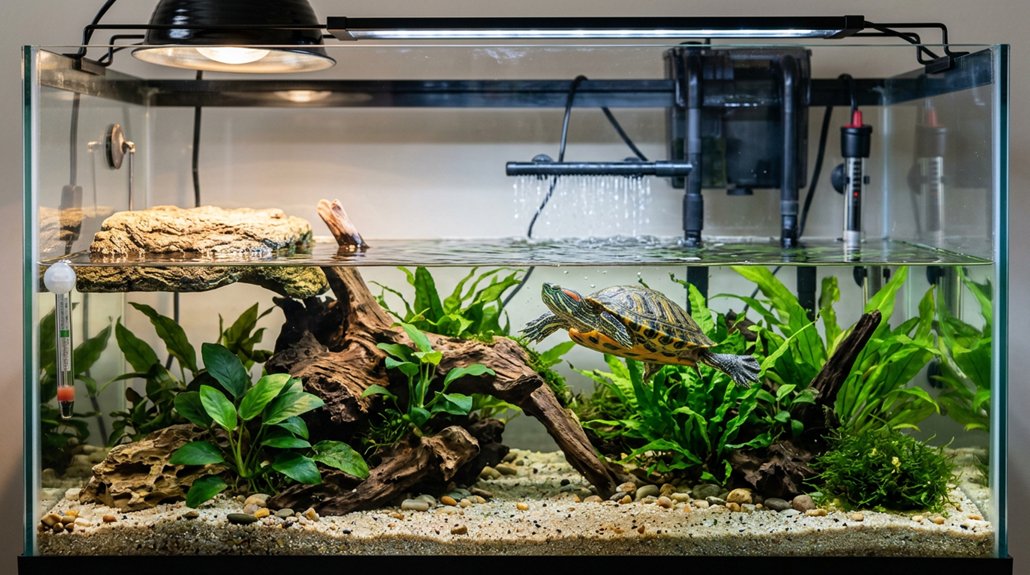
To set up a turtle tank, maintain water at a stable 73-84°F using an aquarium heater with a thermostat, and conduct regular water testing. Use a canister filter with a flow rate for 2-3 times your tank’s volume, and position a basking light 10-12 inches above a properly sized platform maintaining 85-90°F. Install UVB lighting for calcium absorption. Guarantee partial water changes regularly. Discover more about sustaining the ideal turtle habitat.
Key Takeaways
- Maintain water temperature between 73-84°F using an aquarium heater with a built-in thermostat.
- Choose a canister filter with a flow rate that handles 2-3 times the tank volume.
- Ensure the basking area temperature is 85-90°F and provide appropriate UVB lighting.
- Conduct regular water changes of 25%-50% every 2-4 weeks using a water conditioner.
- Replace UVB bulbs every 6-12 months to ensure effective vitamin D3 synthesis for turtles.
Essential Water Quality Tips for Turtle Owners
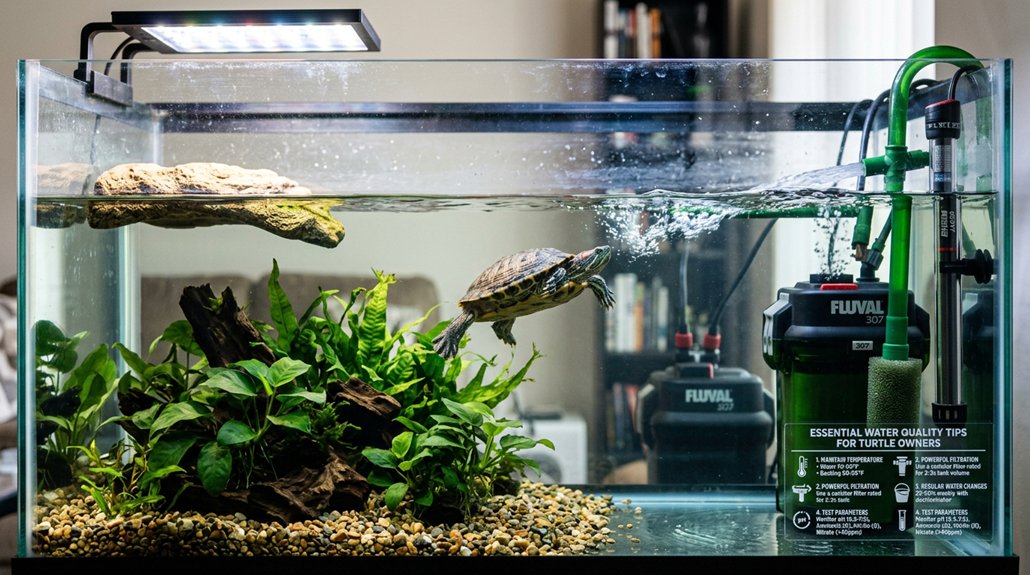
For turtle owners, guaranteeing ideal water quality is essential, as it directly influences your pet’s health and longevity. Maintaining a consistent water temperature between 73-84°F is important, achievable with an aquarium heater featuring a built-in thermostat. Regular water testing is significant for monitoring ammonia, nitrites, and nitrates, as these compounds can become toxic without intervention. Perform partial water changes of 25% to 50% every 2-4 weeks to prevent excessive buildup. A water conditioner, like Zilla Turtle PURE, should be used to treat tap water, effectively removing harmful chemicals. These measures, combined with vigilant water testing for clarity and chemical balance, will guarantee a safe, nurturing habitat for your turtle, minimizing the risk of health complications such as shell rot.
How to Pick the Best Filter for Your Turtle Tank
When selecting a filter for your turtle tank, it’s crucial to evaluate the increased waste production typical of aquatic reptiles. Opt for filter types like canister filters to manage this effectively. Confirm your chosen filter has a flow rate suitable for 2-3 times the tank’s volume, as turtles demand more efficient filtration than fish. Regular maintenance and proper substrate can enhance system efficiency.
Choose a canister filter for your turtle tank to handle increased waste and ensure efficient filtration.
- Choose canister filters: Rated for higher waste capacity.
- Flow rate: Must handle 2-3 times the tank volume.
- Regular maintenance: Prefilter rinsed biweekly, charcoal monthly.
- Avoid sand: Prevents clogging; opt for gravel or pebbles.
A robust filtration system minimizes water change frequency, maintaining cleanliness and preventing health issues efficiently. Your turtle tank’s well-being depends on selecting the proper filter.
Creating the Ideal Basking Spot for Your Turtle
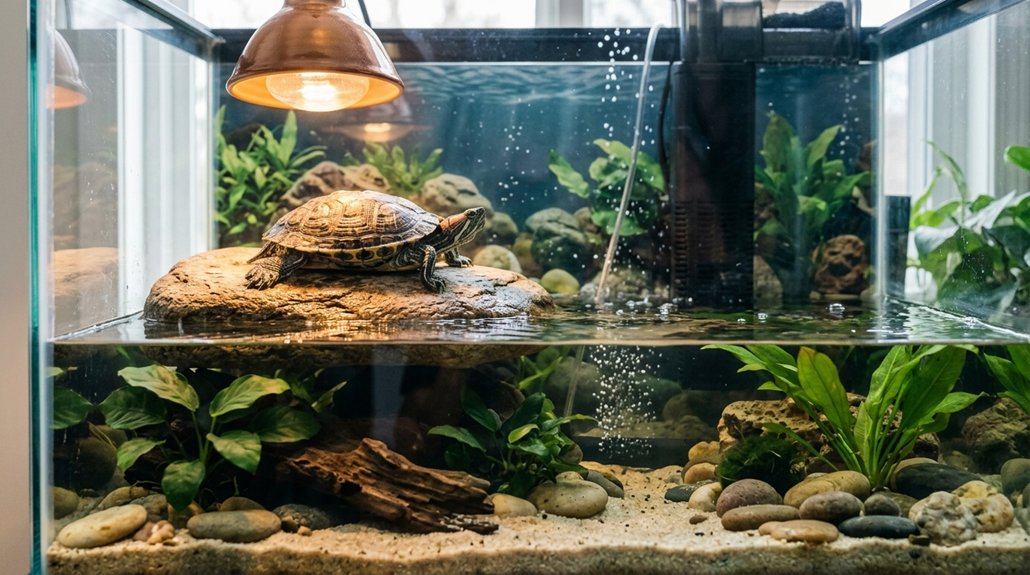
A well-chosen filter guarantees water quality, but it’s equally important to create an ideal basking spot for your turtle, as it plays a vital role in their health. The basking platform size should accommodate your turtle fully, allowing effective thermoregulation and thorough drying. Maintain the basking area’s temperature between 85-90°F, fundamental for their physiological needs. Position it within the basking light’s effective range of 10-12 inches to guarantee optimal UVB exposure. Regular adjustments are necessary to keep the basking area safe and accessible, catering to your turtle’s growth. Include a gently sloping ramp or incline leading from the water to promote natural sunbathing behaviors. These elements collectively offer an ideal environment for your turtle’s wellbeing.
UVB Lighting Essentials for Turtle Shell Health
Though often overlooked, proper UVB lighting is essential for maintaining your turtle’s shell health and overall well-being. UVB lighting is indispensable as it aids in vitamin D3 synthesis, vital for calcium absorption. Guarantee UVB bulb placement covers at least 50% of your tank’s length, with the bulb positioned 10-12 inches above the basking area to produce ideal UVB exposure. To mimic their natural habitat, aim for a lighting duration of 12 hours daily.
- Replace UVB bulbs every 6-12 months, even if visibly working, as UV output decreases.
- Monitor turtle behavior: sluggishness or shell deformities can indicate insufficient UVB exposure.
- Precise UVB placement helps avert metabolic shell disease.
- Effective UVB lighting forms a backbone for your turtle’s physiological needs.
Steps to Maintain Optimal Turtle Tank Conditions
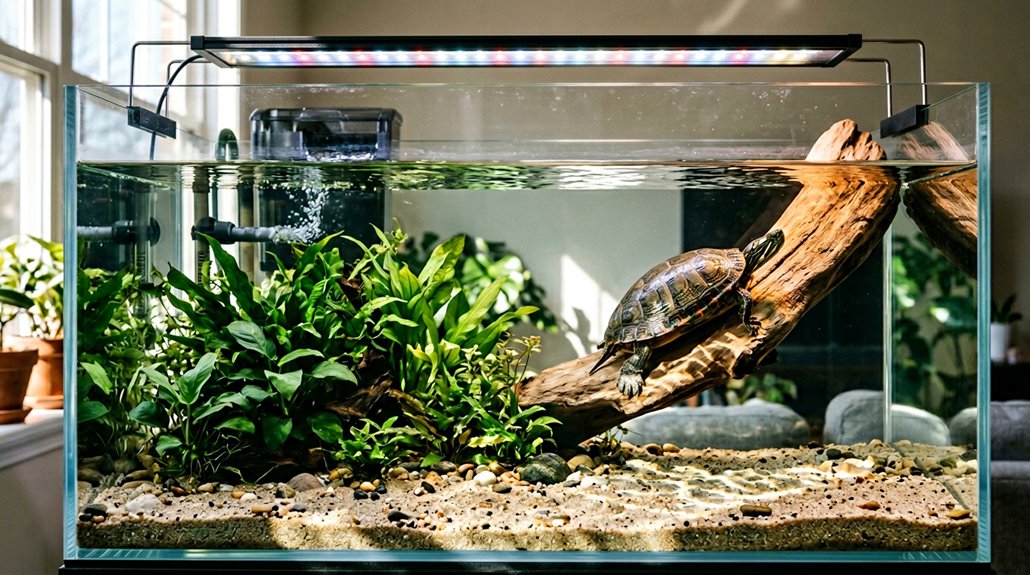
To maintain ideal turtle tank conditions, it’s important to adhere to specific environmental parameters and equipment standards. Begin with tank maintenance by guaranteeing a stable water temperature between 73-84°F, utilizing an aquarium heater for consistent thermal regulation vital for turtle comfort and health. Implement a robust filtration system, such as a canister filter rated for 2-3 times the tank size, to manage waste effectively. Regular water changes of 25% to 50% every 2-4 weeks are necessary to mitigate toxic ammonia, nitrite, and nitrate buildup. Make sure the basking area’s temperature remains at 85-90°F for thermoregulation. Position UVB lighting 10-12 inches above this spot. Consistently perform health monitoring and equipment checks to avoid potential issues, guaranteeing a thriving habitat.
Frequently Asked Questions
Which Two Lights Are Needed for a Turtle Tank?
You’ll need a heat lamp and a UVB light. The heat lamp guarantees thermoregulation by maintaining the basking area’s temperature. The UVB light facilitates calcium metabolism, preventing metabolic bone disease, and should illuminate 50% of the habitat.
How to Use a Water Filter for a Turtle Tank?
You’ll choose water filter types like canister for efficiency, ensuring it’s rated 2-3 times your tank size. Maintain it by rinsing prefilters bi-weekly, replacing or recharging charcoal monthly, conducting major cleanings annually.
Do Turtles Need a Bubbler in Their Tank?
Turtles don’t necessarily need a bubbler, but it can enhance water quality by improving oxygenation and circulation. While turtles rely on surface respiration, a bubbler benefits by reducing waste and optimizing environmental conditions through technical efficiency.
What Are Common Turtle Enclosure Mistakes?
You might think everything’s perfect, but failing to provide the right turtle tank size and selecting inappropriate substrate can spell disaster. Guarantee 10 gallons per inch of shell length and choose non-toxic substrates to avoid health complications.
Conclusion
Imagine your turtle tank as a miniature ecosystem, much like a rainforest in a terrarium. Just as the rainforest thrives through a balance of rain, sunlight, and clean air, your turtle tank needs ideal water quality, efficient filtration, and proper UVB lighting. A study found that 60% of health issues in captive turtles stem from improper conditions. Maintaining this balance guarantees your turtle thrives, much like a vibrant forest, offering a harmonious environment for growth and health.