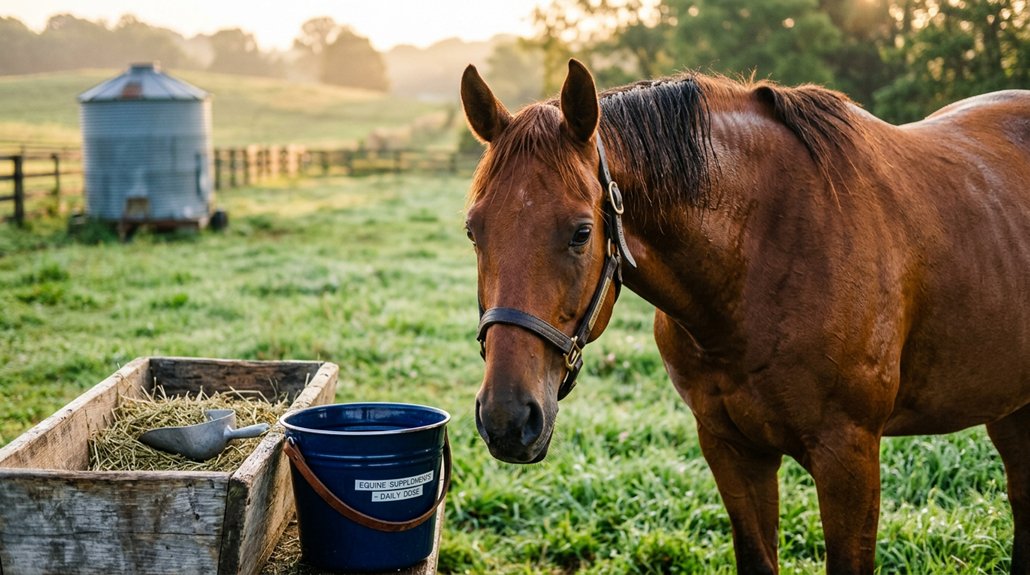
Your horse should consume 1.5-2.5% of its body weight daily in high-quality hay and supplements. For instance, a 1,000-pound horse needs about 20 pounds of hay, with adjustments for weight management. Forages are essential for digestive health, while concentrates can boost the diet if your horse’s energy demands increase. Seasonal changes in pasture quality might require feed adjustments to maintain ideal health. Discover detailed strategies for meeting your horse’s specific nutritional needs.
Key Takeaways
- Horses need 1.5-2.5% of their body weight in daily food intake.
- A 1,000-pound horse requires about 20 pounds of high-quality hay for daily maintenance.
- Daily forage intake for horses should be between 16-32 pounds to maintain health.
- Seasonal changes affect pasture quality, requiring feed adjustments to meet nutritional needs.
- Monitor body condition and adapt feeding strategies for weight maintenance or gain as needed.
Understanding Horse Diet Requirements
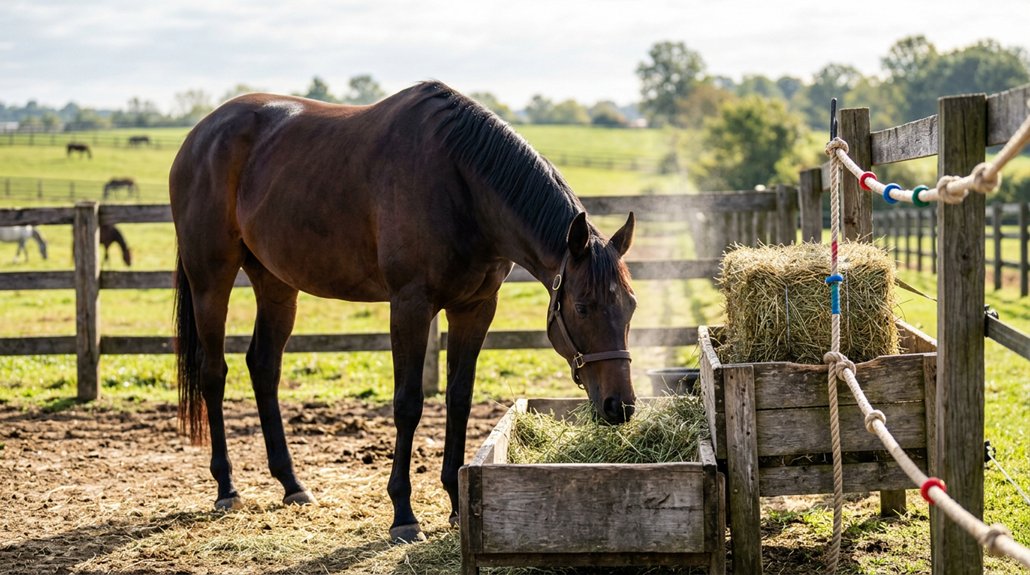
Although understanding a horse’s diet requirements might initially seem complex, knowing the basic nutritional needs is essential for maintaining their health and performance. Start by addressing common dietary misconceptions: one is assuming that horses can thrive on concentrates alone. Instead, high-quality hay should be your primary focus, providing 1.5-2.5% of their body weight daily. A 1,000-pound horse needs about 20 pounds for maintenance. Effective feeding strategies involve supplementing with concentrates or ration balancers for weight management or when energy demands increase, such as during light work requiring around 20,000 kilocalories daily. Regularly assess your horse’s body condition, adjust feed intake accordingly, and remember that overweight or underweight horses need tailored feeding adjustments to guarantee ideal nutrition and health.
Calculating Horse Food Needs
Determining your horse’s daily food needs requires precision and an understanding of equine nutritional demands. Begin with a weight assessment, as feeding isn’t a one-size-fits-all situation. Horses typically need 1.5-2.5% of their body weight in food daily. For instance, an 1,100-pound horse should consume 16.5 to 27.5 pounds of food, contingent upon their condition and activity. Use the feed measurement formula: Daily Feed (lbs) = Ideal Body Weight (lbs) × 0.02 for maintenance, or 0.025 for weight gain, to calculate specific needs. Accurate tracking of feed intake is essential to pinpointing dietary imbalances, ensuring your horse is neither under nor overfed. Consulting an equine nutritionist can provide personalized feeding plans, but don’t overlook the foundational role of forage.
Why Forage Matters Most: Key Benefits
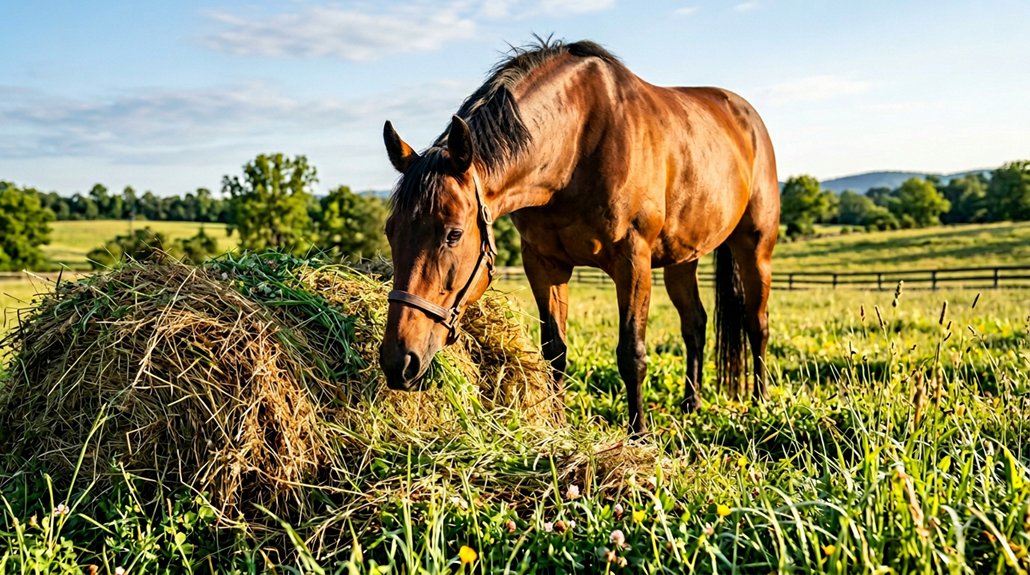
When you’re planning a horse’s diet, prioritize forage as its foundational element given its role in providing essential nutrients and supporting digestive health. Horses, having evolved as continuous grazers, benefit from the fiber in forage which guarantees a healthy gut microbiome and reduces the risk of digestive issues like colic or ulcers. By aligning feeding practices with a horse’s natural grazing behavior, you promote not only peak body condition but also meet their energy needs for both performance and daily activities.
Essential Nutrient Source
Forage is the cornerstone of a horse’s diet, offering critical fiber necessary for ideal digestion and gut health, which helps prevent conditions like colic and ulcers. As a horse owner, you should prioritize quality forage to meet your horse’s core nutritional needs. Offering different forage types, such as grass hay and legume hay, supports a nutritional variety that keeps your horse healthy and energized. Horses, especially those weighing around 1,000 pounds, typically need 16-32 pounds of forage daily, aligning with their forage-evolution.
Consider the following benefits of high-quality forage:
- Prevents digestive issues by maintaining proper fiber levels.
- Supports daily energy needs without needing excessive supplements.
- Facilitates small, frequent meals aligning with a horse’s natural eating habits.
- Provides essential vitamins and minerals for balanced nutrition.
Digestive Health Support
Although the significance of forage in a horse’s diet can’t be overstated, its role in digestive health is particularly important. Consuming 1.5-2% of body weight in forage types such as hay is essential for ideal gut motility. This helps maintain a healthy microbial population, essential for hindgut fiber digestion. Proper function of digestive enzymes depends on consistent access to quality forage.
| Benefit | Impact |
|---|---|
| Gut Motility | Prevents colic and ulcers |
| Microbial Support | Important for fiber digestion |
| Digestive Enzyme Function | Stable digestive environment |
| Nutritional Buffer | Guards against diet-related health issues |
Introducing forage gradually should be prioritized to prevent digestive upset. Its contribution to a horse’s overall nutrition not only supports digestive health but enhances overall well-being.
Natural Grazing Behavior
Horses exhibit natural grazing behavior that’s deeply rooted in their evolutionary history as constant foragers, making forage a vital component of their daily diet. Their foraging instincts drive them to consume small quantities of forage continuously, which aligns with their need for grazing patterns that prevent digestive disturbances and boredom. Here’s why forage matters most:
- Digestive Health: Guarantees your horse’s gut functions with a natural, continuous flow, essential for preventing colic.
- Mental Stimulation: Satisfies your horse’s instinctual need to forage, reducing stress and thwarting unwanted behaviors.
- Optimal Forage Intake: Aim for 1.5-2.5% of body weight daily to maintain health and happiness.
- Efficient Pasture Management: Horses naturally consume about 1-2 pounds of dry matter hourly, making pasture quality vital for meeting nutritional needs.
Recognizing When Your Horse Needs Extra Nutrition
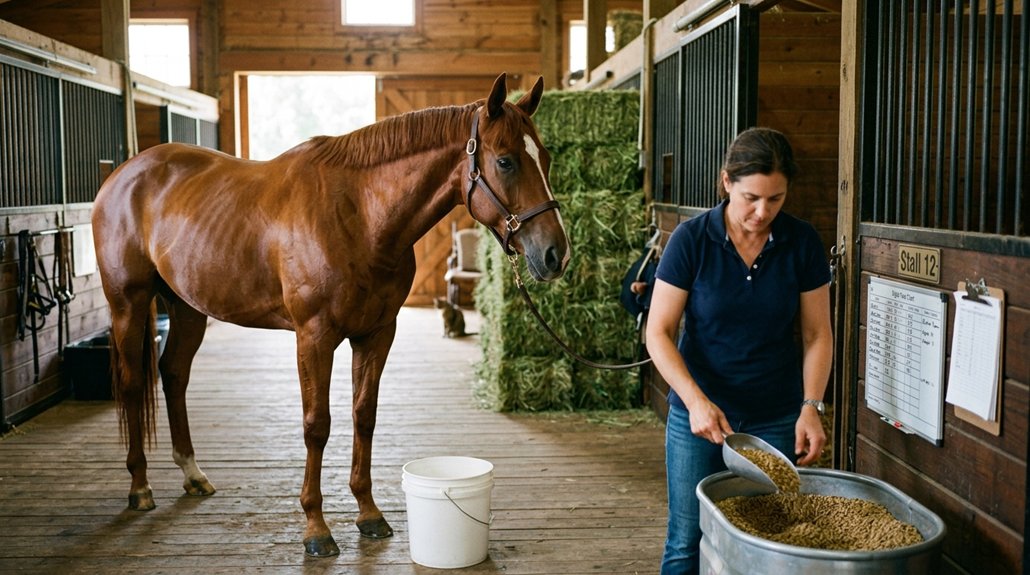
When monitoring your horse’s nutritional needs, it’s crucial to recognize signs indicating a need for extra nutrition. A drop in body condition score to 5 or 6 suggests your horse needs more energy for weight maintenance. Evaluate nutritional signs such as a ribby appearance, or difficulty maintaining topline. Increased activity or cold weather raises caloric needs to about 2.5% of body weight in feed. Underweight horses benefit from higher-quality forage or concentrates. Digestive discomfort may arise if forage isn’t finished, signaling diet reevaluation or supplementation needs. Poor pasture equates to added hay or grain concentrates. Here’s a guide:
| Condition | Recommended Action |
|---|---|
| Drop in body score | Increase energy intake |
| Ribby appearance | Improve forage/concentrate quality |
| Unfinished forage | Assess for digestive issues |
| Limited pasture forage | Offer supplemental hay/grain concentrates |
Tweaking the Diet for Weight Control: Tips and Tricks
Managing your horse’s diet for ideal weight control requires a strategic approach focused on caloric balance. Start by making dietary adjustments tailored to your horse’s specific needs, whether they’re losing, maintaining, or gaining weight. Regular weight monitoring is essential—consider the horse’s activity level and body condition to fine-tune feed intake:
Strategically adjust your horse’s diet to manage weight effectively, considering their activity level and body condition.
- For weight loss, lower feed to 1.5-1.8% of their ideal body weight.
- To maintain weight, adjust intake to 1.8-2.2%, depending on activity.
- For weight gain, increase feeding to 2.2%-3%, particularly for smaller or underweight horses.
- Facilitate gradual feed changes by incorporating high-quality hay and ration balancers to fill nutritional gaps.
Always keep a keen eye on body condition scores to promote optimal health.
How Seasonal Pasture Quality Affects Nutritional Intake
Though it may not be immediately apparent, seasonal changes in pasture quality can drastically affect a horse’s nutritional intake. In ideal spring and summer months, pasture quality peaks, allowing your 1,000-pound horse to consume between 16-32 pounds daily, which satisfies 1.6-3.2% of its body weight needs. However, the situation shifts during fall and winter. Limited growth and often poor-quality pasture compel you to explore supplementary feeding. Overgrazed or drought-stricken fields particularly struggle to provide essential calories and nutrients, potentially leading to weight issues. In these cases, you should consider adding more hay or using ration balancers. Addressing these seasonal changes guarantees that your horse maintains a proper body condition score even when pasture quality diminishes.
Maintaining a Balanced Horse Diet: Practical Tips
Achieving a well-balanced diet for your horse requires understanding its specific nutritional needs and how to best meet them through various feeding strategies. Start with high-quality forage variations like hay or pasture, which should constitute 1.5-2% of your horse’s body weight. Adjust feeding schedules according to your horse’s condition, targeting:
Start with high-quality forage making up 1.5-2% of your horse’s body weight.
- Weight loss: Aim below 2%.
- Maintenance: Keep between 1.8-2.2%.
- Weight gain: Start at 2.2%.
To fill nutritional gaps, gradually introduce grain concentrates or ration balancers in accordance with necessary caloric intake. Regularly monitor body condition scores and make dietary changes over 5-7 days to prevent digestive issues. With supportive planning and vigilant observation, you’ll make certain your horse thrives at peak effectiveness.
Frequently Asked Questions
How Much Should a 1200 Pound Horse Eat a Day?
Your 1,200-pound horse’s daily feeding should be between 18 to 30 lbs, enhancing horse nutrition. For maintaining weight, aim for 24 lbs daily. If the horse is underweight, increase to around 30 lbs for ideal nutrition.
What Is the 1/2/3 Rule for Horses?
You might think it’s complex, but the 1/2/3 rule’s straightforward: Don’t exceed 0.5% of body weight in grains per meal, up to three meals per day; focus on forage for ideal feeding guidelines, equine nutrition, and gut health (правильное кормление).
How Much Should I Feed My Horse Daily?
You should feed your horse about 1.5-2.5% of its body weight daily. Focus on feeding frequency and forage types. Make certain grass or hay is the main diet component, adjusting slowly with added concentrates if necessary.
Do Horses Stop Eating When Full?
Horses may mimic a never-ending library, often responding to hunger cues like selective readers. While they usually stop eating when full, their feeding behavior can be influenced by forage quality and individual appetite. Manage portions to guarantee balance.
Conclusion
In the intricate dance of equine nutrition, your horse’s diet is the conductor orchestrating health and vigor. By understanding dietary needs and the symphony of forage, feed, and supplements, you’re ensuring each day is a harmonious blend. Listen closely to your horse’s body, as it subtly signals when adjustments are needed. Seasonal shifts, like a tempo change, can influence quality, necessitating tweaks. With precision as your guide, you can maintain that delicate balance, fostering a thriving and spirited companion.