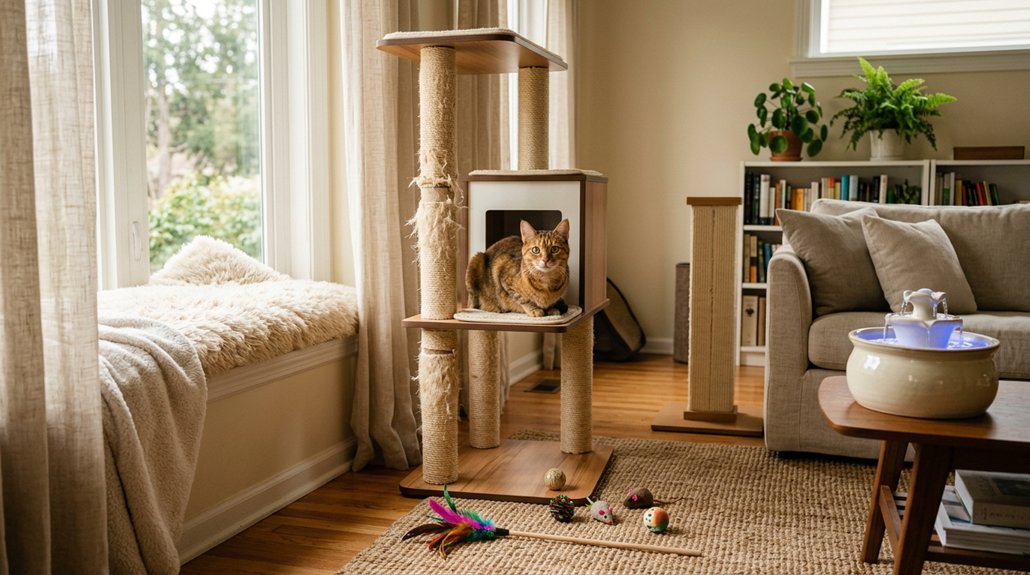
To make your home cat-friendly, remove toxic plants and securely cover electrical cords. Arrange furniture for easy navigation and position it near windows for natural light. Provide cat condos, elevated surfaces, and hiding spots for exploration and security. Supply engaging toys and activities that mimic prey, promote mental stimulation, and rotate them to prevent boredom. Maintain proper scent conditions by avoiding strong odors. Implement these strategies for a harmonious environment, and discover deeper insights further along.
Key Takeaways
- Remove toxic plants and cover electrical cords to prevent accidents and ensure safety.
- Arrange furniture for easy navigation and access to windows for natural light.
- Provide cat condos and hiding spots for stress reduction and security.
- Use toys and interactive games to stimulate natural hunting instincts and mental engagement.
- Maintain a scent-friendly environment; avoid strong odors and use calming pheromones.
Quick Start: Essential Changes for a Cat-Friendly Home
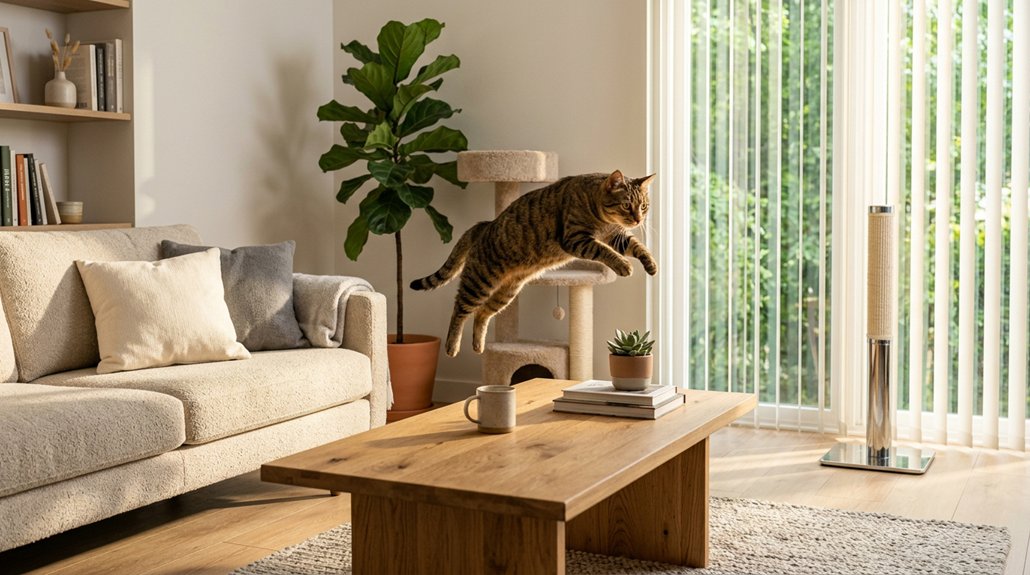
Transforming your home into a cat-friendly haven necessitates strategic modifications that cater to feline needs. Start by focusing on cat proofing essentials to guarantee safety. Remove toxic plants and securely cover electrical cords. Evaluate furniture arrangements; opt for layouts that allow easy navigation and surveillance for your cat. Position furniture near windows for natural light and visibility, providing ideal perches. Implement elevated platforms and hiding spots, blending them with existing furnishings. Consider integrating sturdy, multi-level furniture designed specifically for feline agility. Keep accessible paths clear to reduce stress. Install climbing shelves and incorporate scratching posts to satisfy instinctive behaviors. By meticulously arranging your space, you’ll effectively promote a stimulating and secure environment for your cat.
Ensure Essential Comforts: Safe Spaces and Resources
Once you’ve made the initial adjustments to create a cat-friendly home, it’s critical to focus on providing your cat with necessary comforts that guarantee their well-being. Introduce cat condos and strategically place them with dual-sided access to alleviate stress. Prioritize resource spacing by ensuring that food and water bowls, litter boxes, and scratching posts are arranged to eliminate competition. Each cat should have access to one litter box plus an extra, located away from food and busy areas. Additionally, elevate surfaces and incorporate hiding spots for exploration and security. These enrichments cater to their instinctual needs, creating a harmonious environment. Remember, precise distribution of resources supports your feline’s natural behaviors, promoting comfort and reducing stress effectively.
Simulate the Hunt: Engaging Toys and Activities
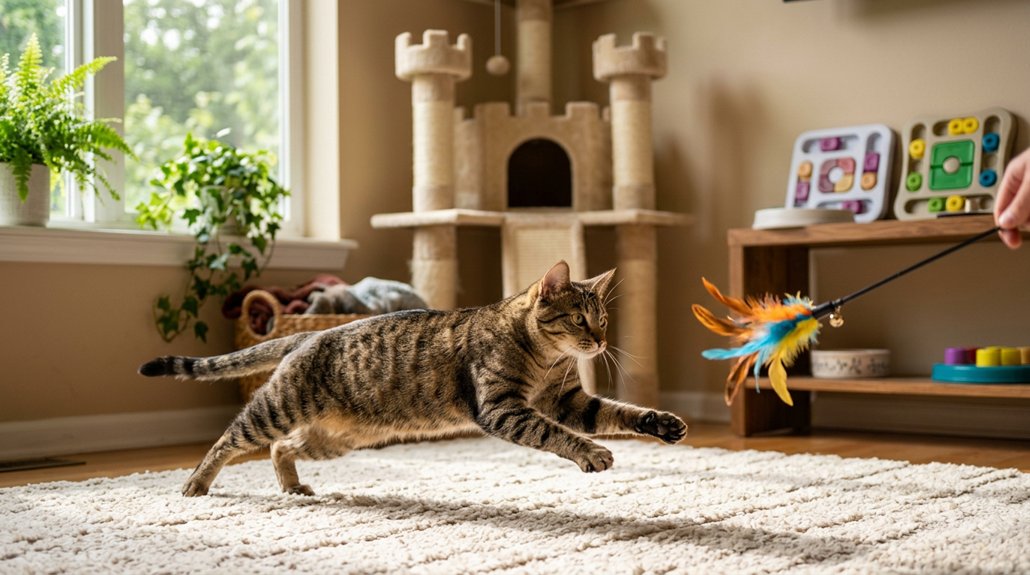
To tap into your cat’s instinctual behaviors, it’s essential to simulate the hunt through engaging toys and activities. Provide toys that mimic prey movements—with interactive wands or unpredictable battery-operated toys—to activate their natural hunting instincts. Incorporate puzzle feeders to challenge their mental faculties, inspiring them to “hunt” for food. Guarantee dynamic play environments by setting up areas with textured surfaces and obstacles, encouraging climbing, stalking, and enhancing their play experience. Rotate toys to stave off boredom, always offering something fresh. Routine interactive playtime of 15-20 minutes daily strengthens your bond with cooperative play.
| Emotion | Description |
|---|---|
| Curiosity | Watching a darting toy or solving a puzzle feeder engages curiosity and stimulates mental activity. |
| Expectation | Anticipating new toys from rotation creates excitement and maintains engagement. |
| Satisfaction | Completing a puzzle feeder offers gratification akin to capturing prey, fulfilling natural instincts. |
Build a Strong Bond: Positive Human-Cat Interaction
Establishing a solid bond with your feline companion involves consistent, predictable interactions that contribute to emotional well-being. Incorporate shared activities like regular grooming and engaging play sessions to enhance your relationship. By tailoring these interactions to respect your cat’s individual preferences, such as allowing personal space, you can greatly improve trust building. Opt for interactive play with toys simulating prey; this satisfies your cat’s natural instincts and fortifies your bond through physical and mental stimulation.
Positive reinforcement during play and socialization fosters a deeper connection, rewarding desired behaviors while highlighting mutual enjoyment. Regular, gentle petting coupled with soothing vocalizations can further foster a sense of security. This guarantees your cat feels safe within its environment, promoting attachment and overall emotional health.
Enhance Safety and Comfort With Scent
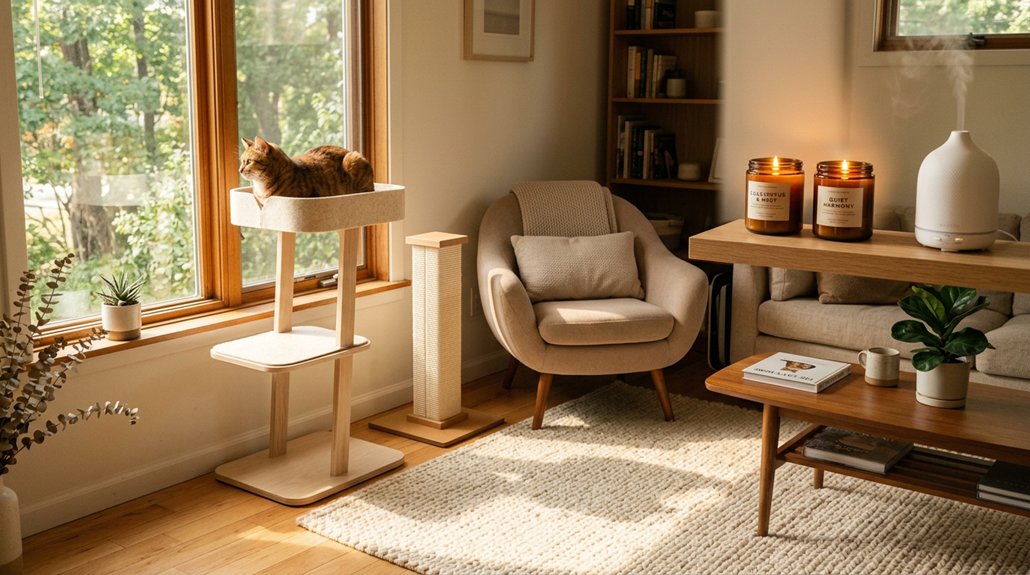
Understanding the critical role scent plays in a cat’s world underscores the necessity of creating a scent-friendly home environment. Cats navigate and interpret their surroundings via smell, so avoiding strong odors from cleaning products or scented surfaces is essential. Overwhelming scents can disrupt familiar scent cues, causing stress. It’s advisable to avoid scented litters and strongly perfumed products in their immediate vicinity.
Consider using scent-friendly products like calming pheromones to foster a serene atmosphere. Synthetic pheromones promote relaxation and mitigate anxiety in indoor cats. Additionally, incorporating natural scents from cat-friendly herbs such as catnip or valerian can enhance their sensory experience and encourage natural behaviors. Maintaining an environment considerate of scent preferences is key to a cat’s safety and comfort.
Frequently Asked Questions
What Is the 3-3-3 Rule for Cats?
The 3-3-3 rule outlines cat introduction tips in three phases: three days of stress, three weeks of trust-building, and three months for full adaptation. Use feline adaptation strategies to guarantee a patient, supportive shift in your home.
What Is “I Love You” in Cat Language?
In cat language, “I love you” is expressed through feline communication. Look for slow blinking, purring, and bunting. These signs of cat affection show they’re comfortable, trusting, and happy with you, strengthening your bond considerably.
What Color Cat Is Least Desired?
Black cats fall victim to color preferences, adoption trends, and persistent superstitions. They’re least desired despite their unique charm. Shelters report they’re adopted 30% less frequently, often overshadowed by orange or tabby cats in adoption choices.
Can Cats Lower Cortisol?
Yes, cats can lower cortisol. Stress reduction through feline companionship is supported by studies showing cats’ presence and soothing behaviors, like purring, decrease stress hormones and enhance well-being, making their companionship beneficial for managing anxiety and stress.
Conclusion
Creating a cat-friendly home doesn’t just boost your pet’s well-being; it can enhance your bond, too. Did you know that nearly 94% of pet owners report increased happiness from interacting with their cats daily? By implementing safe spaces, engaging activities, and positive interactions, you foster a nurturing environment. Plus, familiar scents contribute greatly to your cat’s comfort. Prioritize these adjustments, and you’ll notice a happier, more content feline companion, solidifying the human-cat connection.