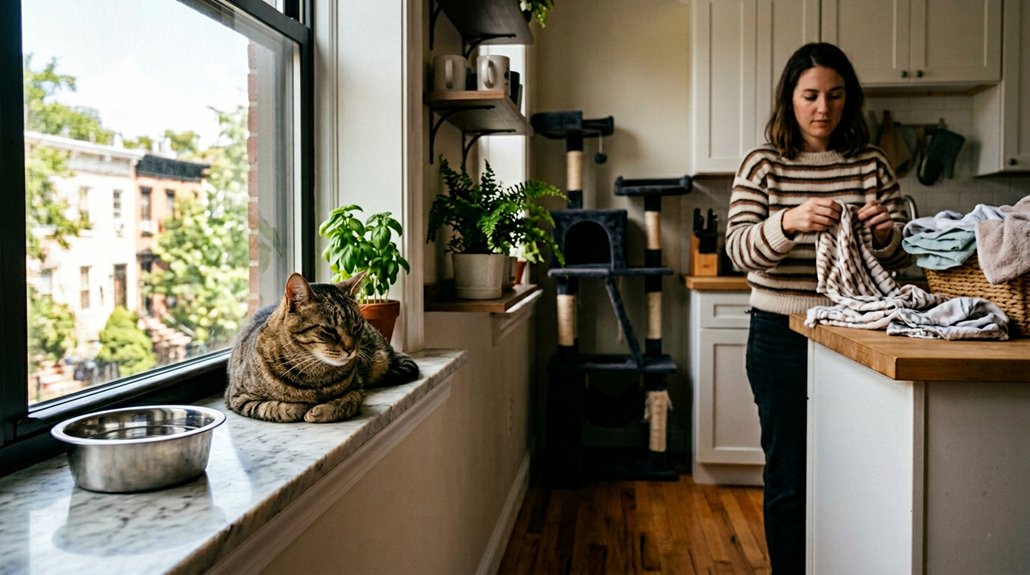
Living with a cat in an apartment requires thoughtful planning and care. Integrate vertical spaces like cat trees for enrichment, and guarantee safety with secured windows and covered cords. Choose a spacious, open litter box in a quiet spot, and maintain hygiene by cleaning it daily. Regular interactive play reduces boredom and enriches your cat’s life. Keep hazardous items locked away, and maintain cleanliness to control odors. Discover more insights to create a harmonious environment for you and your feline companion.
Key Takeaways
- Integrate vertical cat furniture like trees and shelves to maximize limited space for exploration and enrichment.
- Engage in daily interactive play sessions with toys to prevent boredom and foster physical activity.
- Set up spacious, well-ventilated litter boxes in quiet areas to accommodate cat comfort and hygiene.
- Ensure apartment safety by securing windows and storing hazardous materials out of reach.
- Maintain cleanliness by routinely grooming the cat and managing litter box odors effectively.
Essential Steps for a Cat-Friendly Apartment
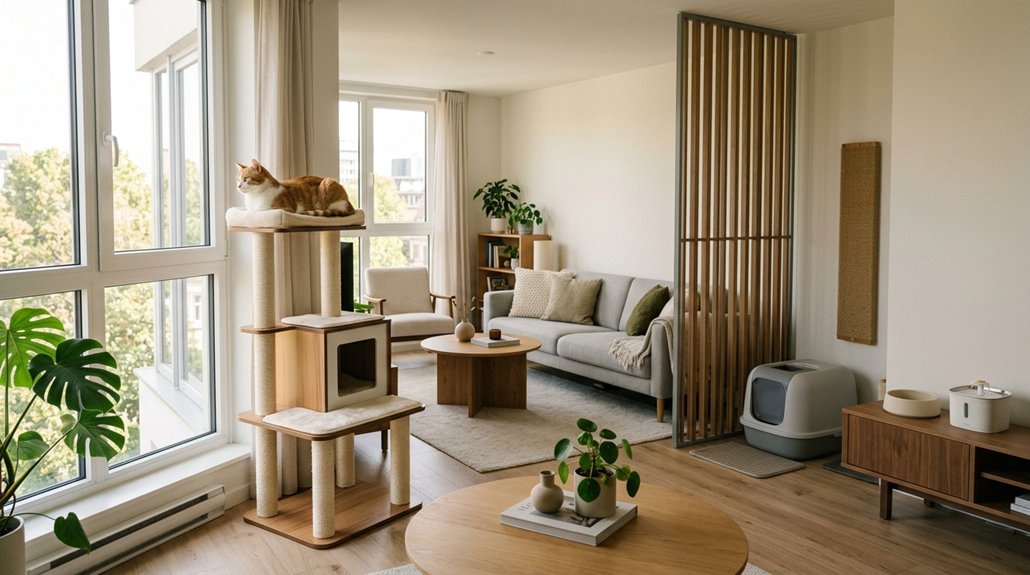
Creating a cat-friendly apartment doesn’t have to be challenging; with a few essential steps, you can make your space comfortable for both you and your feline companion. Start by integrating cat furniture that offers vertical enrichment. Cats instinctively seek elevated areas to observe their surroundings, so install cat trees, climbing shelves, and window perches. These not only satisfy their need for exploration but also maximize limited space efficiently. Provide tall, sisal-covered scratching posts to redirect scratching behavior from your furniture to appropriate surfaces. Remember, cats thrive in environments that allow them to express their natural behaviors, so maintaining a dynamic atmosphere is key. A clean and engaging environment will guarantee your cat is content and your apartment remains a harmonious living space.
Interactive Play: Boost Your Cat’s Activity Levels
Engaging your cat in interactive play is one of the most effective ways to boost their activity levels and mental well-being. Using playful toys like wand toys or laser pointers can greatly enhance your cat’s physical activity, keeping health issues like obesity at bay. Aim for 20-30 minutes of interactive play daily, incorporating engaging routines that meet their natural hunting instincts. Introducing puzzle feeders during these sessions will challenge your cat mentally, promoting healthy problem-solving skills. To keep playtime exciting, alternate between different toys such as teaser wands and catnip balls. This variety prevents boredom and maintains their interest. Regular interactive play not only strengthens your bond but also reduces boredom-related behavioral issues, ensuring a happier, more content feline companion.
Find the Perfect Litter Box Setup for Your Cat
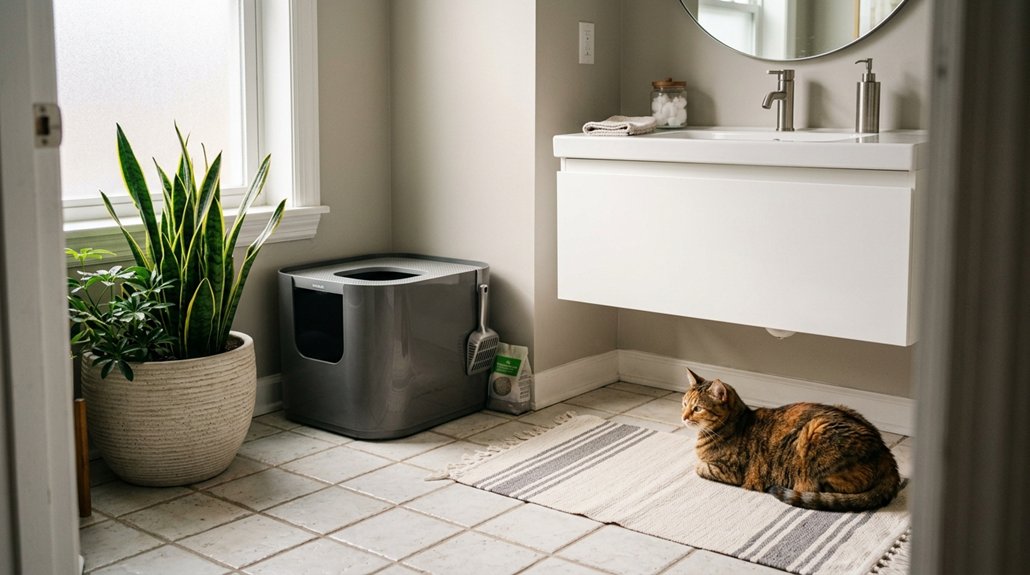
While interactive play keeps your cat physically active and mentally stimulated, a well-considered litter box setup contributes significantly to their overall comfort and reduces stress-related behaviors. First, ascertain appropriate litter box dimensions by selecting a box 1.5 times the length of your cat. This guarantees ease of use and prevents discomfort. Avoid lidded boxes to enhance ventilation. For litter box placement, opt for a quiet, low-traffic area where your cat feels secure, yet the spot is well-ventilated to maintain freshness. Use multiple boxes—one per cat plus an extra—to prevent territorial disputes. Test different unscented litters, remembering some cats are sensitive to strong odors. Daily scooping and monthly washes are essential in preventing odors and maintaining cleanliness.
Safety First: Secure and Cat-Proof Your Home
Ensuring your apartment is a safe haven for your cat involves a keen eye for potential hazards and a proactive approach to mitigation. Start by securing windows with durable screens or cat-proof netting to prevent accidental falls, especially in high-rise buildings. Cats are naturally curious, so store hazardous materials like cleaning supplies in locked cabinets—out of your furry friend’s reach. Don’t overlook kitchen safety; install plastic knob covers on gas stoves to prevent unexpected activation during kitty explorations. Electrical cords pose another risk; protect exposed wires with covers to reduce chewing and eliminate potential electrical hazards. Additionally, remove or reposition toxic plants such as lilies and philodendrons, which can be lethal if ingested. Thorough preparation will safeguard your cat’s well-being.
Maintaining Cleanliness and Odor Control for Cat Owners
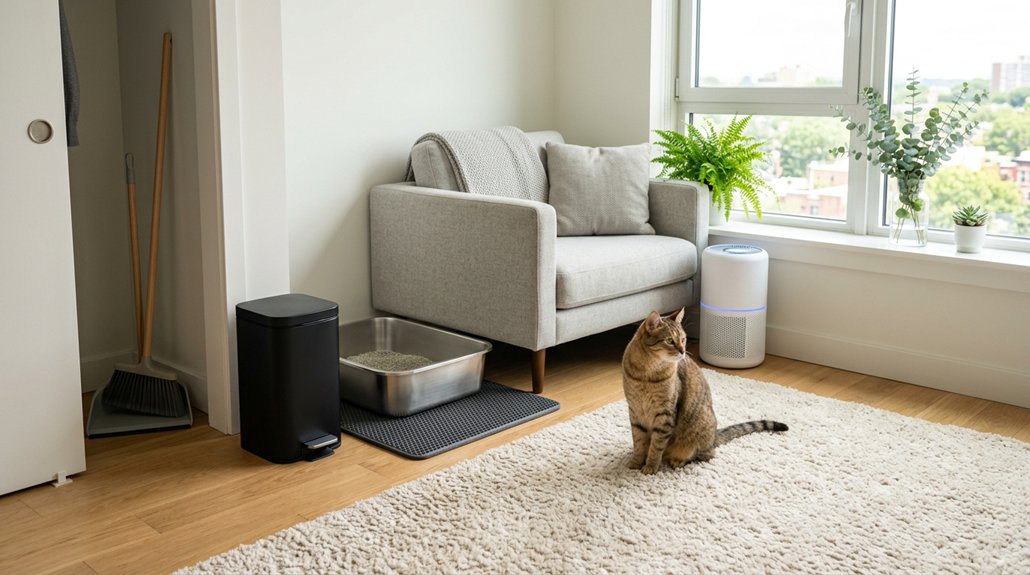
Even if you’re fastidious about cleanliness, living with a cat in an apartment presents unique challenges in maintaining both hygiene and odor control. Prioritize bowl hygiene by cleaning food bowls after each use and washing water bowls daily to inhibit bacteria buildup. For effective odor management, scoop the litter box daily and change the litter regularly. Opt for high-quality clumping litter to control odors and reduce dust. Monthly, perform a deep clean of the litter box to guarantee peak sanitation. Enhance air quality with regular ventilation and consider an air purifier to neutralize lingering smells. Regularly groom your cat, including nail clipping and brushing, to reduce shedding and uphold cleanliness in your apartment. This systematic approach ensures a fresher, healthier home environment.
Frequently Asked Questions
What Is the 3-3-3 Rule With Cats?
When introducing a cat to a new space, remember: patiences is a virtue. The 3-3-3 rule highlights feline adjustment. Tips include environment enrichment with vertical spaces, easing adaptation in three days, weeks, and months.
Can Cats Live Comfortably in an Apartment?
Yes, your cat can live comfortably in an apartment. Space optimization is essential; use vertical spaces with cat trees. Provide indoor enrichment through puzzle feeders and play. Guarantee access to windows for entertainment and a fulfilling life.
How to Tell if a Cat Is Sad?
About 67% of cat owners notice behavior changes indicating distress. Watch for signs of depression like altered cat behavior, clear shifts in feline body language, and definitive emotional needs not being met. Addressing these ASAP guarantees happier companionship.
Can I Leave a Cat Alone for 4 Days?
Leaving your cat alone for four days isn’t ideal due to cat anxiety. Guarantee good pet care by arranging a trusted friend to visit, using automatic feeders, and providing environment enrichment to prevent stress and loneliness.
Conclusion
Living with a cat in an apartment can be a rewarding experience if you take the right steps. Consider Sarah, who transformed her small space by adding vertical shelves and interactive play zones, ensuring her cat stayed active and content. She also found the ideal litter box setup, kept safety a priority by cat-proofing her home, and maintained cleanliness with regular air fresheners. By following these strategies, you too can create a harmonious and joyful living environment for you and your feline friend.