
Living with a cat means embracing a routine filled with curiosity, play, and companionship. You’ll find your feline exploring their surroundings, napping in sunny spots, and needing stimulating play to satisfy their hunting instincts. Understand their subtle body language to build trust and recognize their need for climbing and scratching. Expect multiple small meals and clean litter boxes. As you appreciate these behaviors, you’ll discover deeper joys and bonds. There’s more to uncover about these fascinating creatures.
Key Takeaways
- Cats nap often, up to 19 hours a day, highlighting the importance of warm, comfortable spots for their rejuvenation and well-being.
- Daily interactive play and observation time are essential to satisfy cats’ hunting instincts and provide mental stimulation.
- Feeding through food puzzles aligns with cats’ natural grazing behavior, slows eating, and prevents overeating, while promoting engagement.
- Cats require clean litter boxes and fresh water to maintain health and comfort in their daily bathroom routines.
- Building trust with cats involves patience, allowing them to approach at their own pace, often using gentle play and treats.
Explore Typical Cat Behaviors

While living with a cat, you’ll quickly notice some fascinating behaviors that set them apart from other pets. One key aspect is their playtime importance. Cats need at least an hour of play each day to tap into their hunting instincts. This is essential for their mental and physical stimulation, keeping them sharp and agile. Even though they may seem independent, providing interactive toys can simulate their natural prey-chasing activities.
It’s also intriguing how domestic cats spend about two hours observing their surroundings—perched on a windowsill or a bookshelf. This behavior satisfies their instinctual need for vigilance, offering mental stimulation and fulfillment. By understanding these typical behaviors, you’ll be better equipped to guarantee your feline friend’s well-being and happiness.
The Art of Cat Napping
Although cats are known for their curious and independent nature, understanding the art of cat napping can reveal much about their well-being. A cat’s choice of nap locations, often sunny spots, reflects their instinct for warmth and comfort. These cozy retreats are not just about rest; they’re essential for mental stimulation when they observe their surroundings. With cats sleeping between 12-19 hours daily, recognizing their napping benefits is important. Sleep supports both physical rejuvenation and stress reduction, but beware—excessive napping can also signal boredom, underscoring the need for an enriched environment. Additionally, know that during these restful periods, a cat’s grooming—occurring for about 2-3 hours daily—further enhances their health and comfort, seamlessly integrating with their rest routine.
Essential Feeding and Bathroom Routines
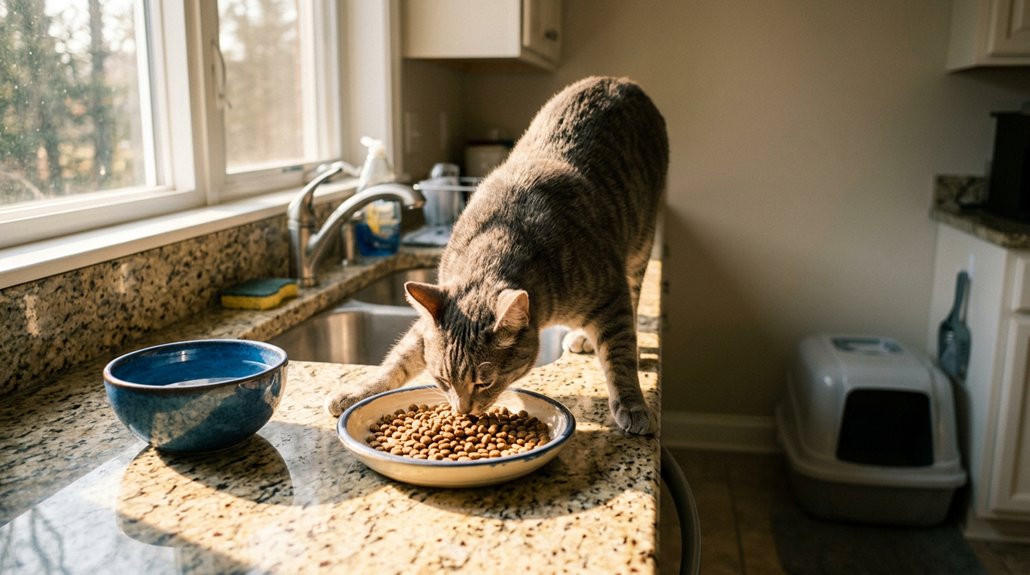
Caring for your cat’s feeding and bathroom routines can enhance their well-being and happiness. Cats love to snack throughout the day, so providing multiple small meals tailored to their dietary needs—confirmed in consultation with your vet—is essential. Pair these meals with stimulating food puzzles and guarantee a clean litter box and fresh water are always available to keep your feline friend healthy and content.
Quick Meal Preferences
Many might not realize that cats are natural grazers, preferring to consume small, quick meals throughout the day rather than gorging on large portions. This means mastering meal timing becomes essential in ensuring your feline friend thrives. You might notice your cat eats quickly, but in these brief bursts, they’re practicing a natural instinct. To support this, consider food puzzles, which provide mental stimulation and mimic hunting behaviors. It’s a smart way to manage quick feeding habits while enriching their environment.
Always have fresh water available, and clean their bowls daily; hydration is crucial for overall health. Remember, treats should be only 5-10% of their diet, so they don’t detract from balanced nutrition. Your consideration helps maintain their wellness.
Daily Bathroom Rituals
Understanding your cat’s habits is key to a happy home, especially when it comes to their daily bathroom rituals. Cats are meticulous creatures, and their litter box etiquette is no exception. Keeping their bathroom environment clean is necessary to maintain their comfort and health. Aim for daily cleaning routines; scoop the litter box at least once a day and refresh the litter regularly to prevent odors and guarantee a spotless space.
Cats can be particular about their bathroom facilities, so monitor litter box usage as changes might indicate health issues. Provide a large enough box in a quiet, accessible area, filled with a suitable litter type. By respecting these preferences and maintaining a clean environment, you’ll support your cat’s well-being and peace of mind.
Food Puzzle Usage
For some, feeding a cat might seem straightforward, but integrating food puzzles can transform mealtime into a fulfilling and health-promoting practice for your feline friend. Cats are natural snackers, thriving on small, frequent meals. Food puzzles provide mental stimulation and engage their natural hunting instincts. By making mealtime interactive, you’re enhancing food puzzle effectiveness and reducing boredom.
Consider this:
| Benefit | Impact | Result |
|---|---|---|
| Mental Stimulation | Encourages Exploration | Reduces Boredom |
| Slow Eating | Prevents Overeating | Minimizes Obesity |
| Hunting Behaviors | Instinctual Fulfillment | Security & Adventure |
Hiding food in various locations guarantees your cat enjoys exploring and feels secure. Slower eating reduces digestive issues, supporting healthier habits. Embrace food puzzles to enrich your cat’s daily life.
Getting the Hang of Cat Grooming

Understanding cat grooming is essential for ensuring your feline friend stays healthy and happy. By incorporating vital grooming techniques and practicing regular brushing tailored to your cat’s coat type, you’ll not only reduce hairballs but also strengthen your bond. Remember, while cats are excellent self-groomers, your gentle support in grooming can make a significant difference in their well-being.
Essential Grooming Techniques
The art of grooming is an essential aspect of feline care that can greatly impact your cat’s health and your relationship with them. Understanding your cat’s coat type is vital. Whether it’s short, medium, or long, tailor grooming tools and techniques accordingly to reduce shedding and enhance their wellbeing. Regular grooming doesn’t just keep them looking sleek—it distributes natural oils that waterproof their coat and aids in absorbing vitamin D.
| Grooming Need | Ideal Technique |
|---|---|
| Short Coat | Rubber brush for shedding solutions |
| Medium Coat | Bristle brush for tangles |
| Long Coat | Wide-tooth comb for undercoat |
| All Cats | Schedule based on coat type |
Implement a grooming schedule that respects your cat’s preferences, ensuring a stress-free routine. Remember, your patience is key to a happier, healthier pet.
Benefits of Regular Brushing
Now that you know how to master grooming techniques tailored to your cat’s coat type, let’s explore why regular brushing is invaluable for their wellbeing and your relationship with them. Utilizing appropriate grooming tools keeps their coat cared for, reducing shedding and the dreaded hairballs. Brushing techniques not only maintain healthy skin by evenly distributing natural oils but also enhance bonding through intimate, comforting interactions. Creating a grooming schedule aligned with their specific fur type prevents matting and fosters stress reduction. While adult cats typically groom themselves for hours daily, your involvement supports their natural coat care rituals, encourages shedding control, and guarantees they remain sleek and waterproof. Regular brushing can transform grooming into a cherished ritual, fostering a harmonious connection.
Creating Engaging Play Environments
While designing engaging play environments for your cat, focusing on their innate hunting instincts can provide substantial mental and physical stimulation. Incorporate toys like feather wands and laser pointers to mimic prey dynamics, fostering interactive play that’s essential for your cat’s happiness and mental health. Aim for at least an hour of playtime daily. Rotating toys regularly keeps their interest alive; it prevents boredom and maintains a stimulating environment. Add food puzzles to challenge them intellectually during mealtime, while also mirroring natural hunting behaviors. Include scratching posts and climbing structures, as cats have the inherent need to climb and scratch, reinforcing their territory. By addressing these key components, you’re ensuring your cat remains engaged and fulfilled throughout their day.
Encouraging Curious Behaviors
As naturally curious creatures, cats thrive in environments that challenge their inquisitive nature. By providing interactive toys like food puzzles, you encourage their instinctual hunting behaviors and enhance mental stimulation. These toys mimic prey, allowing for an engaging exploration activity every day.
Safe perches near windows can serve as prime observation spots where your cat can watch the outside world, satisfying their innate desire to observe and understand their environment. Such spaces contribute considerably to their environment enrichment.
Devote at least an hour daily to interactive playtime. This lets your cat chase toys that mimic prey, effectively fostering curious behaviors and fulfilling their natural instincts. Also, hiding treats or toys around the home encourages exploration and the exercise of their keen sniffing abilities.
How Cats Mark Territory and Explore
Cats’ curious nature isn’t just about exploration and play—it’s intricately tied to how they establish their territory. Territorial marking is essential for your feline friend, as they spend around two hours daily ensuring their space feels distinctly theirs. Utilizing pheromones and the occasional discreet spray, they leave olfactory marks around their environment. Scratching not only defines boundaries but keeps their claws in top shape.
Here’s a peek into their behavioral nuances:
| Behavior | Purpose | Benefit to Cat |
|---|---|---|
| Scent Marking | Establish territory | Feelings of ownership |
| Scratching | Define space, maintain claws | Physical health, boundaries |
| Regular rounds | Check for changes | Increase environmental awareness |
| Pheromone release | Leave a calming scent | Comfort, security |
| Exploration | Maintain environmental awareness | Enhanced comfort |
In understanding these actions, you’re better equipped to respect their need for control and security in their domain.
Developing a Trusting Bond
Although building a trusting bond with a cat can be a gradual process, the journey is both rewarding and enlightening for any cat owner. Understanding the nuances of feline body language is key to knowing when your cat feels comfortable and when they need space. By employing trust building techniques, you can gently cultivate a mutually positive relationship over time.
Here are four effective strategies:
- Patience is essential: Allow your cat to approach you at their own pace.
- Offer treats: Use them to create positive associations.
- Engage in gentle play: This helps to build trust and stimulate bonding.
- Respect boundaries: Recognize signs of discomfort in your cat’s body language.
Once trust is established, your efforts will be reciprocated with warmth and companionship.
Enjoying the Joys of Cat Companionship
Delving into the joys of cat companionship reveals a world brimming with warmth and affection that many find comforting after a long day. Imagine your cat curling up next to you, resembling a furry space heater, providing cat cuddles that enhance relaxation and lower stress. Their playful antics—whether it’s pouncing on toys or executing amusing sleeping positions—offer endless entertainment and emotional enrichment. To guarantee their happiness, devote about an hour daily to playtime, mimicking their natural instincts. This can be as simple as engaging them with a feather toy or watching them showcase their quirks. Over time, the bond deepens, especially with shy cats, transforming those tender moments of affection into unparalleled joy and companionship.
Frequently Asked Questions
What Is the 3-3-3 Rule With Cats?
The 3-3-3 rule outlines a cat adaptation timeline: 3 days to explore, 3 weeks for socializing, and 3 months to fully settle, allowing feline behavior indicators to show they’re comfortable and trust their new environment.
What Color Cat Is Least Desired?
Black cats often face negative stereotypes and lower adoption rates. Isn’t it surprising that these feline adoption trends persist despite their charm? Understanding cat color preferences can help challenge biases and celebrate their unique allure and companionship.
What Did Albert Einstein Say About Cats?
Einstein described cats as ultimate narcissists, combining independence with companionship. He appreciated their intelligence and feline behavior, noting their observational skills and calming presence. You’ll find this perspective insightful, enhancing your understanding of cat-human relationships.
How Do Cats Say “I’m Sorry”?
Cats apologize through body language like lowering their head or avoiding eye contact. Feline behavior includes slow blinks, leg rubs, purring, and bringing gifts. These gestures show remorse and a desire to ease any tension between you.
Conclusion
Living with a cat is an exhilarating, whirlwind adventure. You’ll marvel at their expert naps, treasure their headbutts, and laugh at their mighty territorial claims. The feeding rituals become a sacred dance, while grooming transforms into a spa day extravaganza. Playtime? It’s a burst of energy akin to rocket launches. Your home becomes a playground of curiosity. But above all, you forge an unbreakable bond, gaining a loyal companion who fills your days with joy and wonder.