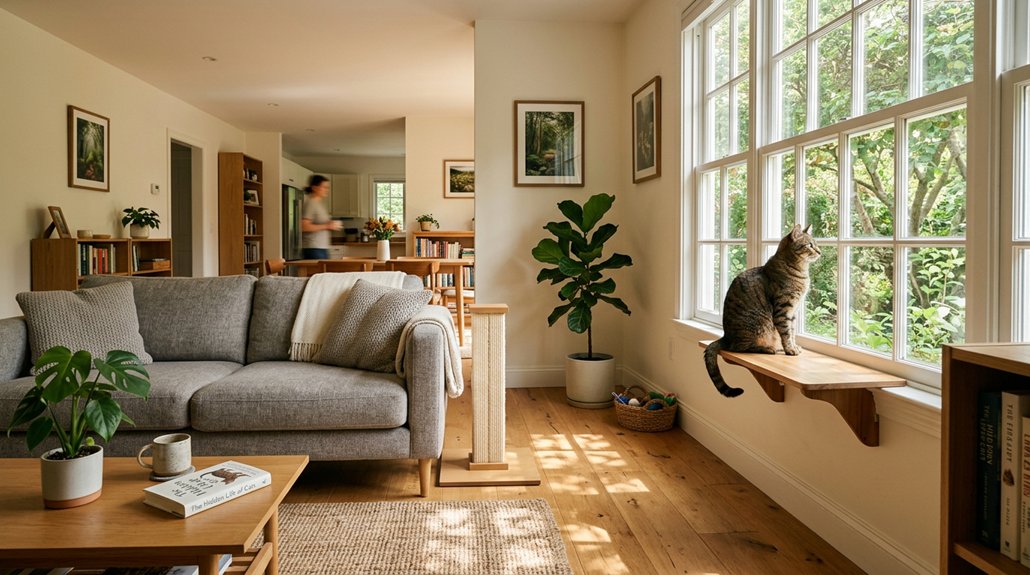
To guarantee your cat thrives at home, you’ll need a minimum of 20 square feet of space per cat. Incorporate vertical climbing options and cozy, secure sleeping spots to cater to their instincts and needs. Place food bowls in quiet areas away from litter boxes for cleanliness, and provide one litter box per cat plus an extra. Thoughtful resource management helps multiple cats coexist peacefully. Explore further to transform your home into a perfect feline haven.
Key Takeaways
- Cats need a minimum of 20 square feet each to thrive at home.
- Vertical spaces like cat towers are essential for exercise and stimulation.
- Private hiding and sleeping spots increase comfort and security for cats.
- Separate eating, sleeping, and litter areas prevent stress and resource competition.
- Clean and easily accessible litter boxes enhance hygiene and comfort.
Identify the Best Spaces for Cats
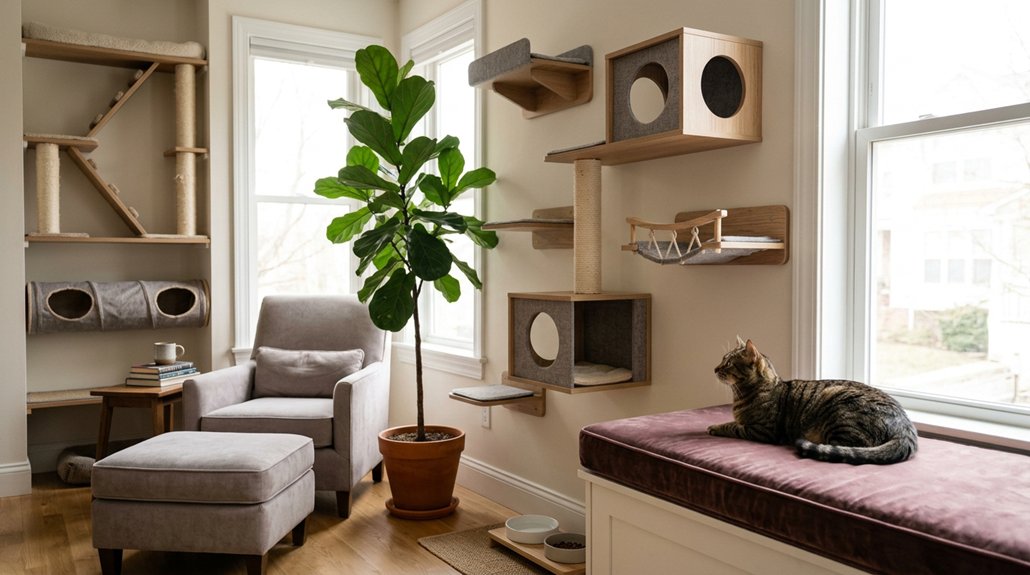
When considering the best spaces for cats, it’s essential to focus on both size and quality. Providing your feline friend with at least 20 square feet is a good start, but what truly enriches their environment are vertical climbing opportunities and safe hiding spots. Cats, being natural climbers, thrive when they’re allowed to explore elevated platforms, such as shelves or cat towers. This not only satisfies their instinctive need to observe from a high vantage point but also enhances their physical health. Equally important are safe hiding spots—these could be cozy boxes or covered beds—which provide vital privacy and security. When these elements are thoughtfully integrated into your home, you’re creating an environment where your cat feels both comfortable and enriched.
Create Cozy Sleeping Spots for Cats
Creating cozy sleeping spots for cats involves understanding both their physical comfort and instinctual preferences. Cats thrive in spaces that offer security, warmth, and proximity to their trusted humans. Consider cat bed alternatives such as DIY options crafted from soft blankets or worn sweaters, which fit snugly into closets or under beds. These flexible arrangements maximize space and adaptability. Cats also cherish cozy hideaways, so offering multiple choices—like cushioned hiding spots or elevated perches—accommodates their natural behaviors.
To enhance restful experiences, make certain these areas remain clean, quiet, and free from disturbances. Locating beds near your own resting areas satisfies a cat’s inherent desire for companionship, strengthening the bond between you and your feline friend. These thoughtful considerations create a harmonious home environment.
Optimize Eating Areas for Cats
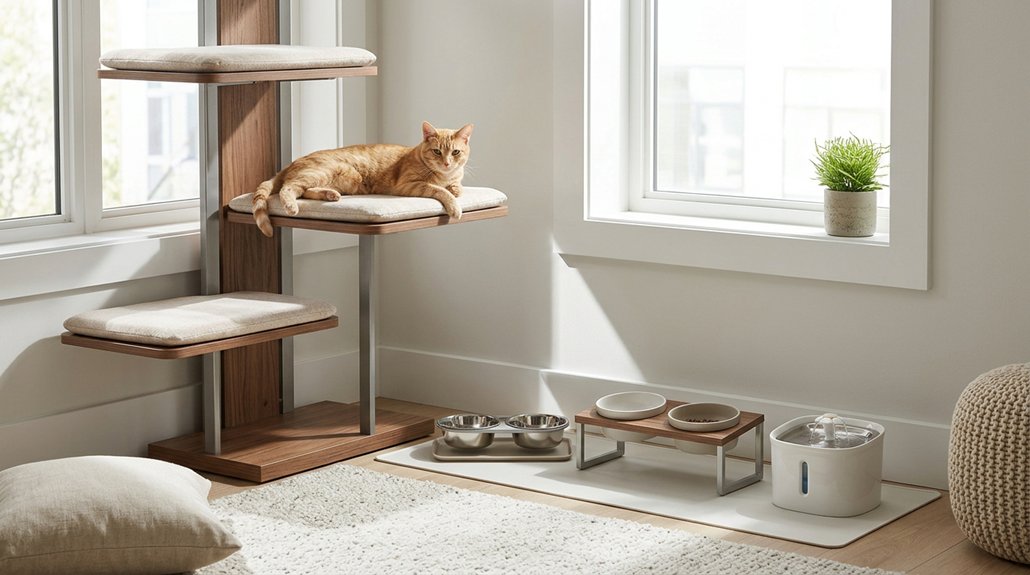
Ideal eating areas play a crucial role in a cat’s well-being, influencing not only their comfort but also their appetite and overall health. To optimize food bowl placement, choose quiet, low-traffic locations free from distractions, such as kitchen corners or under tables. Avoid placing food bowls near litter boxes to promote cleanliness in your feeding routine. Regular cleaning of these areas helps maintain hygiene, reducing mess and inviting a healthier dining experience. Accessibility is key; make sure your cat can easily reach their food to foster a sense of security during mealtime.
| Location | Stress Level | Cleanliness |
|---|---|---|
| Kitchen Corner | Low | High |
| Under Tables | Low | High |
| Near Litter Box | High | Low |
| High Traffic Area | High | Medium |
| Quiet Nooks | Low | High |
Set Up Ideal Litter Box Spots
Selecting the right location for a litter box greatly impacts your cat’s comfort and hygiene. Ideally, place the box in quiet areas like bathrooms or well-ventilated closets, away from food and high-traffic zones. This guarantees privacy, reducing stress and promoting healthy litter box habits. Each cat should have its own box, with one extra for households with multiple cats to prevent competition. Regarding box size selection, aim for a box 1.5 times the length of your cat, allowing ample space for easy entry and digging. Litter depth should be at least 3 cm for comfortable waste covering. Consistent litter box maintenance, including daily scooping and weekly washing, is vital for a hygienic and inviting environment for your furry friend.
Handle Multiple Cats in Small Spaces
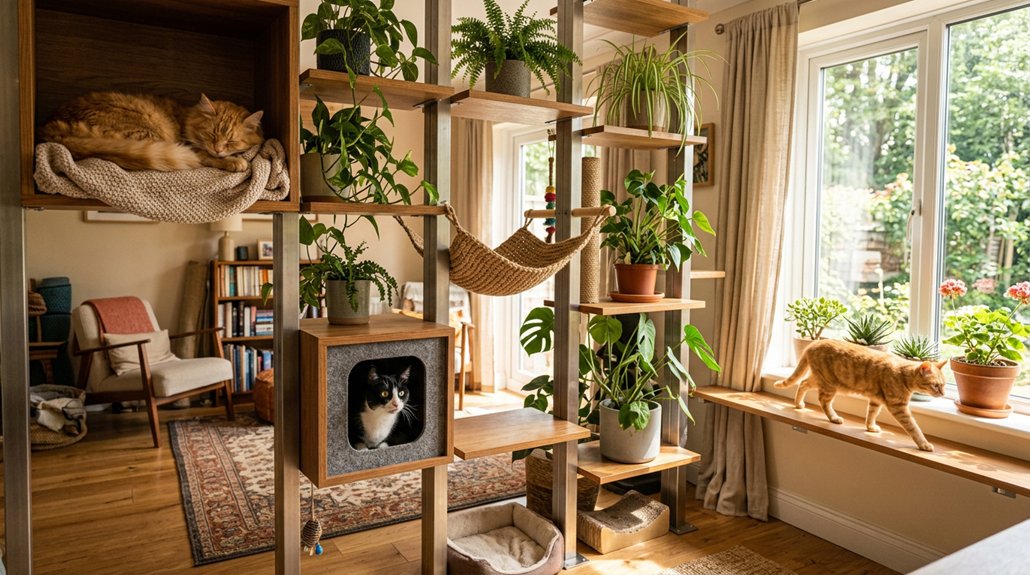
After establishing ideal litter box locations, addressing the dynamics of a multi-cat household in limited spaces is important. Multiple cats require effective resource management to prevent stress-induced cat behavior. Although the ASPCA suggests each cat should have their own litter box, sharing can work if it’s cleaned daily. Confirm each cat has specific areas for eating, sleeping, and toileting. This structure helps minimize disputes and provides a sense of security.
With limited space, vertical climbing options like cat trees or shelves are essential. They allow cats to explore and retreat, promoting harmony in the home. Additionally, dedicate time for regular interaction and socialization. This proactive approach reduces the risk of aggression and confirms a peaceful coexistence among your feline companions.
Frequently Asked Questions
What Is the 3-3-3 Rule for Cats?
The 3-3-3 rule describes a cat’s acclimation process in three phases: first days are stress adaptation, weeks increase comfort and curiosity, months finalize security. Recognize that each cat’s behavior varies, so observe and support their journey.
What Color Cat Is Least Desired?
You’ll find that black cats are often the least desired due to cat color preferences influenced by superstition. Adoption statistics show they have lower rates, about 30% less, despite their charm and affectionate natures. Embrace them!
How Much Space Should an Indoor Cat Have?
Give your cat quality housing with at least 18 square feet to guarantee feline comfort. Accommodation with vertical spaces, quiet areas, and separate resources encourages a fulfilling environment for their instinctual needs. Compassion enhances scientific understanding.
What Is the #1 Cause of Death in Cats?
Chronic kidney disease’s the top cause of death in cats. In feline health, it greatly impacts seniors, affecting 30-50% of older cats. Addressing common illnesses early can extend your cat’s life with compassionate veterinary care.
Conclusion
In designing a cat-friendly home, it’s essential to merge scientific insights with practical compassion. Curiously, studies show that cats typically require about 18 square feet each to thrive, fostering both physical activity and mental stimulation. Ensuring they have cozy sleeping nooks, ideal feeding spots, and well-placed litter boxes creates a harmonious environment. Even in tighter spaces, creative arrangements can accommodate multiple cats, keeping them content and stress-free. Your feline companions will surely appreciate your efforts.