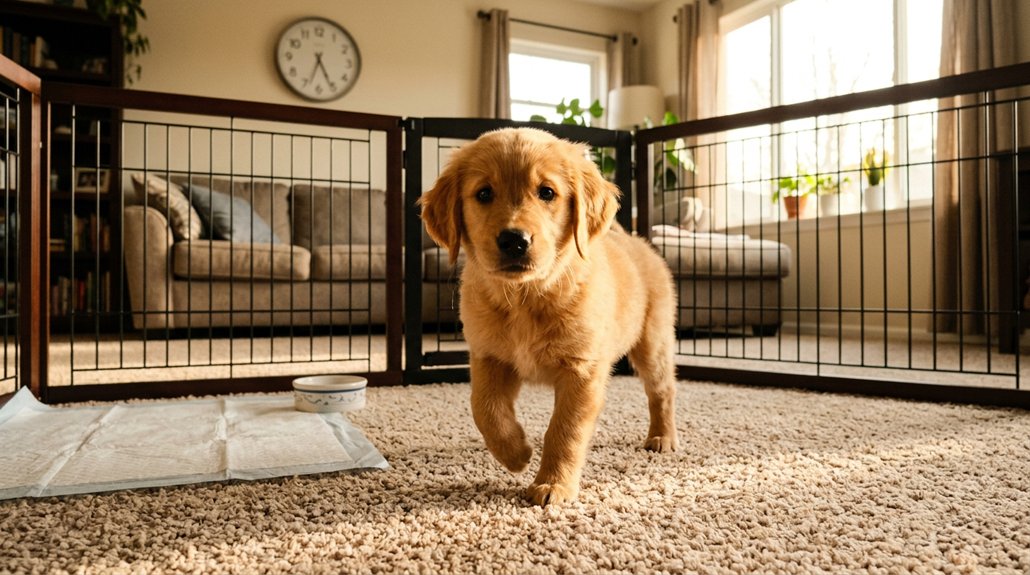
To stop your puppy from having accidents in the house, establish a consistent potty routine, taking your puppy outside every 30 minutes and after meals. Use positive reinforcement like treats and praise immediately after elimination outdoors. Implement crate training, using an appropriately sized crate and limiting time inside. Clean accidents thoroughly with enzymatic cleaners to prevent repeat incidents. If accidents persist, consider consulting a vet for medical issues or a trainer for behavioral insights. Explore further to enhance your puppy’s training success.
Key Takeaways
- Establish a consistent potty routine by taking your puppy outside every 30 to 60 minutes and after meals.
- Use positive reinforcement with high-value treats and praise immediately following successful outdoor elimination.
- Implement crate training to reduce accidents by confining the puppy to a designated space.
- Clean indoor accidents thoroughly with enzymatic cleaners to prevent odor and repeat soiling.
- Consult with a veterinarian or professional trainer if accidents persist or seem anxiety-related.
Establishing a Puppy Potty Routine
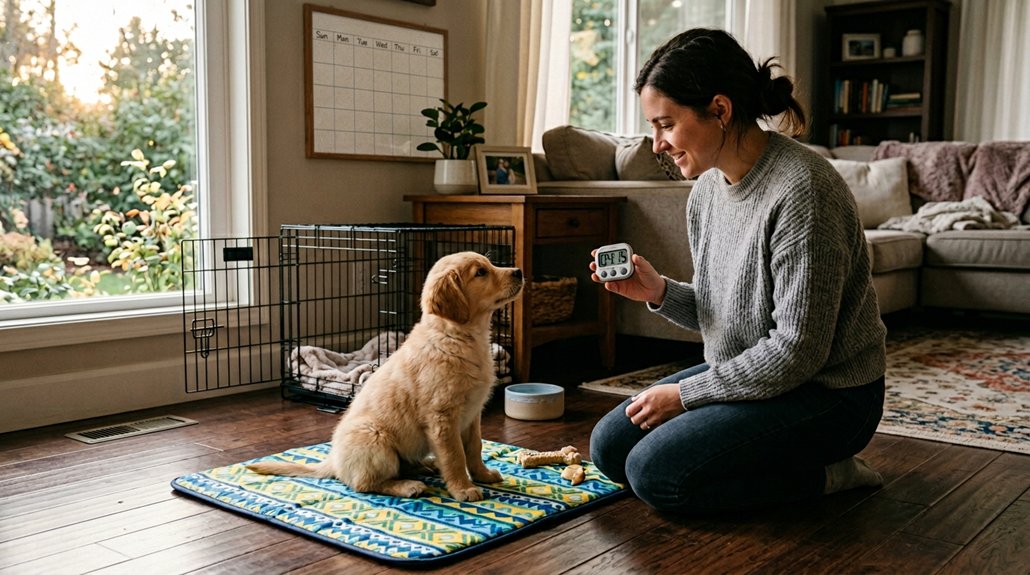
When you’re establishing a puppy potty routine, consistency is essential for effective training. Scientifically, consistent schedules enhance learning behaviors in puppies. To achieve reliability in potty training, take your puppy outside every 30 minutes, and especially after meals, playtime, and naps. This structure helps reinforce routine consistency and desired behavior. Designate a specific outdoor spot for potty breaks, which encourages associating that area with elimination.
Use a leash to minimize distractions, urging your puppy to focus on the task. Reinforce their success by rewarding them with praise and treats right after outdoor relief. Keep a close watch indoors; any signs like sniffing or circling signal urgency. Recognizing these cues prevents accidents and strengthens the behavior for timely bathroom breaks.
Use Crate Training for Potty Success
Establishing a reliable potty routine lays the groundwork for successful crate training. Scientific evidence supports that crate training minimizes accidents by confining your puppy to a designated space. Crate comfort is vital; make certain the crate is appropriately sized so your puppy can move but not so large it encourages soiling. Balancing crate limits is significant—restrict crate time to prevent stress and anxiety. Young puppies shouldn’t be crated for more than a few hours at once. Introduce the crate gradually, associating it with positive experiences like treats and toys, making it a secure and comforting environment. After crate time, regularly take your puppy to an outdoor relief area, reinforcing potty success through consistency and environment familiarity, reducing indoor accidents effectively.
Positive Reinforcement Techniques for Puppies
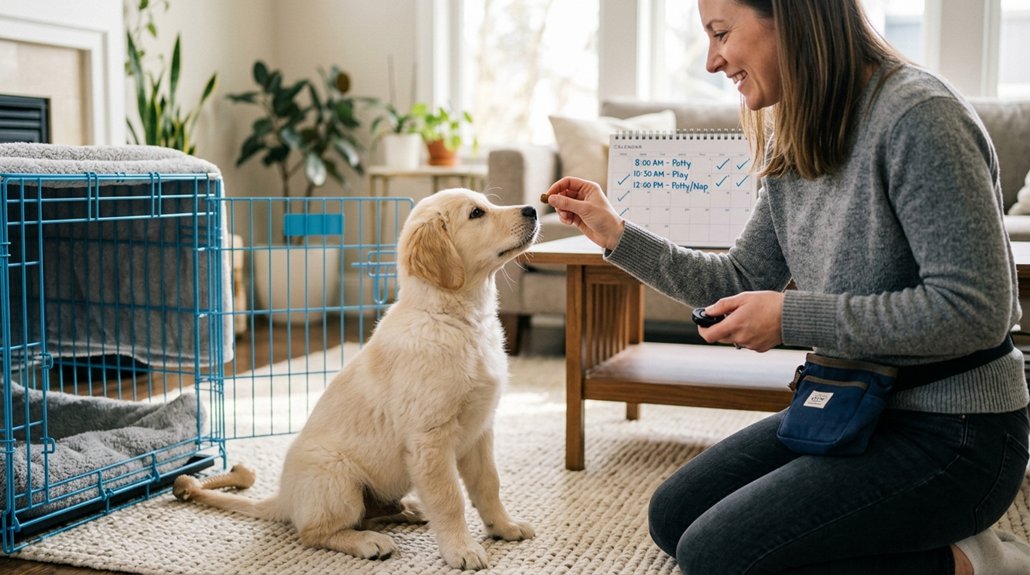
Positive reinforcement is a scientifically supported method that enhances housetraining success by tapping into your puppy’s natural learning processes. You can effectively utilize potty treats by offering them immediately after your puppy eliminates outdoors, reinforcing the association between outdoor pottying and rewards. Additionally, consistent praise alongside this encouragement—paired with recognizing your puppy’s potty cues—facilitates routine training and reduces indoor accidents.
Utilizing Potty Treats Effectively
Boost your puppy’s potty training success by employing the strategic use of potty treats. Scientifically, timing and consistency are paramount. Potty treat timing is essential—immediately reward your puppy right after they eliminate outdoors. This precision reinforces the desired behavior, enhancing retention. Consistent reward frequency is important; reward them every time they potty outside to prevent confusion. Use small, desirable treats exclusively for potty training to create a strong, positive association with outdoor elimination. Reserve these rewards strictly for successful bathroom breaks, thereby maintaining a strong behavioral link. Supplement these treats with a unique verbal cue to further solidify the command, enabling your puppy to associate the cue with the act of eliminating outdoors. These evidence-based methods promote ideal potty training outcomes.
Consistent Praise and Rewards
Incorporate consistent praise and rewards as a cornerstone of effective puppy potty training to promote timely and repeatable successes. Immediate praise and reward, essential for reinforcing outdoor elimination behaviors, establish a positive association with outdoors. Offering high-value treats specifically reserved for potty accomplishments boosts motivation. Timing is critical: reward within seconds to enhance action-reward connection. Praise variety—consisting of verbal commendation, petting, and playtime—creates an enjoyable ambiance encouraging desired habits. Such reinforcement, coupled with a structured routine, delivers clear expectations, optimizing housetraining.
| Praise Type | Reward Timing | Motivational Impact |
|---|---|---|
| Verbal Praise | Immediate (seconds) | Strong |
| Petting | Immediate (seconds) | Moderate to Strong |
| High-value Treat | Immediate (seconds) | Very Strong |
Consistent strategies make training effective and rewarding.
Recognizing Potty Cues
How do you effectively read your puppy’s body language to prevent accidents? Understanding your puppy’s body language cues is essential for anticipating their need to go outside. Behaviors like sniffing the ground or circling are common indicators that your puppy requires a bathroom break. Once you identify these cues, redirect your pup to the designated potty area outdoors using clear outdoor signals. Implement positive reinforcement strategies, such as treats and praise, immediately after successful potty acts. This strengthens the behavioral association, encouraging repetition. Maintain a consistent bathroom routine every 30 to 60 minutes to reinforce expectations. Additionally, keeping a potty journal can help you spot patterns and anticipate when supervision is needed most, aiding in proactive accident prevention.
Identify and Address Potty Signals
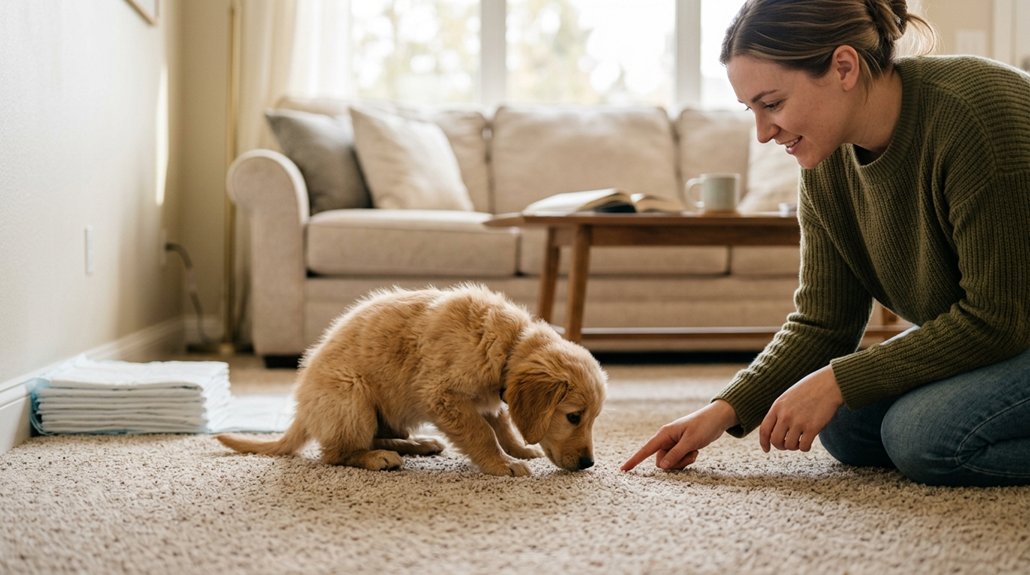
Monitoring your puppy’s body language is essential, as it often provides subtle yet clear signals that they need a potty break. Keep an eye out for signs like sniffing, circling, or whining—these behaviors indicate the need for immediate outdoor encouragement. Scientific evidence suggests that puppies thrive on routine, so establish regular potty breaks. Taking your puppy outside every 30 minutes, especially following meals or playtime, aligns with natural body rhythms. Consistently using a designated potty spot can enhance learning through spatial association—a well-documented cognitive behavior in canines. Reinforce successful outdoor bathroom use with treats and praise instantaneously, solidifying the positive behavior. Maintaining a detailed diary of potty habits can offer predictive insight, aiding in precise potty break timing.
Thoroughly Clean Up Puppy Accidents
To effectively manage puppy accidents, it’s crucial to use enzymatic cleaners designed for pet messes, like Nature’s Miracle or Simple Solution, as they break down urine components to eliminate odors and prevent repeat soiling. Saturate the affected area completely, allowing the cleaner to set as per product guidelines before blotting with paper towels to guarantee proper deodorization. Regularly check favorite spots using a blacklight for hidden stains, verifying thorough cleaning to minimize recurrence and support better potty training habits.
Utilize Enzymatic Cleaners
When a puppy has an accident indoors, it’s crucial to clean it up promptly using enzymatic cleaners to prevent lingering odors that might encourage repeat behavior. Proper cleaning involves utilizing products like Nature’s Miracle, which break down urine and feces at a molecular level. To achieve success, it’s critical to frequently inspect common accident zones and address them immediately. This cleaning frequency is important, as delayed cleaning allows smells to set, confusing your pet.
Apply the cleaner generously and let it air dry for best results. Avoid ammonia-based products; they resemble urine scent and may cause more accidents. Only through thorough and timely action can you eliminate the triggers that lead to repetitive indoor soiling, making certain your puppy learns where elimination is appropriate.
Prompt Spot Deodorization
A critical step in preventing a puppy from developing a habit of indoor soiling is prompt spot deodorization. Utilizing enzymatic cleaners specifically designed for pet messes is crucial for effective spot cleaning. These cleaners contain enzymes that break down organic matter, guaranteeing thorough odor elimination. For best results, saturate the affected area with the cleaner, allow it to sit for the manufacturer’s recommended duration, and then blot with paper towels to absorb residual moisture. Immediate attention to accidents reduces the scent, diminishing the puppy’s inclination to return to the same spot. Persistent odors may necessitate repeating the cleaning process multiple times. Vigilance in monitoring frequently soiled areas guarantees complete odor elimination and decreases future contamination risks.
Prevent Repeat Soiling
After achieving initial odor control with prompt spot deodorization, maintaining a clean environment is paramount to preventing repeat soiling by your puppy. Effective cleaning techniques target both puppy behavior and the biological mechanisms at play. Use enzymatic cleaners specifically designed for pet messes to break down odors and stains thoroughly. By saturating the area, these cleaners dive deep into surfaces, eliminating traces that draw puppies back. Immediate cleanup is critical; delays increase the likelihood of the puppy revisiting the spot. Avoid ammonia-based cleaners; their scent can mimic urine, prompting further marking. Regularly monitor favored zones to disrupt repetitive behaviors.
- Use enzymatic cleaners for pet messes.
- Saturate and thoroughly clean all areas.
- Immediately address accidents.
- Avoid ammonia-based products.
- Monitor and clean frequently visited spots.
When to Consult a Trainer or Vet
Why might your puppy continue to have accidents indoors, even with consistent training? It could be due to underlying behavioral signs or medical issues. Sudden or frequent accidents, despite a structured routine, should prompt medical checks to rule out conditions like urinary tract infections or diabetes. Consulting with a veterinarian is essential for detecting health-related causes of accidents. Furthermore, if your puppy’s accidents appear linked to anxiety or stress, engaging a professional trainer or behaviorist can be invaluable. They’ll offer tailored strategies to address specific issues, such as anxiety-related urination. Keeping a detailed journal of incidents aids in assessment. Additionally, neutering intact male puppies might reduce marking behaviors—a conversation worth having with your vet or trainer.
Frequently Asked Questions
What to Do if a Puppy Keeps Having Accidents in the House?
Increase outdoor breaks every 30 minutes; monitor your puppy’s signals signaling an indoor potty need. Use positive reinforcement. Crate training limits accidents when unsupervised. Persistent issues? Consult your vet for possible medical or training assistance factors affecting puppy training.
What Scent Will Stop Dogs Peeing in the House?
You’re wondering about scents to stop dogs from peeing indoors. Evidence suggests citrus, vinegar, or ammonia can deter them due to their scent preferences. Always use enzymatic cleaners to eliminate urine markers thoroughly and reliably.
What Is the 7 7 7 Rule for Puppies?
The 7 7 7 rule advises taking puppies out every 7 hours to match their bladder control as they age. Use these scientific, evidence-based puppy training tips to develop a structured, accident-free bathroom routine.
What Is the Hardest Month of a Puppy?
Think of this month as a rollercoaster ride; at 4-5 months, a puppy’s behavior challenges potty training with increased independence and hormonal changes. You’ll need patience and consistency to help guide them through this turbulent phase.
Conclusion
Think of your puppy’s journey to being accident-free as planting a young tree. By establishing a consistent potty routine, you’re providing the sun, while crate training forms the sturdy soil. Positive reinforcement is the gentle rain that encourages growth, as recognizing potty signals helps you prune potential mishaps. Thorough cleaning eradicates weeds of past mistakes. If the tree struggles despite your efforts, seeking guidance from experts guarantees it thrives, strong and resilient, in your shared home.