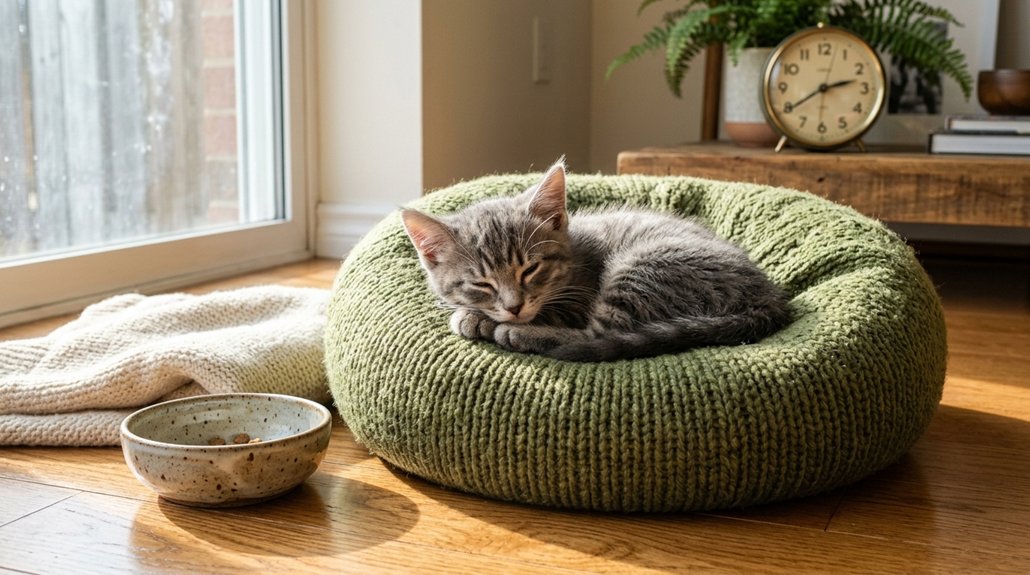
Caring for a kitten requires dedication of time and attention daily. You should focus on hygiene, feeding, and hydration, checking for hazards in their environment. Plan for 4-7 meals, play sessions, social interactions, and regular monitoring of health and weight, ensuring 16-20 hours of sleep. Meal timing and play contribute to social skills and healthy habits. A consistent routine fosters development and well-being, and there’s a wealth of detailed guidance available for thorough kitten care.
Key Takeaways
- Kittens need 16-20 hours of sleep daily for growth and development.
- Schedule at least two to three play sessions daily for socialization and skill development.
- Consistent feeding routines with multiple small meals support healthy growth and energy needs.
- Regular monitoring and interaction ensure hydration, hygiene, and a safe environment.
- Daily weight checks ensure kittens are receiving proper nutrition for steady growth.
Essential Daily Care for Kittens

Caring for kittens during their initial weeks is a delicate balance requiring attentiveness and precision. Ensuring kitten hygiene is essential; clean their environment regularly to prevent infections. A safe environment is important—keep hazards like loose wires and small objects out of reach. Kittens need consistent, frequent feeding, with 4 to 7 small meals daily to support their rapid growth. You’ll need round-the-clock care regarding meal schedules, varying by their exact age. Monitoring their weight daily is critical, as a steady gain of 0.5 to 0.75 ounces (15-20 grams) indicates proper nutrition. Frequent handling is beneficial, promoting important socialization and bonding, setting the foundation for strong attachments and adaptability as they mature in a nurturing environment.
Creating a Balanced Play Schedule
To guarantee a kitten’s healthy development, it’s crucial to establish a balanced play schedule that provides both physical and mental stimulation. You should aim for at least two to three play sessions daily. Each session should feature short bursts of activity, ensuring playtime variety to maintain your kitten’s engagement. Include a mix of toys that encourage chasing and pouncing, which are significant for honing natural instincts.
Incorporate interactive play to help with socialization skills, offering bonding activities that deepen your connection with your kitten. Vigorous play before bedtime can be especially beneficial, potentially curbing nighttime activity that might otherwise disrupt sleep. By adhering to this schedule, you’ll nurture a well-adjusted, content kitten while strengthening your relationship.
Ensuring Quality Rest and Sleep
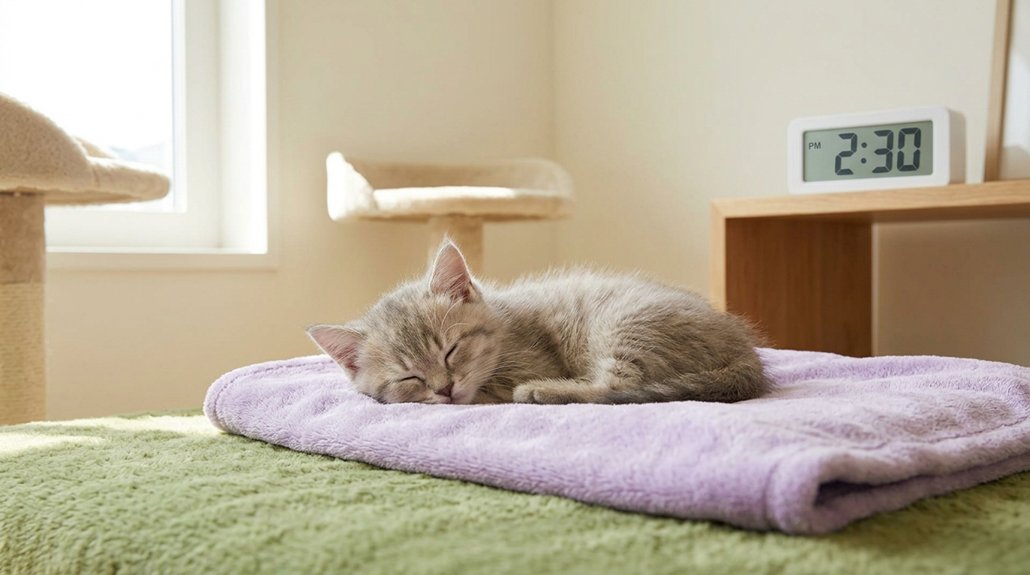
To support a kitten’s rapid development, it’s essential to provide an ideal sleep environment that’s warm and comfortable, especially since newborns can’t regulate their body temperature. Consistency in their sleep schedule guarantees they receive the necessary 20 hours of rest a day, fostering proper social and cognitive growth. By managing potential sleep disturbances, you can help your kitten shift smoothly into playful and engaging behavior after their crucial rest periods.
Optimal Sleep Environment
Although kittens spend a significant portion of their day sleeping, it’s crucial to guarantee their environment supports quality rest and sleep. A suitable sleep environment is critical given that kittens need 16-20 hours of rest daily. To achieve this, consider these key factors:
- Temperature Regulation: Kittens aren’t able to regulate their body heat until they’re about three weeks old. Use cozy bedding and place a heating pad on low setting underneath to maintain warmth.
- Noise Control: A quiet, draft-free area aids in promoting deeper, restful sleep.
- Cleanliness Importance: Regularly check the sleep space for cleanliness. A clean environment prevents health issues and enhances the kitten’s sense of security.
Ensuring these elements will help your kitten thrive.
Sleep Schedule Consistency
Since kittens require substantial sleep for ideal growth and development, maintaining a consistent sleep schedule becomes essential in fostering their overall well-being. You’ll want to establish regular sleep patterns that help your kitten feel secure and stable. Try creating a calming bedtime routine that allows them to shift smoothly into sleep. This can include predictable activities like gentle petting or a quiet environment that signals it’s time to unwind. Schedule engaging play sessions before naptime since kittens tend to enter deep sleep stages after physical activity. Avoid any disruptions such as loud noises or abrupt temperature shifts, as these can compromise the quality of their rest. With a steady routine, your kitten is likely to develop healthier sleeping habits, promoting robust health.
Managing Sleep Disturbances
Maintaining a consistent sleep schedule is integral for your kitten’s well-being, yet sleep disturbances can undermine their ability to get quality rest. Managing these involves understanding their biological needs and safety. Here’s how you can help:
- Create a Safe Haven: Verify their sleeping area is secure with soft, warm bedding. Safety precautions like a well-chosen sleeping spot provide comfort.
- Establish a Routine: Align activities with their crepuscular nature. Structure playtimes at dawn and dusk, and avoid overstimulation before bed.
- Use Calming Techniques: Engage in quiet play or use techniques like gentle petting before bedtime to promote relaxation.
Why Nutrition Is a Big Part of Your Kitten’s Day

You need to understand that a kitten’s nutritional requirements demand careful attention, as they require 4 to 7 small meals daily to meet their energy needs and support rapid growth. It’s crucial to provide a balanced diet rich in protein and calories, adjusting portion sizes as they grow from 250-280 calories daily in their early weeks to more substantial amounts as they approach adulthood. By adhering to precise feeding guidelines, you can guarantee your kitten develops into a healthy, strong adult, with a solid nutritional foundation set during this critical first year.
Essential Nutritional Guidelines
Few aspects of raising a kitten are as important as guaranteeing they receive the right nutrition, which is pivotal for their rapid growth and energy demands. High-quality protein sources are fundamental, as they support brain development and healthy growth. Here’s a quick guide to essential nutritional guidelines:
- Protein Sources: Offer a diet rich in proteins specifically formulated for kittens. Opt for quality sources like chicken, fish, or turkey.
- Feeding Methods: Adopt proper feeding methods by offering multiple small meals daily—typically 4 to 7—to meet their caloric needs of 250-280 calories.
- Hydration: Guarantee free access to fresh water around the clock to keep them well-hydrated and support overall health.
With the right approach, you’ll foster a healthy foundation for your kitten’s life.
Balanced Feeding Frequency
Understanding the importance of balanced feeding frequency is essential to guaranteeing your kitten develops healthily. During the first 10 days, kittens need feeding every two hours, much like puppies, to guarantee they get enough nutrients for proper growth. Once past this initial stage, adjust feeding schedules to every three to four hours. Between 4 to 12 weeks, provide three to four meals daily, with precise portions—1/4 to 1/2 cup of moistened dry food or 1/2 to 1-1/2 cans of wet food per meal. As they grow to 12 to 24 weeks, reduce to two to three meals daily, increasing portion sizes appropriately. Consistent feeding times support calorie intake needs (250-280 daily) and foster security, enhancing social interactions, akin to puppy interactions.
Growth-Driven Diet Choices
Balanced feeding frequency guarantees kittens receive ideal nutrition for their rapidly growing bodies. They require a diet rich in essential nutrients to support their fast-paced development. You should focus on:
- Protein Sources: High-quality proteins like chicken or fish are essential for muscle development.
- Feeding Techniques: Begin weaning at 3-4 weeks with protein-rich solids, facilitating a smooth change from milk replacer.
- Caloric Intake: Monitor their 250-280 daily calorie needs, surpassing adult cats’ requirements.
Daily weight monitoring is imperative, aiming for a 0.5 to 0.75-ounce increase. Make sure to feed every 2-4 hours for newborns. Providing an adequate diet with appropriate protein sources and proper feeding techniques supports brain development and overall health in these significant first weeks.
Starting With Socialization and Play
To foster a well-adjusted and affectionate kitten, prioritizing socialization and play is crucial. Engaging in social play guarantees your kitten develops both physically and mentally. You should aim for at least two to three play sessions daily. These interactions don’t just strengthen your bond but also cultivate trust and affection between you and your kitten. Early human contact, especially before they hit 10-12 weeks, sets the stage for adaptability in family life. Incorporating interactive toys that encourage chasing, pouncing, and scratching helps prevent destructive behaviors and supports their journey to becoming well-adjusted adults. By using varied play scenarios, kittens learn critical social skills, preparing them for interactions with both humans and other pets effectively.
Final Tips for Kitten Care
When caring for your kitten, it’s essential to focus on providing a stable and nurturing environment, as this sets the groundwork for a healthy and happy life. Guaranteeing robust kitten bonding and interaction is important to their development. Here are three final tips to make sure your kitten flourishes:
- Play and Bonding: Dedicate time for meaningful interaction using interactive toys. These sessions are crucial for psychological and physical growth.
- Routine and Nutrition: Establish a consistent feeding routine to meet their nutritional demands. Multiple small meals help sustain energy levels and develop eating habits.
- Health and Safety: Regularly monitor for dehydration and temperature control. Kittens need warmth and hydration, especially during the early weeks, to avoid health issues.
With structured care, your kitten will thrive.
Frequently Asked Questions
What Is the 3-3-3 Rule for Kittens?
The 3-3-3 rule for kittens involves three stages of acclimation: initial adjustment in three days, growing confidence over three weeks, and full adaptation by three months. Patience and gradual socialization are key to guiding their development and trust-building.
What Are the Signs of a Happy Kitten?
Your kitten becomes a tiny, fluffy whirlwind of energy, displaying playful interactions like pouncing and chasing toys. Their joyful behavior includes loud purring and meowing, and an unquenchable interest in frolics, revealing their overall happiness.
How Long Do Kittens Have to Eat Every 4 Hours?
Kittens should follow a feeding schedule of eating every 4 hours until they’re approximately 4 weeks old. This guarantees ideal kitten nutrition for growth. Gradually, you’ll adjust the schedule as your kitten’s dietary needs change with age.
What Is the One Meat to Never Feed a Cat?
Never, under any circumstance, feed your cat raw chicken—it’s the ticking time bomb of cat nutrition! It’s packed with dangerous bacteria and can lead to severe deficiencies. Always prioritize safety by thoroughly cooking or consulting a vet.
Conclusion
Caring for a kitten might seem overwhelming, but with the right balance of play, rest, nutrition, and socialization, you’ll have a thriving feline friend. You might worry it’s too much, but remember, this dedication now sets the foundation for a healthy, well-adjusted adult cat. Keep consistent, and don’t hesitate to seek advice. Expert guidance guarantees you’re on the path to nurturing a loving companion that enriches your life immeasurably. You’ve got this—your kitten’s counting on you!