
Your puppy’s daily schedule should balance structured feeding, regular potty breaks, and engaging play alongside essential nap periods. Expect to provide 20-30 minute play sessions several times a day, while also ensuring your puppy sleeps 16-18 hours daily. Consistent routines in feeding, exercise, and socialization will support your puppy’s overall well-being, enhancing social skills and confidence. Exploring further will reveal how to establish routines that foster growth and minimize anxiety.
Key Takeaways
- Puppies need potty breaks every 2 to 4 hours to prevent accidents and support house training.
- Engage puppies in 20-30 minute play sessions, 2-3 times per day, for physical and cognitive development.
- Allocate 16 to 18 hours for sleep daily to ensure the puppy’s well-being and growth.
- Consistently schedule three meals daily, aligned with potty breaks, to optimize feeding and training routines.
- Gradually increase alone time, starting with 5-10 minutes, to foster independence and reduce separation anxiety.
Establishing a Puppy Routine That Works
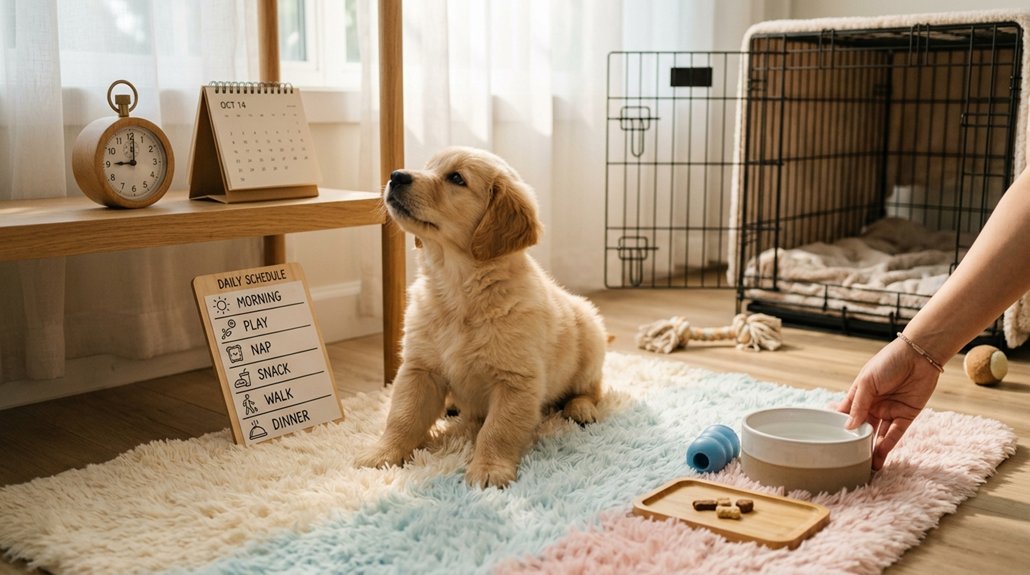
Establishing a consistent routine for your puppy is fundamental because it greatly reduces anxiety and clarifies expectations, which are essential for their developmental progress. Crafting a personalized puppy schedule that seamlessly integrates daily activities such as potty breaks, play, and rest is critical. Begin by factoring in that puppies generally need to relieve themselves every 2 to 4 hours and immediately after meals or activity changes. Guarantee multiple short playtime sessions of 20-30 minutes daily, encouraging physical and mental growth without overstimulation. Include designated nap and bedtime schedules, offering a quiet environment to facilitate restorative sleep. By organizing these elements into your puppy’s daily routine, you not only foster a balanced lifestyle but also enhance their overall well-being.
Optimize Feeding Times and Portions for Your Puppy
With a consistent daily routine in place, it’s time to focus on tailoring your puppy’s feeding schedule. Puppies thrive on structured feeding frequency—three meals a day is ideal. Align feeding times with family meals to build routine and regulate eating behavior. Portion control is critical; observe your puppy’s appetite and their body condition score. Adjust portions according to age, weight, and activity; a puppy feeding chart will help determine appropriate servings tied to caloric requirements. Remove food after 15 minutes to prevent overfeeding and encourage prompt eating. Maintain hydration by ensuring constant access to fresh water—essential for health and growth. This disciplined approach supports your puppy’s development and helps instill lifelong healthy eating habits.
Consistency in Potty Training and Breaks
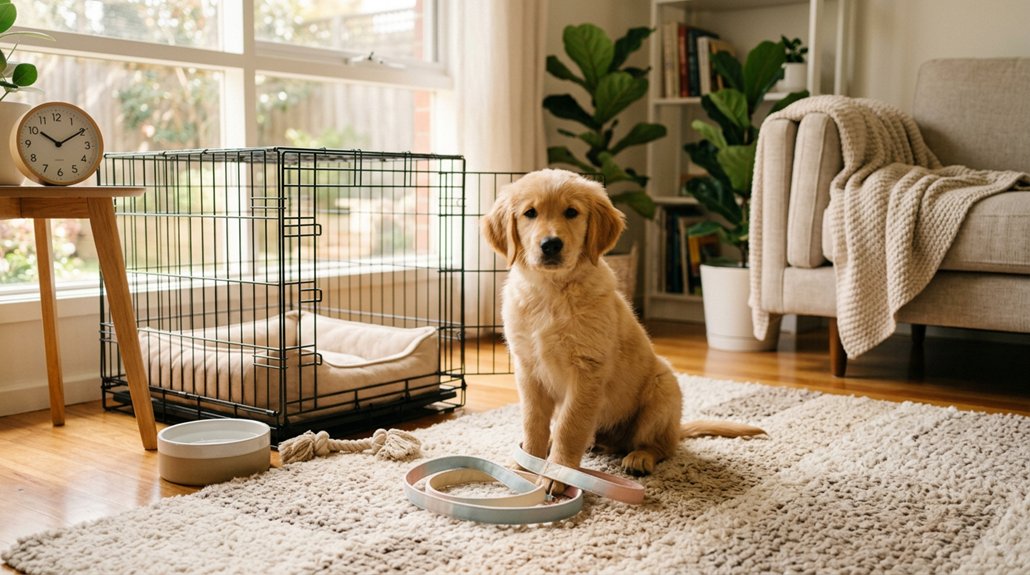
In establishing a consistent potty training routine, it’s essential to provide your puppy with regular breaks every two to four hours to guarantee efficient house training and accident prevention. Tying meal times to these breaks and using a designated potty area can enhance results, allowing your puppy to create predictable associations. Reinforcing successful potty trips with rewards greatly strengthens behavior patterns, making each outing an instructive experience.
Regular Breaks Essential
A structured approach to your puppy’s potty breaks is essential for effective and consistent house training. Establishing a regular potty schedule, with a break frequency of every two to four hours, greatly minimizes indoor accidents. Consistency is key, as familiarity with this routine helps reinforce your puppy’s understanding of appropriate behaviors. To enhance success:
- Post-Meal Breaks: Take them outside immediately after meals, as this aligns with their natural need to relieve themselves shortly thereafter.
- Activity Changes: Schedule breaks following any substantial activity change, like waking from a nap or completing a play session.
- Designated Areas: Use a specific spot each time for potty breaks, which encourages strong behavioral associations with that space.
This structured approach fosters cognitive links, simplifying your puppy’s learning curve.
Timed Feeding Benefits
Implementing a structured feeding schedule offers numerous advantages for your puppy’s potty training regimen. By establishing consistent meal timings, you help regulate your puppy’s digestive health, facilitating more predictable potty breaks. Consistent feeding routines, with meals served at the same times each day, encourage habit formation, thereby enhancing training effectiveness. Puppies typically need to relieve themselves shortly after meals, so synchronized feeding and potty schedules reinforce positive behavior, helping them learn the connection between eating and relieving themselves. Keeping feeding times limited to 15 minutes prompts efficiency in eating, aligning with structured timing and minimizing indoor accidents. Such regulated routines yield a structured environment conducive to reducing anxiety, as puppies find comfort in predictability, leading to successful behavior reinforcement.
Designating Potty Areas
While a structured feeding schedule lays the foundation for effective potty training, designating specific potty areas is equally beneficial for solidifying your puppy’s training regimen. Establish a routine by consistently taking your puppy to the same outdoor site. This technique supports their understanding of where to relieve themselves, enhancing house training effectiveness. Consider these steps:
- Regular Timing: Take the puppy outside every two to four hours and shortly after meals or playtime for ideal outdoor reinforcement.
- Potty Cues: Monitor behaviors like sniffing or circling, indicating urgent needs, to facilitate timely trips to the designated spot.
- Routine Formation: Use the same area to build consistency, reducing confusion and increasing success in adhering to the potty training schedule.
Consistency cultivates reliable behaviors and minimizes accidents.
How to Balance Play and Exercise for Your Puppy
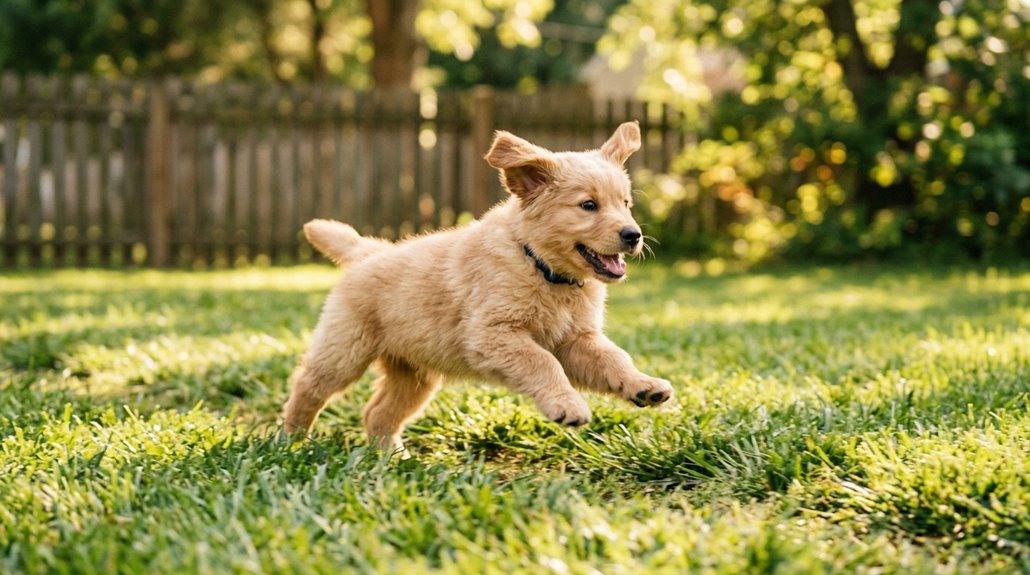
The challenge of balancing play and exercise for your puppy lies in understanding their developmental needs and energy levels. To optimize their well-being, employ a variety of playtime techniques. Focus on short, engaging sessions 2-3 times a day, each lasting 20-30 minutes, to cater to their attention span and energy management. Blend exercise types, including interactive play like fetch, with training games, to enhance both physical and mental skills. Introduce mental challenges using appropriate toys, such as puzzle toys, to foster cognitive development. Consistently monitor puppy engagement and adjust activities based on age and breed, avoiding strenuous exercise to prevent joint issues. Adequately balancing these elements guarantees your puppy thrives in a healthy, stimulating environment.
Why Naps and Quiet Time Matter for Puppies
Understanding the significance of naps and quiet time for puppies is essential to fostering their overall well-being. Puppies need 16 to 18 hours of sleep daily, critical for their physical and mental health. The nap benefits include preventing over-stimulation and reducing anxiety and behavioral problems. Here’s why naps and quiet time matter:
Puppies thrive with 16-18 hours of sleep daily, crucial for physical and mental well-being.
- Recharge: Regular rest allows puppies to restore energy, which is necessary for effective play and training.
- Mental Health Enhancement: Adequate naps help in emotional regulation, diminishing the risk of developmental issues.
- Teaching Calmness: Having a designated quiet space like a crate assists puppies in learning to enjoy solitary moments, which is fundamental for balanced growth.
Respect their rest; disturbing sleep can negatively affect their adjustment and development.
Effective Socialization Techniques With People and Animals
Socializing puppies effectively is essential for developing their behavioral and emotional stability, particularly when introduced between 3 to 14 weeks of age. During this critical period, puppy introductions should include various environments, sounds, and experiences to foster adaptability. Gradually expose your puppy to different people and well-behaved animals to promote positive interactions and reduce fear in future encounters. Monitor reactions to guarantee they’re not overwhelmed, adjusting the level of exposure as necessary. Utilize positive reinforcement, such as treats and praise, to encourage desirable behavior and make sure social experiences are enjoyable. Engage in regular socialization activities, like puppy classes or playdates, which enhance social skills and build confidence. Remember, consistent socialization is key to a well-adjusted, sociable adult dog.
Instilling Good Habits Through Training
- Behavior Reinforcement: Use positive reward systems like treats and praise to encourage desired behaviors, creating trust.
- Skill Foundations: Establish command consistency through repetition, essential for building problem solving skills and reducing behavioral issues.
- Interactive Play and Distraction Management: Engage in short, active interactions, incorporating play that manages distractions, to strengthen learned behaviors.
Implementing these strategies guarantees your puppy’s training is thorough, effective, and sets a strong behavioral foundation.
Teaching Independence: Managing Alone Time Effectively
To effectively teach your puppy independence, implement gradual separation strategies starting with short, manageable alone time intervals of 5–10 minutes. Use tools such as crates or playpens equipped with safe toys to provide a secure and stimulating environment, reducing the risk of destructive behavior. Consistently reinforcing these experiences with positive attention afterward plays a crucial role in promoting your puppy’s confidence and emotional stability.
Gradual Separation Strategies
When you initiate the task of nurturing your puppy’s independence, gradual separation strategies are pivotal to fostering a sense of security and self-assurance. Start by scheduling alone time in short intervals—5 to 10 minutes—to boost your puppy’s confidence. Here’s a structured method:
- Create a Secure Environment: Utilize a crate or playpen with safe toys to help them associate alone time with comfort.
- Implement a Consistent Routine: Maintain calm during departures and arrivals to lessen anxiety and predictability in your routine.
- Monitor and Adapt: Regular observation of your puppy’s reactions allows you to adjust the duration of alone time as needed, preventing separation anxiety.
Positive Alone Time Experiences
Establishing positive alone time experiences is essential for teaching your puppy independence effectively. Begin with 5–10 minutes of alone time, using crates or playpens filled with comfort objects like safe toys. Ensuring these environments are inviting promotes positive reinforcement, helping your puppy associate solitude with security. Gradually extend this duration, incrementing by short intervals as your puppy adapts. It’s important not to sneak away; instead, maintain calm and predictable departure routines to reduce anxiety. Regular exposure to these controlled alone times fosters self-soothing skills and curbs separation anxiety. By providing consistent, positive reinforcement, you lay a foundation of trust and confidence, ensuring your puppy feels comfortable independently while understanding that alone time is a safe, enriching experience.
Frequently Asked Questions
What Is the 7 7 7 Rule for Puppies?
The “7 7 7 Rule” requires you to meet your puppy’s exercise and socialization needs through 7 hours of attention, 7 exercise opportunities, and 7 hours of rest. This routine guarantees their healthy development and emotional well-being.
What Is the Hardest Month of a Puppy?
Brace yourself, the hardest month for a puppy often arrives at three months. This period is notorious for puppy challenges, including training difficulties, teething discomfort, and the need for intense socialization, testing every new owner’s patience and resolve.
What Is the 3-3-3 Rule for Puppies?
The 3-3-3 rule outlines three phases: initial adjustment (three days), settling routine (three weeks), and full acclimatization (three months). Focus on socialization tips and training techniques during these phases to facilitate a smooth change.
What Is the 10 10 10 Rule for Puppies?
The 10 10 10 rule for puppies, like a finely tuned symphony, balances 10 minutes of training, play, and socialization daily. This structured regimen guarantees adequate puppy exercise and rich puppy socialization, fostering development and well-being.
Conclusion
Implementing a structured daily routine for your puppy is vital for their development and well-being. Notably, studies show that puppies who receive consistent training and socialization are 70% less likely to develop behavioral problems. By dedicating time to optimize feeding schedules, guarantee potty breaks, and balance play with rest.