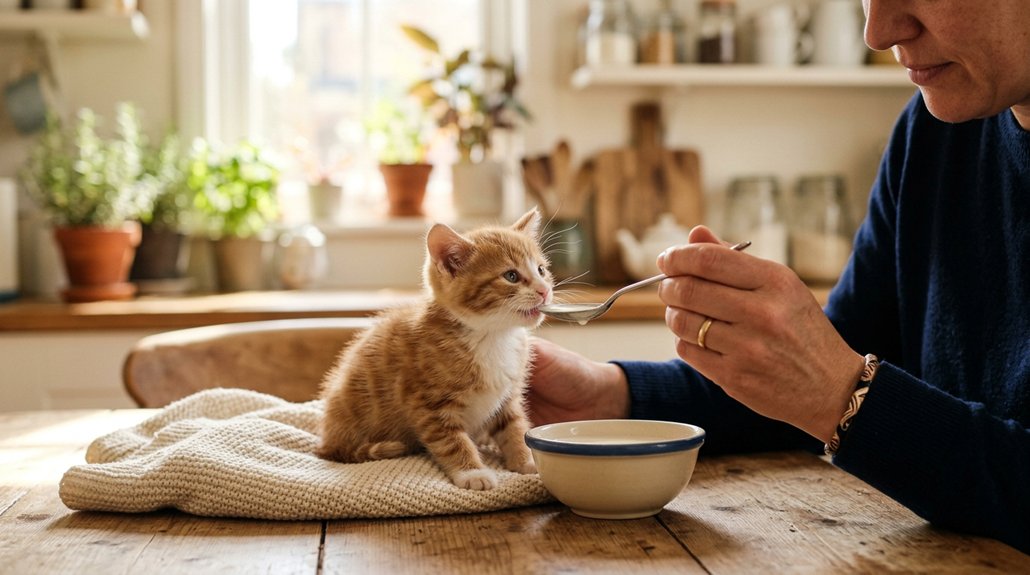
You’ll want to feed your kitten with high-quality, AAFCO-approved kitten formula, maintaining a belly-down position. Begin introducing solid foods at 5 to 6 weeks, ensuring access to fresh, clean water at all times. Choose foods with at least 30% protein and 20% fat. Serve small, frequent meals, shifting from three to two daily by six months. Address eating issues promptly and monitor weight gains. There’s much more to explore about ensuring your kitten’s health and nutrition.
Key Takeaways
- Provide high-quality, AAFCO-approved kitten formula and gradually introduce solid foods around 5 to 6 weeks of age.
- Ensure the kitten remains between 100 and 102°F during feedings and position on its belly.
- Offer clean water at all times, refreshing it regularly to prevent dehydration.
- Feed kittens under four months three meals daily, adjusting portion size for proper growth.
- Select kitten food with at least 30% protein and 20% fat to meet nutritional needs.
Quick Start to Feeding Kittens: Steps and Tips
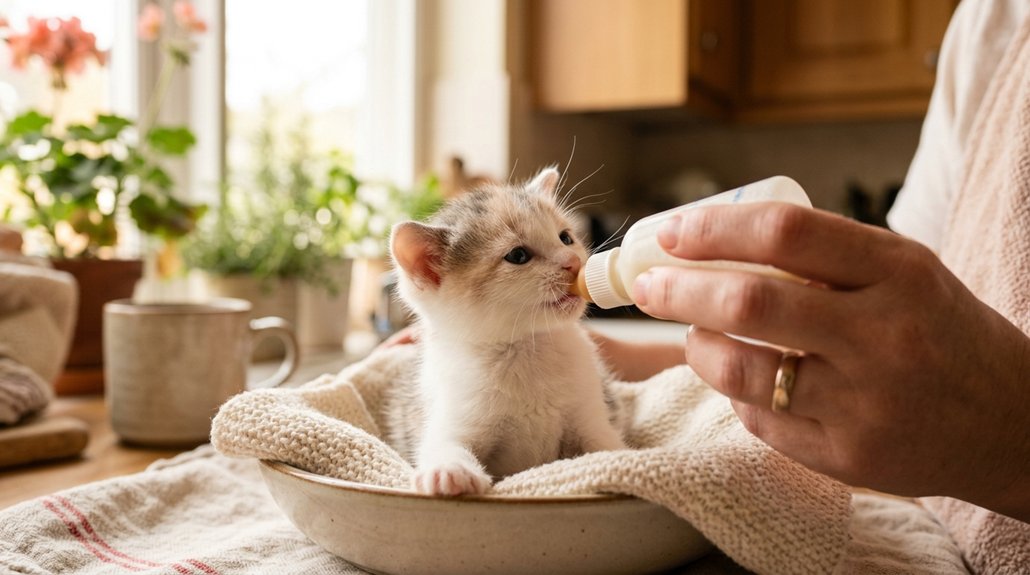
If you’re caring for a kitten, starting its nutritional journey on the right path is essential. Begin with the kitten feeding essentials: a high-quality, AAFCO-approved kitten formula and a properly sized bottle with an appropriate nipple. Verify proper bottle preparation by confirming the nipple hole releases a slow drop of formula, preventing overfeeding and aspiration. Always check the kitten’s temperature, keeping it within the ideal 100 to 102 degrees Fahrenheit range. During feeding, position the kitten on its belly, support its head, and guide the nipple gently into its mouth. Do not squeeze the bottle. After feeding, clean the kitten’s face with a warm, damp cloth to avoid irritation, and stimulate elimination by gently rubbing its lower belly.
Starting Solid Foods for Kittens: When and How
Introduce solid foods to your kittens around 5 to 6 weeks while still allowing access to nursing or kitten formula to guarantee proper nutrition. Offer both wet and dry food options, using high-quality canned food or a gruel mix, to stimulate their interest and accommodate their taste and health requirements. Gradually increase solid food intake by 7 to 8 weeks, carefully observing their adaptation to foster smooth development of independent eating habits.
Timing for Solid Foods
At around 5 to 6 weeks of age, kittens should start being introduced to solid foods while still nursing. During this critical nursing phase, gradually incorporate wet and dry kitten-specific foods, recognizing that food preferences are beginning to form. The influence of the mother’s diet during pregnancy and nursing is significant, so selecting high-quality options is essential. By offering a balanced variety, you’ll support their nutritional needs and help facilitate the shift from milk to solids. As kittens reach 7 to 8 weeks, systematically increase solid food while decreasing nursing sessions—this method aids in the weaning process. Look for signs of readiness, like the use of the litter box at 3 to 4 weeks, indicating they’re prepared for a more solid diet.
Encouraging Exploration and Chewing
While kittens naturally advance towards independence, fostering exploration and chewing is vital in their development. Introduce your kitten to solid foods around 5-6 weeks. This key period is when they shift from nursing to self-feeding, and exploring texture variety helps them adapt. Provide both wet and dry food options to encourage flavor exploration and acceptance of new textures. Their baby teeth are developed enough to handle firmer food by this age.
| Age (weeks) | Food Type | Focus Area |
|---|---|---|
| 5–6 | Wet & Dry | Texture variety |
| 6–7 | Mixed Feeds | Flavor exploration |
| 7–8 | Firm Foods | Increased chewing |
Monitor your kitten’s preferences and make sure their diet includes high-quality, protein-rich kitten food essential for growth.
Transition Techniques and Tips
How exactly do you begin the change to solid foods for your kitten? Around 5–6 weeks, introduce solid foods by mixing wet kitten food with kitten milk replacer. This creates a gruel that’s easy for kittens to handle. This texture shift encourages them to explore different textures and flavors. Monitor feeding frequency closely, starting with small, frequent meals to facilitate adjustment. By 7–8 weeks, increase the solid food proportion in their diet and reduce nursing to aid weaning.
- Create a gruel using kitten milk replacer: start with small amounts.
- Offer both wet and dry food: wet food hydrates, dry food is economical.
- Monitor their eating habits daily to guarantee proper intake.
- Observe independence in eating and consistent litter box use.
Hydration Needs for Healthy Kittens
Make certain your kitten always has access to fresh, clean water, as adequate hydration is essential for their proper growth and well-being. Kittens need about 3.5 to 4.5 ounces of fluid per 5 pounds of body weight daily to remain hydrated, so regularly check their water supply. Be alert for signs of dehydration such as lethargy, dry gums, and skin that doesn’t promptly return to its original position when pinched.
Importance of Fresh Water
To support the ideal growth and health of kittens, access to fresh water is non-negotiable, as it plays a critical role in proper hydration. Water consumption is essential and should be a daily priority, ensuring they get the needed 2 to 4 ounces, especially if they’re consuming dry food. Hydration tips for maintaining optimum health include monitoring water levels and ensuring the availability of fresh, clean water. This facilitates crucial functions like digestion and nutrient absorption, protecting them from severe conditions such as kidney issues.
- Provide multiple bowls: This enhances accessibility and encourages regular drinking.
- Opt for shallow bowls: They’re easier for small kittens to reach.
- Regularly refresh water: Prevents contamination and staleness.
- Consider diet impact: More water is needed when dry food predominates.
Signs of Dehydration
While maintaining accessible fresh water is fundamental, recognizing signs of dehydration in your kitten is vital for safeguarding their health. Dehydration symptoms to watch for include dry gums, sunken eyes, lethargy, and reduced skin elasticity. Perform a skin pinch test by gently pulling the skin at the nape of the neck—healthy skin should quickly return to place. A kitten’s body is composed of 70-80% water, highlighting hydration importance, especially in early growth stages. Inadequate fluid intake can cause severe issues like urinary tract problems and kidney damage. To guarantee adequate hydration, your kitten needs about 2-4 ounces of water per pound of body weight daily, adjusting for diet, activity, and environment. Monitoring hydration is essential.
What Makes a Good Kitten Food?
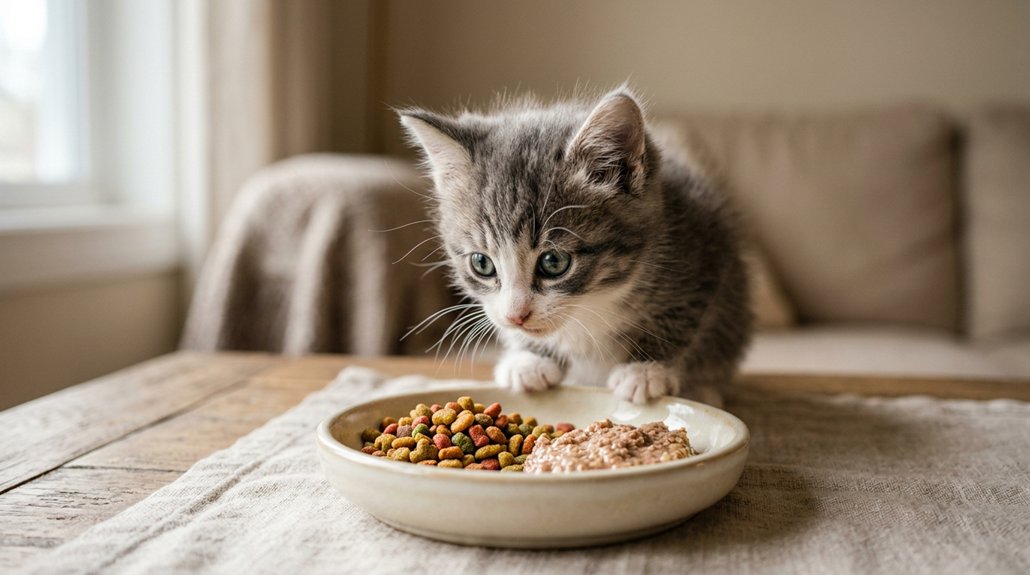
When selecting a good kitten food, it’s imperative to choose options that meet the AAFCO nutritional adequacy standards, guaranteeing they support young felines’ unique growth and development needs. High-quality protein sources are critical, with foods providing a minimum of 30% protein. This guarantees adequate amino acids for tissue development. A nutrient balance is essential, so aim for a fat level of at least 20% to fuel energy and support healthy skin and coat. Include foods rich in omega-3 fatty acids, specifically EPA and DHA, important for neurological and visual health.
- Verify the presence of the AAFCO statement on packaging.
- Opt for reputed brands like Purina or Hill’s.
- Prioritize high protein and fat content.
- Guarantee inclusion of brain-benefiting omega-3s.
Choosing Between Wet and Dry Kitten Food
Selecting between wet and dry kitten food involves understanding each type’s unique benefits and how they align with your kitten’s needs. Wet food benefits include its high moisture content, essential for hydration and often more enticing to young kittens adapting to solid foods. It’s particularly beneficial for ensuring your kitten remains well-hydrated, facilitating smooth digestion. On the other hand, dry food advantages encompass its contribution to dental health, as the crunchiness aids in plaque and tartar removal. It’s also a practical choice for budget-conscious owners due to its cost-effectiveness and shelf stability. Ultimately, combining both forms provides a variety of textures and flavors, nurturing exploratory eating habits vital for a kitten’s healthy growth. Always opt for high-quality brands like Purina, Hill’s, and Royal Canin for complete nutrition.
Creating a Kitten Feeding Schedule
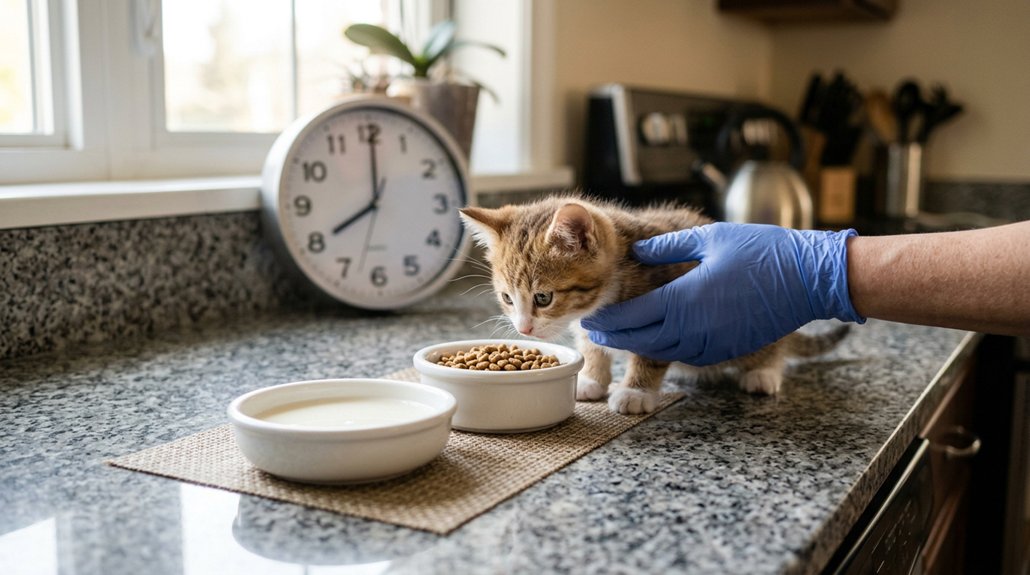
Establishing a feeding schedule for your kitten is crucial for fostering ideal growth and energy levels. Kittens under four months need frequent meals to meet their high energy demands, typically three times a day. As they mature, you can adjust their feeding schedule, reducing meal frequency to twice daily by six months. Keep in mind, young kittens may benefit from 4 to 7 small meals daily to support proper growth and metabolism.
Implementing feeding time flexibility allows adjustments based on your kitten’s preferences and activity level. Continuous monitoring of weight guarantees dietary needs are met. Make certain:
- Meals are evenly spaced
- Water is always available
- Schedules align with work/life
- Feeds align with energy requirements
Tailor meal frequencies as needed for best development.
How Much Food Should Kittens Eat?
Determining how much food to feed your kitten requires careful consideration of their age, weight, and activity level. These kitten feeding guidelines suggest younger kittens (up to 4 months) should have three meals a day to match their caloric intake needs, typically between 250 to 280 calories daily. Older kittens shift to twice daily feedings. Monitor their intake using food packaging and keep track of their weight, aiming for a 0.5 to 0.75 ounces daily gain.
| Brand | Calories per Cup |
|---|---|
| Hills Science Diet | 568 |
| Purina Pro Plan | 409 |
| Age (months) | Meals per Day |
| ≤ 4 | 3 |
| > 4 | 2 |
Avoid overfeeding by offering small portions regularly, and consider each kitten’s physical activity and metabolism to optimize growth.
Switching to Adult Cat Food
As kittens complete their nutritional needs during the growth phase, their dietary requirements shift considerably by the time they reach 12 months. You need to start the shift to adult cat food carefully, considering both shift timing and food preferences. Start with 25% adult food mixed with 75% kitten food, gradually adjusting over six days. Kittens exhibiting sensitivity might benefit from an even slower introduction, easing in with 10% adult food. Always monitor their reaction, tailoring the process to guarantee comfort. Select high-quality adult food to provide essential nutrients.
- Initiate with a 75/25 kitten-to-adult mix.
- Gradually increase adult food percentage.
- Observe your kitten’s adaptation to changes.
- Choose nutrient-rich adult cat food.
Adjust the schedule to fit your pet’s specific needs.
Handling Kitten Feeding Problems: Refusal, Diarrhea, and More
When feeding complications arise in kittens such as refusal to eat or diarrhea, it’s crucial to address these issues promptly to maintain their health. For refusal strategies, mix a high-quality kitten milk replacer with soft food to tempt their appetite. Monitor their body temperature, verifying it’s between 98 and 102 degrees Fahrenheit, as improper temperature can lead to refusal or digestive problems. Diarrhea causes can include dietary intolerance or infections. Should diarrhea persist beyond a day, consult your veterinarian and closely watch the kitten’s weight. Shift them to a bland diet, like milk replacer with soft canned food, gradually reintroducing their usual diet. Make sure the nipple hole size controls formula flow, preventing aspiration and aiding digestion.
Frequently Asked Questions
What Is the 3-3-3 Rule for Kittens?
The 3-3-3 rule for kittens outlines their adjustment process: three days of hiding, three weeks of settling in, and showing true personalities. Monitor kitten behavior closely and maintain a stable feeding schedule to guarantee smooth acclimation.
How Much Food Should a Kitten Eat per Day?
Imagine feeding Luna, a playful 12-week-old kitten: aim for about 250-280 calories daily. Master kitten feeding through portion control; adjust based on her activity, using specific food calorie counts like Hills Science Diet or Purina Pro Plan.
What Is the One Meat to Never Feed a Cat?
Never feed your cat raw chicken due to cat food safety concerns. Raw meat carries harmful bacteria like Salmonella and Campylobacter. Cooking chicken thoroughly mitigates these risks, ensuring it’s safe for consumption. Prioritize cooked meats for your feline.
Where Should a Kitten Sleep on the First Night?
Don’t worry if it seems too much; your kitten’s comfort is essential. Place them in a warm, secure space with cozy bedding, like a heated pet bed, to mimic their mother’s embrace and guarantee a peaceful night.
Conclusion
Feeding your kitten is akin to laying the foundation stone of a monumental structure—a healthy adulthood. Choose kitten food wisely, balancing wet and dry options to cater to specific nutritional needs. Hydration is essential, so guarantee easy access to fresh water. Establish a consistent feeding schedule and monitor portions diligently as they shift from kitten kibble to adult cat cuisine. Troubleshoot issues promptly to maintain their growth trajectory, guaranteeing a future of vigor and well-being.