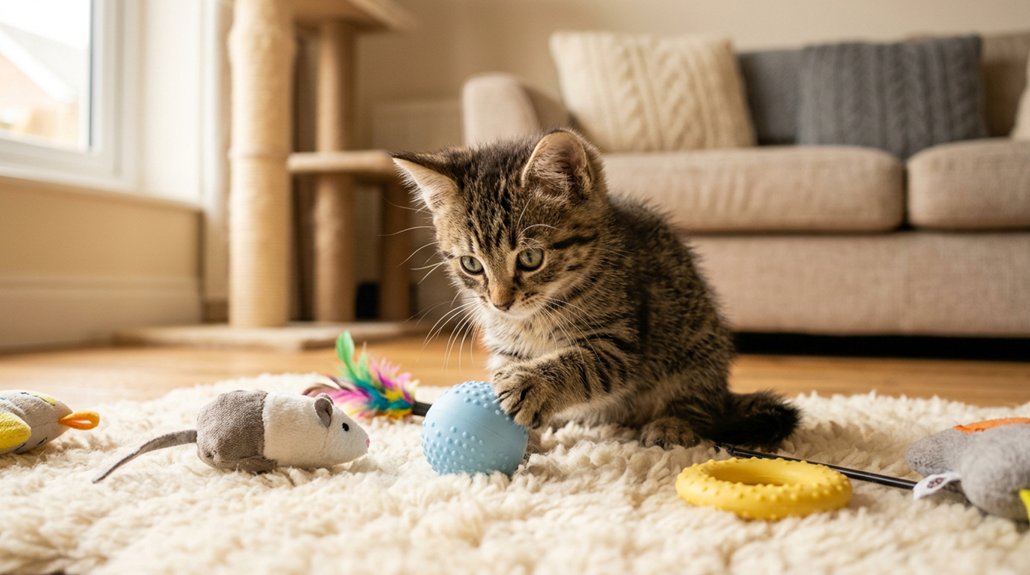
To effectively curb kitten biting, provide toys that mirror their natural instincts and encourage safe chewing. Opt for non-toxic rubber chew toys to alleviate teething discomfort, or plush toys with varied textures to simulate prey and engage curiosity. Interactive toys reduce boredom and redirect biting behaviors while strengthening your bond. Prioritize age-appropriate selections and inspect regularly for wear. Discover how diverse toy options can enhance your kitten’s dental health and overall well-being as you explore further.
Key Takeaways
- Durable rubber chew toys support dental health and withstand aggressive bites, reducing destructive chewing behavior.
- Plush toys with catnip redirect biting tendencies and promote safe chewing while providing comfort.
- Toys with diverse textures and shapes engage natural chewing instincts, decreasing boredom-induced biting.
- Interactive toys strengthen owner-pet bonds and focus kittens’ energy, mitigating unwanted biting behavior.
- Regularly inspect and replace toys to ensure safety, preventing choking hazards and maintaining engagement.
Why Do Kittens Bite and How Can Toys Help?
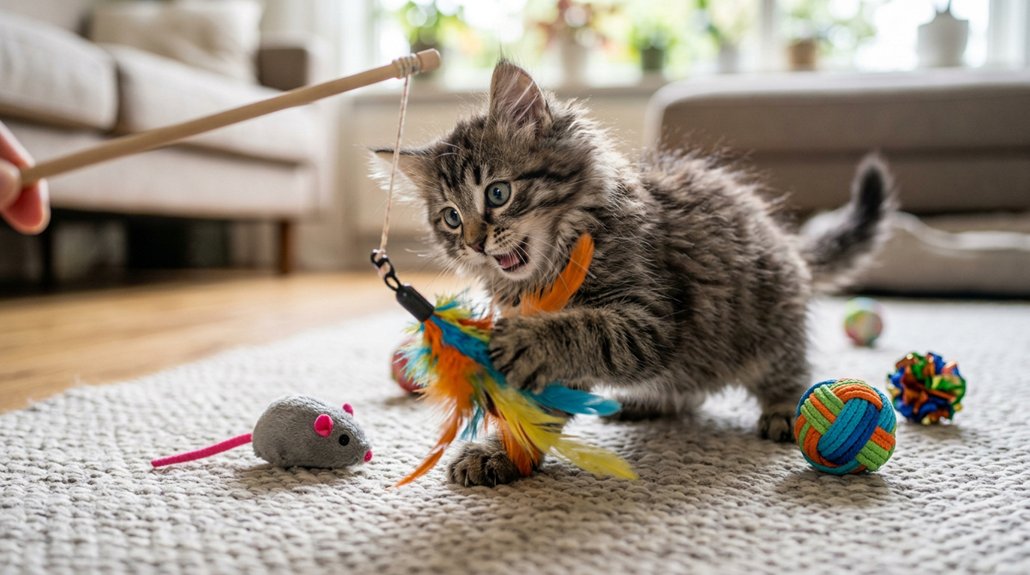
Although biting is a natural behavior for kittens, understanding its roots can be key to mitigating its adverse effects. Kitten behavior often involves exploration through biting, as this action helps them navigate their environment and ease teething discomfort. Identifying biting triggers, such as anxiety or boredom, can guide you toward effective solutions. Engaging with toys designed for dental health plays a significant role. These toys not only help clean their teeth and massage gums but also satisfy innate chewing urges. Providing your kitten with a diverse array of textures and shapes in these toys is essential. This variety attracts their interest, reducing destructive biting. By directing their energy to the right outlets, you’re instilling healthier play habits and preventing problematic behaviors.
Key Features That Make Effective Chew Toys for Kittens
Now that you understand why kittens bite and how toys can help, it’s important to identify the key features that make chew toys effective for your feline friend. First, verify the toy is made from non-toxic materials to prioritize material safety. This minimizes health risks during vigorous play. Texture variety is essential in engaging a kitten’s natural chewing instincts. Opt for toys with different surface textures to keep your kitten entertained and mentally stimulated. Besides, toys designed with dental benefits help clean teeth and massage gums, reducing plaque buildup effectively. Consider your kitten’s age; soft toys suit young ones, while durable rubber or rope toys better cater to older kittens. Regularly inspect toys to maintain safety and reduce biting behavior effectively.
Top Plush Toys for Kitten Chewing Instincts
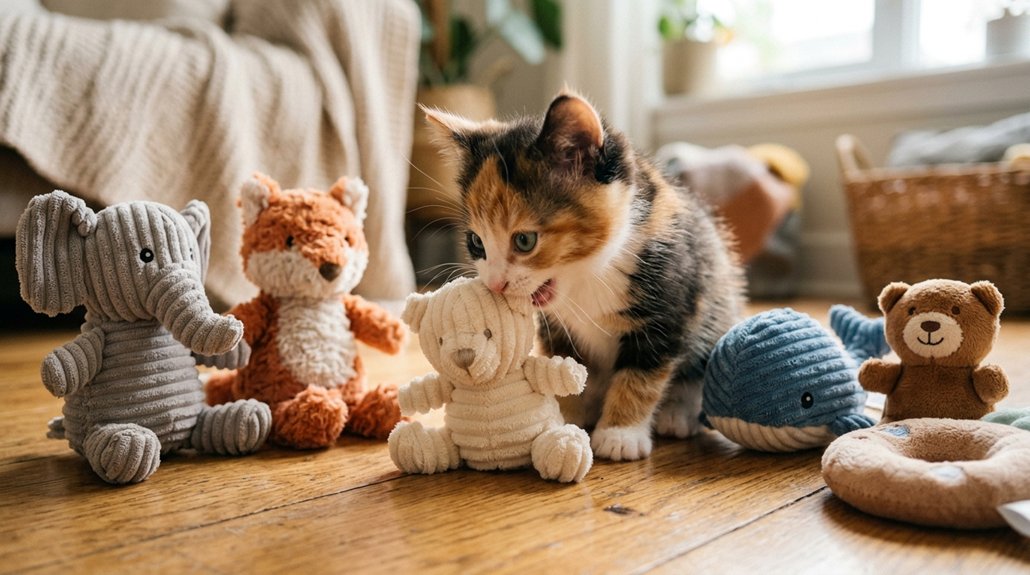
When it comes to managing your kitten’s chewing instincts, plush toys offer an effective solution with their soft textures designed to stimulate safe chewing behavior. Look for options made from durable, non-toxic materials to guarantee your kitten’s safety while engaging their natural curiosity. Engaging designs, often enhanced by catnip, can help keep your kitten interested and prevent them from adopting inappropriate chewing habits on household items.
Soft Textures Promote Chewing
Among the essential tools for managing kitten chewing behaviors, soft plush toys stand out due to their ability to satisfy teething instincts while offering comfort. The plush benefits lie in their lightweight, cuddly nature. These toys mimic prey, encouraging curiosity and reducing undesirable biting behaviors on household items. Comfort factors include various shapes and sizes to suit individual preferences, enhancing engagement and providing a soothing experience.
Using plush toys can lead to:
- Healthy chewing habits, essential for gum health.
- Reduced plaque buildup over time due to consistent use.
- Engagement through catnip infusion which redirects biting tendencies.
- Versatility in size and shape, making toys adaptable to any kitten’s style.
- Encouragement of exploratory behavior, diminishing destructive biting.
Incorporating these toys can transform kittens’ chewing habits effectively.
Safe and Durable Materials
Selecting safe and durable materials for kitten toys is essential for nurturing healthy chewing habits and safeguarding your pet’s well-being. Plush toys, like those crafted with eco friendly materials, support sustainable choices while catering to your kitten’s natural chewing instincts. Opt for non-toxic, hypoallergenic options to minimize allergic reactions and potential harm, ensuring these toys remain trustworthy companions during your kitten’s teething phase.
Inspect plush toys regularly for signs of wear and damage, as even durable materials can degrade over time. This vigilance prevents choking hazards from broken pieces. Consider toys with dental benefits, designed to clean teeth and massage gums. The KONG Soft Kitten Mice, filled with catnip, offer engagement and durability, making them an excellent choice for your playful companion.
Engaging and Interactive Designs
While kittens naturally exhibit biting and chewing behaviors, providing engaging and interactive plush toys can effectively channel these instincts into healthy play. These toys mimic the texture of prey, offering an outlet for chewing and promoting interactive engagement. Popular options include:
- KONG Soft Kitten Mice: Infused with catnip to stimulate and encourage active play.
- Petstages Dental Kitty Chew Wheel: Features unique netting for dental health, cleaning teeth while engaging.
- Hartz Just For Cats Kittenz Chew n Clean Dental Duo: Offers varied textures for diverse chewing preferences.
- Interactive Plush Balls: Encourage sensory stimulation with different tactile experiences.
- Feathered Catnip Toys: Combine visual and textural elements, enhancing playtime excitement.
Engaging your kitten with these toys not only satisfies their instincts but strengthens your bond through interactive engagement.
Durable Rubber Chew Toys for Active Play
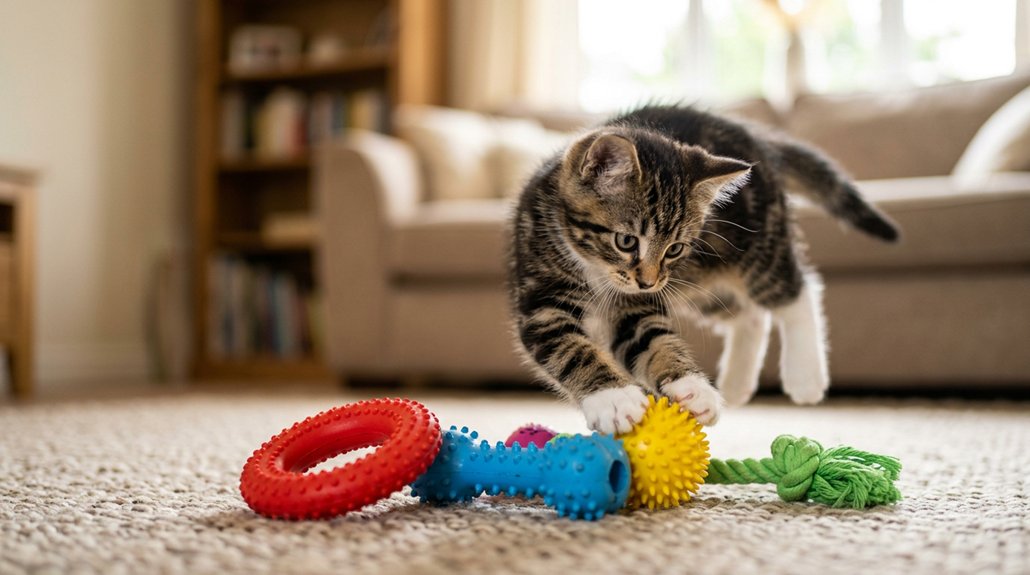
When selecting a suitable toy for an active kitten, consider durable rubber chew toys that promote dental health and engage their natural chewing instincts. These toys are designed to withstand aggressive bites, helping reduce the chance of destructive behavior while also cleaning teeth through regular play. Make certain the rubber is BPA-free for safety and inspect frequently for wear to maintain effectiveness and safety.
Promoting Dental Health
Durable rubber chew toys are a powerful tool in promoting dental health for kittens. Scientifically engineered to withstand vigorous chewing, these toys effectively support tooth health by cleaning teeth and massaging gums. They’re instrumental in reducing plaque and maintaining proper dental hygiene, ensuring your kitten’s fresh breath and preventing future dental issues. The interactive nature of rubber chew toys not only keeps kittens entertained but also deters them from biting inappropriate items, fulfilling their natural chewing instincts safely. Additionally, these toys come in sizes tailored for small cats, enhancing safety and efficacy.
- Cleans teeth and massages gums
- Reduces plaque buildup
- Prevents dental complications
- Provides a teething discomfort outlet
- Cat-friendly sizes enhance safety
Embrace these toys as a positive step towards ideal dental health.
Engaging Chewing Instincts
Rubber chew toys, a cornerstone in feline play, offer crucial textures that engage a kitten’s natural chewing instincts, functioning simultaneously as tools for dental health improvement. These durable toys withstand aggressive chewing, a necessity for maintaining an active kitten’s attention while safeguarding your possessions. By providing appropriate chewing alternatives, you can effectively redirect your kitten’s biting behavior to suitable contexts. Scientifically speaking, the resilience of these toy textures aids in massaging gums and reducing plaque, essential for oral health. Moreover, safety is paramount; these non-toxic toys guarantee that your kitten can gnaw without risk. With numerous shapes and sizes available, rubber chew toys cater to individual preferences, enhancing the overall play experience, and nurturing positive, healthy play habits.
Engaging Play Benefits: Combating Kitten Boredom
While kittens are naturally curious, they can often resort to unwanted behaviors like biting when they’re not adequately occupied. Kittens experiencing boredom might lash out due to kitten frustration, escalating to mischievous chewing or biting behaviors. Engaging toys can offer significant benefits by maintaining focus and reducing restlessness. Scientific studies show that:
- Interactive play stimulates mental activity, curbing destructive tendencies.
- Variety of toys prevents them from nibbling on household items.
- Puzzle feeders promote both active play and problem-solving skills.
- Catnip-infused toys provide fascinating social interaction and mental engagement.
- Chew toys designed for dental health reinforce positive chewing habits.
Keeping Playtime Safe: Toy Selection Tips
When selecting toys for your kitten, guaranteeing safety is paramount. Opt for toys made from non-toxic materials to avoid potential health risks. Regularly inspect and replace worn-out toys, as damaged ones can be hazardous. For safety, keep playtime supervised—monitor your kitten closely to prevent accidents with small parts or strings that could be choking hazards. Employ interactive toys to stimulate their mental activity, which can effectively redirect biting behavior. Organizing a dedicated toy storage area helps in maintaining a clutter-free environment and guarantees you only offer safe toys. Scientific studies support that providing safe play conditions not only stimulates growth and development but also curbs risky behavior, promoting an engaging yet secure playtime for your feline friend.
Age-Appropriate Toys for Teething Kittens
As kittens go through the teething phase, their needs and behaviors evolve, necessitating age-appropriate toys to address specific developmental demands. Understanding the teething timeline helps tailor toy preferences effectively. Young kittens, around 2-3 months, benefit from soft stuffed toys or small plush mice that mimic prey. This satisfies their instinct to bite while easing discomfort. By 4-6 months, mid-aged kittens prefer textured chew toys or silicone teething rings as they manage gum discomfort from new teeth. Older kittens, 7-12 months, require durable rubber balls or ropes, ideal for their stronger jaws. Recognizing teething signs like drooling aids in choosing suitable toys.
- Soft stuffed toys for 2-3 months
- Textured chew toys for 4-6 months
- Durable rubber toys for 7-12 months
- Monitor drooling and irritability
- Vary textures and shapes
How to Assess the Effectiveness of Catnip Toys
Evaluating the impact of catnip toys on your feline’s behavior isn’t straightforward, but observing specific reactions can provide valuable insights. Start with a behavior assessment by noting changes such as increased playfulness, rolling, and vocalization—signs of positive catnip effects. Remember, about 50-75% of cats are attracted to catnip, with age being a vital factor—kittens tend to be less responsive. Test different products since catnip potency varies across brands. Pay attention to how long engagement lasts to gauge a toy’s effectiveness. If a toy consistently prompts engagement, it’s effective. Make sure the toys are non-toxic and clean to maintain interest. This scientific approach guarantees you find the most effective catnip toys tailored to your cat’s preferences.
When and Why to Replace Teething Toys
To guarantee your kitten’s dental toys remain safe and effective, it’s essential to replace them regularly, ideally every few months. During your kitten’s teething timelines, frequent use can wear toys down, making safety inspections imperative. Examine them weekly for tears or fraying, as these can become choking hazards. If you notice deterioration from your cat’s chewing habits, it’s time to introduce fresh options to maintain their interest and divert them from inappropriate items. Additionally, toys that are excessively dirty or difficult to clean should be replaced to prevent harmful bacteria build-up. Prioritize replacements by considering the following:
Replace kitten dental toys every few months, inspect weekly for wear, and prioritize cleanliness and safety.
- Torn or frayed toys
- Loss of structural integrity
- Difficulty in cleaning
- Decreased interest from your kitten
- Choking hazard potential
Frequently Asked Questions
How to Stop Kitten Biting Behavior?
You’re dealing with kitten biting by offering engaging kitten playtime and introducing biting alternatives. Redirect energy with prey-mimicking toys. Reinforce desired behaviors using treats or praise to promote gentle play. Engage in regular, structured play sessions.
What Do Cats Do When You Leave the House?
When you leave, your cat might engage in a symphony of solitude, exploring or napping, but sometimes, feline separation anxiety creeps in. Look for cat behavioral cues like vocalizations, indicated by incessant meowing or playful destruction.
How Do I Discipline a Kitten for Biting?
To discipline a kitten for biting, consistently use positive reinforcement and redirect behavior with chew toys. Reward gentle play with treats. Remove attention immediately when biting occurs, signaling that it leads to play and affection loss.
What Annoys a Cat the Most?
What annoys a cat the most? Isn’t it the unpredictability of their environment, like loud noises or restricted access? Understanding cat communication helps you navigate these behaviors, minimizing stressors that might lead to an annoyed, biting cat.
Conclusion
By indulging your kitten with thoughtfully selected toys, you’re fostering a positive outlet for their exuberant energy and exploratory nibbling tendencies. Opt for toys that cater to their teething stage and playful pursuits while ensuring they’re safe and age-appropriate. Keep an eye on the wear and tear of these amusements, as even the most treasured ones need renewal eventually. You’ll find that managing your kitten’s less gentle inclinations with the right toolkit enhances their growth and your peace of mind.