When welcoming a kitten into your home, prepare a cozy, draft-free space with soft bedding and familiar scents to ease their first-night anxiety. Expect some whimpers; it’s normal as they adjust. Engage in pre-bedtime play to burn off excess energy, and stick to a calm routine with gentle petting or pheromone plug-ins. Keep essentials close without cluttering the area, and maintain meal timing to support restful sleep. Discover more ways to guarantee a smooth shift ahead.
Key Takeaways
- Designate a cozy, hazard-free sleeping area with soft bedding and a familiar scent for comfort.
- Identify anxiety signs such as excessive crying; employ calming techniques and consider pheromone plug-ins.
- Engage in vigorous pre-bedtime play sessions to help manage energy and aid sleep.
- Use a nightlight to reduce anxiety and provide a sense of security in the new environment.
- Maintain a consistent routine with soothing wind-down activities and schedule the last meal a few hours before bedtime.
Creating a Night-Ready Space for Your Kitten

When bringing your new kitten home, it’s essential to create a night-ready space that fosters comfort and security, thereby easing their adjustment into your household. For kitten sleep, designate a quiet and cozy area. A comfy bed or blanket will help them feel secure. A soft toy or an item with their previous scent can supplement warmth, supporting their nighttime habits. Install a nightlight to offer reassurance, mitigating anxiety in an unfamiliar environment. Make certain this area is free from hazards: secure windows, remove breakable items, and tuck away any electrical cords. Place essentials like the litter box, food, and water nearby, but not together, to facilitate easy access. By doing so, you cultivate a welcoming space conducive to peaceful nights.
Recognizing and Alleviating First-Night Anxiety in Kittens
As you establish a comforting space for your kitten, it’s also important to identify and address any signs of first-night anxiety they might experience. Recognizable anxiety signs, such as excessive crying, often stem from separation from their mother and littermates. To ease these behaviors, provide a soothing atmosphere by including familiar scents, like a blanket from their previous home. Keep them near you during the night to promote security and bonding. Consider these strategies to help alleviate their anxiety:
- Create a calm, quiet environment.
- Use pheromone plug-ins to mimic maternal comfort.
- Offer a warm, enclosed bed to simulate sibling warmth.
- Closely monitor kitten behavior for distress or health concerns.
- Consult a vet if anxiety signs persist or elevate.
These steps guarantee your kitten feels safe.
Crafting a Cozy Sleeping Environment

To guarantee your kitten’s first night is as comfortable as possible, start by setting up a snug bed or sleep bag in a quiet, draft-free corner of your home. Enhancing warmth with soft bedding and a gentle heat source, like a low-setting heating pad, can replicate the comforting sensation of their mother and siblings. Position essential items, such as the litter box and food bowls, nearby yet maintain a slight distance to keep the area clean, and consider using a nightlight to provide gentle illumination, easing their fear of darkness.
Ideal Kitten Bed Setup
Creating the perfect sleeping environment for your kitten requires some thought and care, but the rewards in comfort and security are well worth it. Choosing suitable kitten bed materials is essential. Opt for soft, burrowing materials like blankets or sleep bags to guarantee warmth and a sense of safety. A bed with raised sides can provide an additional sense of security. Consider these bed placement tips:
- Position the bed in a quiet area, away from drafts.
- Maintain room temperature around 85°F (29°C), especially for vulnerable kittens.
- Keep distance from the litter box, food, and water to foster hygiene.
- Include a scratching post nearby for constructive, post-sleep engagement.
- Avoid high-traffic areas to minimize disturbances during rest.
With these considerations, your kitten will settle in comfortably.
Nighttime Comfort Strategies
When night falls, guaranteeing a cozy sleeping environment for your kitten is essential for its comfort and adjustment into its new home. Establish effective nighttime routines by crafting a snug space with a cozy bed, plush blankets, and comforting small boxes. A dedicated sleeping area can make the kitten feel secure and promote restful kitten sleep. Position the sleeping spot away from drafts, maintaining a comfortable temperature around 85°F (29°C) since kittens instinctively seek warmth. Introducing a nightlight can ease nighttime fears, helping your kitten feel at ease in their new surroundings. Additionally, a pheromone plug-in can enhance their sense of calm and security. Encouraging independence by providing a separate sleeping space guarantees your kitten’s steady acclimatization to its new home.
Maintaining Warmth Overnight
As your kitten begins to settle into their new nighttime routine, guaranteeing warmth becomes an essential part of their comfort. Creating a cozy sleeping environment with adequate heat sources is crucial. Maintaining a temperature around 85°F (29°C) for older kittens can be achieved using a Snuggle Safe disk or a heating pad on a low setting. Confirm that your kitten’s cozy bedding is well-covered to prevent burns and free from drafts.
To craft the perfect sleeping area:
- Provide soft, burrowing materials.
- Offer a snug, enclosed sleeping space.
- Place familiar scents like previous home blankets.
- Avoid hazards such as electrical cords.
- Maintain a consistent environment to promote security.
With these measures, you’ll help your kitten feel safe, warm, and ready for restful sleep.
Deciding on Shared Sleeping Spaces: Pros and Cons

Deciding whether to share your bed with your new kitten on their first night involves weighing both the benefits and potential challenges. Close proximity can offer your kitten comfort, enhancing bonding and fostering a sense of security essential for their emotional growth. However, you should be prepared for possible nighttime disruptions and consider setting boundaries to guarantee both you and your kitten enjoy a restful night.
Benefits of Close Proximity
While welcoming a new kitten into your home, deciding on shared sleeping spaces can be a significant choice that impacts both you and your furry companion. Allowing the kitten to sleep close to you can enhance their sense of security, reducing nighttime anxiety. This close proximity fosters kitten bonding, as your presence soothes feelings of loneliness. Here’s why this can be beneficial:
- Enhances a sense of safety, helping them adjust smoothly.
- Promotes positive bonding experiences between you and your kitten.
- Soothe any nighttime fears with visible, familiar presence.
- Monitor sleep patterns and behaviors to adjust care effectively.
- Offers an opportunity to observe and respond to any distress.
Ultimately, a thoughtful approach to shared sleeping spaces can offer reassurance and comfort for both you and your kitten.
Potential Disruptions at Night
Sharing sleeping spaces with a new kitten can strengthen your bond, but it’s not without its nighttime challenges. Allowing them to sleep in your room can provide security, reducing cries and anxiety. However, be prepared for unexpected disruptions due to natural kitten behavior. Kittens often engage in nighttime exploration, playfully roaming around and potentially interrupting your rest.
Consider the pros and cons of sharing your bed. It might lead to accidents or disturbed sleep, but can also foster comfort. A middle-ground solution is setting up a separate, cozy sleeping area nearby. This gives your kitten the closeness they crave while minimizing disturbances. Incorporate pheromone plug-ins to calm nighttime restlessness and establish a consistent bedtime routine to ease the adjustment.
Bonding and Security Factors
Allowing your kitten to sleep in your room can be both rewarding and challenging, as it greatly affects their sense of security and your overall quality of sleep. By spending nights close to you, your kitten may develop stronger attachments utilizing effective bonding techniques. However, it’s essential to establish boundaries to prevent dependency and guarantee proper security measures. Consider these points:
- Enhanced Security: Your presence can reduce the kitten’s anxiety.
- Boundary Setting: A separate bed allows them comfort while maintaining space.
- Independent Behavior: Encourages confidence and self-reliance as they grow.
- Safe Enclosure: A carrier can mimic a protective den-like environment.
- Behavioral Considerations: Be aware of potential dependency issues if always near.
Balancing closeness and independence is key.
Easing Transition With Familiar Scents and Items
When you bring a new kitten home, easing their adjustment by surrounding them with familiar scents and items can make a world of difference. Familiar scents, like those from their mother and littermates, help reduce anxiety. Consider bringing a blanket or toy from their previous environment, infused with comforting scents, to soothe their change.
Pheromone-based products can mimic these familiar odors, providing extra comfort. A soft, warm blanket with familiar smells can create a cozy sleeping area.
Implement these items immediately for maximum comfort during the initial night.
| Emotional Need | Solution |
|---|---|
| Comfort | Mother-scented blanket |
| Security | Toy from previous home |
| Calmness | Pheromone plug-ins |
| Warmth | Cozy, familiar blanket |
| Reassurance | Immediate familiar items |
Building a Relaxing Nighttime Routine
Although bringing a new kitten home is an exciting experience, their first night can be intimidating without a soothing nighttime routine. To ease the shift, incorporate nighttime rituals to help your kitten relax. A playful wind down with gentle play sessions allows them to release energy, promoting relaxation. Establish a cozy sleeping area with soft bedding and a familiar blanket, guaranteeing it’s a secure, quiet space. Use a night light to provide comfort and lessen anxiety. Consistent, soothing techniques like gentle petting or softly spoken words will reassure your kitten.
Remember:
- Easily tire them with playful wind down
- Guarantee bedding is soft and comforting
- Use a night light for security
- Consistently soothe with gentle touches
- Maintain consistency in routine
These steps nurture a peaceful first night.
Meal Timing for Restful Kitten Sleep
To help your kitten shift smoothly into bedtime, schedule their last meal two to three hours in advance to allow for digestion and prevent restlessness. By adjusting their meal schedule to provide smaller, frequent feedings throughout the day, you’re mimicking natural patterns, which can aid in developing a consistent sleep routine. Pay attention to their energy levels post-meal, as a bit of active play can help expend excess energy for more peaceful sleep.
Evening Feeding for Calmness
Establishing the right meal timing is crucial for ensuring your kitten enjoys a restful night’s sleep. By scheduling the last meal two to three hours before bedtime, you allow digestion to complete, encouraging a peaceful sleep cycle. Adjusting kitten meal habits means focusing on calming techniques, such as integrating wet food in the evening for its satisfying and filling properties, which can result in longer rest. Evening feeding benefits include stabilizing their energy levels with smaller, frequent meals throughout the day. It’s essential to monitor post-feeding behavior, ensuring their environment promotes relaxation.
- Schedule the last meal 2-3 hours before bedtime
- Serve wet food for satisfying evenings
- Establish a consistent feeding routine
- Observe post-meal relaxation
- Provide smaller, frequent daily meals
Adjusting Meal Schedule
A thoughtfully adjusted meal schedule can make a world of difference in achieving peaceful nights for your new kitten. Establishing consistent kitten feeding times helps regulate sleep patterns, leading to longer, uninterrupted rest at night. Opt for smaller, more frequent meals during the day to promote better digestion and reduce hunger-related disturbances when darkness falls. By scheduling the last meal slightly later, you’ll allow digestion to occur before bedtime, which can enhance their sleep quality and minimize wakefulness. Keep an eye on how your kitten responds to this meal frequency; a reduction in nighttime disruptions might indicate the schedule’s working. Don’t forget to provide fresh water and guarantee your furry friend’s adequately fed before nightfall, soothing any nighttime anxiety and preventing crying.
Pre-Bedtime Play: Burning Energy for Better Rest
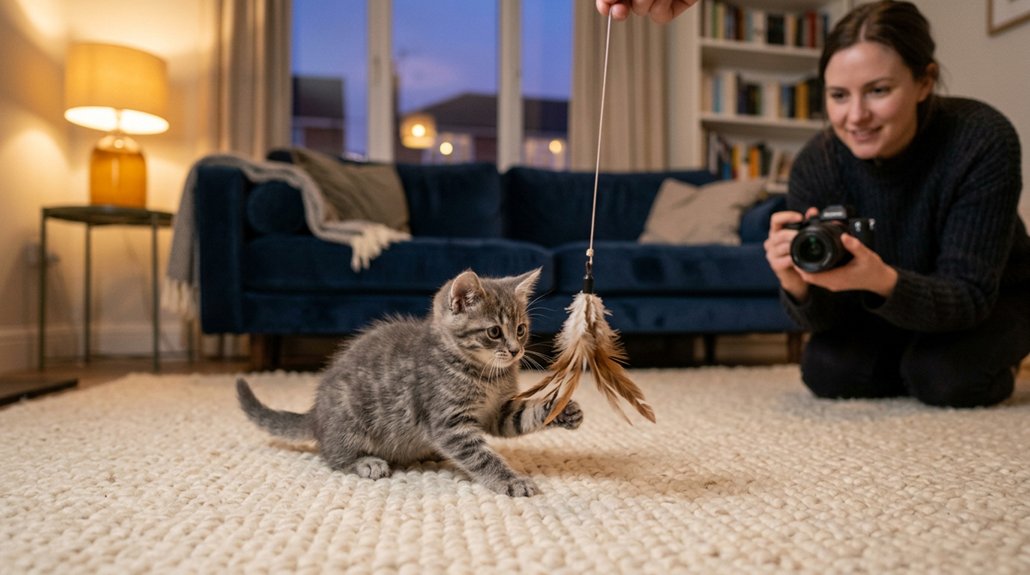
Engage in a lively pre-bedtime play session to help your kitten burn off that surplus energy, ensuring a restful night’s sleep for both of you. Use playtime strategies that incorporate energy-burning toys like feather wands or laser pointers to simulate their natural hunting behaviors. This kind of interactive play is essential for both physical and mental stimulation, helping your kitten wind down.
For ideal results, devote 15-30 minutes to this energetic activity, ideally aligning playtime with peak activity periods such as dawn and dusk. This routine not only promotes relaxation but also strengthens your bond.
- Choose toys that mimic prey.
- Schedule play around the most active periods.
- Encourage vigorous, chase-like movements.
- Alternate toys to maintain interest.
- Observe your kitten’s cues for energy bursts.
Tackling Kittens’ Nighttime Whimpers With Confidence
After an energetic play session, as your kitten begins to settle down, understanding how to handle nighttime whimpers with confidence can transform those first few nights. Kittens often experience anxiety as they adjust to their new surroundings, leading to nighttime vocalizations. Creating a cozy sleeping area with familiar scents from their previous home can ease their stress. A night light will further soothe their nighttime behaviors by reducing feelings of loneliness. Having your kitten close at night fosters bonding and reassures them of your presence. Employing calming techniques like speaking in a gentle voice or using pheromone plug-ins can greatly reduce whimpering. With a compassionate approach, you’ll help your kitten feel safe and secure, turning those cries into contented purrs.
Observing Your Kitten’s First Night Safely
Getting through the first night with your kitten involves careful observation and creating a safe space for them to settle. Expect your kitten’s behavior to include some nighttime exploration, guided by their natural curiosity. Guarantee their space is quiet and comfortable, with a designated area featuring their bed, blankets, carrier, or basket. A night light can help ease their anxiety. Here’s how to keep them comfortable:
- Have a scratching post and some safe toys nearby to encourage exploration.
- Monitor their behavior for signs of distress and offer gentle reassurances.
- Expect some crying as they adjust to new surroundings; it’s normal.
- Avoid sudden noises that might startle them.
- Maintain a calm atmosphere to help the kitten feel secure.
Frequently Asked Questions
Where Should Kittens Sleep on Their First Night?
Your kitten should sleep in an ideal sleeping spot that’s warm, snug, and secure. Use comforting items like soft bedding. An elevated bed separate from high-traffic areas guarantees security, while a night light can help ease any anxiety.
What Is the 3-3-3 Rule for Kittens?
The 3-3-3 rule’s an epic saga in a kitten’s life. First three days: stress and gentle introduction tips. Next, three weeks: socialization techniques bloom. Finally, three months: confidence grows, and your home becomes their kingdom.
What Should I Do With My Kitten on the First Night?
Keep your kitten in a calm space with necessities nearby. Expect some kitten behavior like meowing or nighttime noises. Comfort them with gentle interaction and a soothing nightlight to help them adjust and feel secure.
Should I Sleep With the Kitten First Night to Get Used to Me?
You wouldn’t plant a sapling too close to a full-grown tree. Instead, nurture it nearby to grow strong roots. Likewise, let your kitten settle into its own space, using bonding techniques and calming nighttime routines.
Conclusion
Congratulations on your first night with your new kitten! You’ve set up a cozy space and tackled nighttime anxiety with care. Remember, each action—whether sharing sleep, introducing familiar scents, or adjusting mealtime—plays a role in your kitten’s comfort. You’ve laid the groundwork for restful nights ahead, but isn’t this just the beginning of a lifelong bond? Keep observing, learning, and nurturing your kitten’s needs; through compassion and attention, you’re building a loving home together.