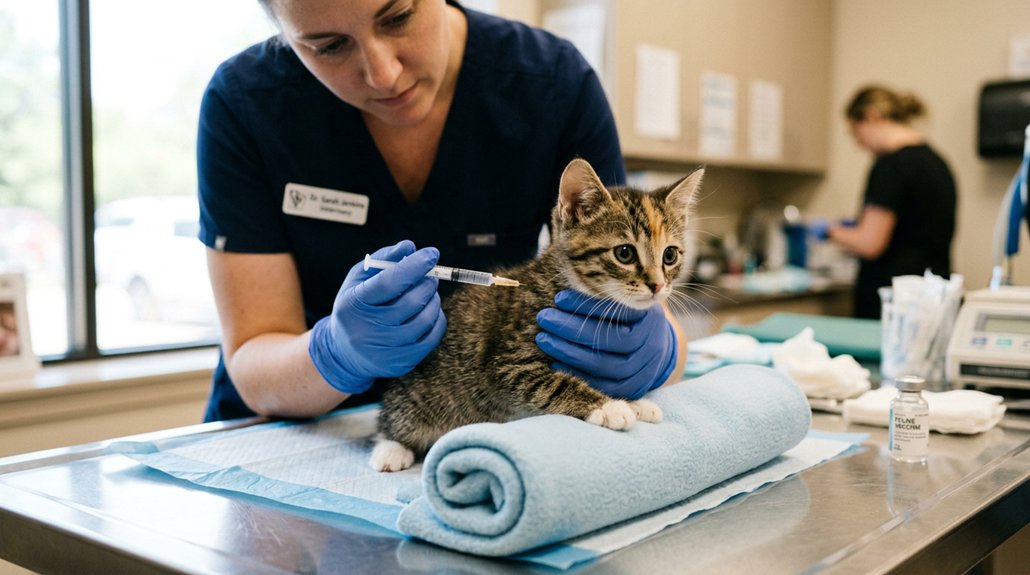
You’ll start your kitten’s vaccination schedule with the FVRCP vaccine at 6-8 weeks, with boosters every 3-4 weeks until 16 weeks. Rabies shots follow at 14-16 weeks, and if needed, FeLV vaccines commence at 8-12 weeks. Monitor for mild reactions post-vaccination like tiredness or reduced appetite. Initial vet visits include exams and vaccinations, often totaling $75-$160. Choosing the right vet guarantees personalized care and better management of your kitten’s health journey. Discover essential details in the following sections.
Key Takeaways
- Kittens start the FVRCP vaccine between 6-8 weeks, with boosters every 3-4 weeks until 16 weeks.
- Rabies vaccine is usually given between 14-16 weeks and legally required after 12 weeks.
- FeLV vaccine begins at 8-12 weeks for kittens exposed to other cats, with boosters every 3-4 weeks.
- Monitor for mild vaccine reactions like tiredness and soreness, but seek immediate help for severe symptoms.
- Discuss lifestyle with a vet to customize the vaccination schedule for environmental and social factors.
Understanding the Kitten Vaccination Schedule
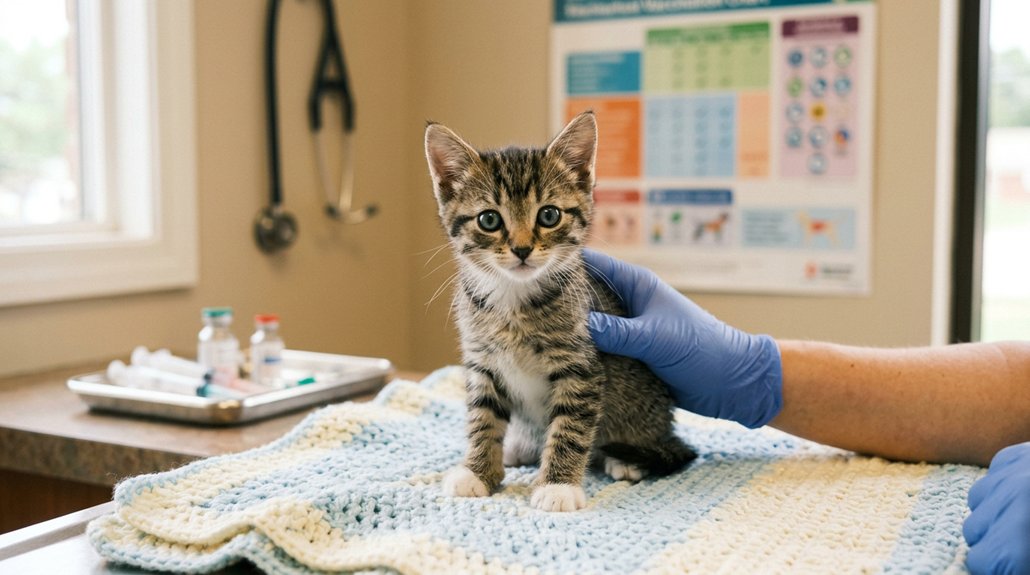
Understanding the kitten vaccination schedule is essential for ensuring your pet’s long-term health. At 6-8 weeks, you’ll want to start with the FVRCP vaccine, a significant step in kitten health to guard against major feline viruses. Debunking vaccination myths, you should know these vaccines don’t weaken your kitten’s immune system; instead, they build robust defenses as maternal antibodies diminish. After the initial dose, FVRCP boosters are critical every 3-4 weeks until they reach 16 weeks. Rabies vaccination, administered between 14-16 weeks, is often legally mandated, important for both pet and public safety. Depending on lifestyle, non-core vaccines like FeLV may be necessary from 8-12 weeks. Post first-year, you’d follow a tailored booster schedule.
Core Vaccines Your Kitten Needs
When it comes to safeguarding your kitten’s health, the FVRCP vaccine is vital as it protects against three major feline diseases: rhinotracheitis, calicivirus, and panleukopenia, starting as early as 6-8 weeks of age. Equally important is the rabies vaccine, which is not only essential for your kitten’s wellbeing but is also a legal requirement, typically administered from 12 weeks of age. By adhering to the recommended vaccination schedule, you guarantee that your kitten develops strong immunity against these serious threats, setting a foundation for a healthy life.
Essential FVRCP Protection
A cornerstone of your kitten’s health is guaranteeing they receive the FVRCP vaccine, a significant component of their core vaccination schedule. This vaccine is crucial for safeguarding against three serious diseases: feline viral rhinotracheitis, calicivirus, and panleukopenia. Understanding the vaccination importance is essential for promoting robust kitten health. The recommended schedule for the FVRCP vaccine includes multiple doses:
- Initial shot between 6 to 8 weeks of age.
- Booster shots every 3-4 weeks until 16 weeks.
- Completion coincides with waning maternal antibodies.
- Important 1-year booster for maintaining immunity.
- Estimated cost between $25 to $60, depending on your location.
Following this regimen guarantees enduring protection and complies with veterinary recommendations, giving your kitten the best chance for a healthy life.
Legal Rabies Requirement
Continuing with your kitten’s essential health care regimen, let’s focus on the rabies vaccine, a significant component of their core vaccinations. Rabies laws mandate this vaccine in most states starting at 12 weeks of age. It’s not just a legal requirement; vaccinating your kitten against rabies is important due to the disease’s severe impact on both pets and humans. The vaccine guards against a deadly neurological disease, ensuring safety and health for your family and community. Typically, the rabies vaccine is administered alongside your kitten’s final FVRCP booster, around 14 to 16 weeks old. Depending on the vaccine type and state regulations, immunity can last from one to three years. Complying with rabies laws is a key aspect of responsible pet ownership.
What to Watch for After Vaccination
After your kitten’s vaccination, it’s critical to monitor them for mild reactions like tiredness, mild fever, or soreness, which usually resolve without intervention. However, be vigilant for moderate signs such as vomiting or diarrhea, and recognize severe symptoms, including facial swelling or breathing difficulties, that require immediate veterinary assistance. Keeping a close eye on their behavior guarantees you can promptly consult a veterinarian, greatly impacting their recovery and well-being.
Recognizing Mild Reactions
Vaccinations are an essential part of your kitten’s health plan, and it’s important to keep an eye out for a few common mild reactions they may experience afterward. These mild symptoms typically arise shortly after the vaccination timeline and are often harmless, resolving on their own. Here’s what to monitor:
- Tiredness: Your kitten might be sleepier than usual.
- Slight Fever: A minor increase in body temperature can occur.
- Local Soreness: Some soreness or tenderness at the injection site is normal.
- Reduced Appetite or Activity: A temporary decrease in food interest or playfulness often happens.
- Mild Swelling or Redness: Look for minor swelling or redness near the injection site.
Should any unusual symptoms persist, consulting your vet is recommended.
Identifying Severe Symptoms
While mild reactions to vaccinations in kittens are typically harmless, it’s also important to be vigilant for more serious symptoms that could signify a severe reaction. Watch for signs like facial swelling, hives, or difficulty breathing, as these need immediate veterinary attention. Persistent vomiting or diarrhea lasting beyond 24 hours might be indicative of a severe reaction and shouldn’t be ignored. Also, severe lethargy, where your kitten appears unusually inactive or hard to wake, is concerning. Monitor any swelling or redness at the injection site; if it worsens or doesn’t improve, it’s time to seek advice. Keep a close eye on your kitten within the first 24-48 hours post-vaccination, as this is a critical period for observing any severe kitten discomfort or vaccination anxiety.
Consulting Veterinarian Promptly
One of the most important steps in guaranteeing your kitten’s health post-vaccination is knowing when to contact a veterinarian. Vaccine concerns often arise if side effects escalate beyond mild symptoms like tiredness or soreness. It’s vital to be vigilant and know what signs warrant an emergency response.
- Mild symptoms such as lethargy or fever should resolve within a few days.
- Moderate reactions, like vomiting or diarrhea, require monitoring for any progression.
- Severe allergic reactions, such as facial swelling or hives, demand immediate veterinary attention.
- Watch for any prolonged effects or unusual behavior past the initial days.
- Prompt consultation with a veterinarian guarantees timely intervention and peace of mind, safeguarding your kitten’s health.
Which Non-Core Vaccines Might Your Kitten Need?
When considering your kitten’s health, which non-core vaccines might be required to guarantee their safety? Begin by evaluating lifestyle factors. The feline leukemia virus (FeLV) vaccine should be high on your list if your kitten’s got potential exposure to other cats. This is especially vital in multi-cat households or if your pet frequents boarding facilities. Administer the FeLV vaccine starting at 8-12 weeks of age, with boosters every 3-4 weeks. Assess the need for additional non-core vaccines like feline immunodeficiency virus (FIV) and feline infectious peritonitis (FIP) vaccines, which depend on specific risk factors your vet identifies. Discuss your kitten’s environment and social habits with a veterinarian to tailor their vaccination plan precisely, providing robust protection where it’s most needed.
When to Start Vaccinations
As you consider which vaccines best suit your kitten’s needs based on lifestyle and risk, it’s equally important to think about the right timing to begin vaccinations. Initiating vaccinations at the correct kitten age guarantees maximum protection against prevalent diseases. Here’s a guide to help:
- 6-8 Weeks: Start with the first FVRCP vaccine. It’s essential, as it offers protection against rhinotracheitis, calicivirus, and panleukopenia.
- 8-12 Weeks: Depending on exposure, consider the FeLV vaccine to shield against feline leukemia.
- Every 3-4 Weeks: Boosters for core vaccines should continue until 16 weeks.
- 12 Weeks Onward: Introduce the rabies vaccine, which is critical and legally mandated in most jurisdictions.
- Vaccination Importance: Following this schedule helps build a robust immune system for a healthy future.
What to Expect at Your Kitten’s First Vet Visit
Your kitten’s first vet visit, typically scheduled around the 6-8 week mark, is an essential step in ensuring their health and well-being. During this visit, the veterinarian will conduct a thorough wellness examination, evaluating your kitten’s overall health and growth. The initial FVRCP vaccine will be administered, which protects against feline rhinotracheitis, calicivirus, and panleukopenia—crucial components of kitten health. This is also an opportune time to receive expert vet advice on establishing a vaccination schedule tailored to your kitten’s lifestyle and risk exposure. Preventative care discussions will include deworming, flea control, and any necessary future vaccinations. Establishing such a plan early promotes lifelong health, making this first visit a cornerstone of responsible pet ownership.
Cost Considerations for Kitten Vaccinations
Although caring for a new kitten is an exciting journey, it’s important to contemplate the costs associated with essential vaccinations. Here’s what you should consider:
- Vaccination Fees: Each vaccine can range from $25 to $60, influenced by manufacturer and location.
- Initial Examination Costs: A mandatory vet check-up before any vaccinations can cost between $50 and $100.
- Follow-up Examinations: Opting for these with a veterinary technician can minimize costs.
- Additional Treatments: Occasionally, extra vaccines or treatments are needed, which might increase expenses.
- Insurance Coverage: Pet insurance may cover vaccination costs, offering you relief on your budget.
How Kitten Vaccines Strengthen Immunity
Understanding how kitten vaccines strengthen immunity is essential for safeguarding your pet’s health. Vaccines introduce harmless components of viruses or bacteria to your kitten’s immune system, promoting immune development and preparing it to fend off actual pathogens effectively. As the maternal antibodies deplete, vaccinations are imperative in stimulating your kitten’s system to produce its own protective antibodies. This is typically achieved through a series of vaccines administered every 3-4 weeks from 6-8 weeks until 16 weeks of age. Core vaccines, like FVRCP and rabies, are essential for building long-term immunity against serious infectious diseases. Vaccination benefits include closing the immunity gap left by diminishing maternal protection, thereby greatly reducing the risk of severe infections during critical developmental stages.
How to Choose a Veterinarian You Can Trust
Making certain your kitten receives the proper vaccinations is only part of the equation for safeguarding their health; finding a trustworthy veterinarian is equally important. Start by finding local veterinarians with expertise in kitten care. Consider these factors:
- Experience with Kittens: Choose those who understand the unique healthcare needs of kittens.
- Wellness Packages: Evaluate if they offer packages that include discounted vaccinations and regular checks.
- Clinic’s Reputation: Read reviews, and get recommendations from trusted sources, like friends or animal shelters.
- Vaccination Protocols: Inquire about their protocols, focusing on your kitten’s safety and any protocols for vaccine side effects.
- Availability: Confirm the vet is available for timely follow-up care whenever needed.
Selecting the right vet confirms lifelong health for your kitten.
Frequently Asked Questions
What Is the 3-3-3 Rule for Kittens?
The 3-3-3 rule for kittens includes three weeks for acclimatization, three months for socialization, and three years focusing on kitten health. It emphasizes vaccination importance, routine vet visits, and building trust for ensuring well-adjusted feline companions.
What Is the 3 2 1 Rule for Cat Vaccination?
The 3 2 1 rule for cat vaccination includes three types of vaccines—FVRCP, FeLV, and Rabies. They’re essential for your cat’s health benefits, offering protection from common illnesses and ensuring they’re legally compliant with vaccination requirements.
Can an Unvaccinated Kitten Be Around a Vaccinated Kitten?
You shouldn’t let an unvaccinated kitten around a vaccinated one. Despite vaccination importance, there’s potential health risk as no vaccine guarantees complete immunity. Prioritize kitten health by consulting a vet and managing their interactions cautiously.
What Happens if My Cat Misses a 4 in 1 Booster?
If your cat misses a 4 in 1 booster, it’s like leaving them to battle an army of germs with a spoon! The health risks increase, disrupting their vaccination timeline, which can lead to costly catch-up shots.
Conclusion
By carefully following your kitten’s vaccination schedule, you’ll guarantee their health and happiness, just like a gardener nurturing a young plant to full bloom. Safeguarding your kitten with essential vaccines and understanding their effects is the key to strong immunity. It’s also vital to choose a veterinarian you trust for guidance and support throughout their growth. Prioritizing vaccinations not only prevents illness but also offers peace of mind as your kitten begins a vibrant and playful life.