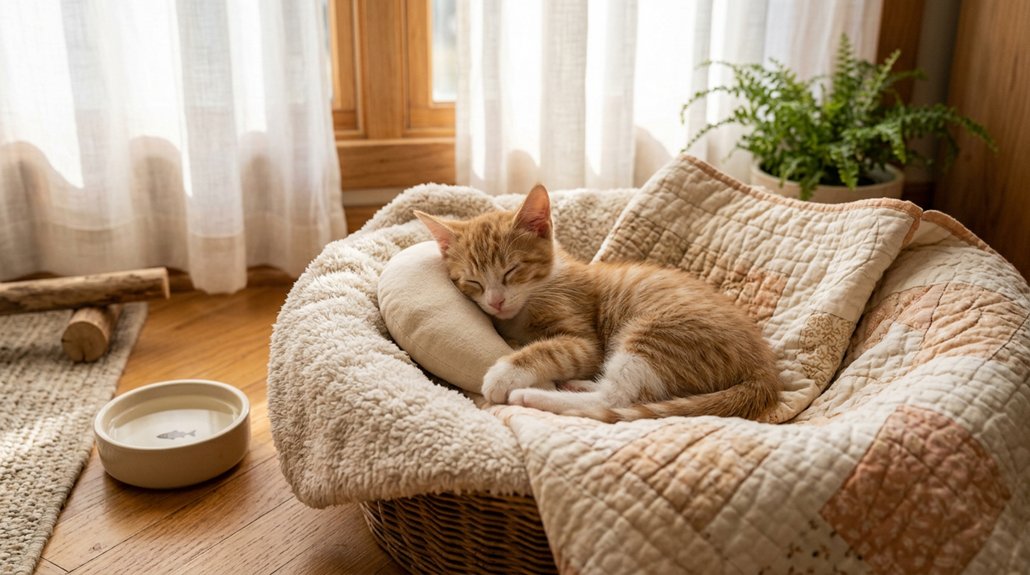
To create a comfortable sleeping space for your kitten, choose a draft-free, warm spot, ideally elevated and near essentials like food and water. Use soft, easy-to-clean materials such as cotton or fleece, and incorporate familiar scents from old blankets or sweaters to ease anxiety. Establishing a consistent nighttime routine with play and a small meal supports relaxation. Ensuring the area is quiet and gently lit promotes restful sleep. Discover more about crafting an ideal environment for your kitten.
Key Takeaways
- Select a warm, draft-free, and elevated spot for the bed to ensure security and comfort.
- Utilize soft bedding materials like cotton and fleece to enhance warmth and coziness.
- Incorporate familiar scents using personal items to ease anxiety and offer comfort.
- Establish a consistent nighttime routine involving play and calming rituals for healthy sleep habits.
- Maintain a serene environment with dim lighting and quiet surroundings to support relaxation.
Pick the Perfect Spot for Your Kitten’s Bed
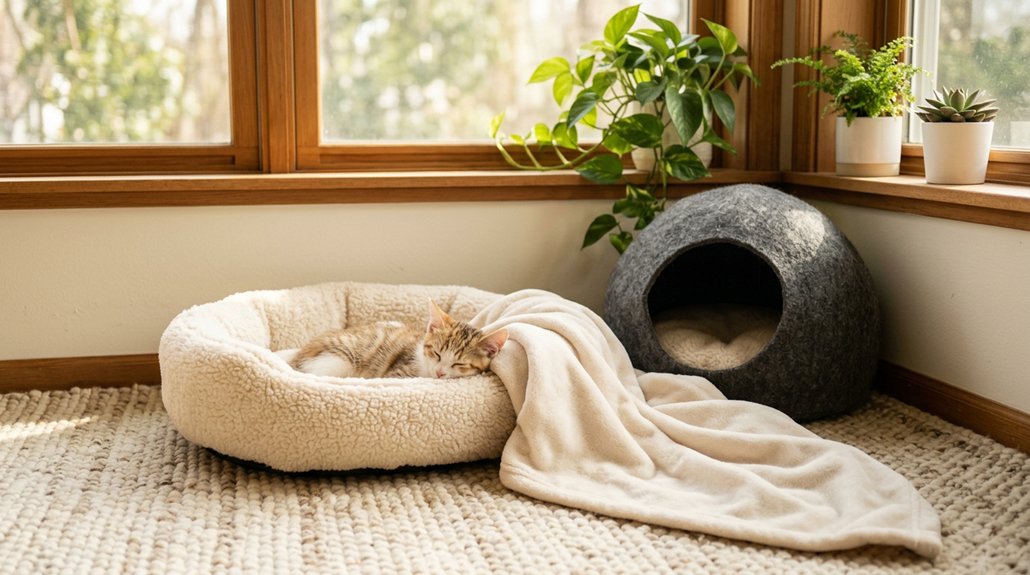
Selecting the right spot for your kitten’s bed is crucial for their comfort and well-being, considering various environmental factors. To guarantee ideal sleep, locate the bed in a warm, draft-free area. Kittens instinctively seek elevated safe havens, like shelves or cat trees, which provide security and broad visibility. Quiet areas are paramount; avoid noisy or bustling zones to foster a relaxed sleeping environment. Observe your kitten’s preferred spots, often cozy niches like boxes or beneath furniture, and emulate these conditions in their sleeping space. Position the bed near essentials such as the litter box, food, and water to support autonomy and ease during nighttime. These considerations will help cultivate a nurturing environment conducive to restful, undisturbed sleep for your kitten.
Gather Essentials for a Cozy Kitten Bed
To guarantee your kitten feels secure and cozy, select a bed with soft materials and high sides to insulate against drafts. Including a fabric or blanket carrying familiar scents, such as your clothing, can ease your kitten’s anxiety during the adjustment. A strategically chosen bed position further promotes comfort in a serene environment.
Select Soft Bedding Material
Creating a cozy kitten bed starts with choosing the right soft bedding material. Opt for materials like cotton or fleece. These bedding materials provide essential comfort factors such as warmth and ease of cleaning. Selecting beds with high sides can enhance the sense of security, important for kittens requiring a snug sleeping environment. You might also consider materials like felted wool, known for combining breathability with warmth, further catering to their instinctual needs.
Here’s a quick comparison:
| Material | Benefits |
|---|---|
| Cotton | Easy to clean, soft feel |
| Fleece | Provides warmth, durable |
| Felted Wool | Insulation, breathable |
| Beds with high sides | Security, coziness |
| Quiet area placement | Minimizes disturbances |
Choosing wisely guarantees a cuddly, secure sleeping space.
Include Familiar Scents
After choosing the right bedding material, it’s important to incorporate familiar scents to fully guarantee a kitten’s comfort and security. Familiar odors can ease anxiety and help your kitten adjust smoothly to its new sleeping space. Introduce an old sweater or blanket from their previous home, rich with comforting aromas. Using scented toys or applying calming sprays in the area can further enhance these effects, promoting relaxation and trust. Including items with your scent, like a well-worn T-shirt, supports the kitten’s emotional wellbeing by reinforcing your bond. Don’t forget to pair these with soft, cozy materials, as they complete the enticing environment. By integrating these elements, you’ll create a comforting refuge where your kitten feels both snug and protected.
Include Familiar Objects for Added Comfort
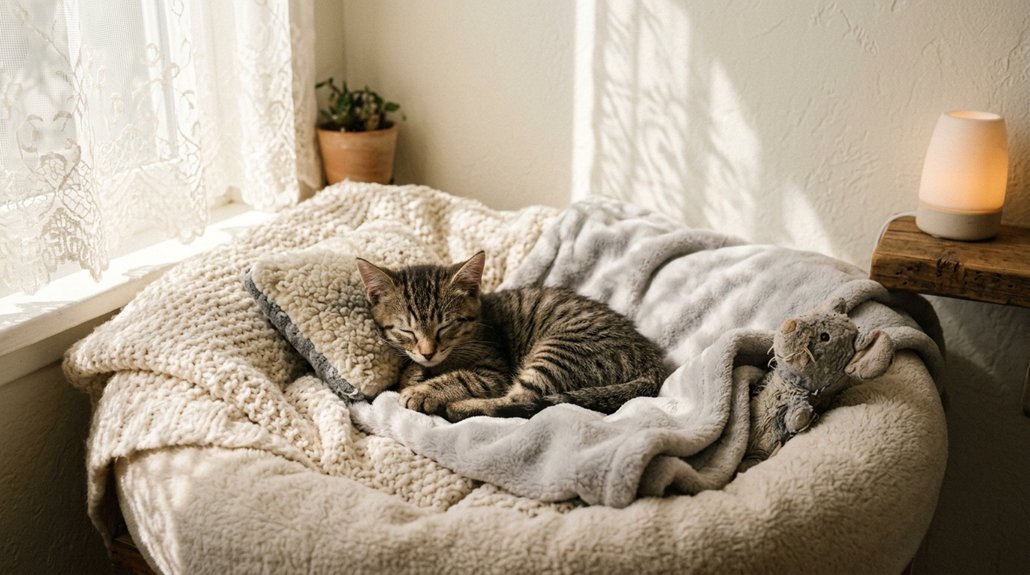
To help your kitten feel secure in their new environment, incorporate familiar objects like a blanket from their previous home. Materials carrying familiar scents, such as those from the mother or littermates, can greatly reduce anxiety by creating a comforting sense of safety. Using known scents eases their adjustment and encourages exploratory behavior, promoting confident use of their sleeping area.
Familiar Scents Ease Anxiety
When bringing a kitten into a new home, incorporating familiar scents, such as an old sweater or blanket from its previous environment, can play an essential role in reducing anxiety. Scent familiarity provides comfort association, serving as a calming reminder of safety, vital in helping the kitten adapt to new surroundings. These familiar scents help create a sense of security during the initial adjustment period. As kittens are sensitive to their environment, having objects imbued with known smells can instill a sense of control and comfort. Including familiar toys or bedding in their new sleeping area can enhance relaxation and facilitate healthy sleep patterns. Ultimately, these comforting smells reinforce positive associations with the sleeping space, which enhances sleep quality and promotes confidence.
Blanket From Previous Home
One effective way to ease your kitten’s adjustment into a new home is by including a blanket or item with familiar scents from their previous environment. This familiar blanket offers a significant source of scent comfort, easing anxiety and fostering a sense of security. Research indicates that familiar objects can trigger positive memories, thereby reducing stress during the initial nights. As kittens rely on their sense of smell, this blanket becomes an essential element for their emotional well-being, reassuring them as they explore new surroundings. Furthermore, a soft blanket isn’t just comforting; it helps create a cozy sleeping area, crucial for your kitten’s sense of safety and warmth. By incorporating such items, you support their healthy development and smooth change.
Establish a Nighttime Routine for Calming Sleep
Every kitten deserves a sanctuary to sleep peacefully, and establishing a nighttime routine is key to achieving this. Begin with engaging nighttime activities by incorporating a 10-15 minute play session. This helps your kitten expend energy, preparing them for a restful sleep. Following this, offer a small meal or treat to mimic natural hunting instincts. Such calming techniques signal it’s time to relax and wind down.
Maintain a dimly lit or dark environment, as kittens find it comforting and less distracting. Verify the kitten’s sleeping area is cozy with a soft bed, high sides, and a warm blanket, creating a secure space. Be patient and consistent; over time, your kitten will adjust, forming healthy sleep habits.
Use Playtime to Promote Restful Nights
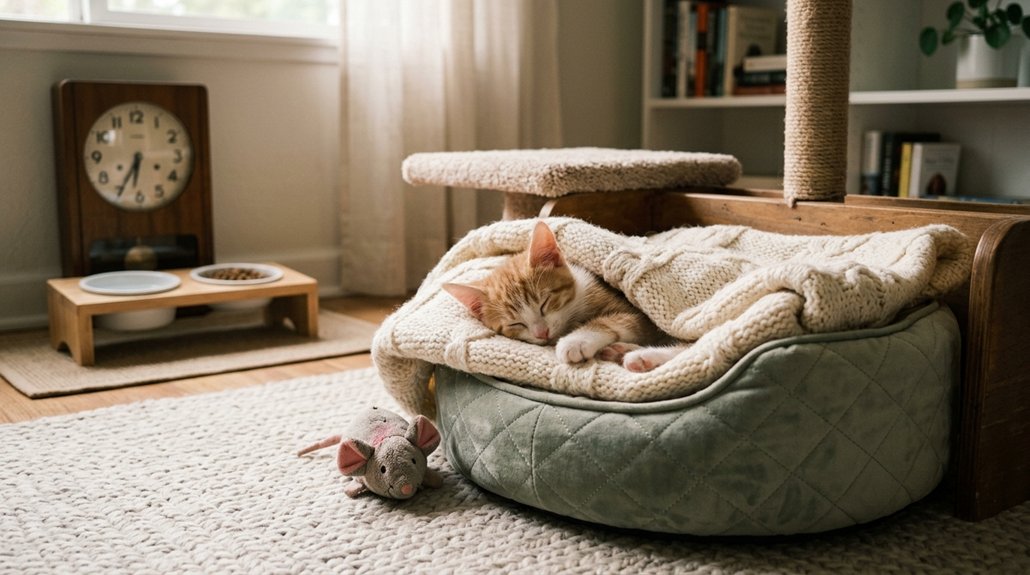
To promote restful nights for your kitten, strategically timed playtime is essential. Engage your kitten in active play sessions that last 10-15 minutes. This helps expend their energy and facilitates a smoother shift to sleep. Schedule these sessions close to their last nap of the day to guarantee they’re tired and ready for nighttime calmness. Utilize a variety of toys to cater to their hunting instincts, stimulating both mental and physical engagement before bedtime. After playtime, offer a small meal or treat, mimicking natural hunting behavior; as digestion begins, sleepiness follows. Maintaining a consistent nighttime routine fosters security and predictability, signaling it’s time to unwind. This holistic approach promotes a peaceful sleeping environment essential for your kitten’s well-being.
Set the Mood for a Good Night’s Sleep
Creating a serene sleeping environment for your kitten involves several key elements. Start by ensuring their sleep environment is cozy and warm, using high-sided beds or cushy blankets to mimic a secure, nest-like setting. Dim lighting caters to their crepuscular nature, facilitating calm navigation in twilight. Introduce familiar scents, such as a sweater or blanket, to soothe anxiety and make the space inviting. Establish calming rituals through a consistent bedtime routine with evening play and a small meal, signaling it’s time to wind down. Aim to keep the area draft-free and away from noisy disturbances. These steps collectively contribute to creating a restful ambiance for your feline friend.
| Element | Importance |
|---|---|
| Cozy Bed | Enhances security |
| Dim Lighting | Supports natural instincts |
| Familiar Scents | Mitigates anxiety |
| Bedtime Routine | Initiates calming rituals |
| Quiet Location | Reduces disturbances |
Support the Kitten’s Transition at Their Pace
Pivoting from establishing a serene sleep environment, it’s important to approach the next phase where you support your kitten’s comfort and ease in their new home. Begin with a gradual introduction to their surroundings. Start in a single room to avoid overwhelming them with too much space. As the kitten adjusts, extend their boundaries, encouraging kitten exploration at their own pace. Incorporate familiar scents using an old sweater or blanket from their previous home to reduce anxiety. Creating a cozy sleeping area with soft bedding and high sides aids in security. Additionally, make sure food, water, and litter box are accessible. Implement a consistent nighttime play and feeding routine to signal relaxation and help your kitten settle smoothly into their new environment.
Frequently Asked Questions
What Is the 3-3-3 Rule for Kittens?
The 3-3-3 rule for kitten adjustment outlines three phases: initial adaptation during the first three days, exploring and gaining confidence over the next three weeks, and full acclimatization by three months with essential environmental enrichment and support.
Where Should a Kitten Sleep at Night?
Make certain your kitten sleeps in a warm, draft-free area with high-sided bedding to enhance nighttime safety. Use familiar scents for comfort and include necessities like a litter box and water nearby for convenience.
What Is “I Love You” in Cat Language?
Did you know 76% of cat owners notice feline affection through slow blinking, often called “cat kisses”? In cat communication, this gesture signifies “I love you,” enhancing the emotional bond between you and your cat.
Is It Okay to Ignore a Kitten at Night?
It’s generally okay to ignore a kitten at night since nighttime behavior is natural for them. Promoting independent sleep fosters kitten bonding in the long run, encouraging their confidence and adaptability while maintaining healthy sleep habits.
Conclusion
In the grand tapestry of your kitten’s life, creating a sanctuary twines threads of care and understanding. Just as stars guide travelers, your efforts carve a path to serene dreams. By crafting a comforting haven, you’re the architect of your kitten’s restful nights. Familiar rituals mimic the rhythm of nature, soothing restless hearts. Your gentle guidance illuminates the way, helping your furry companion navigate the mysterious landscape of sleep with grace and tranquility.