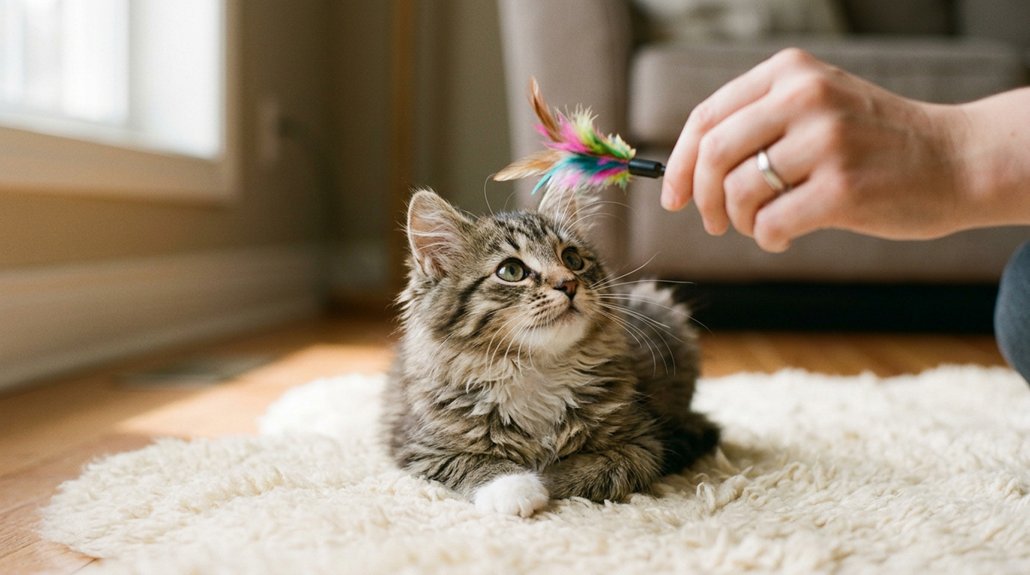
To stop your kitten from biting and scratching, understand these are instinctual behaviors. Set boundaries with a firm “no” and withdraw attention when biting occurs. Redirect their energy using toys like crinkle balls and wand toys. Encourage scratching on designated posts with praise. Use positive reinforcement to reward non-aggressive play. Adapt play strategies as your kitten matures to meet development needs. Structured play and interaction are essential in easing these behaviors. Discover more about fostering gentle habits ahead.
Key Takeaways
- Establish clear boundaries by firmly saying “no” and withdrawing attention when the kitten bites or scratches.
- Redirect biting behavior using engaging toys like crinkle balls or wand toys during playtime.
- Use positive reinforcement by offering treats or praise for non-aggressive interaction to encourage good behavior.
- Incorporate structured daily play sessions to alleviate excess energy and reinforce good social interactions.
- Monitor and adjust play intensity to avoid overstimulation, ensuring play remains comfortable and enjoyable for the kitten.
Quick Solutions for Managing Biting
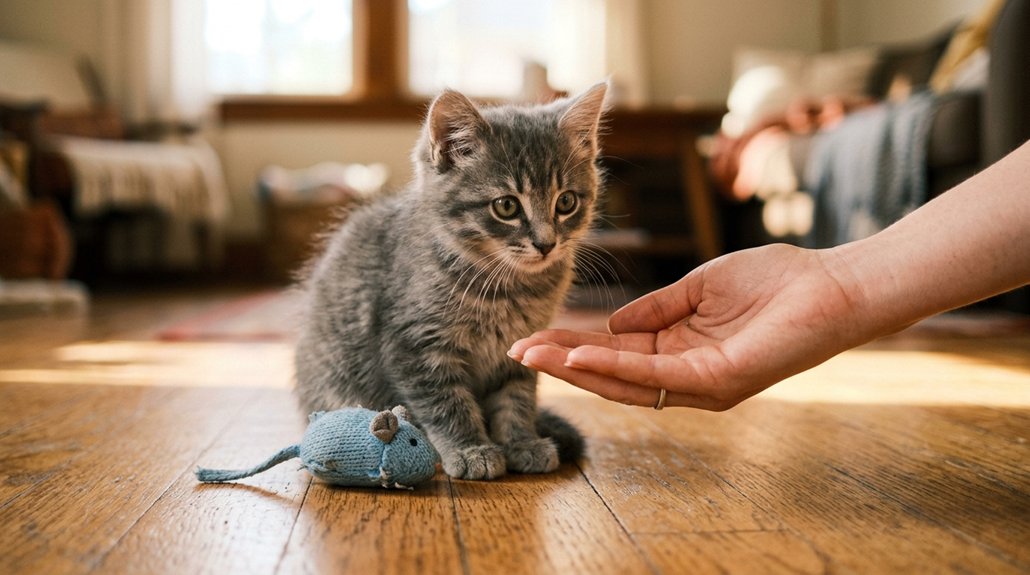
To effectively manage a kitten’s biting, first establish clear boundaries by firmly saying “no” and withdrawing attention when biting occurs, allowing your kitten to understand that this behavior ends playtime. Social interaction and playful engagement form a significant part of a kitten’s learning environment, yet it’s important they know biting will cease such interactions. Redirecting their behavior with engaging toys that mimic prey, like crinkle balls or wand toys, channels predatory instincts into suitable outlets. Maintaining a calm demeanor prevents escalating aggression; instead of reacting loudly, use positive reinforcement to support good conduct. Regular play sessions, ideally multiple times a day, are crucial for alleviating pent-up energy, reducing behaviors stemming from boredom or overstimulation. Removing yourself reinforces that biting leads to lost attention.
Recognize Why Kittens Bite and Scratch
Understanding why kittens bite and scratch is essential for managing these behaviors effectively. Biting and scratching stem from natural, instinctual behaviors, allowing kittens to practice hunting skills like stalking, pouncing, and wrestling. These actions are primarily explored during play. Playful biting is fundamental in kitten development, facilitating the inhibition of aggression through feedback from littermates and mothers. Such feedback is crucial as it helps them understand boundaries. However, poorly socialized kittens may lack this restraint, leading to more aggressive biting. Early socialization importance cannot be overstated; it lays the foundation for proper behavior. Additionally, these activities aid in motor skill development and environmental exploration. Providing appropriate toys diverts attention from human hands and feet, reducing undesirable biting and scratching.
How to Teach Your Kitten Good Habits
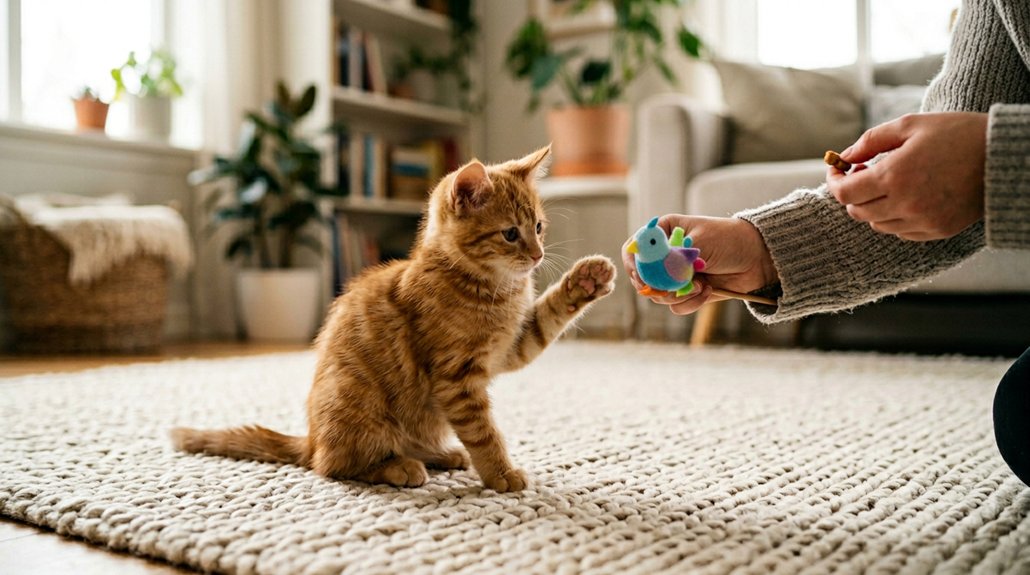
Teaching your kitten good habits involves establishing a structured environment where biting and scratching are channeled appropriately. Incorporate positive reinforcement and social interaction to foster these behaviors. Here’s how:
- Structured Play: Engage daily with toys like wands to redirect their natural instincts and enhance social interaction.
- Redirection Techniques: When they bite or scratch, offer a toy immediately, helping them understand what’s acceptable.
- Calm Correction: Use a firm “no” for unwanted behaviors, followed by withdrawal of attention to emphasize consequences.
- Designated Scratching: Introduce strong scratching posts, guiding and praising their use to reinforce preferred actions.
Monitor and adapt interactions based on the kitten’s cues to gradually cultivate calm, appropriate behaviors.
Build a Fun Play Area
Building an engaging play area is essential for managing your kitten’s biting and scratching tendencies. Start by designating a safe space filled with play area essentials like climbing structures and hiding spots. These elements will stimulate your kitten’s natural instincts, keeping them entertained and reducing aggressive behaviors. Incorporate stimulating toys such as crinkle balls and wand toys to encourage active play. Regularly rotating these toys retains their novelty and maintains mental stimulation. Interactive play sessions will not only bond you with your kitten but also reinforce positive behaviors while mitigating biting. Include box-like structures or tunnels which provide security and promote healthier exploration. This environment not only redirects unwanted behaviors but guarantees your kitten thrives both physically and mentally.
Guide Scratching to the Right Places
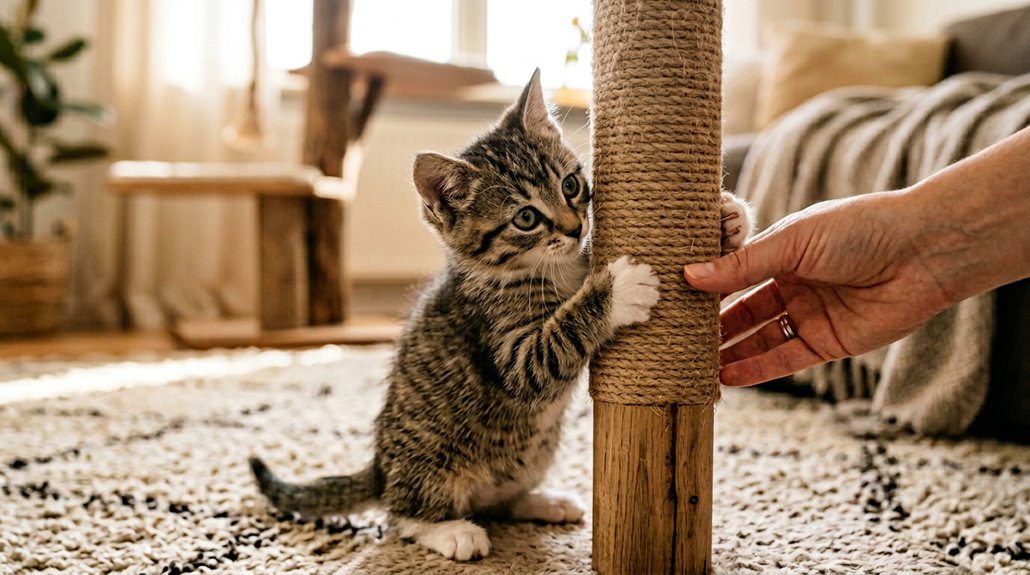
While creating an entertaining play environment addresses your kitten’s energy and instincts, steering scratching habits is equally important. Properly guiding your kitten involves understanding their need to scratch and directing it constructively:
- Scratching Post Selection: Choose a sturdy scratching post and place it in a proper location that’s both accessible and attractive. Observe their favorite spots and adjust the post’s position accordingly.
- Paws-On Approach: When your kitten attempts to scratch inappropriate surfaces, gently direct their paws to the scratching post to encourage its use.
- Incentivize: Employ interactive toys or catnip to entice your kitten to the post, keeping it appealing.
- Positive Reinforcement: Offer praise or small treats when they use the post, fostering positive associations and reinforcing proper scratching behavior. Regular inspection and rotation guarantee continued interest and usage.
Adjust Play as Your Kitten Grows
As your kitten matures, adapting play strategies becomes essential to meet their evolving needs and prevent undesirable behaviors. To align with their developmental milestones, incorporate dynamic playtime that matches their increased energy and hunting instincts. Introduce interactive toys like puzzle feeders or wand toys to challenge their mental and physical abilities. This will redirect nipping behaviors from human hands or feet to more appropriate outlets. Pay attention to signs of overstimulation, such as tail flicking or dilated pupils, and adjust play’s intensity and duration to avoid aggression. Gradually enhance play’s complexity, such as hiding treats or using toys that mimic prey, to satisfy their predatory instincts. Consistent reinforcement of positive actions helps in developing strong bite inhibition.
How Long Does It Take for Behavior to Change?
You’ll find that changing a kitten’s biting and scratching behavior requires patience and consistent training strategies. As kittens typically outgrow this behavior by 4-6 months, implementing age-appropriate methods such as regular play sessions and positive reinforcement is essential. Monitoring your kitten’s behavioral progress is crucial, as some may respond quickly while others need additional time and effort to develop more desirable habits.
Patience and Consistency Required
Training a kitten to lessen biting and scratching demands both patience and consistency, as these behaviors typically start to wane naturally by 4 to 6 months of age with proper guidance. For effective behavior modification, rely on structured training techniques to establish clear behavior expectations. Reinforcing desired actions through positive reinforcement is essential; use toys to redirect biting. Regular play sessions with safe toys manage energy levels and mitigate aggression. Recognize overstimulation signs and offer breaks to teach self-regulation. Incorporate the following strategies:
- Plan several interactive play sessions daily to direct energy positively.
- Observe your kitten’s cues to prevent overstimulation.
- Redirect biting with toys to encourage appropriate behavior.
- Implement a routine blending play and training for security and predictability.
Consistency speeds behavior change.
Training Strategies and Age
While kittens are naturally inclined to bite and scratch during play, structured training strategies can considerably streamline behavior modification. It typically takes 4-6 months for your kitten to change from biting to healthier play patterns. Employ targeted reinforcement by rewarding appropriate behaviors, such as using scratching posts and toys, with treats or praise. Immediate reactions, like saying “no” and walking away, effectively communicate that biting results in playtime ending. Observing your kitten’s body language is vital; it helps you recognize signs of overstimulation and tailor your responses accordingly, such as providing space or engaging in calming interactions. By consistently applying these techniques and accommodating their natural instincts, you’ll gradually encourage desired behavioral changes, culminating in a gently playful kitten.
Monitoring Behavioral Progress
Monitoring your kitten’s behavioral progress is essential, as changes in biting and scratching habits may span several weeks to months. Effective behavioral tracking and progress evaluation involve several critical steps:
- Age Benchmarking: Kittens typically start learning biting etiquette at 4-6 months. Track progress during this period to guarantee milestones are met.
- Consistent Observation: Regularly observe your kitten’s interactions. Note any positive changes, as these indicate successful adaptation to training efforts.
- Response Consistency: Apply consistent training techniques. Inconsistency can confuse your kitten, extending the duration for behavioral adjustments.
- Positive Reinforcement: Use treats or praise for non-aggressive behavior. This encourages quicker understanding and adaptation to desired behaviors.
Frequently Asked Questions
How Do You Discipline a Kitten From Biting and Scratching?
To discipline a kitten from biting and scratching, use distraction techniques with toys and employ positive reinforcement. Consistently reward non-aggressive play to encourage good behavior. Avoid aggressive responses, instead, calmly redirect their attention and reinforce desired actions.
At What Age Do Kittens Stop Scratching and Biting?
Kittens typically stop biting and scratching by 4 to 6 months, as playful interactions mature. Like a budding artist discovering their canvas, they’ll learn to channel natural instincts into healthier behaviors through proper socialization and training.
What Is the 3-3-3 Rule for Kittens?
The 3-3-3 rule for kittens outlines their behavior adjustment phases: three days to distress, three weeks to settle into playful aggression, and three months to fully express their personality in social interactions and preferences.
What Age Are Kittens Most Aggressive?
Kittens exhibit the most playful aggression between 8 to 16 weeks of age. Their behavior during this period is instinctual, rooted in developing predatory skills. You’re encouraged to manage these behaviors with consistent, gentle guidance.
Conclusion
As you navigate the waters of kitten behavior, remember patience is key. Like a garden blooming under the right care, your efforts in guiding and redirecting your kitten will bear fruit. Reinforce good habits and adjust as your kitten matures, ensuring their playful energy is directed appropriately. Progress might seem slow at first, but with consistent effort, your kitten’s biting and scratching will fade, revealing a well-mannered companion who thrives in their environment.