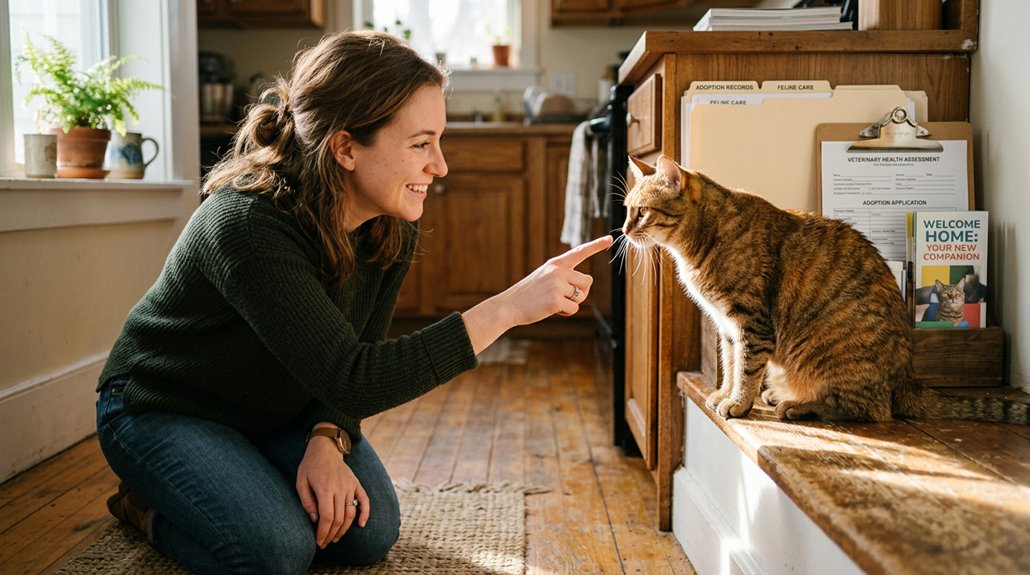
Successfully maneuvering the cat adoption process involves evaluating your lifestyle for readiness, considering monthly expenses, commitment, and space. Decide between a kitten or adult cat based on socialization needs and behavior predictability. Visit local shelters to engage with counselors about cat histories and unique traits. Follow adoption steps like applications and interviews, benefiting from spaying, vaccines, and microchips. Create a cat-friendly home with enrichment and comfort supplies. By proceeding, you’ll discover more detailed guidance.
Key Takeaways
- Research local shelters and rescues online to identify potential cats for adoption.
- Complete the adoption application and prepare for an interview to ensure a good household fit.
- Engage with shelter staff to learn about each cat’s history and unique traits.
- Acquire essential cat supplies and prepare your home for a smooth, safe transition.
- Schedule a post-adoption veterinary appointment to establish your cat’s health baseline.
Assess Your Lifestyle for Cat Adoption Readiness
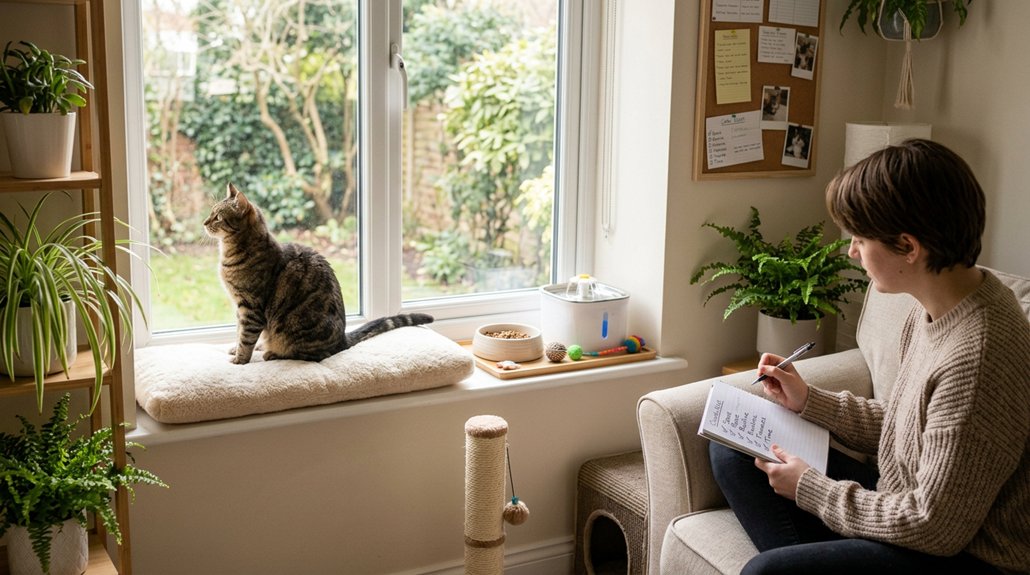
When considering adopting a cat, it’s important to assess your lifestyle to confirm you’re ready for the commitment. Cats can live for 15 years or more, requiring a long-term commitment to daily care, attention, and regular veterinary check-ups. It’s vital to evaluate financial considerations, making sure you can cover monthly expenses like food, litter, toys, and annual veterinary costs. Also, assess lifestyle factors such as travel frequency and current pet dynamics, which can impact stability for your cat. Adequate living space is key, keeping rental agreements in mind, to facilitate a stress-free environment. Finally, understand the responsibilities, including regular social interaction, training, and creating a secure space. Commitment requires a thorough lifestyle evaluation to guarantee a harmonious adoption experience.
Explore the Differences: Kitten vs. Adult Cat
Evaluating your lifestyle for cat adoption readiness naturally leads to the consideration of age differences in potential feline companions. A kitten’s energy is unmatched, offering boundless playfulness and requiring significant investment in socialization and training. This phase also entails regular veterinary visits for vaccinations and monitoring growth. Conversely, adult cats typically display more independence, as their established personalities provide a reliable gauge of future behavior. They generally possess robust immune systems, requiring fewer vet visits, and serve as ideal companions for busy lifestyles. Adult cats may present a more predictable and less demanding adoption experience. Additionally, shelter staff often possess insights on individual adult cats, aiding you in choosing a cat whose history and temperament align with your lifestyle.
Visit Local Shelters and Adoption Centers
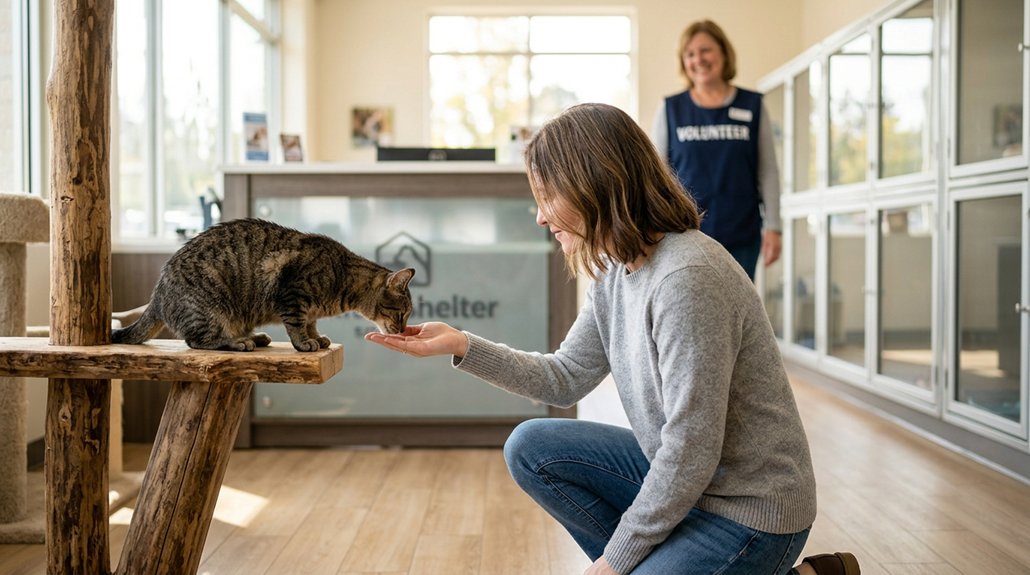
Visiting local shelters and adoption centers is a critical step in the cat adoption process, providing you with firsthand opportunities to interact with a diverse range of feline personalities and ages. By partaking in shelter tours, you can observe cats in various environments and identify those whose temperament and behavior suit your lifestyle. Engaging with knowledgeable adoption counselors is invaluable, as they offer insight into each cat’s history and quirks, ensuring a good match.
Most centers encourage asking about each cat’s past, helping align their unique traits with your home environment. Utilize resources, such as workshops, to prepare for responsible cat ownership. Online platforms like Adopt A Pet simplify identifying nearby shelters, streamlining your search for the perfect feline companion.
Master the Steps of the Adoption Process
Exploring local shelters and gaining insights from adoption counselors lay a strong foundation for taking the next essential steps in the cat adoption process. Begin by researching nearby shelters and rescues; the U.S. hosts nearly 5,000 shelters and 9,500 rescues that challenge adoption myths and connect you with loving feline companions. Submit an adoption application—usually available online—and prepare for an interview to guarantee the best fit for both your household and the cat.
Consider the shelter benefits, including spaying/neutering, vaccines, and microchipping, often covered by adoption fees, that support the animal’s welfare. Don’t forget to schedule a veterinary appointment soon after adoption to establish health baselines, promoting a smooth changeover for your new feline family member.
Create a Cat-Friendly Haven at Home
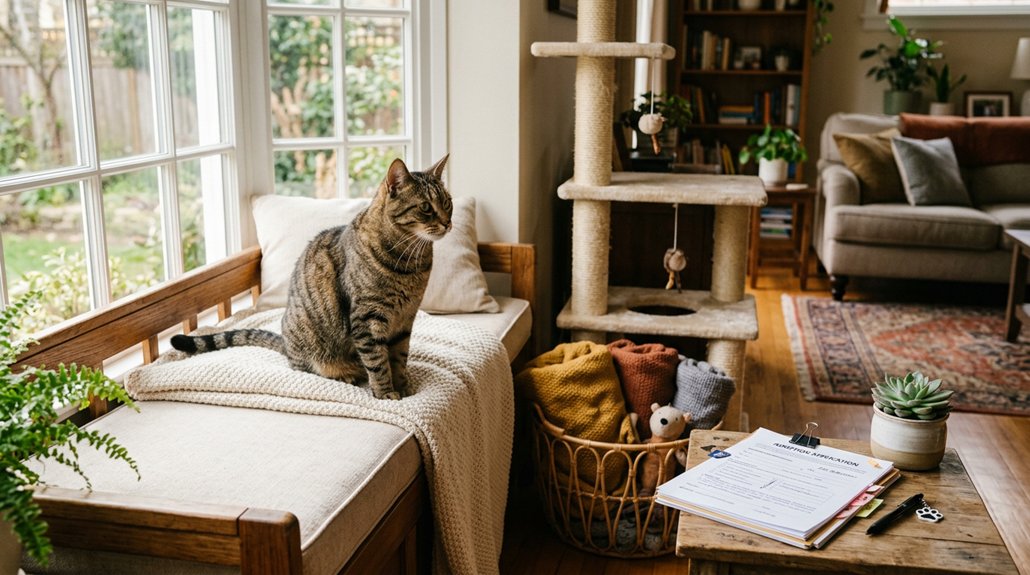
To create a cat-friendly haven at home, start by assembling essential supplies such as a litter box, food and water bowls, scratching posts, toys, and a comfy bed. It’s vital to cat-proof your living space, removing loose wires and small objects to guarantee a safe environment. Additionally, establish a quiet, secure area with plenty of vertical spaces, so your cat has options to decompress and explore.
Essential Supplies Checklist
Creating a comfortable and safe environment for your new feline friend is paramount, and having the right supplies on hand is an essential first step. Start by ensuring you have litter box essentials—choose a box that suits your space and high-quality litter to maintain hygiene. Equip yourself with grooming tools like brushes, a toothbrush, and nail clippers for regular maintenance. The right supplies, including food and water bowls, high-quality cat food, and a scratching post, will keep your pet engaged and healthy. To stimulate your cat’s instincts, gather a variety of toys, and consider investing in a cozy bed. Preparing these items before your cat arrives will facilitate a seamless change and pave the way for a positive adjustment period.
Safe and Comfortable Spaces
While welcoming a new cat into your home, it’s crucial to establish a safe, comfortable space that caters to their needs. Start by selecting a quiet area where your feline can decompress, an integral aspect of cat stress management. Provide necessary supplies such as a litter box, scratching post, food and water bowls, and cozy bedding. Cat-proof by securing loose cords, removing swallowable objects, and keeping food out of reach to deter unwanted counter jumps. For environmental enrichment, incorporate vertical spaces like shelves or cat trees, encouraging natural behavior and exploration. An initial secure room allows gradual exploration, fostering security. By crafting this cat-friendly haven, you promote well-being and ease the adjustment, greatly enhancing the adoption process for your new companion.
Introduce Your New Cat to Existing Pets and Family
Introducing a new cat to your household requires careful planning and thoughtful execution to guarantee harmony between your feline and existing pets. Begin with scent swapping techniques. Exchange bedding or toys between the new cat and your existing pets to allow them to become familiar with each other’s scents without direct contact, easing the adjustment. Keep the new cat in a separate, well-equipped room initially while permitting your existing pets to roam under supervision. Observe body language closely—look for signs of stress or aggression such as hissing, growling, or tense postures. Involve family members in the process, emphasizing the importance of providing the new cat with space and patience. Prepare a backup plan if tensions arise, ensuring a peaceful integration.
Establish Healthy Routines and Veterinary Planning
Establishing healthy routines and veterinary planning is crucial to your new cat’s well-being and successful adaptation. Begin by scheduling veterinary checkups soon after adoption to facilitate timely veterinary vaccinations and conduct thorough health assessments. Implement a structured routine for feeding and play within the first three months, fundamental for stability. Behavioral monitoring is essential; observe your cat’s body language to maintain a stress-free environment. Consider pet insurance to mitigate unforeseen veterinary expenses. Guarantee a consistent grooming and dental care schedule, combining home teeth brushing with professional cleanings.
| Task | Frequency |
|---|---|
| Veterinary Checkups | First few weeks |
| Pet Insurance Review | As needed |
| Feeding Routine | Daily |
| Behavioral Monitoring | Ongoing |
| Grooming/Dental Care | Weekly/Monthly |
Frequently Asked Questions
How Do I Handle Allergies When Considering Cat Adoption?
To handle allergies, consider allergy management techniques and explore hypoallergenic breeds like Siberian or Balinese. Don’t forget to consult allergists and explore HEPA purifiers to reduce allergens. Always prioritize both your well-being and the cat’s welfare.
What Should I Budget for Ongoing Cat Care Costs?
When planning cat care costs, budget for food expenses, vet visits, and litter costs primarily. Don’t forget grooming supplies, a small toys budget, and consider pet insurance for unexpected health issues. Maintaining their well-being is essential.
How Can I Prepare for Unexpected Cat Behavior Issues?
Did you know 85% of cat owners encounter behavior issues? You’ll need a solid behavior management plan, including training and common adjustments like routine changes, to address unexpected behaviors while ensuring your new feline friend’s welfare.
Are There Specific Breeds Suited for First-Time Cat Owners?
Yes, some breeds, like Ragdoll or British Shorthair, possess breed characteristics favorable for novices. These cats often display gentle temperament. Consider potential health predispositions, behavioral tendencies, and their compatibility with your lifestyle for ideal welfare.
What Training Can Help My Cat Adapt to Indoor Living?
To help your cat adapt indoors, focus on behavior training and environmental enrichment. Use interactive toys, scratching posts, and scheduled playtime to reduce stress. Reinforce positive behaviors and create a stimulating, safe environment for ideal adjustment.
Conclusion
Steering through the cat adoption process coincidentally aligns with enhancing your home and lifestyle. By understanding your readiness and choosing between a kitten or adult cat, you’re setting the stage for a successful adoption. Visiting shelters reveals your perfect match, while mastering the steps guarantees a smooth changeover. Creating a cat-friendly haven coincides with family harmony, as does a seamless introduction to existing pets. Establish consistent routines and veterinary care for a fulfilling, lifelong commitment to your new feline friend.