
When budgeting for a newly adopted cat, start with adoption fees ranging from $30 to $180, initial setup costs around $316, and essential veterinary care from $200 to $500. Plan for ongoing expenses, including annual food costs of $150 to $750, monthly vet visits, grooming tools, and toys for enrichment. Allocate funds for emergencies as well. Careful planning guarantees your cat stays happy and healthy. There’s more to explore to make informed decisions.
Key Takeaways
- Calculate initial adoption and setup costs, including fees, essential items, and veterinary care, to establish a baseline budget.
- Allocate funds for yearly food expenses, considering diet needs, brands, and occasional treats or supplements.
- Set aside a monthly amount for routine veterinary check-ups and build an emergency fund for unexpected treatments.
- Invest in quality grooming tools and toys to ensure mental enrichment and hygiene, reducing potential healthcare expenses.
- Maintain a monthly budget for routine expenses, including regular health check-ups, food, grooming, and emergency preparedness.
Understanding Your Cat Adoption Costs
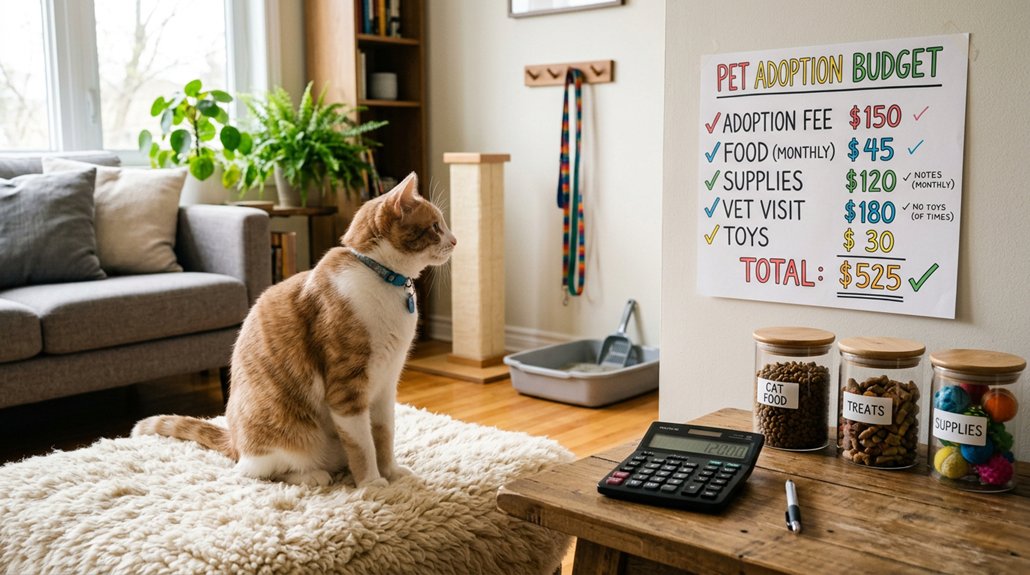
Adopting a cat can be a fulfilling and rewarding experience, but understanding the costs involved is vital to guaranteeing you’re fully prepared. An adoption fee can range from $30 to $180, influenced by factors like breed, age, and medical needs. Beyond the adoption fee, you’ll want to take into account the initial setup expenses. Essential items like a cat carrier and litter box start at approximately $316, varying with the quality of supplies. It’s also significant to budget for initial veterinary care, which can run between $200 and $500, covering exams and vaccinations. Additionally, microchipping ($80–$100) and ID tags ($5–$20) are important for safety and identification. Being prepared for these costs guarantees a smooth changeover for both you and your new cat.
Essential Purchases for New Cat Owners
Starting your journey with a newly adopted cat involves gathering essential items that guarantee their comfort and well-being. You’ll need to budget for basic supplies like a durable cat carrier, litter essentials, and high-quality food, all of which contribute to their hygiene and health. To create cozy spaces, think about investing in a snug bed, engaging toys, and grooming tools, helping your feline feel right at home.
Basic Cat Supplies
While it might seem overwhelming at first, gathering the basic supplies for your newly adopted cat is an important step towards ensuring their happiness and health. Start with selecting a durable carrier; soft-sided or hard-shell cat carrier options are both popular for safe transport. Next, choose from various litter box types—open trays, covered boxes, or self-cleaning units—along with a scoop, mat, and appropriate litter for hygiene. High-quality food, ideally starting with their previous diet, is also vital. Don’t forget feeding bowls and a water fountain to encourage proper hydration. Here’s a quick guide:
| Item | Importance | Recommendation |
|---|---|---|
| Cat Carrier | Safety and Transport | Soft or Hard-sided |
| Litter Box | Hygiene | Open, Covered, Self-Cleaning |
| Food | Nutrition | Start with Previous Diet |
| Water Fountain | Hydration Encouragement | Vet Recommended |
Creating Cozy Spaces
Enhance feline comfort with a cat tree or scratching post, encouraging natural instincts and offering mental stimulation. These can cost between $10 and $90. Finally, consider an automatic food and water dispenser, ranging from $10 to $200, to structure feeding and promote hydration.
Budgeting for Your Cat’s Food

As you welcome a new feline into your home, planning for your cat’s dietary needs is an integral part of creating a sound budget. Cats have distinct food preferences, and you’ll need to account for cost variations as you find the perfect diet for them. Initially, budget around $136 for the first six months. Yearly expenses vary from $150 to $750, depending on dietary needs and food brands. Since cats can be particular, you might need to experiment with various diets, which could impact ongoing costs. Don’t forget treats and supplements—they’re important too. To guarantee your cat’s health, consult a veterinarian regularly, facilitating informed decisions about the most nutritious and cost-effective options for your furry friend’s diet.
Planning for Vet Care Expenses
When you bring a newly adopted cat home, budgeting for the initial vet visit is vital; expect costs between $200 to $500 for examinations and vaccinations. Don’t forget to plan for regular health check-ups and unexpected emergencies, as these can add significant expenses, making a monthly allocation of $20–$50 essential for preventive care. It’s wise to reflect on pet insurance or create a savings fund to help manage unforeseen medical costs, ensuring your feline friend stays healthy and happy.
Initial Vet Visit Essentials
Bringing home a new feline friend means you’re also taking on some immediate, essential responsibilities to guarantee their health and happiness. A key step is planning for the initial vet visit, which can range between $200 and $500. Prioritize the following fundamental aspects:
- Vaccination Importance: Essential shots like Rabies and FVRCP are not only critical for your cat’s health but also necessary for complying with travel regulations.
- Microchipping Benefits: At a cost of €20 to €30, microchipping appreciably enhances the possibility of recovering your pet if they ever get lost.
- Parasite Treatments: Don’t overlook deworming and flea treatments. These are fundamental for maintaining your cat’s well-being and usually add €30 to €50 to the visit cost.
Always consult your vet for personalized guidance.
Routine Health Check Costs
After covering the initial vet visit essentials, it’s important to plan for ongoing veterinary expenses that guarantee your feline friend’s continued health. Routine check-ups, recommended every six months, cost around €20 to €50. These visits help maintain your cat’s health through routine vaccination schedules and essential preventive health measures. Managing budget for these regular visits is vital for your cat’s long-term wellness.
Additionally, anticipate costs for specific treatments like spaying or neutering, typically ranging between €80 and €120, which greatly benefit your cat’s overall wellbeing. It’s wise to set aside funds for potential yearly expenses, such as flea and tick prevention, which can add €50 to €300. Establishing a savings fund or opting for pet insurance can guarantee you’re prepared.
Emergency Care Preparations
Budgeting for emergency veterinary care is an essential aspect of being a responsible pet owner. Unexpected costs can range from $50 to $300, impacting your finances. Consider these strategies:
- Pet Insurance: Investing in pet insurance helps offset high costs. Premiums vary, so choose coverage that suits your cat’s needs. This safety net can greatly ease financial strain during emergencies.
- Savings Fund: Set aside a dedicated fund, ideally $500 or more, to cover unexpected vet bills. This provides you peace of mind, knowing you’re prepared for emergencies.
- Routine Care: Regular veterinary visits prevent surprises, especially for kittens requiring check-ups from six to eight weeks, and adult cats needing biannual visits. Early prevention reduces the risk of costly emergency care.
How Grooming Keeps Your Cat Healthy
While adopting a cat can be a rewarding experience, maintaining their health goes beyond just providing food and shelter. Grooming techniques are important for your cat’s health and wellbeing. Regular grooming minimizes shedding and hairballs, supporting both a clean home environment and your cat’s digestive system. This routine also offers health benefits by allowing early detection of skin problems, parasites, or unusual lumps, potentially preventing serious issues.
Your grooming routine should consider your cat’s coat type; long-haired breeds need more frequent sessions to avoid matting and irritations. Investing in quality grooming tools like brushes and nail clippers is necessary. Though costs can vary, these tools are key for maintaining hygiene. Additionally, grooming strengthens the bond you share with your feline friend.
Choosing Toys and Enrichment for Cats

Exploring the world of cat toys and enrichment not only keeps your feline companion entertained but also contributes remarkably to their mental and physical well-being. Careful toy selection supports your cat’s interests while promoting healthy behavior. Consider these play strategies to guarantee ideal engagement:
- Interactive Toys: Feather wands and laser pointers foster bonding and exercise, essential to your cat’s well-being.
- Puzzle Toys: These stimulate mental faculties and improve problem-solving skills, offering rewarding treats or food.
- Rotation System: Regularly rotate and refresh toys to maintain interest and combat boredom.
Initial toy purchases can range from $5 to $290, but prioritize quality and adaptability to your cat’s preferences. By implementing diverse and thoughtful play strategies, you nurture an environment of joy and liveliness for your new companion.
Preparing for Unexpected Cat Emergencies
When welcoming a new cat into your home, it’s crucial to be prepared for any unexpected emergencies that might arise. Setting aside an emergency fund of $500 to $1,000 can help manage unexpected treatments. Pet insurance is worth considering, as it can greatly ease the financial burden of emergency care that can range from $450 to over $1,000.
To further prepare, research local veterinarians and emergency clinics to understand their pricing.
| Emergency Fund | Pet Insurance | Vet Preparation |
|---|---|---|
| $500 – $1,000 | Mitigates high | Research costs |
| emergency costs | and services | |
Regularly monitor your cat’s health. Early detection aids in avoiding costly emergencies and makes budgeting for unexpected expenses like $130 for prescription food feasible.
Frequently Asked Questions
What Is the 3 3 3 Rule for Adopting a Cat?
The 3 3 3 rule for adopting a cat outlines typical adjustment phases: initial stress (first three days), acclimatization (three weeks), and full integration (three months). Understanding cat behavior helps ease adjustments and offers valuable adoption tips.
What Is “I Love You” in Cat Language?
Did you know 65% of cat owners feel closer to their cats through shared behaviors? In cat communication, “I love you” involves slow blinking, rubbing, and purring—each a distinct sign of affection within feline behavior, fostering deep connections.
What Is the Least Wanted Cat Color?
Black cats often rank among the least popular colors due to feline color psychology and superstitions. You’re not alone if you’ve overlooked them, but they’re wonderful companions deserving of love and a forever home.
How Long Does It Take for a Newly Adopted Cat to Adjust to a New Home?
Think of adjusting to a new home like unraveling a ball of yarn—slow but rewarding. Cats can take days to weeks to acclimate. Maintain patience and calm, offering stable routines to ease cat behavior during the adjustment period.
Conclusion
Adopting a cat enriches your life, yet requires thoughtful budgeting. From initial adoption costs to ongoing essentials like food, vet care, and grooming, it’s vital to plan wisely. Don’t let “the cat out of the bag” when emergencies occur; set aside funds to cushion unexpected costs. Investing in quality toys enriches your cat’s environment and enhances its well-being. With careful planning, you can guarantee your feline friend thrives while keeping your financial peace of mind intact.