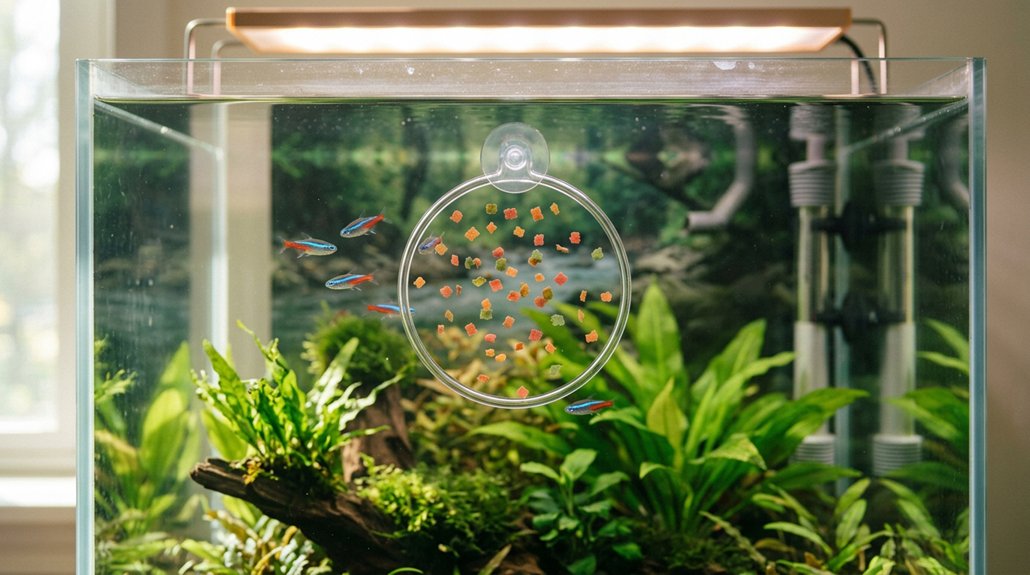
Prevent overfeeding by giving your fish only what they consume within 1–2 minutes, then checking the substrate for leftovers 1–3 hours later. Feed adults once daily or less, and use smaller, species-appropriate portions for juveniles, bottom-dwellers, and warmer-water tanks. Flakes are often safer than dense pellets because they disperse better. If food remains, reduce the ration rather than increasing frequency. Watch for belly swelling or sluggishness, because small adjustments can prevent larger problems ahead.
Key Takeaways
- Feed only what fish consume within 1–2 minutes; remove or reduce portions if food remains visible later.
- Give adults one controlled feeding daily, and juveniles small meals 1–2 times daily.
- Use flakes or species-appropriate foods that stay suspended longer and match mouth size.
- Check the substrate 1–3 hours after feeding for leftovers; persistent waste means you are overfeeding.
- Reduce portions and slow feeding flow rather than increasing meal size or frequency.
How Much Should You Feed Fish?
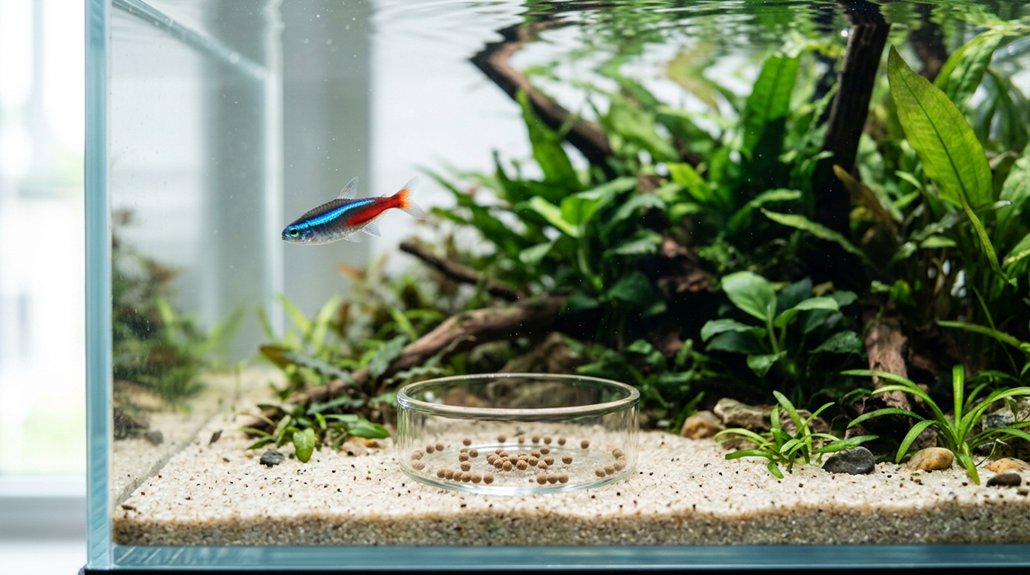
Feed fish only what they can consume within 1–2 minutes; if food is still visible on the substrate several hours later, the portion is too large and should be reduced. You should use strict portion control, because excess feed degrades water quality and can alter nutrient dynamics. For juveniles, feeding frequency may be twice daily; for adults, once daily is often sufficient, and reducing frequency is preferable to increasing each meal. Flakes should be applied sparingly, since they spread and appear larger than they are. Pellets and sticks require extra caution because fragmented material settles quickly. If uneaten feed persists, decrease the ration until little remains. Tank composition matters, so adjust for species, overnight scavenging, and bottom-dwellers.
Choose a Feeding Schedule That Fits
A feeding schedule should match the fish’s life stage, species, and tank conditions. For juveniles, you should provide small portions 1–2 times daily, keeping meal timing tight enough that food disappears within 1–2 minutes. In adult community tanks, once-daily feeding with skipped days usually works well and limits waste.
- Check for uneaten flakes or pellets within a few hours.
- If residue collects on the substrate, reduce portions immediately.
- Adjust frequency for temperature and seasonal adjustments, since warmer water accelerates digestion.
Some fish graze continuously; others stop quickly. You’ll need to vary schedules cautiously, such as alternating light and normal feed days, then observe body condition and tank cleanliness. The goal isn’t maximum feeding—it’s the minimal routine that supports health without excess accumulation.
Pick Fish Food That Won’t Waste
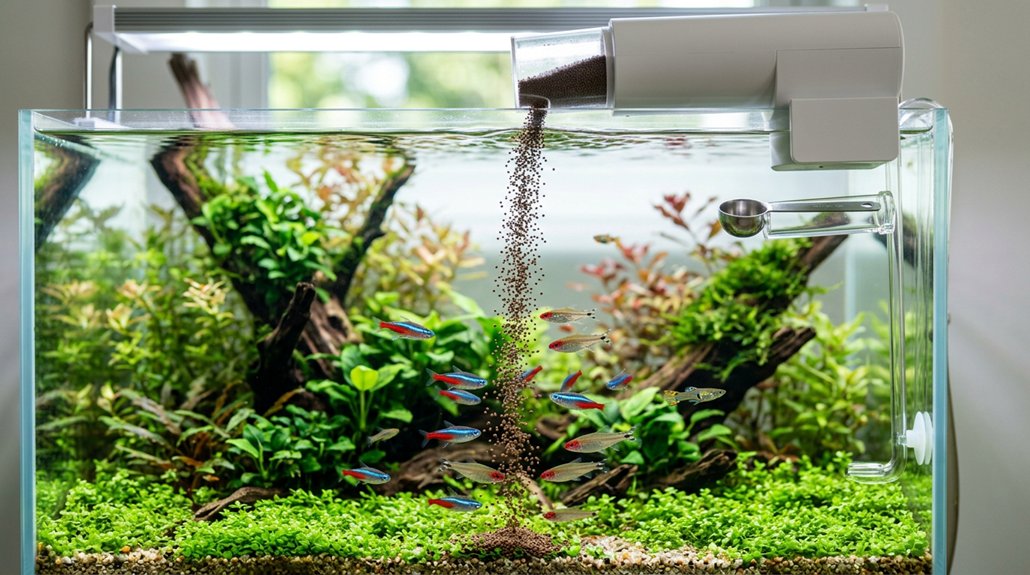
You should favor flake foods for routine feedings because they stay suspended longer and’re less likely to form dense waste on the substrate than pellets. Match the food size and texture to your fish, using small flakes or micro-pellets for juveniles and small species so they can consume it within about 1–2 minutes. For bottom-dwellers, use sinking wafers or frozen foods sparingly, since dense leftovers can accumulate quickly and degrade water quality.
Choose Flake Over Pellets
Flakes are usually the better default for community tanks because they float and disperse gradually, giving surface- and mid-water feeders time to eat before food reaches the substrate. You’ll also get clearer dose control with flaked nutrition and a more predictable feeding texture.
- You can see uneaten flakes quickly.
- Dense pellets sink and waste more.
- Limit flakes to 1–2 minutes of intake.
Because flakes break into small, visible fragments, you can assess leftovers within hours and cut portions before residue accumulates. Pellets and sticks are denser, so overfeeding lets them sink, disintegrate, and degrade water quality faster. If bottom-dwellers need extra food, add a targeted sinking ration instead of converting the whole tank to pellets. That keeps waste localized and reduces substrate fouling overall.
Match Food To Feeders
Match food form to the feeding niche, since the wrong texture often becomes waste before fish can ingest it. You should align particle size with mouth gape and feeding behavior, because dietary preferences vary by species.
| Feeder type | Best food |
|---|---|
| Surface feeders | Floating flakes |
| Midwater small fish | Micro pellets |
| Bottom dwellers | Slow-sinking wafers |
| Juveniles | Crushed flakes |
| Cichlids | Dense pellets |
Use flakes for surface and midwater feeders, but give sinking tablets or veggie wafers to plecos and loaches so they eat promptly. Offer dense pellets or sticks only to species that actively swallow them. Don’t mix multiple forms in one feeding unless you confirm each group takes its share. If you match form, size, and delivery mode, you’ll reduce rejected bits and improve intake efficiency.
Avoid Dense Leftovers
Dense leftovers often start with the wrong food form, so for routine feedings, prefer flakes over heavy pellets or sticks; flakes float and disperse, which reduces compact uneaten material that settles on the substrate and decomposes. You’ll improve water clarity and reduce algae growth by minimizing dense residue.
- Use sinking pellets only when they’re species-appropriate and fully consumed in 1–2 minutes.
- Avoid powders and brittle pellets; stable foods stay intact longer and leave fewer fragments.
- For mixed diets, feed a small pellet portion, then add flakes so bottom-feeders can feed without buildup.
If you still see solid food on the substrate hours later, cut the portion size or switch to less dense flakes. Track leftovers clinically; persistent waste indicates excess.
Check the Tank Bottom for Leftovers
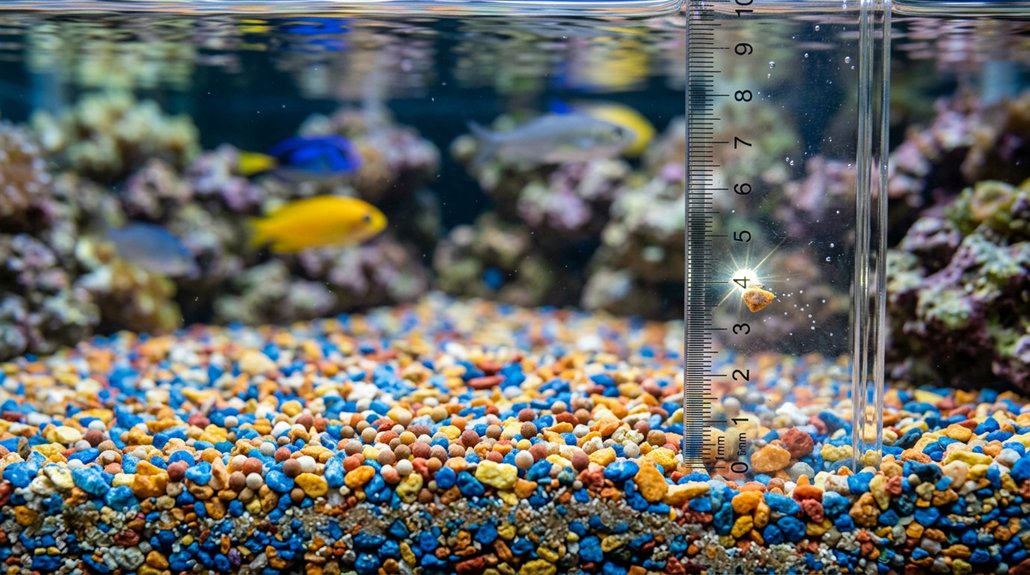
After feeding, check the substrate and tank bottom several hours later for leftover food; ideally, you should see little or no uneaten flake or pellet material. Use this inspection to quantify feeding efficiency under your current inspect lighting conditions and limit microbial buildup from decomposing debris. If visible food remains persistently, you’re overfeeding, and you should reduce portions until leftovers rarely appear within a few hours. Note that flakes disperse and may be harder to trace, whereas disintegrated pellets or sticks often leave denser, obvious residue on the bottom. Don’t assume bottom food will be consumed later; many species ignore it, even overnight. During feeding, briefly reduce filter flow or pause filtration so food isn’t driven downward and mistaken for excess rationing.
Feed Bottom-Dwellers Without Overdoing It
You should target the substrate with flakes or sinking granules so bottom-dwellers can locate food within 1–2 minutes, before top-feeders remove it. Use only small portions, since dense foods sink quickly and uneaten material accumulates on the bottom. If needed, reduce filter flow briefly during feeding so the food stays in the feeding zone and doesn’t spread into excess.
Target the Substrate
To feed bottom-dwellers without overdoing it, keep substrate-bound food strictly limited: add only as much flake food as they’ll consume within 1–2 minutes, and use sinking pellets or sticks sparingly because any uneaten portion disintegrates and accumulates on the bottom. You should target the substrate directly, then assess residue promptly to preserve substrate aeration and bacterial balance.
- Briefly reduce filter flow during feeding so food remains accessible near the bottom.
- Inspect the substrate after several hours; visible leftovers indicate excessive input.
- Use compatible scavengers only to remove occasional debris, not to justify larger rations.
If you repeatedly detect uneaten food, decrease delivery immediately. This approach minimizes decomposition, limits organic buildup, and keeps bottom-feeders supplied without creating chronic waste accumulation in dead zones or compacted sediment.
Use Small Portions
Tiny, measured feedings are the most reliable way to keep bottom-dwellers nourished without driving excess waste into the substrate. You should practice portion control: offer measured servings that your fish finish in 1–2 minutes. If you see hunger at the bottom, add a second, targeted pinch of sinking pellets instead of enlarging the surface meal. Briefly stop the filter during feeding so fine particles don’t get pushed into gravel.
| Action | Effect |
|---|---|
| Small servings | Less residue |
| Targeted sinking pellets | Bottom access |
| Short filter pause | Reduced dispersal |
| Substrate check | Portion adjustment |
After feeding, inspect the substrate; little or no uneaten food should remain within a few hours. You can add compatible scavengers, but they can’t replace disciplined portion control.
Adjust Feeding for Species and Age
Because feeding requirements change with both age and species, a fixed schedule can easily lead to overfeeding. You should apply species specific nutrition and age adjusted portions to match metabolic demand.
Age and species shape feeding needs, so adjust portions to match metabolism and avoid overfeeding.
- Juveniles generally need two small feeds daily, but each meal should be finished in 1–2 minutes.
- Adults usually do best on one controlled feeding per day, with no residual food on the substrate.
- Continuous grazers, such as goldfish, need more frequent small feedings, while predators and opportunistic feeders, including cichlids, often tolerate one measured meal.
You should also adjust rations with temperature and season. Warmer water speeds digestion, so you can maintain modest portions; cooler water slows digestion, so meals should be smaller and less frequent. For growing angels and other young fish, monitor body condition and cut back if food remains uneaten.
Spot Overfeeding Signs Before They Worsen
Within 1–3 hours after feeding, inspect the substrate for visible flake or pellet fragments; if food remains, you’re likely overfeeding and should reduce the ration. You should also assess behavioral signs: pale color, an enlarged belly, sluggish swimming, or gasping at the surface suggest chronic excess intake or digestion issues. For growing angels, give only what’s consumed in about 2 minutes; juveniles should clear food in 1–2 minutes. If it’s safe, briefly stop the filter during feeding so current doesn’t carry food to the bottom and distort your assessment. Feed no more than once daily, and skip a day occasionally. Continue lowering portions until little or no food is found on the tank bottom.
Avoid the Feeding Mistakes That Cause Waste
To cut down waste, feed your fish once per day at most and give only the amount they can finish in 1–2 minutes; if you’re still seeing food on the substrate after several hours, scale back the ration rather than feeding more often. Your feeding rituals should prioritize flakes for surface feeders and avoid dense pellets or sticks that disintegrate and sink. Use meal timers to keep portions consistent, and stop or slow the filter during feeding so current doesn’t push food downward before it’s consumed.
- Reduce portions, not frequency, when uneaten food remains.
- Add targeted sinking pellets for shy or bottom-feeding fish.
- Consider scavengers such as clown loaches or plecos.
This less-is-more protocol limits decomposition, preserves water quality, and makes waste visually easier to detect.
Frequently Asked Questions
How to Fix an Overfeeding Fish Tank?
Reduce feeding schedules and tighten portion control immediately; remove uneaten food with a siphon, perform a partial water change, and monitor ammonia and nitrite. You’ll restore balance, lower waste, and prevent further water-quality decline.
Can Fish Survive Overfeeding?
Yes, you can sometimes overfeed fish and they’ll survive, but the excess is a storm cloud: feeding frequency and food quality matter. Chronic overfeeding’ll raise ammonia, deplete oxygen, and trigger disease, obesity, or death.
What Are the Signs of Overfeeding Fish?
You’re seeing overfeeding when uneaten food stays after 1–2 hours, water turns cloudy, nitrates rise, algae blooms increase, fish bloat or gasp, waste accumulates, filters clog, and feeding frequency or food portioning’s excessive.
Is It Better to Under or Overfeed Fish?
You’re better off slightly underfeeding than overfeeding; excess food worsens water quality and health. Use portion control and adjust feeding frequency by species, age, and temperature, since fish can’t safely tolerate chronic surplus.
Conclusion
If you feed your fish less than you think they want, you usually protect the tank more than you harm it. That theory is true: excess food decays, elevates ammonia, and destabilizes water chemistry. You can prevent this by following a strict schedule, matching portions to species, and removing leftovers promptly. When you treat feeding as a measured intervention, not a habit, you reduce waste, support health, and keep your aquarium biologically stable.