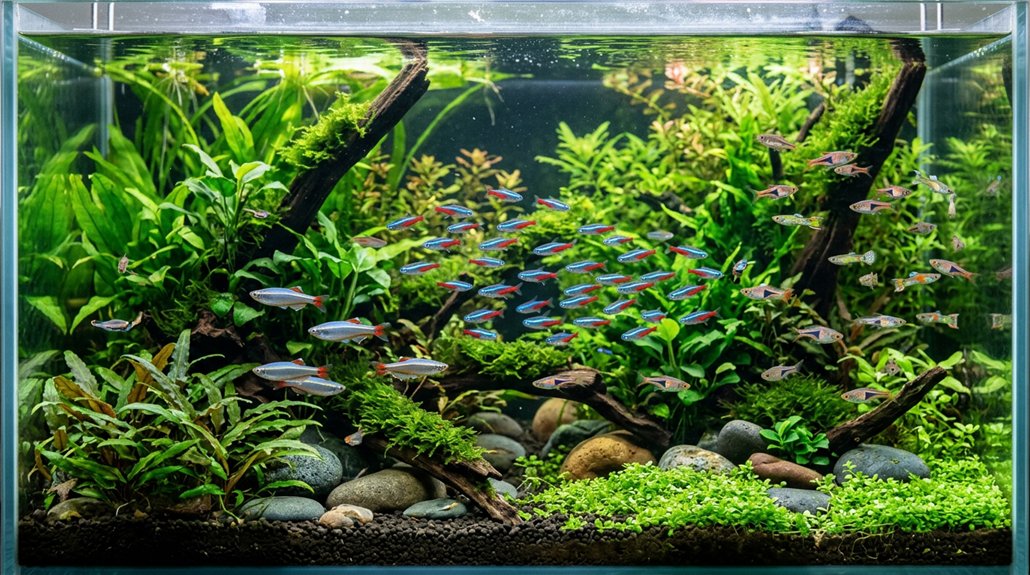
For the best community fish in a freshwater aquarium, you should choose peaceful species that match in adult size, temperament, and water needs. Neon tetras, harlequin rasboras, and rummy-nose tetras are strong midwater schooling fish when you keep six or more. Corydoras, otocinclus, and bristlenose plecos cover the bottom well. Guppies, platies, and a single dwarf gourami can also work. With stable 74–80°F water, you’ll see more harmony and clearer fish behavior as you learn more.
Key Takeaways
- Neon tetras, harlequin rasboras, and celestial pearl danios are peaceful schooling fish that thrive in groups of six to ten or more.
- Corydoras, otocinclus, and bristlenose plecos make excellent bottom dwellers for community tanks with sand, cover, and leftover food.
- Guppies and platies are hardy, colorful livebearers that adapt well and add constant activity to freshwater community aquariums.
- Dwarf gouramis can work as a centerpiece fish, but usually keep only one per tank to reduce aggression.
- Choose fish with similar adult size and water needs, ideally 74–80°F and pH 6.5–7.5, in tanks 20 gallons or larger.
Best Peaceful Community Fish
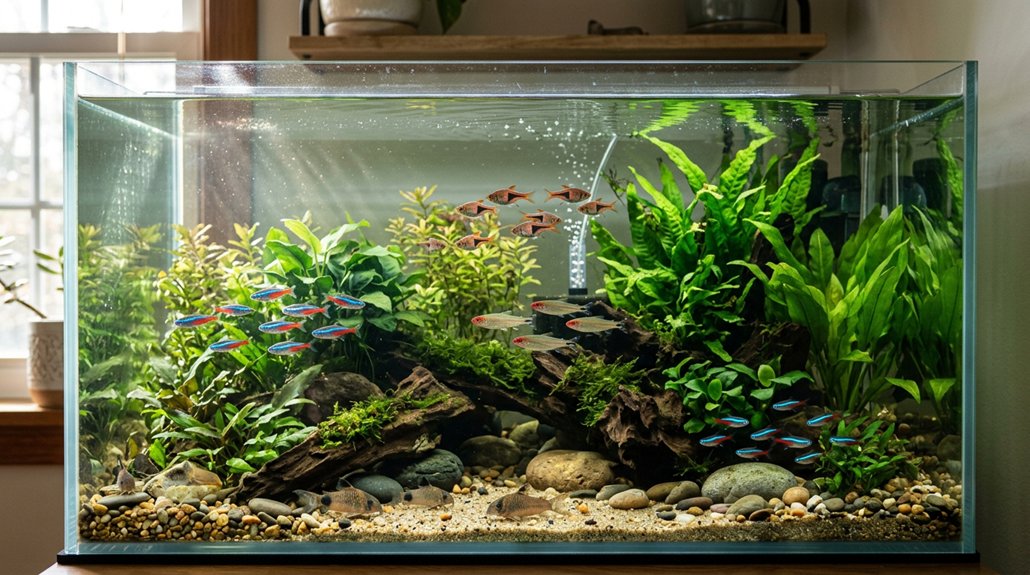
When choosing peaceful community fish, you’ll usually get the best results by mixing species that occupy different parts of the tank and share similar temperaments. In your setup, Neon Tetras are reliable midwater tank mates if you keep six or more, since schooling reduces stress and improves coloration. Corydoras catfish suit the bottom zone; give them sand, same-species groups, and leftover food to support natural scavenging. Otocinclus are effective algae-grazers for planted aquariums, but they’re shy, so stock them in groups of six plus stable feeding regimes. Guppies and Platies adapt well, eat readily, and breed in community tanks, adding constant activity. Dwarf Gouramis can work as a focal fish, though one per tank is usually safest unless you’ve got 20+ gallons and low aggression.
Colorful Schooling Fish for Midwater
Colorful midwater schooling fish usually show their best color and most natural behavior when you keep them in proper groups and stable conditions. You’ll see neon tetra schooling at its best when you keep six or more in a 10- to 20-gallon aquarium with 74-80°F water and pH 6.5-7.5. Rummy-nose tetras need similar numbers, and their bright red faces should stay vivid; fading often signals stress or poor water quality. Celestial pearl danios do best in larger groups of 10+, where they feel secure and explore planted layouts more confidently. Harlequin rasboras and related rasboras also school tightly when you stock seven or more. For larger mixed schools, a 55-gallon or bigger tank gives you better spacing, steadier behavior, and clearer schooling displays.
Bottom Dwellers for Clean Community Tanks
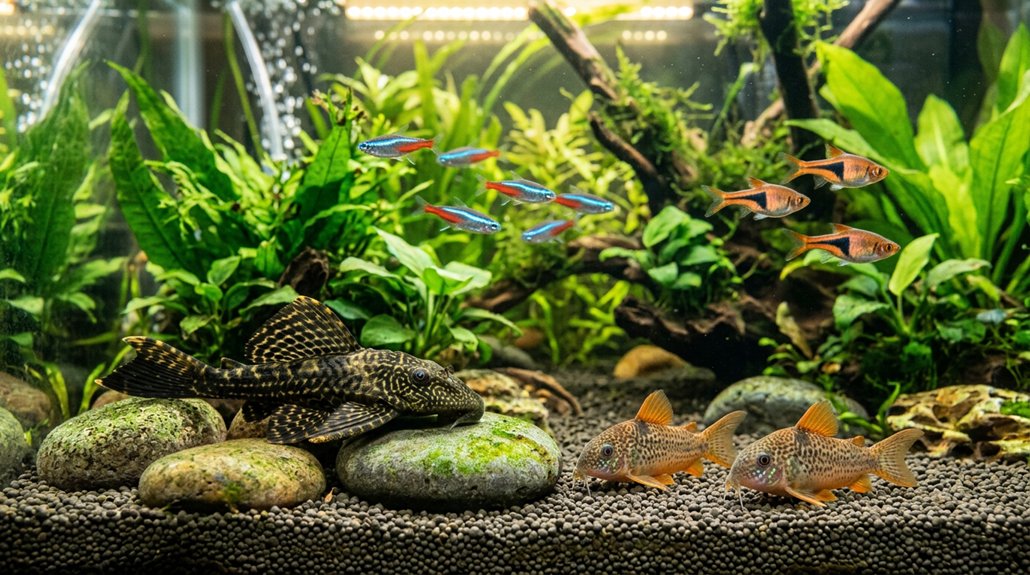
Bottom dwellers often do their best work in well-planned community tanks, where they help tidy leftover food and add natural activity at the substrate level. You’ll want corydoras in groups of 6+ on a soft sand substrate to protect barbel health. Bristlenose plecos, at 4–5 inches, manage diatoms and algae while taking wafers, pellets, and blanched vegetables. Otocinclus stay tiny and should be grouped in six or more in planted tanks for brown algae control.
| Species | Size | Use |
|---|---|---|
| Corydoras | 2–3 in | Scavenge leftovers |
| Bristlenose Pleco | 4–5 in | Algae and diatoms |
| Otocinclus | 1.5–2 in | Brown algae |
A 20+ gallon tank fits a cory school plus one bristlenose; larger plecos need more space. Provide driftwood, caves, and sinking foods to reduce competition.
How to Choose Fish That Get Along
To build a peaceful community tank, you’ll want to match fish by adult size, temperament, and water needs so no species is pressured into hiding, bullying, or predation. Choose companions with similar body lengths and calm behavior; small tetras, rasboras, and danios usually pair best with other nonaggressive species. Keep schooling fish in groups of 6–10 or more, since isolation raises stress and can trigger aggression or concealment. Verify overlapping parameters, especially 74–80°F and pH 6.5–7.5, so every fish stays physiologically stable. Build vertical balance with top, mid, and bottom swimmers to reduce space competition. Before stocking, use compatibility testing and note species-specific traits, like territorial dwarf gouramis or breeding livebearers. Add habitat enrichment and soft sand for Corydoras.
Community Tank Care Tips
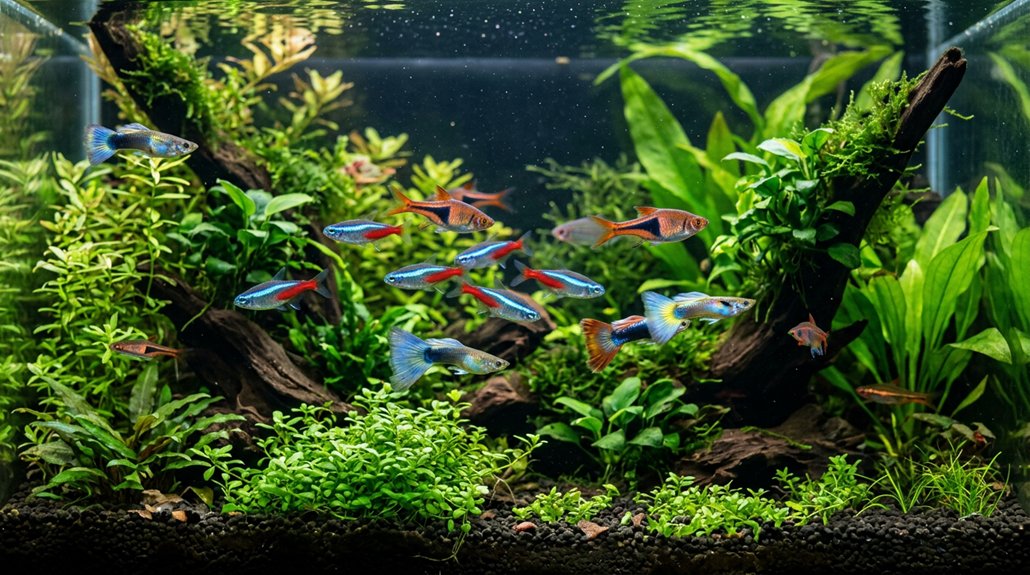
Establishing a stable community tank starts with sufficient volume: 20 gallons is the practical minimum, with larger setups needed for active or schooling species, and stocking should be based on each fish’s adult size rather than its juvenile form. Keep temperature at 74–80°F and pH 6.5–7.5, then match species with similar needs. Use careful plant placement, driftwood, and cover to define territories while preserving open water.
| Care point | Target |
|---|---|
| School size | 6–10+ |
| Corydoras/Otos | 6+ |
| Lighting schedule | Consistent daily cycle |
Feed controlled portions of varied foods, run filtration rated above tank volume, and change water regularly. When you maintain these parameters, your fish stay calmer, healthier, and visibly more secure.
Frequently Asked Questions
What Are the Best Freshwater Aquarium Fish for a Community Tank?
You’ll do best with neon tetras, rummy-nose tetras, guppies, platies, peaceful corydoras schooling, and otocinclus; bristlenose plecos also work. Watch dwarf gourami behavior for aggression, and keep all species in appropriate groups.
What Is the Hardiest Community Fish?
You’ll usually find platies the hardiest; they’ve survived my heater failure from 78°F to 64°F. You get excellent temperature tolerance, broad pH acceptance, and decent disease resistance, making them forgiving, resilient community fish.
What Fish Can I Add to My Community Tank?
You can add Neon Tetras, Rummynose Tetras, Corydoras, Otocinclus, or a single Dwarf Gourami, matching tank decor preferences and breeding behavior; keep schooling species in groups, provide hides, and stock by adult size and filtration capacity.
What Community Fish Can Live Together?
You can keep schooling danios with tetras, rasboras, corydoras, otocinclus, and peaceful gouramis, since they share compatible temperaments, sizes, and water needs; ironically, the quieter your tank, the more fish get along.
Conclusion
Choosing the best community fish for your freshwater aquarium can transform a plain glass box into a living, moving tapestry of color and calm. When you pair peaceful species, active schoolers, and diligent bottom dwellers, you create a balanced tank that works like a tiny engineered ecosystem. If you match sizes, temperaments, and water needs, your fish’ll coexist smoothly, and your aquarium’ll look as if it’s been painted with motion, light, and life.