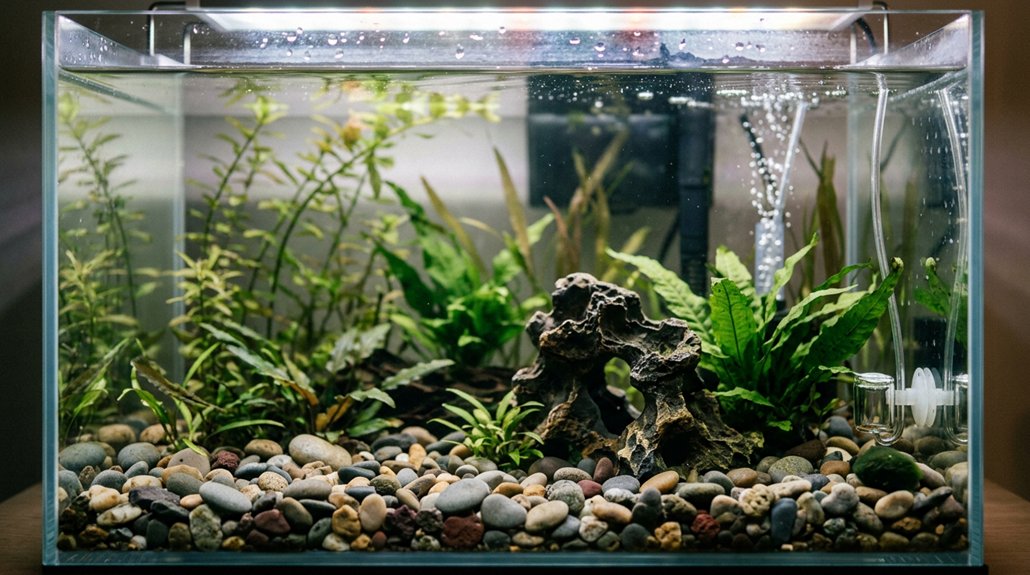
Start by choosing a tank that fits your fish, then place it on a level stand away from sunlight, vents, and drafts. Rinse the tank, substrate, and décor, and gather a filter, heater, thermometer, test kit, conditioner, and dechlorinator. Fill slowly, install equipment, then cycle the aquarium for 4–6 weeks until ammonia and nitrite read zero. Test weekly, change water as needed, and quarantine new fish before adding them. There’s more to make each step easier.
Key Takeaways
- Choose a properly sized tank, ideally a wider one, based on adult fish size, count, and filled weight.
- Place the aquarium on a level, low-traffic stand away from sunlight, drafts, and temperature swings.
- Install filter, heater, thermometer, lighting, substrate, and decorations; rinse and secure everything before filling.
- Fill slowly with conditioned, temperature-matched water, then run the equipment and cycle the tank fishless for 4–6 weeks.
- Test water regularly, keep ammonia and nitrite at 0 ppm, and use partial water changes and proper filter maintenance.
Choose Your Aquarium Size
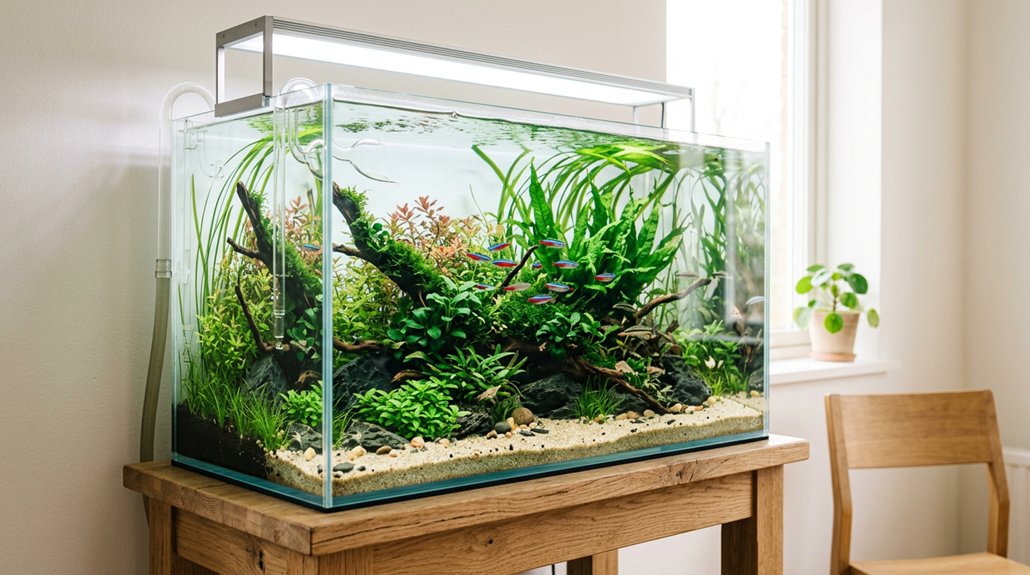
Choosing the right aquarium size starts with the fish you want to keep as adults, not just the ones at the store. Start by matching gallons to species and count: a 20-gallon long works well for small community fish, while a single fancy goldfish needs about 20 gallons and each extra one needs roughly 10 more. Prioritize wider tanks because extra surface area improves oxygen exchange, stability, and swimming room. Think about stocking density, too; bigger tanks give you more flexibility and fewer swings in water quality. If you like certain aesthetic themes, choose a shape that supports them without crowding fish. Remember that water weighs 8 to 10 pounds per gallon, so size affects stand strength and your maintenance routine.
Pick the Best Spot for Your Tank
Once you’ve picked the right tank size, the next step is finding a spot that can safely support it and keep your fish comfortable. Choose a level, low-traffic area you’ll visit often for feeding and checks, and place the tank at a comfortable viewing height. Keep it away from direct sunlight, windows, exterior doors, vents, and air conditioners to avoid drafts, temperature swings, and algae blooms. Make sure the floor and stand can handle the filled weight; a 20-gallon tank can weigh 160–200 pounds. Use a stand built for your tank’s footprint, not uneven furniture. Leave a few inches behind the aquarium for hoses and access. Pick a spot with at least three outlets nearby, and form drip loops before cords reach sockets. Fill 1–2 inches first to test levelness and leaks.
Gather the Essential Aquarium Supplies
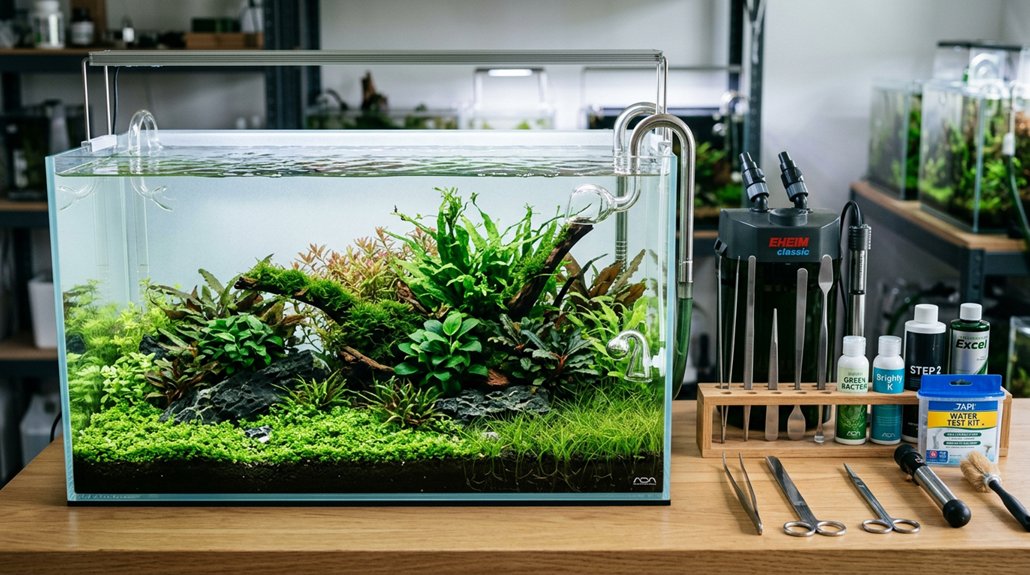
You’ll need to start with the core tank equipment: a properly sized aquarium, a sturdy stand, a hood/light, a filter rated above your tank volume, and an adjustable heater sized for the gallons you’re keeping. For water care, make sure you’ve got a liquid test kit, dechlorinator, and a bacteria starter so you can monitor water quality and kick off the cycle correctly. Then gather the practical extras and decor, including rinsed substrate, safe plants and decorations, a siphon, net, thermometer, spare filter media, and a dedicated bucket for easy maintenance.
Core Tank Equipment
Start by gathering the core equipment that’ll make your tank stable from day one: a filter rated for at least twice the aquarium’s volume, with extra replacement media on hand, so it can handle waste as the tank cycles. Choose an adjustable submersible heater sized about 3–5 watts per gallon, and position it for even heat; smart Heater placement means putting an in-tank thermometer opposite it to confirm steady temperature. Plan for easy Filter maintenance by keeping spare media ready and accessible. Add a reliable liquid test kit, water conditioner, rinsed substrate, siphon, nets, buckets, and a sturdy cover. If you’re using plants, include the right substrate now. Finish with lighting suited to your goals and a timer for consistent daily use.
Water Care Essentials
For water care, gather the supplies that keep your aquarium safe and stable from day one: a reliable liquid test kit for ammonia, nitrite, nitrate, and pH; a dechlorinating water conditioner to remove chlorine and chloramine; and bottled nitrifying bacteria or seeded filter media to jump-start the biofilter.
- Test daily at first so you catch spikes early.
- Treat every new bucket of tap water with conditioner before it enters the tank.
- Add beneficial bacteria to help your cycle start faster and protect fish.
- Keep a gravel vacuum, bucket, and replacement media ready for weekly water changes and simple maintenance.
If you’re keeping tropical fish, use a heater and thermometer to hold 72–82°F. Consider oxygenation strategies like an air pump, especially during outages.
Tools And Decor
Gather your tools and decor before the tank ever fills, because the right setup gear makes maintenance easier and keeps fish safer from day one. Keep a siphon gravel vacuum, dedicated 5-gal buckets, algae scraper, fine mesh nets, and a long-handled cup or pasta strainer ready for aquascape maintenance. Choose aquarium-safe rocks, pre-soaked driftwood, caves, and smooth hides that match your fish without crowding swim space. Use 1–2 inches of planted substrate, or rinsed gravel or sand for species like Corydoras and loaches; skip colored gravels that may leach. Sponge filters or internal filters with spray bars can hide tubing and add biological media. For decor safety, secure heavy pieces with aquarium-safe silicone, and keep dechlorinator, salt, fertilizers, and root tabs on hand.
Rinse the Tank, Substrate, and Décor
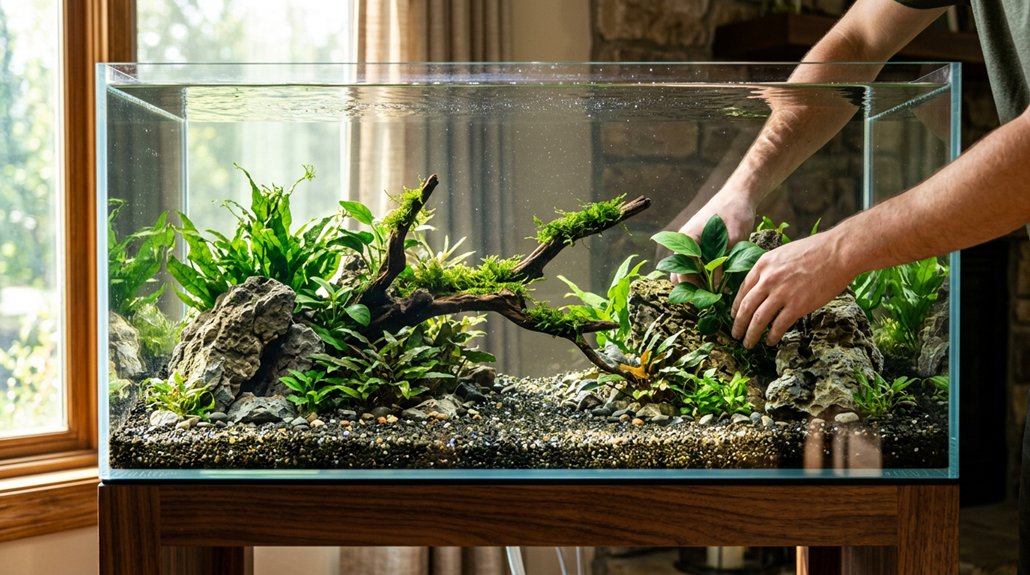
Wipe the tank down with warm tap water, then inspect the glass seams and silicone closely for cracks, gaps, or trapped debris—skip soap and detergents entirely, since any residue can harm fish later. During this glass inspection, fill the tank with 1–2 inches of water to spot leaks before you add anything else.
Wipe the tank with warm water, then check seams and silicone for cracks or leaks before adding anything.
- Rinse gravel or pool sand in a bucket or colander until the water runs clear.
- Soak decorations and artificial plants in hot water, then remove stickers and loose bits.
- For driftwood, soak it separately for days to handle tannin leaching and help it sink.
- If you’re using live plants or seeded media, rinse only gently so you don’t wash away beneficial bacteria.
Once everything’s clean, you’re ready for the next step.
Install the Filter, Heater, and Light
Next, set up the filter, heater, and light so the tank can start cycling and stabilizing properly. Install the filter per the manufacturer’s instructions and choose one rated for at least twice your tank volume; for a 20-gallon tank, that’s about 40–60 GPH. Don’t plug it in until the tank’s filled and the unit’s primed, unless it’s self-priming. For heater placement, put the submersible heater near the filter intake or outflow and size it at 3–5 watts per gallon. After filling, wait about 10 minutes before powering it on. Mount the thermometer opposite the heater, set the temperature slowly, and use a timer for the light photoperiod. Keep cords neat with drip loops, and let everything run several hours.
Fill and Condition the Tank
Now comes the filling and conditioning step, and doing it slowly helps keep your setup clean and stable. Use slow filling by placing a plate, saucer, or bowl on the substrate, then pour water over it so gravel stays put and the tank fills to about 1 inch below the rim. 1. Match the new water to the tank temperature. 2. Add conditioner for chlorine and chloramine neutralization, using the label dose for your volume. 3. Wait 10–20 minutes before installing and priming the filter, then plug in the heater with a drip loop. 4. If you’re starting fishless, add seeded media or bottled bacteria and test water daily. Keep the heater and thermometer on so the temperature stays steady at 72–82°F.
Cycle the Aquarium Before Stocking
Before you add any fish, let the aquarium cycle for 4–6 weeks so beneficial bacteria can build up and convert toxic ammonia into nitrite and then nitrate. This fishless cycling period gives your tank time to stabilize without stressing livestock. You can dose ammonia, add a little decaying food, or seed the filter media and substrate with material from an established tank to speed things up. A reputable live bacteria product can also help. Use a liquid test kit to track progress, aiming for 0 ppm ammonia, 0 ppm nitrite, and measurable nitrates. Don’t replace all filter media at once, since that can wipe out colonies. Once readings stay stable, add only a few hardy fish at first and quarantine new arrivals.
Test Water and Maintain the Tank
Test the water at least once a week with a reliable liquid test kit, and daily during cycling, so you can catch problems early. Track ammonia, nitrite, nitrate, and pH; aim for 0 ppm ammonia, 0 ppm nitrite, and under 20 ppm nitrates before heavy stocking. Good water testing helps you spot drift fast.
- If ammonia or nitrite rises above 0.25–0.5 ppm, do a 25–50% water change.
- Treat new water with dechlorinator and match temperature and basic parameters.
- Rinse filter media in removed tank water, not tap water, for bacteria preservation.
- Replace only part of the media monthly if needed, and log every test, change, and treatment.
That record will show trends and help you keep the tank stable.
Acclimate and Quarantine New Fish
When you bring new fish home, ease them in slowly and keep them separate at first so you don’t put your whole tank at risk. Use drip acclimation for 30–60 minutes, adding tank water at about 2–4 ml/min so temperature, pH, and chemistry match. Then move them into a 10–20 gallon quarantine tank with a heater, simple filter, and hides. Seed the filter with media from your main tank if you can.
| Check | Do this |
|---|---|
| Quarantine duration | Keep fish separate at least 14 days |
| Health checks | Watch daily for odd behavior or spots |
| Water tests | Test ammonia, nitrite, and nitrate |
| Treatment | Medicate only in quarantine, and remove carbon |
Don’t add new fish to the display until quarantine ends cleanly. Record source, date, and treatments.
Frequently Asked Questions
How Often Should I Clean Aquarium Decorations?
You should clean aquarium decorations monthly, or sooner if algae builds up. During water changes, inspect them and use algae scraping gently. Rotate decor occasionally to prevent buildup, keep things looking fresh, and reduce stress.
What Fish Species Are Best for Beginners?
You’ll do best with hardy species like neon tetras, cherry barbs, and danios; they’re peaceful, colorful, and forgiving. Start with a small school, stable water, and compatible tank mates to keep your aquarium thriving.
Can I Use Tap Water for a Freshwater Aquarium?
Yes, you can use tap water, but treat it first. Like a clear stream needing a shield, add water conditioner for chlorine removal, then test temperature and pH so your fish stay healthy and stress-free.
How Many Fish Can I Add at Once?
Add only a few fish at once, ideally 1–3 small ones, so you can monitor water quality. Stagger additions by 1–2 weeks; acclimation timing helps stress reduction and keeps your tank stable.
Should I Add Live Plants Before Cycling?
Yes, you should add live plants before cycling. They’ll help test the theory of plant benefits while you refine substrate selection, and they can stabilize water, reduce algae, and make your tank easier to manage.
Conclusion
With your tank set up, you’re ready to build a healthy freshwater home for your fish. Take it slow, keep testing the water, and don’t rush stocking—patience really is the name of the game. If you stay consistent with maintenance, your aquarium will stay stable, clear, and thriving. Now you’ve got the basics in place, so trust the process and enjoy watching your new aquatic world grow.