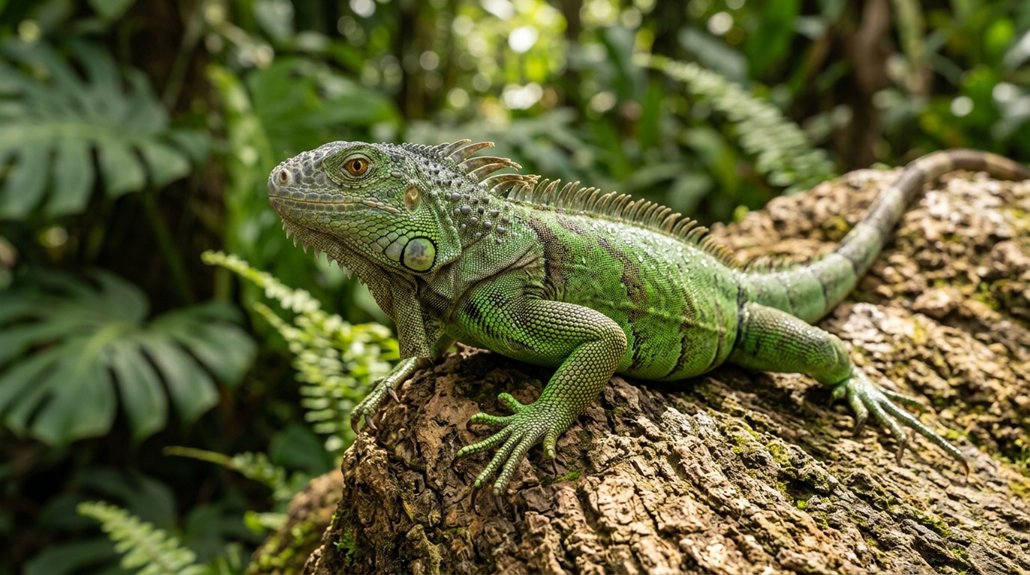
Caring for an iguana involves creating a habitat that mimics its natural environment. You’ll need a spacious, well-ventilated enclosure with controlled temperatures between 75°F and 95°F, plus proper UVB lighting for vitamin D. Make certain humidity levels stay between 60%-80%, and provide a diet rich in greens with a calcium-phosphorus ratio of 2:1. Recognize signs of illness, practice proper handling, and maintain strict hygiene to prevent salmonella. Explore further to understand iguanas’ specific behavioral and social needs.
Key Takeaways
- Ensure your iguana has a spacious enclosure with proper temperature and humidity control to mimic their natural environment.
- Provide a diet of 95% dark leafy greens and 5% fruits, with supplements for calcium and vitamin D3.
- Regularly monitor for signs of illness and engage in preventive veterinary care to maintain your iguana’s health.
- Establish a socialization routine while respecting their space and be aware of defensive behaviors like biting or tail whipping.
- Equip the habitat with UVB lighting and enrich it with live plants and climbing branches for mental stimulation.
Quick Start Guide to Iguana Care
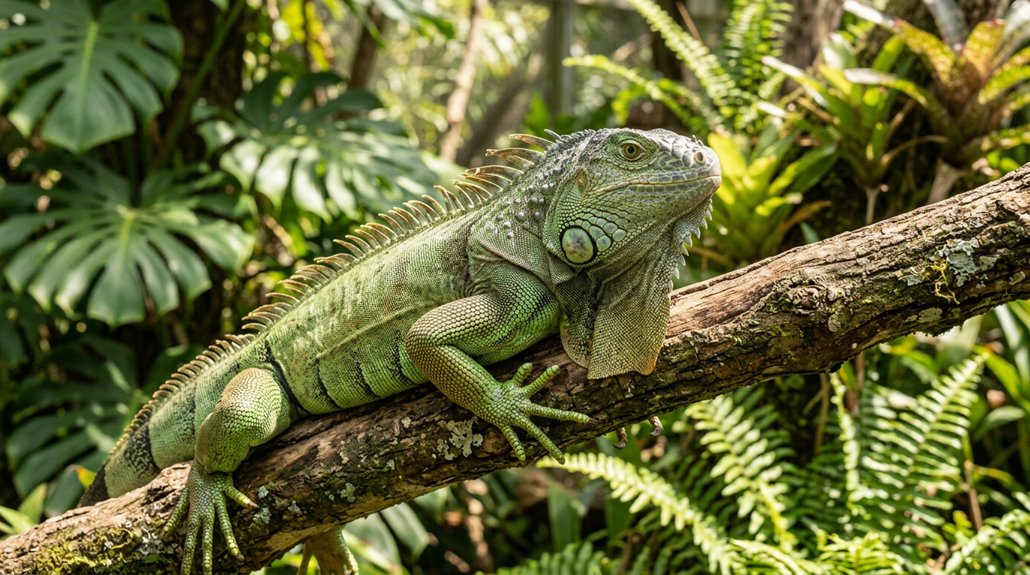
When you’re beginning to care for an iguana, it’s important to establish a proper living environment to assure its health and well-being. Creating a spacious custom enclosure measuring 12x6x8 feet is essential, especially for breeding iguanas, as it provides ample space for natural iguana behavior. Regulate temperature between 75°F and 95°F to mimic their native climate. A diet comprised of 95% dark leafy greens and 5% fruits, supplemented with calcium, prevents metabolic bone disease, critical for maintaining skeletal health. Regular cleaning—both daily and weekly—keeps the habitat hygienic and reduces disease risk. Because adult iguanas can live up to 20 years, committing to long-term care, including regular handling, supports trust-building while accommodating their instinctual self-defense behaviors.
Key Behavioral Traits of Iguanas and How to Accommodate Them
Due to their inherent wild nature, iguanas exhibit specific behavioral traits that require a keen understanding to accommodate effectively. Consistent routine handling, an essential iguana socialization technique, bolsters trust and comfort. Baby iguanas, fast and skittish, contrast greatly with adult iguanas, which may become lazy and docile. Practicing vigilant behavioral observation guarantees stress signs aren’t overlooked.
Below is a summary highlighting key behavioral insights:
| Behavioral Trait | Description | Accommodation Strategy |
|---|---|---|
| Handling Resistance | Never fully domesticated | Routine, gentle interaction |
| Speed and Skittishness | Common in baby iguanas | Calm, patient approach |
| Defensive Behaviors | Biting, tail whipping | Recognize aggression signs |
| Strong Claws/Tails | Injury risk to handlers | Use protective gear |
| Socialization Need | Overcoming self-defense instinct | Regular socialization |
Understanding these traits helps forge a trusting bond with your iguana.
Creating the Perfect Iguana Habitat
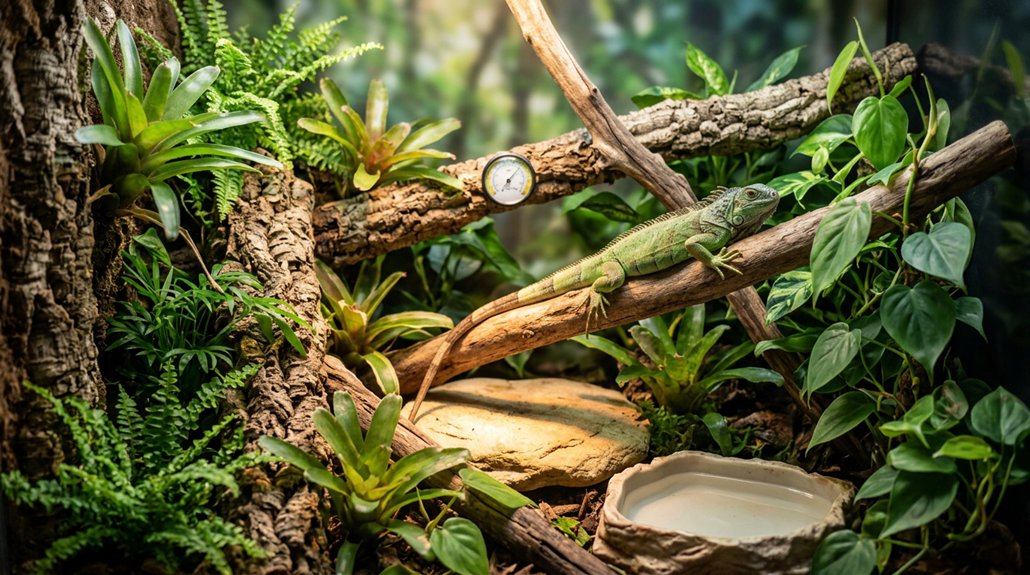
To create the perfect iguana habitat, you’ll need to guarantee the enclosure is spacious, measuring approximately 12 feet long, 6 feet wide, and 8 feet tall to match their climbing instincts and large size. It’s crucial to maintain a humidity level of at least 70% with regular misting and water pools, while also providing a temperature gradient that includes a basking area heated to 95°F, a cooler section at 75°F, and an ambient temperature of 85°F to facilitate proper digestion. Equipping the habitat with live plants, climbing branches, and hiding spots will not only enrich the environment but also help simulate natural conditions for ideal iguana welfare.
Optimal Temperature and Humidity
Creating the perfect iguana habitat requires precise attention to both temperature and humidity, which greatly impact the reptile’s health and wellbeing. Begin with effective temperature monitoring. Maintain the enclosure at 85-90°F, ensuring a basking area reaches 95-105°F for ideal digestion and metabolism. Night temperatures should fall to 75-80°F using non-light emitting heat sources to prevent sleep disruption. Equally important is humidity control; aim for 70-80% humidity to avert dehydration and bolster health. Achieve this through regular misting and incorporating water features. Consistency in lighting, with a 12-hour daylight cycle, supports hormonal balance. Finally, prioritize good ventilation to preclude mold growth, avoiding glass tanks in favor of ventilated enclosures for superior airflow.
Suitable Enclosure Features
While constructing a suitable iguana enclosure, prioritize size above all to guarantee the reptile’s physical and psychological health. Aim for dimensions of at least 12 feet long, 6 feet wide, and 8 feet tall. Use enclosure materials like Repticarpet or paper towels as substrates; they mitigate the risk of impaction compared to loose bedding. Integrate climbing features such as sturdy branches and live plants to fulfill the iguana’s natural climbing instincts and encourage enrichment.
Create a habitat with proper heating, maintaining ambient temperatures at 85°F and basking areas at 95°F, while ensuring cooler zones don’t drop below 75°F. Keep humidity levels between 70%-80% by incorporating regular misting and water features. Install appropriate lighting to replicate a 12-hour light/dark cycle for ideal physiological health.
Maintaining Optimal Climate: Temperature and Humidity
Properly maintaining the climate within an iguana’s enclosure is crucial for their health and well-being. Temperature adjustment is critical, with ambient levels kept between 85°F and 90°F during the day. Basking spots should reach 95°F to aid digestion, while cooler zones must not drop below 75°F to allow thermoregulation. At night, reduce the temperature to 75°F–80°F using non-light-emitting heat sources.
Effective humidity management is equally important, maintaining levels at 70% to 80%. This prevents dehydration and guarantees adequate lung function. Incorporate misting systems and water pools to boost humidity. Additionally, adhere to a consistent 12-hour light cycle to stabilize hormonal functions. Utilizing thermometers and hygrometers will provide precise monitoring of these environmental parameters.
What Should You Feed Your Iguana?
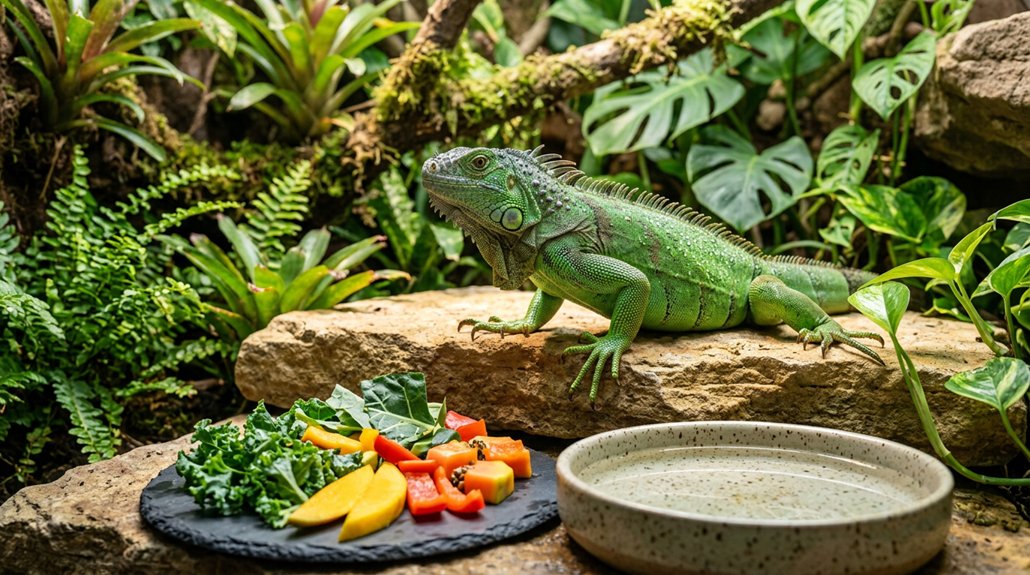
When planning your iguana’s diet, it’s imperative to focus on its herbivorous needs while guaranteeing nutritional balance. Your iguana’s diet should consist of 95% leafy greens and 5% fruits, adhering strictly to herbivore nutrition. Essential greens include mustard, turnip, and collard greens, which are rich in nutrients, but must be supplemented with calcium and vitamin D3. This supplementation guarantees a proper calcium balance, essential in achieving the ideal calcium-to-phosphorus ratio of 2:1. This ratio is critical to prevent metabolic bone disease by aiding calcium absorption. Chop or shred these greens into small pieces, as iguanas eat food whole. Maintain constant access to fresh water to prevent dehydration and remove uneaten food within 24 hours to avoid spoilage.
Common Iguana Health Issues to Watch Out For
When caring for an iguana, monitoring for signs of illness such as abnormal skin discoloration, lethargy, or unusual behavior is essential to prevent serious health issues. Dehydration, a prevalent condition in iguanas, can escalate to kidney disease, so guarantee they have adequate water and maintain a humid environment. Additionally, practice rigorous hygiene to avoid salmonella transmission, and handle them gently to reduce stress, fostering trust that minimizes defensive responses like biting or tail whipping.
Signs of Illness
Recognizing the signs of illness in iguanas is vital for ensuring their well-being and addressing potential health issues promptly. Regular veterinary check-ups are necessary to keep your iguana in peak health. Pay attention to symptoms like lethargy, abnormal skin discoloration, and loss of balance, as these are indicators of potential health concerns. The importance of hydration can’t be understated, as dehydration often leads to severe conditions like kidney disease. Look for symptoms such as swelling and decreased appetite to spot dehydration early. Other signs include twitching, stuck shed, and excessive open-mouth breathing. Monitoring their feeding habits and behaviors is essential; iguanas may mask illness. Always practice proper hygiene after handling to prevent salmonella transmission.
Common Health Concerns
In iguana care, several common health concerns demand your attention to secure their well-being. Dehydration can lead to kidney disease, marked by lethargy and swelling, requiring immediate veterinary intervention. Metabolic bone disease results from inadequate calcium and vitamin D3, stressing the need for a balanced diet with ample vitamin supplementation. A typical diet includes dark leafy greens to guarantee proper nutrition and stave off deficiencies.
Diabetes management in iguanas isn’t typical as it is in mammals, but an unbalanced diet could contribute to metabolic issues. Monitor for symptoms like loss of balance, abnormal skin discoloration, or decreased appetite, which signal underlying health issues. Always maintain strict hygiene after handling to prevent salmonella transmission, especially around children or the elderly.
Preventive Care Tips
As you begin the journey of safeguarding your iguana’s health, it’s essential to adopt a strategic approach toward preventive care. Start with meticulous hydration monitoring, as dehydration can lead to kidney disease, detectable by lethargy or swelling. Frequent behavioral observation is important; watch for defensive actions like biting or tail whipping, signals your iguana feels threatened. Use strict hygiene practices post-handling to mitigate salmonella risks, especially to vulnerable individuals. Be vigilant for unusual behavior—loss of appetite, twitching, or skin discoloration could highlight underlying health issues. Nutrition is critical; supply a vegetable-rich diet with adequate calcium to prevent metabolic bone disease. Constant vigilance and proactive measures are key to nurturing a healthy, stress-free lifestyle for your iguana.
Safe Handling Techniques for Your Iguana
Handling your iguana safely is vital to fostering a trusting relationship and guaranteeing its well-being. Regular handling is fundamental as it aids in stress reduction and allows your iguana to become comfortable with interaction. Carefully managing handling sessions can minimize defensive behaviors.
- Support your iguana under the abdomen and hind legs to prevent sudden movements.
- Wear protective gear like long sleeves and gloves when managing adults, as they can inflict injury.
- Observe body language, such as tail whipping or biting, indicating discomfort or aggression.
- Maintain a calm environment to avoid startling your iguana with noise or sudden movements.
- Gradually increase handling duration to build trust and ease your iguana into interactions.
Prudent handling guarantees a stress-free relationship with your iguana.
Preventing Salmonella: Essential Hygiene Practices
To effectively prevent salmonella transmission, it’s essential to wash your hands with soap and water immediately after handling your iguana or its environment. Implement safe handling procedures by designating specific utensils and cleaning supplies for your iguana’s use, reducing cross-contamination risks. Additionally, adhere to a strict cleaning and disinfecting routine for the iguana’s enclosure, ensuring that bacterial growth is minimized.
Proper Hand Washing Techniques
Rigorous hand washing is essential in mitigating the risk of salmonella infection associated with iguana care. By adopting effective hygiene habits, you can safeguard yourself and others. Always wash your hands thoroughly with soap and water for at least 20 seconds after any contact with your iguana or when cleaning its enclosure. This reduces the risk of salmonella transmission. Consider these practices:
- Use separate cutting boards and utensils to prevent cross-contamination with human food.
- Keep a dedicated set of cleaning supplies, like gloves and disinfectants, specifically for iguana care.
- Regularly disinfect surfaces that come into contact with your iguana or its food.
- Avoid allowing children, the elderly, and immunocompromised individuals to handle iguanas to reduce health risks.
- Educate household members about the importance of these hygiene practices.
Safe Handling Procedures
When managing iguana care, prioritizing safe handling procedures is essential to minimizing the risk of salmonella transmission. Iguanas can carry salmonella bacteria asymptomatically, making vigilant hygiene important. After every instance of handling, wash your hands thoroughly with soap and water. Use gloves when managing their environment: cleaning the enclosure or handling uneaten food. Proper handling techniques also mean limiting contact with high-risk individuals, like young children, the elderly, pregnant women, and those with compromised immune systems. This prevention method is significant for protecting vulnerable people. Observe iguanas’ communication signals to avoid stressing them, which might increase handling complications. For thorough hygiene guidance, consult trusted resources like Anapsid.org and Melissa Kaplan’s materials, ensuring both you and your iguana stay healthy.
Cleaning and Disinfecting Protocols
Begin the iguana care journey with meticulous cleaning and disinfecting protocols as your primary defense against salmonella exposure. Employ dedicated cleaning supplies solely for enclosure sanitation to thwart cross-contamination. Rigorously wash your hands with soap and water after handling your iguana or related items. Regularly disinfect the enclosure, executing daily waste removal and weekly deep cleans to maintain sanitary conditions.
- Use reptile-safe cleaning solutions, guaranteeing chemicals are thoroughly rinsed to prevent toxicity.
- Adopt disposable gloves when managing soiled objects to minimize direct pathogen contact.
- Be particularly vigilant if young children or immunocompromised individuals share the household.
- Consistent cleanliness via reptile-safe disinfectants is paramount; never compromise.
- Maintain thoroughness in all cleaning actions to safeguard ideal iguana health.
Such methods are essential in safeguarding both your iguana and household members from infection risks.
Should You Get an Iguana? Pros and Cons
Considering an iguana as a pet? It’s essential to understand iguana behavior and habitat requirements before committing. Iguanas can live over 20 years, demanding a lasting commitment. Behaviorally, they’re not naturally tame and may exhibit aggression without proper socialization, emphasizing the need for consistent handling, especially in homes with children or other pets. Habitat requirements are extensive; you’ll need a substantial enclosure—approximately 12 feet long, 6 feet wide, and 8 feet tall. This results in high housing costs but guarantees space for movement and growth. Diet is simpler than an omnivorous pet, focusing on dark leafy greens and calcium supplements. If you’re patient and prepared for long-term care responsibilities, an iguana could be a rewarding companion.
Where to Find More Iguana Care Advice
Curious about where to find more reliable iguana care advice? Leverage diverse care resources and community support to guarantee your iguana thrives. Here’s a precise guide:
- Anapsid.org: It offers extensive resources on iguana diet, housing, and health.
- Melissa Kaplan’s Herp and Green Iguana Information Collection: Access in-depth guides on iguana specifics.
- Online forums and communities: Engage with fellow iguana enthusiasts for real-life insights and support.
- Local exotic animal veterinarians: Obtain tailored health advice to address unique iguana health issues.
- Cross-referencing information: Validate advice through multiple trusted sources to mitigate misinformation risks.
Always verify information from these sources, guaranteeing a well-rounded understanding of iguana needs. Accurate guidance fosters a healthy and happy iguana life.
Frequently Asked Questions
How to Care for an Iguana for Beginners?
Make certain your iguana’s habitat is spacious with controlled humidity and temperatures. Provide a diet of 95% fresh vegetables, avoiding pet-store cages, and practice hygiene to prevent salmonella. Handle iguanas regularly but cautiously to build trust.
Are Iguanas Good Pets for Beginners?
Iguanas aren’t ideal for beginners due to their skittish behavior and complex handling requirements. They demand extensive knowledge for care, large enclosures, and specialized diets. These factors make them challenging to manage without prior reptile experience.
Are Iguana Bites Painful?
Yes, iguana bites are painful, capable of deep wounds due to strong jaws. Understanding iguana behavior and employing bite prevention techniques, like wearing thick gloves and recognizing stress signals, can help minimize bite risks and pain.
Do Green Iguanas Need Light at Night?
Green iguanas don’t need nighttime lighting; a dark environment is essential for their health. Ensuring your iguana habitat maintains 75-80°F without emitting light at night supports their circadian rhythm, proper digestion, and reduces stress.
Conclusion
Caring for an iguana is like balancing between lush jungles and sterile laboratories. You must simulate the wild’s warmth and humidity while ensuring clinical cleanliness to prevent diseases like salmonella. Their vibrant diet demands precision, mirroring their vivid scales, as delicate handling underscores their fragile trust. Consider the iguana’s labyrinth of needs, from temperature gradients to behavioral quirks. Are you prepared to walk this tightrope of nature and nurture, ensuring a thriving partnership with your reptilian companion?