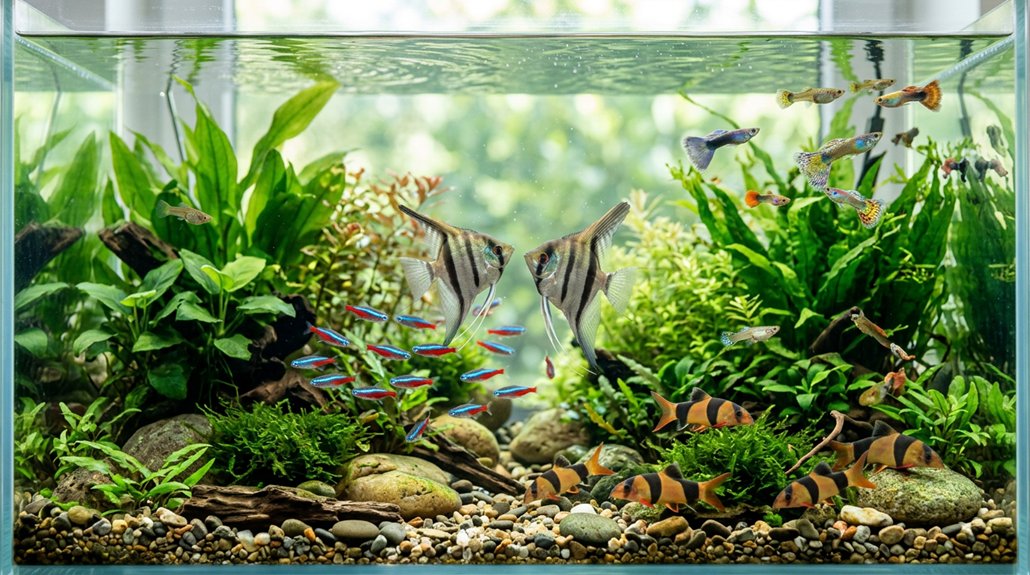
You can keep fish together safely when you match their adult size, temperament, diet, and water needs. Peaceful community fish like neon or cardinal tetras, rasboras, zebra danios, guppies, platies, and corydoras often do well together in a properly sized tank. Avoid mixing aggressive cichlids, fin-nippers, or very different species needs. Group schooling fish in 6 or more, and quarantine newcomers for 4–6 weeks. A few key details can make your tank much calmer.
Key Takeaways
- Peaceful schooling fish like tetras, rasboras, zebra danios, and corydoras often live together well in community tanks.
- Keep schooling fish in groups of at least 6–10, with enough tank space to reduce stress and aggression.
- Match fish by adult size, temperament, and diet to prevent bullying, fin-nipping, and feeding competition.
- Avoid mixing aggressive cichlids, fin-nippers, and tankbusters with peaceful community fish.
- Quarantine new fish for 4–6 weeks and maintain good water quality before adding them to the tank.
Which Fish Make Good Tank Mates?
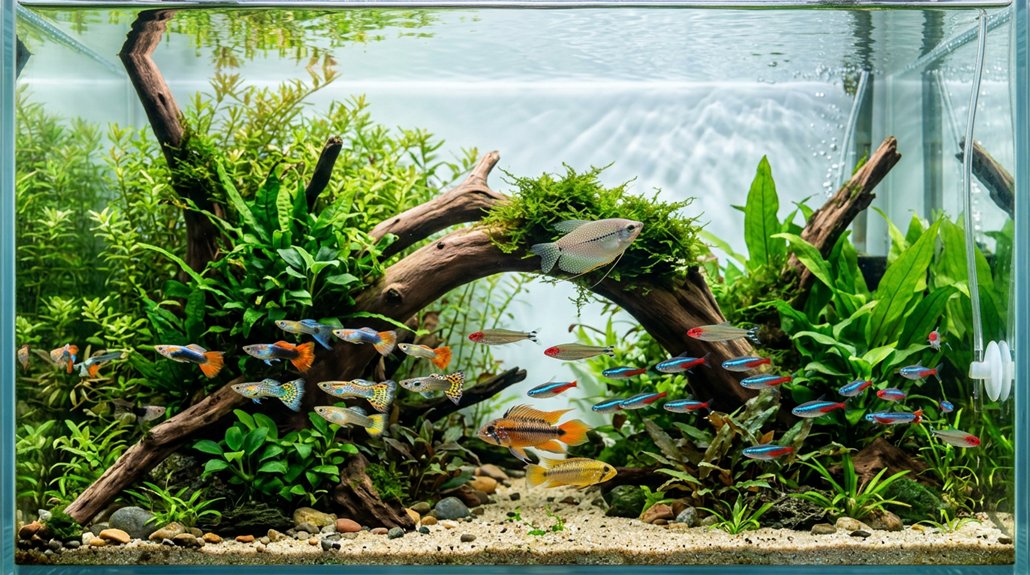
Good tank mates are fish that share similar temperaments, space needs, and water conditions, so you can set up a stable community without constant stress or injury. You’ll usually do best with peaceful schooling fish such as neon or cardinal tetras and rasboras, kept in groups of six or more to lower anxiety and nipping. Corydoras catfish are reliable bottom-dwellers, and they’re healthiest in groups of four to six. Guppies, platies, and mollies can fit together if their water parameters match, and you should consider color preferences when choosing visible, active species. If you’re keeping nocturnal species, give them calmer tank mates. Avoid pairing long-finned fish with fin-nippers, and don’t mix tiny schoolers with larger grower species.
How Tank Size Affects Compatibility
Tank size directly affects territory, so if you keep semi-aggressive fish like cichlids or redtail sharks, you’ll often need a larger aquarium to reduce chronic harassment. You’ll also need enough room for schooling fish such as tetras or danios, since small groups don’t show normal behavior and can become stressed. If you overcrowd a tank, aggression and water-quality problems rise quickly, so you should match stocking to the tank’s actual capacity.
Tank Size And Territory
When space is limited, fish compatibility drops quickly because aggression and stress rise as territory shrinks. You’ll see stronger disputes when tank boundaries are tight and territory markers can’t separate rivals. In 10–20 gallon tanks, keep only small, peaceful species; larger or territorial fish usually can’t cope.
- Neon tetras, rasboras, and guppies fit better in compact community setups.
- African cichlids often need at least a 4-foot tank to settle territories.
- Overcrowding raises conflict and destabilizes water quality.
- Hiding places help, but they can’t replace adequate tank volume.
For semi-aggressive fish, size the aquarium for adult length and bioload, not a rough inch-per-gallon rule. If you’re trying to reduce chronic harassment, give territorial species much more room or keep them separately.
Space For Schooling Fish
Schooling fish need enough room to stay in groups of at least 6–10, because tight quarters can turn normal shoaling behavior into stress, fin-nipping, and weak water conditions. You should plan for a 20-gallon minimum for small tetras, rasboras, and danios, but longer tanks matter more than volume alone. A 4′ tank improves schooling distance and shoal cohesion for active species.
| Species | Tank Length | Group Size |
|---|---|---|
| Tetras | 20+ gal | 6–10 |
| Danios | 4′ ideal | 6–12 |
| Rasboras | 20+ gal | 6–10 |
Use 1 inch of adult fish per gallon as a starting point, then adjust for body depth, activity, and filtration. If you mix schooling species, give similar sizes and horizontal space so no school is outcompeted.
Overcrowding Increases Aggression
Although tank size is often overlooked, overcrowding can quickly turn compatible fish into aggressive tank mates. In smaller tanks, space limits and social compression intensify territorial contact, so you’ll see more chasing, nipping, and stress. Water quality can also decline fast; rising ammonia, nitrite, and low oxygen push peaceful species toward conflict.
- Give schooling fish their minimum group size, then add swimming room.
- Match tank size to adult body length, not juvenile size.
- Use larger tanks for territorial species like African cichlids.
- Add rockwork and structure to diffuse aggression.
If you keep semi-aggressive fish in a tank that’s too small, they’re more likely to bully weaker tank mates. A larger, well-structured aquarium lets them establish space without constant confrontation and helps you maintain stable, healthier compatibility.
Best Community Fish for Peaceful Tanks
You’ll usually get the best results with peaceful schooling species such as neon or cardinal tetras, corydoras, zebra danios, guppies, and platies, since they’re broadly compatible in calm community setups. You should keep these fish in appropriate groups, because social structure reduces stress and supports normal behavior. If you’re choosing tankmates, match size, temperament, and water needs so your community stays stable and low-conflict.
Peaceful Schooling Species
- Neon and cardinal tetras: keep 6–12 in soft, slightly acidic water.
- Corydoras catfish: keep 4–6+, use fine substrate, and expect scavenging.
- Zebra danios: keep 5+; they’re hardy and active in varied temperatures.
- Rasboras: keep 6+; they need open space and calm midwater companions.
If you prefer livebearers, guppies and platies can fit well when male numbers are controlled.
Beginner-Friendly Tankmates
For a beginner-friendly community tank, start with peaceful fish that match one another’s size, activity level, and water needs. You can keep neon or cardinal tetras in groups of at least six in stable 10–20 gallon tanks. Corydoras need 4–6 companions and soft, sandy substrate to protect their barbels. Guppies and platies are adaptable livebearers for Livebearer mixes, while zebra danios suit active setups because they’re hardy and should school in fives or more. In Soft planted aquascapes, these fish often show calmer behavior and better color. Quarantine new fish for 4–6 weeks, then watch ammonia and nitrite closely during cycling. Avoid fin-nippers and territorial species, and you’ll reduce stress, injuries, and poor compatibility in your tank.
Choosing Compatible Groups
To build a peaceful community tank, choose true community species that share similar size, temperament, and diet, then keep them in proper groups so their behavior stays stable: neon or cardinal tetras and rasboras in schools of 6 or more, zebra danios in schools of 6 or more, and Corydoras in groups of 4–6. Match stocking to adult size, not juvenile looks, and don’t mix them with larger or predatory fish.
- Use guppies or platies with other calm, small fish.
- Avoid tiger barbs, Serpae tetras, and fin-nippers with long-finned species.
- Keep semi-peaceful fish only in 20+ gallon, well-planted tanks.
- Quarantine newcomers 4–6 weeks and monitor water chemistry.
Adequate planting density reduces stress and helps you spot territorial shifts early.
Semi-Peaceful Fish That Need Extra Care
Semi-peaceful fish can work in a community tank, but they usually need more planning than truly peaceful species. You’ll need territorial monitoring and careful water conditioning, especially when keeping bettas, dwarf gouramis, or mollies. A betta may coexist in a tank over 20 gallons, but avoid tankmates with long fins or similar color patterns. Dwarf gouramis are often calm when young, yet adults can claim space, so use dense plants and hiding spots. Mollies need stable, slightly alkaline water, plenty of room, and low crowding. Choose similarly sized, non-fin-nipping tankmates, and add plants or rocks to break sight lines. If you’re a beginner, don’t mix several semi-peaceful species in a small tank. Quarantine new arrivals for 4–6 weeks to check aggression and disease.
Fish to Keep Out of Community Tanks
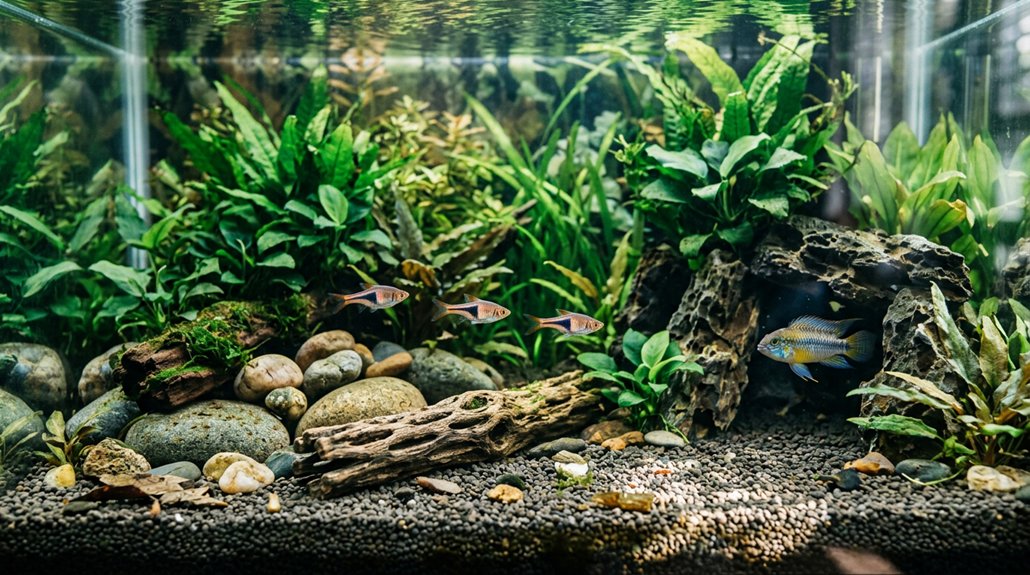
Not every fish belongs in a community tank, even if it’s sold that way in stores. You’ll protect your stock by excluding species that predictably disrupt shared systems and cause chronic stress.
- Aggressive cichlids can injure peaceful fish.
- Fin-nippers repeatedly damage long-finned tankmates.
- Tankbusters outgrow typical aquariums and may eat smaller fish.
- Territorial grazers and water-parameter specialists often harass others or fail outside their niche.
If you keep these fish, give them species-specific housing, not mixed setups. That caution also helps prevent invasive releases, accidental breeding hybrids, and avoidable losses. When you match fish to a stable environment, you reduce disease pressure and improve welfare for every animal in your care.
Match Fish by Size, Diet, and Temperament
Once you’ve ruled out fish that don’t belong in community tanks, the next step is matching the fish you do keep by size, diet, and temperament. Use size matching so adult fish stay comparable; tiny neon tetras, for example, do best with other small species, not tankmates that can bully or swallow them. Practice diet pairing by grouping herbivores, omnivores, or carnivores with fish that need similar foods, which helps you feed accurately and reduces competition. You’ll also want compatible temperaments: peaceful schooling fish like tetras, rasboras, and corydoras usually mix well, while aggressive or territorial species often need isolation. If you keep semi-aggressive fish, choose robust, similarly sized tankmates and avoid fin-nippers with long-finned fish.
Signs Your Fish Need Separate Tanks
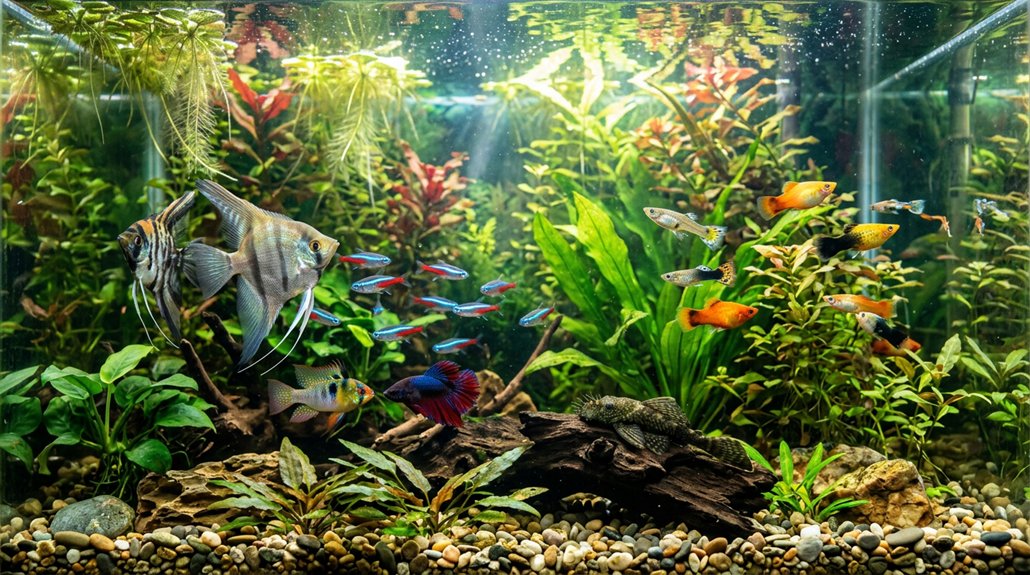
When fish that were meant to coexist start showing clear stress or injury, separate tanks may be necessary to protect them. You should watch for repeated chasing, ramming, or territorial displays, especially if one fish hides more than half the day.
When fish start chasing, hiding, or showing injury, separate tanks may be needed to protect them.
- Torn or missing fins that don’t heal in a few weeks suggest fin-nipping or aggression.
- Elevated ammonia or nitrite after adding fish can mean the tank’s bioload is too high.
- Bite marks, missing scales, or internal injury mean smaller fish may need urgent removal.
- Feeding exclusion or a dominant fish blocking access for weeks indicates an unsafe social balance.
If you see these patterns, act promptly. Separation can reduce stress, lower infection risk, and give each fish a safer chance to recover without ongoing conflict.
Setup Tips for a Low-Stress Community Tank
A low-stress community tank starts with the right setup before any fish are added, especially if you’ve already seen signs that certain fish can’t safely share space. Begin with at least a 10–20 gallon tank, then scale up for adult size and schooling needs. Run the filter for 4–6 weeks until ammonia and nitrite read 0 ppm, while pH and temperature stay stable. Choose tankmates with similar size, temperament, and diet; guppies, rasboras, danios, and corydoras fit well. Avoid fin-nippers or territorial species with slow or long-finned fish. Keep water quality steady with weekly 20–30% changes and test regularly. Use consistent lighting schedules and careful liveplants selection. Quarantine new fish 4–6 weeks, add schooling fish in full groups, and remove aggressors promptly.
Frequently Asked Questions
Which Aquarium Fish Live Together?
You can keep community schooling fish like neon tetras, rasboras, and danios together, plus guppies, platies, mollies, and Corydoras. Avoid fin-nippers and fish with territorial behavior, unless you’ve got a large, carefully monitored tank.
What Fish Cannot Be in the Same Tank Together?
You shouldn’t keep aggressive cichlids with small peaceful fish, fin-nippers with long-finned species, tankbusters in community tanks, nocturnal predators with tiny tankmates, or fish needing opposite pH and temperature; you’d risk stress, injury, and death.
What Fish Are Best in Pairs?
You’ll do best with species showing strong pair compatibility: many cichlids, dwarf gouramis, and some angelfish or rainbowfish pairs in large tanks. You’ll also need to watch breeding behaviors closely and provide space.
Conclusion
So, after all this talk of “community,” you may find the calmest tank is the one where you resist the urge to mix every colorful fish you like. Ironically, good companionship in a tank often means knowing who should not be together. If you match size, diet, and temperament, you’ll avoid stress, injury, and regret. In the end, your fish aren’t asking for variety—they’re asking for peace, and you’re the one who has to provide it.