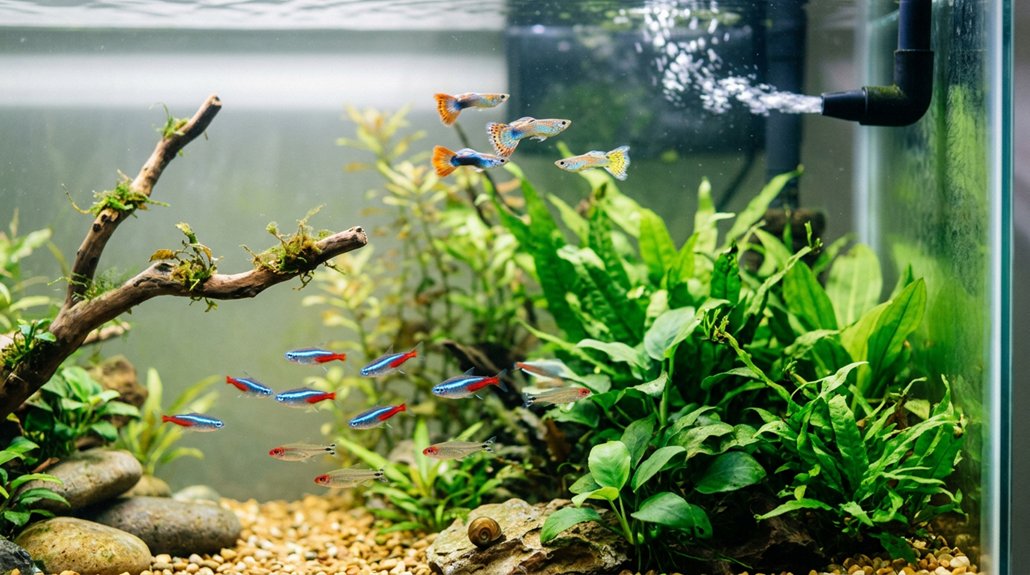
Common freshwater aquarium problems usually start with unstable water quality, weak filtration, excess light, or overfeeding. You should test ammonia, nitrite, and nitrate often, keep ammonia and nitrite at 0 ppm, and change 25–50% of the water if toxins rise. If the tank looks cloudy, remove waste and boost aeration. For green water, cut light and nutrients. Add fish slowly, maintain your filter, and keep a regular cleaning schedule so the system stays stable and your tank improves.
Key Takeaways
- Cycle new tanks for several weeks, testing ammonia and nitrite every 2–3 days before adding fish slowly.
- Keep ammonia and nitrite at 0 ppm with water changes, dechlorinator, and careful feeding during cycling.
- Cloudy water often means a bacterial bloom; test parameters, increase aeration, and remove waste immediately.
- Control algae with 6–8 hours of light, no direct sunlight, reduced feeding, and regular water changes.
- Maintain filtration and routine care by cleaning media in tank water, changing water weekly, and monitoring nitrates below 40 ppm.
Common Causes of Aquarium Problems
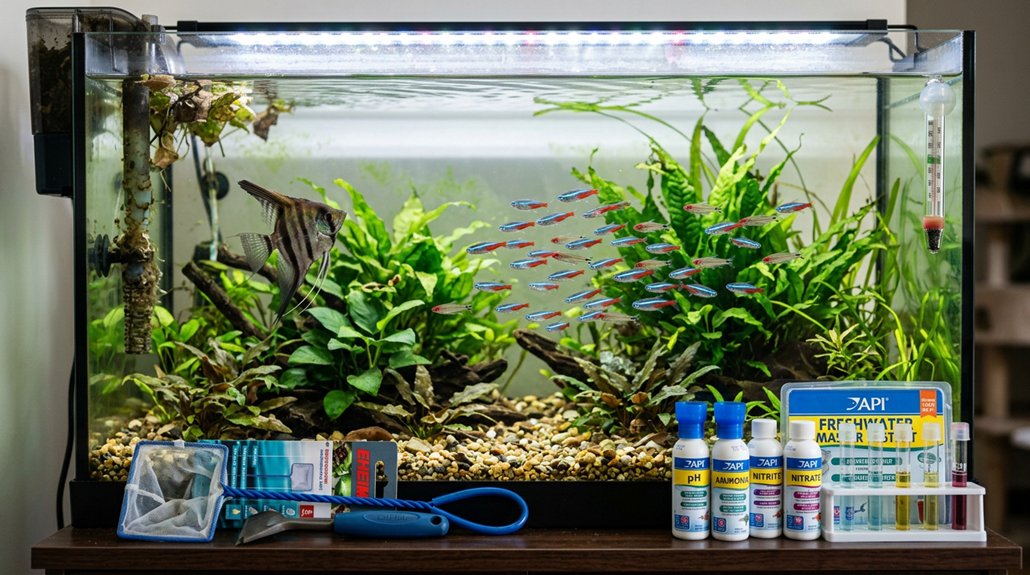
Aquarium problems often start with the tank’s biological foundation: in new setups, nitrifying bacteria haven’t fully colonized yet, so ammonia and nitrite can spike to toxic levels until the system cycles. You should test every 2–3 days and add fish only after both read 0 ppm. Overcrowding stress builds when you exceed the tank’s biological capacity or the filter’s rating, causing waste buildup and low oxygen; stock a 20–55 gallon tank slowly. Overfeeding leaves uneaten food that decays and raises ammonia and nitrate, so feed lightly once daily. Chemical contamination from untreated tap water, chloramine, or bad cleaning can kill bacteria and stress fish. Use dechlorinator, rinse media in tank water, and replace parts in stages.
Fix Cloudy Water Fast
Cloudy water is usually a symptom of the same imbalance behind many tank problems: in new or recently disturbed aquariums, a white, milky haze is often a bacterial bloom driven by elevated ammonia as the nitrogen cycle stabilizes. Test ammonia and nitrite immediately; if either reads above 0 ppm, change 25–50% of the water and use an ammonia detoxifier such as Seachem Prime. Cut back to reduce feeding, and remove uneaten food, dead plants, and detritus. Add an oxygenation boost with an air stone or stronger surface agitation so nitrifying bacteria recover faster. This bloom often clears in days once conditions settle. If the water stays particulate rather than milky, run a micron pad or clarifier, and recheck parameters every 2–3 days to keep the problem from returning.
Stop Ammonia and Nitrite Spikes
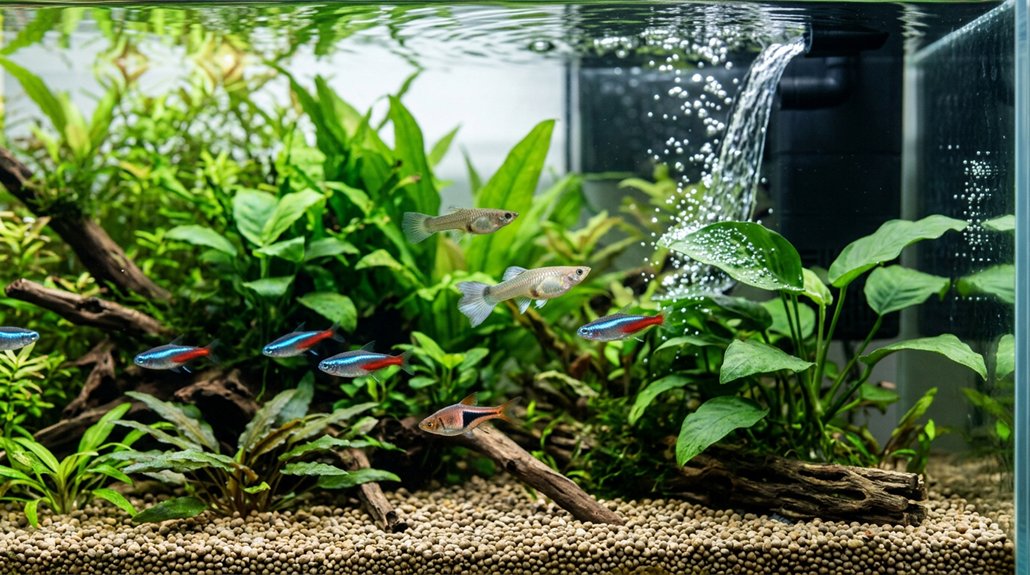
When ammonia or nitrite shows even a detectable reading, act immediately with a 25–50% water change, remove any decaying plant matter or uneaten food, and dose an ammonia detoxifier such as Seachem Prime while biological filtration catches up. Test with a reliable kit every 2–3 days during cycling and after any major change, because both compounds should stay at 0 ppm. In new tanks, stock slowly; don’t add more fish until ammonia and nitrite repeatedly read zero. Protect nitrifying bacteria by rinsing filter media in tank water only and replacing media in stages, not all at once. If nitrite remains elevated, use partial water changes, extra aeration, and aquarium salt at 1 tsp/gal if your species tolerate it. Bacterial seeding can speed recovery.
Control Green Water and Algae
Green water usually means free-floating microscopic algae are feeding on excess nutrients, so you’ll need to cut the light to about 6–8 hours a day, block direct sunlight, and reduce nutrient input with sparing feeding, prompt removal of uneaten food, and avoidance of overstocking. To further reduce lighting pressure, use a timer and keep the photoperiod consistent. Perform 25–50% water changes and vacuum the substrate to lower dissolved nitrate and phosphate. Test ammonia, nitrate, and phosphate regularly so you can track the bloom’s drivers. Add live plants to compete for nutrients and stabilize conditions. If suspended algae persist, improve mechanical capture with fine media or use a correctly sized UV sterilizer with proper flow. Keep nitrate under 40 ppm and adjust husbandry before the bloom rebounds.
Clear Debris With Better Filtration
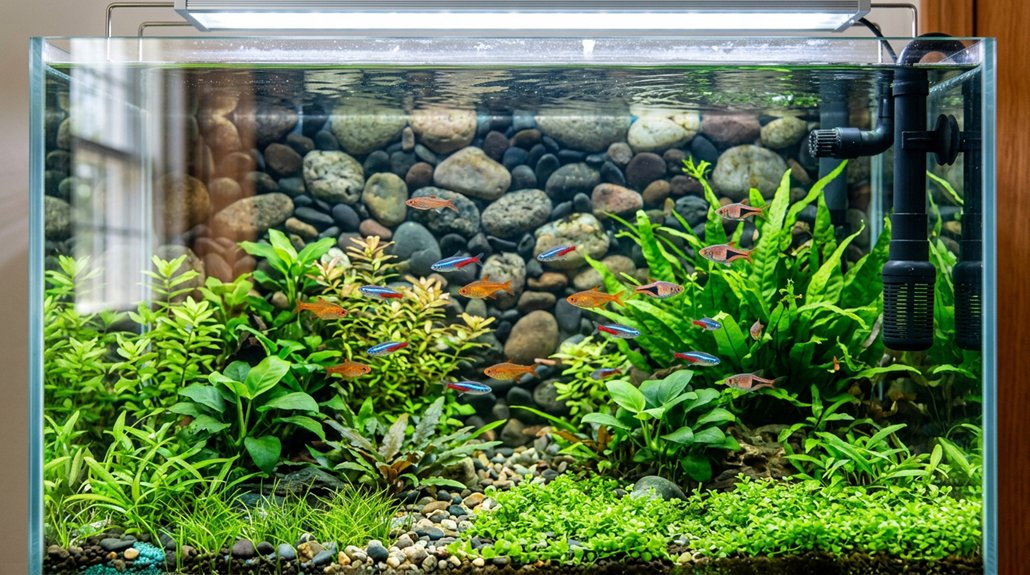
Boost mechanical filtration by using a filter rated slightly above your tank size—such as a 30–40 gallon unit on a 20–30 gallon aquarium—to capture more suspended debris before it settles. Add micron pads or polishing cartridges to trap fine particles that standard sponges miss, and rinse or replace them regularly so flow doesn’t drop. If the water still looks hazy, use a clarifier sparingly to clump ultra-fine debris, then siphon out the settled floc. During 10–25% water changes, vacuum the substrate and extract detritus from corners, behind decor, and under hardscape. If debris keeps returning, reduce feeding to once daily using the two-minute rule, and consider adding a second filter to raise mechanical turnover and improve capture efficiency.
Keep Fish Healthy With Good Maintenance
You’ll keep fish healthier by maintaining a stable routine with regular partial water changes and consistent cleaning intervals. Change 10% of the water each week or 25% every two weeks, and vacuum about one-third of the substrate at a time to remove nitrate-producing waste. Keep feeding, lighting, and maintenance on a fixed schedule so water quality stays predictable and stress stays low.
Regular Water Changes
Regularly changing aquarium water is one of the most effective ways to keep fish healthy and stable. As part of scheduled maintenance, replace about 10% weekly or 25% every two weeks to dilute nitrates, phosphates, and dissolved organics that evaporation top-offs won’t remove. In new or recently altered tanks, test ammonia, nitrite, and nitrate every 2–3 days until ammonia and nitrite stay at 0 ppm and nitrates remain well below 40 ppm. Siphon and vacuum substrate in sections to lift detritus without upsetting bacterial balance. Use dechlorinator that neutralizes chloramine, or RO/DI water for sensitive systems. Match temperature, and when relevant pH and hardness, as closely as practical, and don’t change more than 25–30% at once to avoid parameter swings.
Stable Tank Routine
A stable aquarium routine starts with consistent testing and controlled maintenance: check ammonia, nitrite, nitrate, and pH at least weekly, or every 2–3 days in new tanks, and keep ammonia and nitrite at 0 ppm while holding nitrates below about 40 ppm. Follow a consistent schedule for 10% weekly water changes, or 25% every two weeks, and vacuum about 25% of the substrate in sections to remove organics. Feed once daily in new tanks, or only what fish eat within two minutes, so waste doesn’t trigger spikes. Clean mechanical media regularly, rinse bio-media in tank water, and replace filter parts in stages. Use a timer for 8–10 hours of light and stock slowly in 20–55 gallon tanks for predictable maintenance.
Avoid New Tank Setup Mistakes
When setting up a new freshwater aquarium, choose a 20–55 gallon tank if possible, since larger volumes keep water chemistry more stable and give you more room to correct mistakes. Check heater placement, and avoid incorrect substrate that traps debris or alters pH unexpectedly. Run the system 2–3 days before buying fish, then cycle it fully over several weeks. Stock slowly: add only a few fish at first so nitrifying bacteria can establish. Test ammonia and nitrite every 2–3 days; both should read 0 ppm before you add more livestock. Feed sparingly during cycling, and if either toxin rises, change 25–50% of the water immediately. Use a filter rated above your tank size, rinse media in tank water only, and replace it in stages to preserve biological filtration.
Frequently Asked Questions
What Is the New Tank Syndrome in Freshwater?
New tank syndrome is when your aquarium’s cycling process hasn’t established bacterial colonization yet, so ammonia and nitrite spike to toxic levels. You’ll need to test water, change water, and add fish slowly.
What Not to Put in a Fish Tank?
You shouldn’t add untreated tap water, wild-caught animals, or outdoor rocks. Avoid plastic plants, metal decorations, pesticides, and household plants. These can leach toxins, alter chemistry, spread disease, and stress or kill your fish.
What Does Baking Soda Do to Aquarium Water?
Baking soda raises your aquarium’s pH slightly and boosts carbonate buffering, which stabilizes water chemistry. You’ll get temporary baking effects, not chlorine removal. Add it gradually, test KH and pH, and don’t overdose.
What Are the Common Diseases of Freshwater Aquarium Fish?
You’ll commonly see Ichthyophthirius multifiliis (ich), fin rot, Columnaris disease, velvet, and dropsy. You’ll also encounter internal bacterial infections; each needs prompt diagnosis, stable water, and targeted treatment to prevent losses.
Conclusion
By staying ahead of the usual hiccups in your freshwater aquarium, you keep small issues from becoming bigger headaches. When you fine-tune filtration, monitor water quality, and maintain a steady cleaning routine, your tank stays clearer, healthier, and far more stable. A few careful adjustments can quietly improve everything from cloudy water to algae and waste buildup. With consistent attention, you’ll give your fish a more comfortable home and enjoy a cleaner, more reliable aquarium.