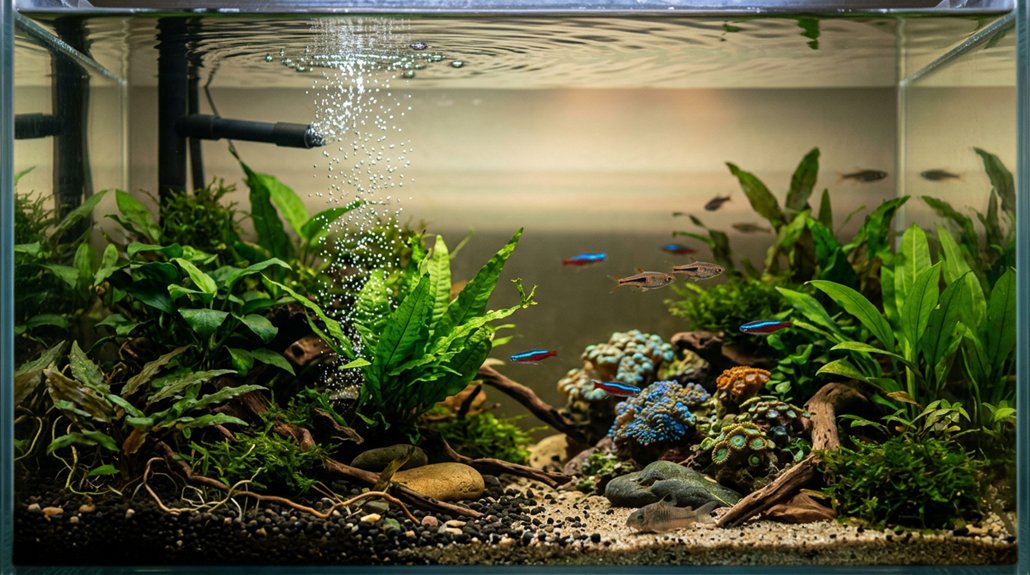
You know your aquarium is fully cycled when repeated tests over several days show 0 ppm ammonia, 0 ppm nitrite, and detectable nitrate, usually above 5–10 ppm. A reliable test kit matters, and a 1 ppm ammonia dose should clear to 0 ammonia and 0 nitrite within 24 hours. Clear water alone isn’t proof, especially in planted tanks. If you want to stock safely, there’s more to check before you add fish.
Key Takeaways
- A fully cycled aquarium repeatedly tests 0 ppm ammonia and 0 ppm nitrite, with measurable nitrate present.
- Confirm cycling by dosing about 1 ppm ammonia and seeing it return to 0 ammonia and 0 nitrite within 24 hours.
- Stable clear water, no foul odors, and no recurring bacterial blooms can support the result, but should not replace testing.
- Healthy fish behavior, including normal feeding, active swimming, and no gasping or clamped fins, suggests the tank is handling waste.
- After cycling, stock slowly, keep nitrate below about 40 ppm, and watch closely for any ammonia or nitrite spikes.
How to Tell Your Aquarium Is Cycled
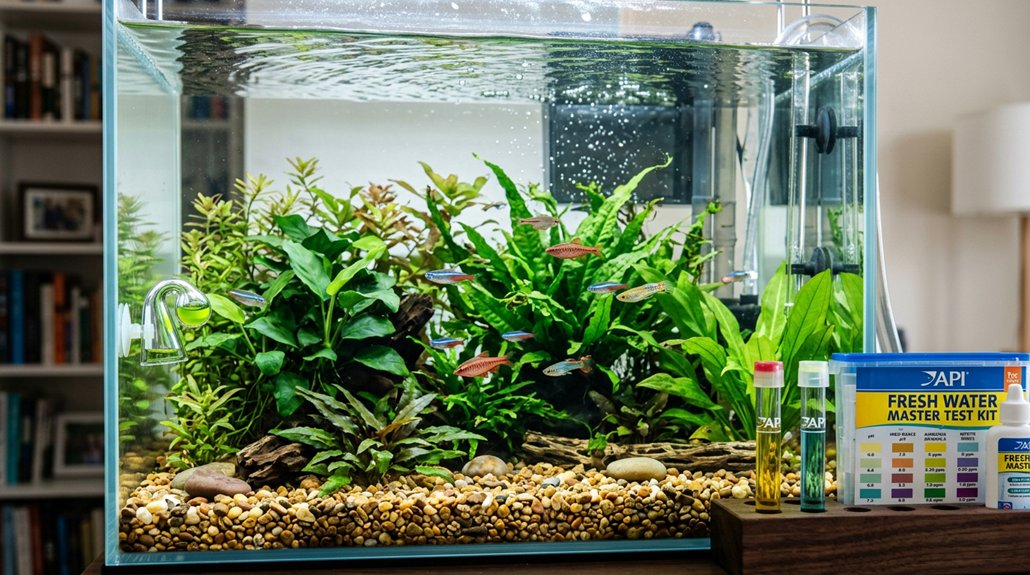
You can consider your aquarium fully cycled when repeated water tests consistently show 0 ppm ammonia and 0 ppm nitrite, with nitrate present and usually rising above trace levels. That pattern indicates bacterial maturity in the filter and substrate seeding throughout the tank. For the most reliable confirmation, dose 1 ppm ammonia in a fishless test and confirm that both ammonia and nitrite return to 0 within 24 hours. You can also look for supporting signs: clear water after the initial bacterial bloom, vigorous plant growth, and stable algae appearance or clearing. If you’ve added fish, they should stay active and show no gasping, lethargy, or clamped fins for several days. Many aquarists still wait 3-8 weeks and repeat stable readings before calling the cycle complete.
Check Ammonia, Nitrite, and Nitrate
You should use a reliable test kit to confirm ammonia is 0 ppm and nitrite is 0 ppm, while nitrate is present and ideally rising above baseline. That combination shows your nitrifiers are fully converting waste. If nitrate isn’t appearing, your cycle may not be complete yet.
Ammonia And Nitrite Zero
A fully cycled aquarium should consistently read 0 ppm ammonia and 0 ppm nitrite, with measurable nitrate present, because that pattern shows toxic waste is being fully converted into the less harmful end product.
Use a test kit to confirm this pattern over several days, not just once. If you’re verifying capacity, dose enough ammonia to reach about 1 ppm and retest after 24 hours; both ammonia and nitrite should return to 0.
| Test | Target |
|---|---|
| Ammonia | 0 ppm |
| Nitrite | 0 ppm |
| Nitrate | Detectable |
This repeated zero result indicates stable ammonia suppression and no nitrite variability. Heavily planted tanks can mask readings, so keep checking. If fish are already present, test daily and change water whenever either compound rises above 0 ppm.
Nitrate Shows Up
Nitrate showing up is the clearest confirmation that your biofilter is converting waste all the way to NO3, so check ammonia, nitrite, and nitrate together rather than relying on any single reading. If ammonia and nitrite both stay at 0 ppm and nitrate rises above about 5–10 ppm, your cycle’s likely complete. For a stronger test, dose 1 ppm ammonia and confirm 0 ammonia, 0 nitrite, and increased nitrate within 24 hours.
- Watch for nitrate buildup, not just zero toxic nitrogen.
- In planted tanks, fast uptake can mask readings; interpret results cautiously.
- Keep nitrate below ~40 ppm after stocking, and remember denitrification processes aren’t enough to replace testing.
When chemical kits aren’t available, a cleared bloom and healthy plants can help, but they’re not definitive.
What Visual Signs Show Cycle Completion?
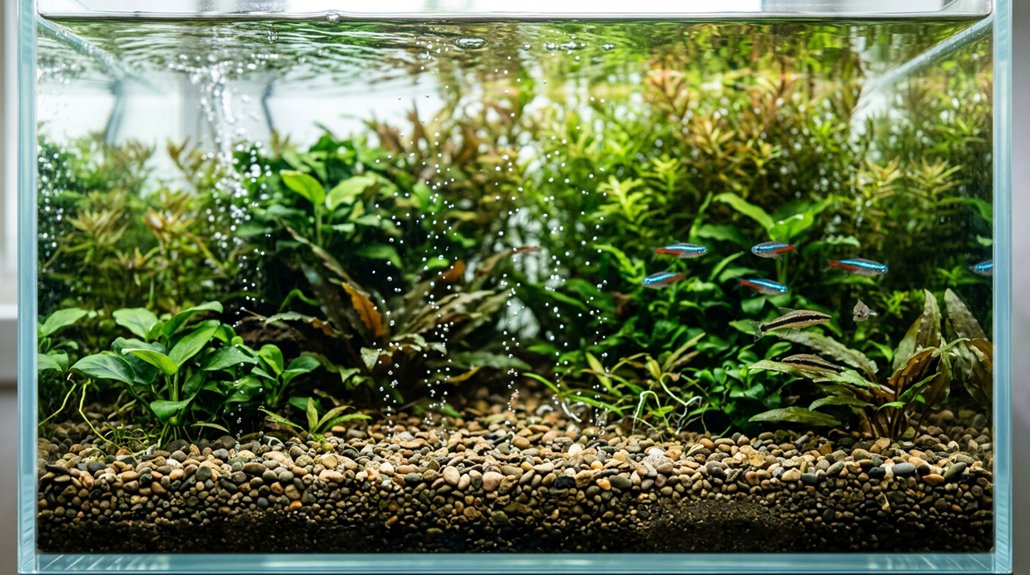
You can often tell your tank’s cycle is complete when cloudy water has cleared and stayed clear for about a week, with no recurring bacterial bloom or foul odor. Look for lush, actively growing plants and reduced algae, since that shows nitrogen’s being taken up by the system. Also verify that your fish are behaving normally—active, eating, and not gasping or clamping fins—because that usually means ammonia and nitrite are no longer stressing them.
Clear Water Return
Clear water returning after an initial bacterial bloom is one of the most useful visual signs that your aquarium’s cycle is nearing completion. You should watch for stable water clarity for about seven consecutive days, even with normal feeding, because that suggests your bacterial balance has shifted toward nitrifiers and away from suspended bloom organisms.
- No recurring cloudy, green, or brown water
- No ammonia-like odor or visible haze
- Fish swim normally, eat well, and don’t gasp
If the tank stays clear instead of cycling through repeated blooms, nitrification is probably dominating. This steady clarity, combined with healthy test-fish behavior, indicates the ammonia-to-nitrite-to-nitrate sequence has largely finished and turbidity is dropping as the system stabilizes.
Plant Growth Signs
Plant growth gives another reliable read on cycle completion, especially after the water has already settled and stayed clear. You should look for rapid leafing on stem and floating plants: new shoots, visible leaf expansion, and steady vigor over a few weeks mean they’re taking up ammonia and nitrate efficiently. Healthy root establishment in new plantings is another strong sign; if plants anchor quickly, stay turgid, and don’t shed leaves, ammonia and nitrite are likely being controlled. On root-feeding species, leaves should remain green, not yellow, with few necrotic spots, especially after root tabs. You may also see a short algae bloom that fades naturally, which indicates active nutrient processing. Consistent growth without widespread die-off confirms your tank’s nitrifying biofilter and plant uptake are working together.
Fish Behavior Cues
Fish behavior is one of the most direct visual checks for cycle completion: when ammonia and nitrite are no longer stressing the tank, fish usually swim actively, eat normally, and stop gasping at the surface. You should watch for stable activity for several days, with no clamped fins, flashing, or rapid gill movement after feeding. Bright coloration and consistent schooling patterns, or normal territorial behavior, suggest the water’s chemistry has settled.
- Observe new fish for 24–48 hours; they shouldn’t show respiratory distress.
- Check for the absence of sudden lethargy or stress displays.
- Track the tank for a week or more; no unexplained deaths or frequent illness is a strong sign.
When these cues stay consistent, your cycle is likely complete and biologically stable.
How Plants Change Cycling Results
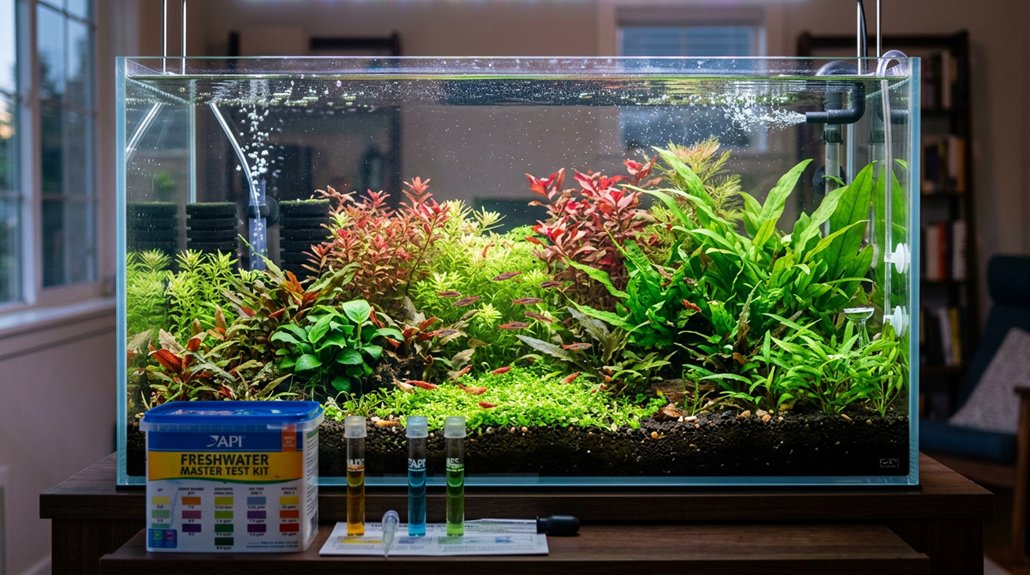
Adding fast-growing and floating plants such as hornwort, duckweed, and stem plants can change cycling results by absorbing ammonia and nitrate so efficiently that your tests may show near-zero ammonia and nitrite even before the nitrifying bacteria are fully established. This plant masking effect comes from nutrient competition, where plants outcompete microbes for available nitrogen. As a result, you can’t assume the tank is biologically mature just because test kits read clean. Look for sustained plant growth, reduced algae, and stable readings over time. Even with heavy planting, nitrifier colonies still need to build on filter media for long-term stability. Add fish gradually, feed sparingly, and keep checking for 0 ppm ammonia and nitrite with nitrate detectable or steady before stocking normally.
How Long Does Aquarium Cycling Take?
Cycling time varies a lot depending on method and conditions: a fishless cycle with ammonia dosing and bottled bacteria often finishes in 1–4 weeks, while a traditional fish-in cycle usually takes 4–8+ weeks. You should track ammonia, nitrite, and nitrate daily and treat 0 ppm ammonia and nitrite, with detectable stable nitrate, as the completion criteria. A 1 ppm ammonia dose should disappear within 24 hours in a fully cycled tank.
- Cold water slows nitrifiers.
- Low pH can suppress biofilm development.
- More biomedia speeds colonization.
With live plants and low bioloads, safe readings can appear near 3 weeks, but conservative cycling often runs 6–8 weeks. Temperature effects, surface area, and reliance on plants alone all change the timeline.
When Can You Add Fish After Cycling?
Once your test kit shows 0 ppm ammonia and 0 ppm nitrite with measurable nitrate present, you can begin adding fish. Keep nitrate ideally below 40 ppm before and after stocking. If you don’t have kits, wait until the bloom clears and plants are growing strongly for at least a week, then add livestock very slowly. Your stocking strategy should start with one hardy fish, or one Betta in a 10-gallon, so the biofilter can adjust. Space additions at least one week apart. Use careful fish acclimation to reduce shock, and feed sparingly during the first few days. Test ammonia and nitrite daily for the first week, and watch for gasping, lethargy, or clamped fins. If you see stress, perform an immediate partial water change.
Common Aquarium Cycling Mistakes to Avoid
Even after your tank shows 0 ppm ammonia and 0 ppm nitrite, a few common mistakes can still cause problems during cycling or soon after stocking. Don’t rely on clear water, plant growth, or algae as proof; that’s incomplete testing. Verify results with a kit, and confirm you can process a known ammonia dose to 0 ppm ammonia and 0 ppm nitrite within 24 hours. Avoid fish food-only cycling, which can favor heterotrophs and create unstable spikes. Resist overstock temptation and add fish gradually, because a new bioload can trigger mini-cycles. Don’t keep making large water changes unless you’re protecting fish from toxic levels, since dilution slows nitrifier growth.
- Test, don’t guess
- Stock slowly
- Preserve ammonia for nitrifier growth
Frequently Asked Questions
How Long Does It Take for a Tank to Be Fully Cycled?
It usually takes you 1–3 weeks with fishless cycling and bottled beneficial bacteria, but 3–8+ weeks with fish-in setups. Ammonia spikes can extend that; you’ll know it’s done when tests stay stable.
Do Nitrates Mean Tank Is Cycled?
No, nitrates alone don’t mean you’re cycled. You’ll need nitrate testing plus source control, and you should confirm ammonia and nitrite both stay at 0 ppm after dosing. Then you’re likely cycled.
Does Algae Mean Your Tank Is Cycled?
No—algae doesn’t mean your tank’s cycled. You need to check algae causes and algae types, then confirm 0 ppm ammonia, 0 ppm nitrite, and measurable nitrates; algae alone just shows nutrients and light are available.
How Long Should a 5 Gallon Tank Cycle Before Adding Fish?
You should cycle a 5-gallon tank 2–8 weeks before adding fish, though some planted tanks finish around 3 weeks. Use fishless testing, verify ammonia and nitrite hit 0 ppm, and maintain filter maintenance carefully.
Conclusion
In the end, you can tell your aquarium is fully cycled when ammonia and nitrite both read 0 ppm, nitrate is present, and the tank can process a full ammonia dose within 24 hours. Clear water and stable test results help confirm the cycle is complete. If you’re adding fish, do it slowly. As the adage says, “Good things come to those who wait.” Patience here keeps your livestock safer and your aquarium healthier.