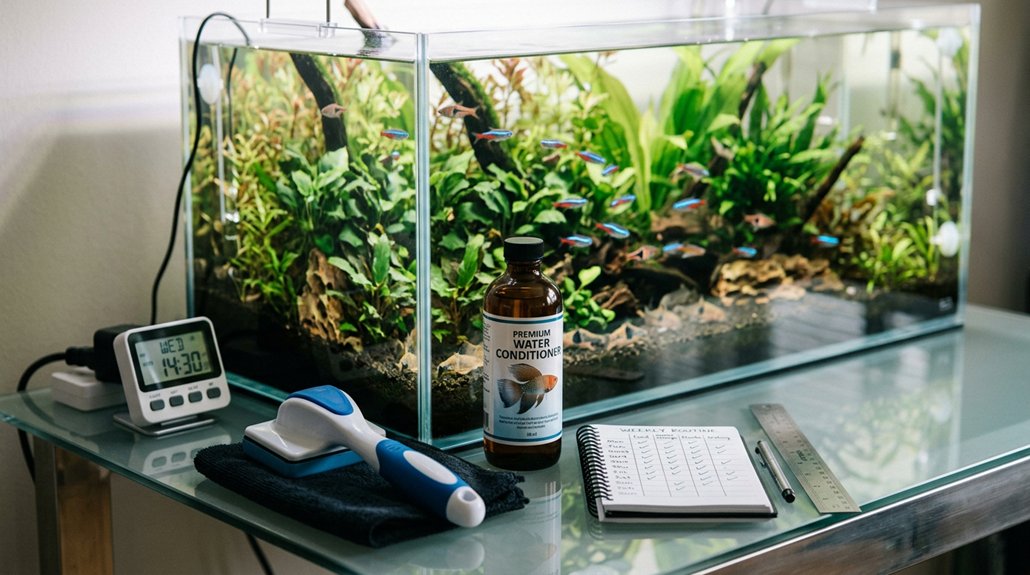
For a beginner freshwater tank, you should check it daily for fish count, behavior, heater temperature, filter flow, and leftover food, then top off evaporated water with treated water. Each week, change 20–30% of the water, scrape algae, and vacuum about half the substrate. Each month, test pH, ammonia, nitrite, and nitrate, inspect equipment, and trim plants. Follow these steps, and you’ll build a stable routine that gets easier as you learn the details.
Key Takeaways
- Check fish daily for normal behavior, missing stock, gasping, color changes, or lesions.
- Verify heater temperature, filter flow, feeding, and remove uneaten food after 5–10 minutes.
- Perform weekly 20–30% water changes with dechlorinated, temperature-matched water.
- Vacuum about half the substrate and scrape algae during water changes to remove waste and detritus.
- Test water monthly for pH, ammonia, nitrite, and nitrate, and inspect or clean equipment regularly.
Freshwater Tank Maintenance Routine
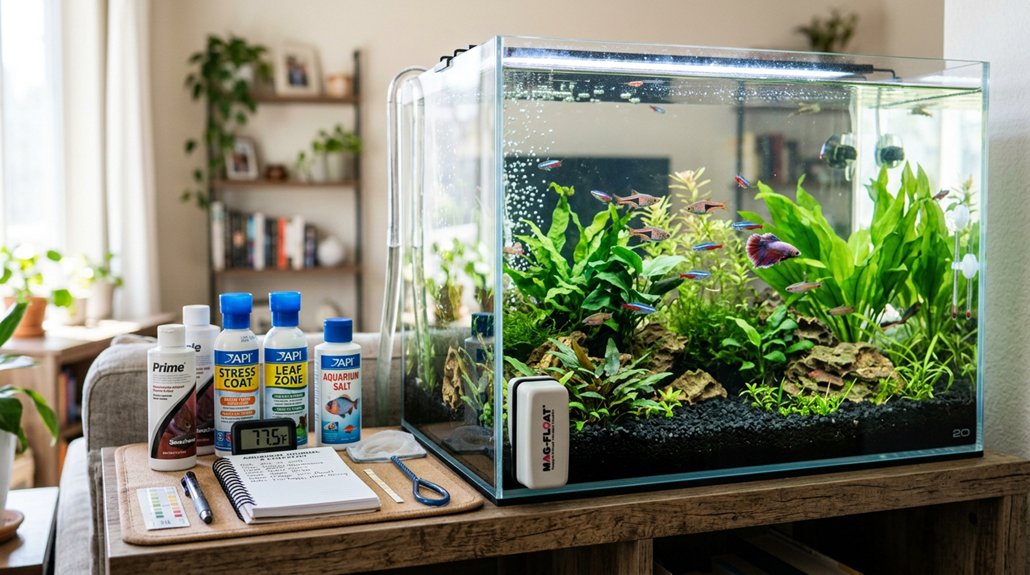
Start with a simple daily routine: check that your fish are active, count them, verify the heater temperature and filter are running, and remove any uneaten food after 5–10 minutes. Use this check to catch stress early, especially during aquarium cycling, when ammonia and nitrite can rise. Adjust your maintenance plan to match stocking density and plant mass: higher loads usually need more frequent water changes. Each week, replace 20–30% of the water, or 10–50% as needed, using dechlorinated water within about 3°F of the tank. Every 1–2 weeks, siphon settled detritus from half the substrate. Monthly, test pH, ammonia, nitrite, and nitrate, and clean filter media carefully so beneficial bacteria stay intact.
What to Do Every Day
Daily upkeep is simple but important: once a day, check that every fish is present, swimming normally, and not gasping at the surface, and watch for sudden color changes or lesions. During your daily observations, verify the heater matches the set temperature, the filter is flowing, and lights follow schedule. Listen and feel for unusual vibration or noise.
| Task | Standard |
|---|---|
| Fish count | All present |
| Behavior | Normal swimming |
| Feeding | Feed removal after 5–10 min |
| Water level | Top off with treated water |
| Log | Record issues daily |
Remove uneaten food promptly to limit ammonia spikes and waste buildup. Top off only the evaporated amount, using treated or aged water. Enter feeding, behavior, equipment issues, and top-offs in your tank journal so you can spot trends early.
Weekly Freshwater Tank Maintenance Tasks
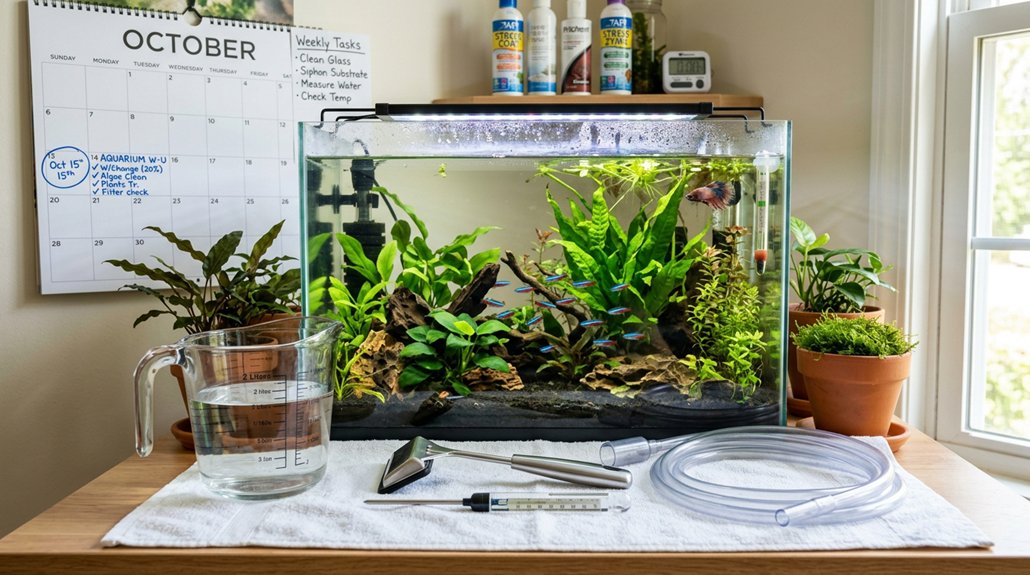
Once a week, perform a 20–30% water change, or up to 50% in heavily stocked tanks, by scraping algae from the glass and hardscape first, then siphoning the substrate to remove detritus and vacuuming about half the gravel so you can alternate sections each week. Match new dechlorinated water to within about 3°F of tank temperature to reduce stress. Keep suction controlled so you don’t disturb the whole bed, and use this routine for algae prevention. Adjust the change volume to stocking density: denser systems need larger exchanges. During maintenance, verify filter flow, heater output, and tubing condition, count fish, trim overgrown plants, and note any abnormalities. If needed, rinse mechanical media in saved tank water later, but don’t clean all bio-media at once. Log the water change and observations for traceability.
What to Do Every Month
Each month, test and record pH, ammonia, nitrite, and nitrate to confirm tank stability and catch spikes before they harm fish. Use consistent water testing methods and log results for trend tracking.
| Task | Target |
|---|---|
| Water testing | pH, ammonia, nitrite, nitrate |
| Equipment inspection | Impellers, tubing, light fixtures |
| Plant check | Remove dead growth, assess melt |
Inspect equipment for buildup, wear, or reduced flow, and note anomalies in your aquarium log. Review plant health, then trim overgrowth and remove decaying tissue. Add root tabs or liquid fertilizer only if your species needs them. If you see warning signs, increase testing frequency and correct the cause promptly. Keep your monthly routine systematic so you can detect problems early and maintain stable conditions for fish, plants, and filtration.
How to Do Water Changes, Clean Filters, and Trim Plants
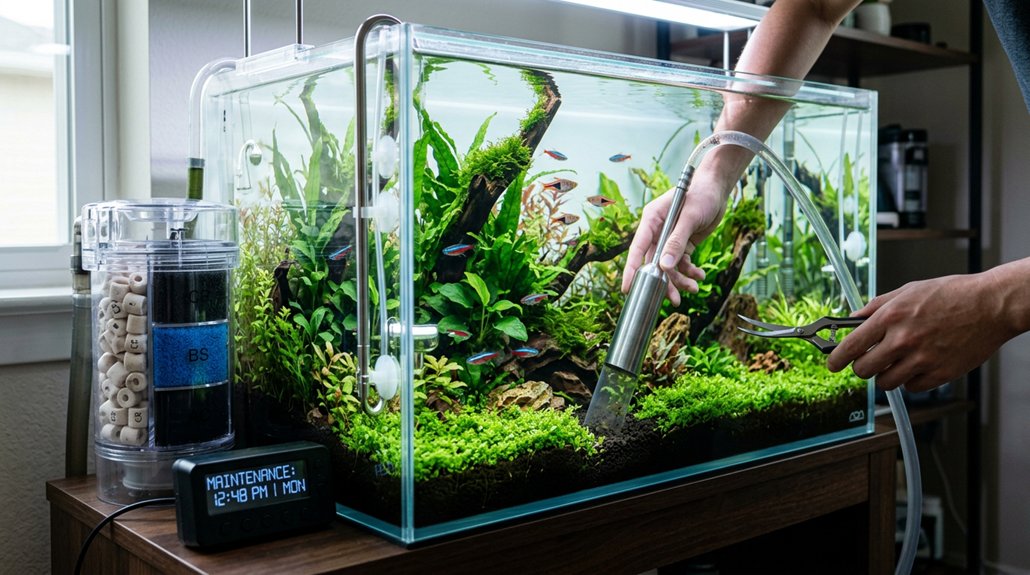
Weekly water changes help keep a freshwater tank stable by removing waste before it accumulates. Use a siphon gravel vacuum to replace 20–30% of the water weekly, or 10–50% based on stocking and plant mass. Vacuum the substrate first for substrate aeration and detritus removal, and collect old water in a dedicated bucket for filter rinsing. Match new water within 1–2°C, dechlorinate it, and add it gently against hardscape or through a disperser. Rinse sponges and polyfil in saved tank water; never clean biological media in tap water. Replace carbon or resins every 2–4 weeks. Clean impellers and intake screens monthly. Trim plants with scissors, remove decaying leaves, and prune runners. This supports algae control.
Frequently Asked Questions
What Is a Regular Maintenance Schedule for Aquariums?
You’ll do daily checks, remove waste, change 20–30% weekly, test water monthly, and schedule filter cleaning plus algae control as needed. Log results, adjust by stocking, and watch fish for stress.
What Mistakes Do Beginner Fish Owners Make?
You often sidestep overfeeding problems, incorrect stocking, insufficient filtration, and poor water testing; these quiet missteps can destabilize your tank. You’ll avoid them by feeding sparingly, stocking carefully, filtering adequately, and testing consistently.
How Long Should You Let a Freshwater Tank Cycle?
You should let your freshwater tank cycle 4–6 weeks, until nitrogen cycling and bacterial colonization stabilize. Test ammonia, nitrite, and nitrate twice weekly, and don’t add more fish until readings stay at 0,0 for a week.
Is It Okay to Do Fish Tank Water Changes Every 2 Weekly?
Yes, you can do fish tank water changes every two weeks if you’re maintaining a lightly stocked, well-planted tank; the theory holds. Use partial waterchanges, test nitrates, and avoid alternating substrates during deep cleaning.
Conclusion
By keeping a simple routine, you protect your tank, support your fish, and stabilize your water. Check your livestock daily, test and clean weekly, and inspect equipment monthly. Change water consistently, clean filters carefully, and trim plants when needed. Small, regular actions prevent large, costly problems. When you maintain balance, you don’t just preserve a tank—you create a healthier habitat, a cleaner system, and a more reliable environment for every aquatic resident.