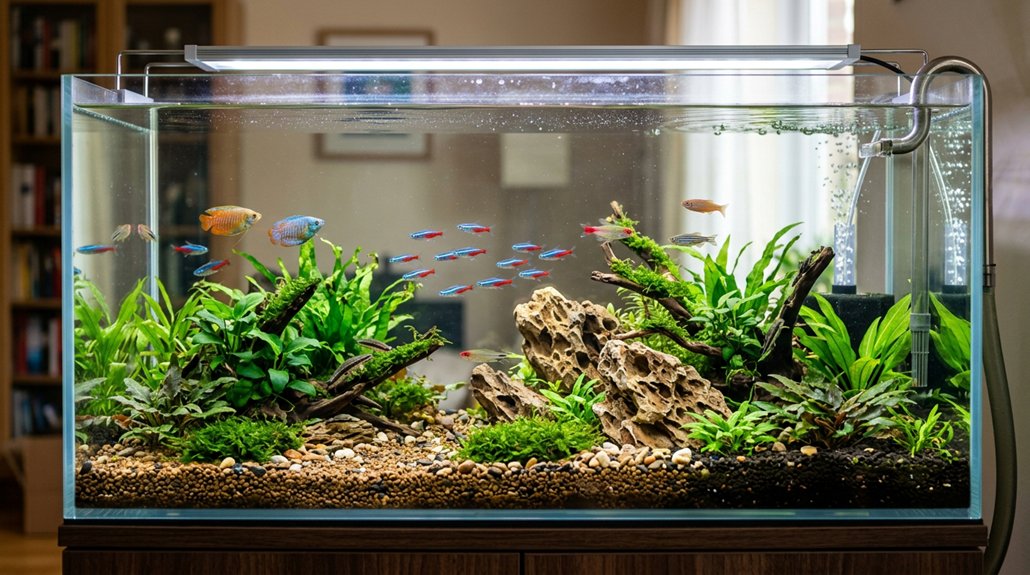
You should clean a freshwater fish tank on a regular schedule, usually with a 20–25% water change about once a week. In lightly stocked or heavily planted tanks, you can sometimes stretch this to every two weeks if ammonia and nitrite stay at 0 ppm and nitrates remain below 40 ppm. Clean sooner if water turns cloudy, algae builds up, flow drops, or waste accumulates, and you’ll see what else to watch for below.
Key Takeaways
- Most freshwater tanks need a 20–25% water change about once a week.
- Heavily planted or lightly stocked tanks may allow biweekly changes if ammonia and nitrite stay at 0 ppm.
- Clean sooner if nitrates rise above about 40 ppm, water turns cloudy, or algae becomes heavy.
- Vacuum only part of the substrate during water changes to remove waste without disturbing beneficial bacteria.
- Rinse filter media in removed tank water monthly, and check flow weekly for clogs.
How Often Should You Clean a Freshwater Fish Tank?
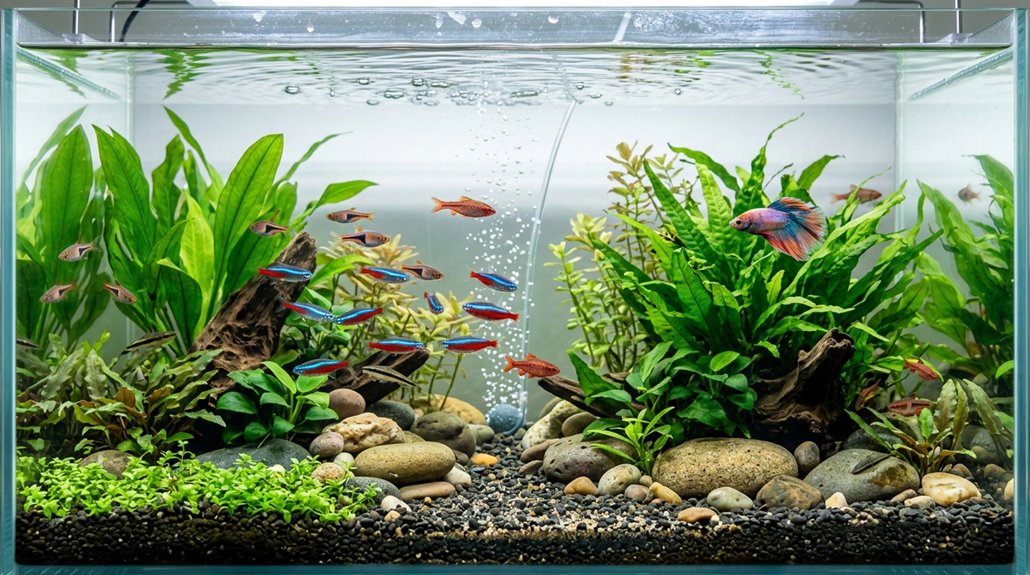
For a 5–10 gallon freshwater tank with 4–5 small fish, you should do a 20–25% water change about once a week, or every 7–10 days, to keep ammonia and nitrate at safe levels. During each change, lightly vacuum the substrate and remove visible waste, but clean only about one-third of the gravel so you don’t strip beneficial bacteria. Rinse filter media monthly in removed tank water, not tap water, and never replace all biological media at once. If your tank is heavily planted or lightly stocked, you can sometimes extend to biweekly 20% changes when tests stay at 0 ammonia, 0 nitrite, and nitrates below 40 ppm. Adjust for algae, cloudiness, or overfeeding. This routine supports aquarium aesthetics and seasonal maintenance.
What Affects Your Cleaning Schedule?
Your cleaning schedule depends on how quickly waste builds up in the tank. Tank size, stocking density, and species behavior all change that rate: a 5–10 gallon tank with 4–5 fish or messy eaters usually needs more frequent partial water changes than a lightly stocked system. Your feeding frequency matters too; heavier feeding increases ammonia and nitrate production, so you’ll need tighter maintenance intervals. If your filter is mature and the tank is heavily planted, biological stability can extend the time between cleanings. Still, test water regularly. Rising ammonia or nitrite, nitrates near 40 ppm, cloudy water, or algae blooms mean you should clean sooner. Also, if flow slows or media clogs, rinse the filter in tank water and keep vacuuming aligned with water changes.
Weekly vs Biweekly Fish Tank Cleaning
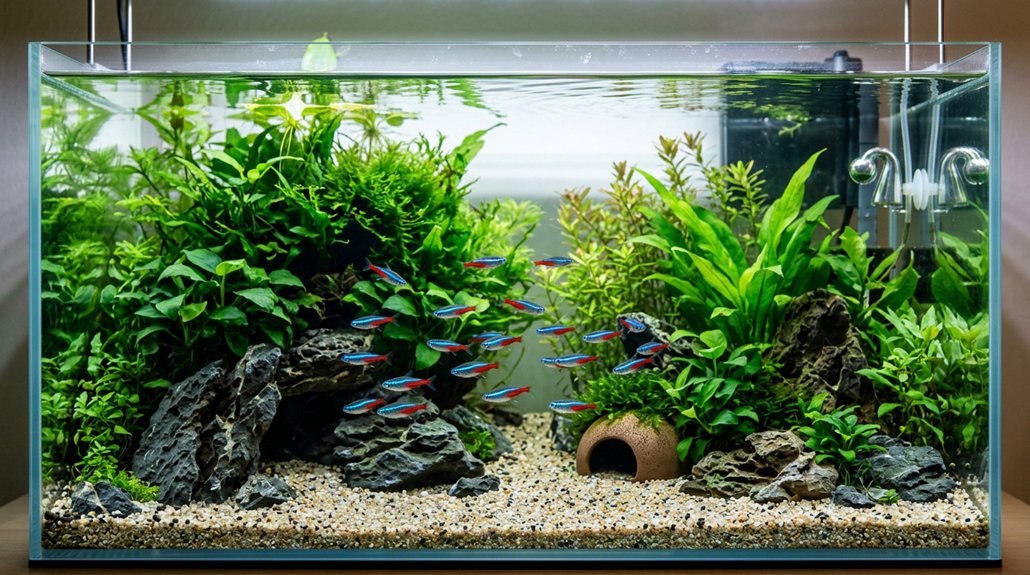
When you’re deciding between weekly and biweekly fish tank cleaning, tank load and water quality should set the pace. In a lightly stocked 5–10 gallon tank, weekly 20–25% water changes usually keep nitrates under 40 ppm and waste in check. You can stretch to biweekly 20% changes only when stocking density is low, feeding frequency is modest, plants are dense, and ammonia and nitrite stay at 0 ppm with low nitrates.
- Weekly: 4–5 small fish, higher waste.
- Biweekly: light feeding, heavy planting.
- Move up: cloudy water or algae.
- Vacuum substrate if nitrates rise.
If readings climb above 40 ppm, shorten the interval. Rinse mechanical filter media in tank water monthly, not every change, so beneficial bacteria stay stable.
What Counts as Regular Tank Cleaning?
Regular tank cleaning means you’re doing partial water changes, usually about 15–25%, instead of draining the tank. You’ll also vacuum the substrate to remove waste and uneaten food, which helps keep the system stable. Filter care counts too, so you should rinse sponges or biomedia in removed tank water and replace mechanical media as needed.
Water Changes Count
Water changes are the core of regular tank cleaning, not full drain-and-refill jobs. For most 5–10 gallon freshwater tanks with 4–5 small fish, your water change frequency should be about 20–25% every 7–10 days, with weekly being ideal for nitrate control. Use nitrate monitoring to confirm the schedule’s safety, especially if stocking or feeding changes.
- Remove 20–25% of the water.
- Replace it with dechlorinated, temperature-matched water.
- Test nitrate and ammonia after the change.
- Rinse filter media only in removed tank water when needed.
If your tank’s heavily planted or lightly stocked, you can often stretch to two weeks, but only if tests stay stable. This isn’t a full reset; it’s routine maintenance that keeps conditions predictable.
Vacuuming Substrate Counts
Vacuuming the substrate during a partial water change counts as regular tank cleaning, and it shouldn’t be treated like a full teardown. You’re removing trapped waste while keeping most beneficial bacteria in place. For a lightly stocked 5–10 gallon tank, plan gravel agitation every 7–14 days, usually with a 20–25% water change. Use an aquarium siphon to clean about one-third of the substrate each session, or until the water runs relatively clear, and move decor to expose debris pockets. In planted tanks, low feeding, or with detritus-eating fauna, you can stretch this to 2–4 weeks. Don’t overwork the substrate; excessive bacterial redistribution can reduce stability. Keep the task targeted, consistent, and matched to your tank’s waste load and stocking level.
Filter Care Counts
Filter care also counts as regular tank cleaning, because clogged media can cut filtration efficiency and degrade water quality. In your routine filter maintenance, inspect flow weekly and rinse sponge or foam media in old tank water during your partial water change. Never use chlorinated tap water.
- Check flow rate.
- Rinse mechanical media gently.
- Replace chemical media every 3–6 weeks.
- Clean no more than half of biological media at once.
For most small freshwater tanks, do this weekly to biweekly, with a deeper filter service once a month. That schedule keeps beneficial bacteria intact and supports the nitrogen cycle. If you’re doing media rotation, stagger cleaning so you don’t remove all filtration capacity at once.
How to Clean Your Fish Tank Safely
Before you start, turn off and unplug heaters and filters, then use a gravel vacuum to remove about 15–25% of the water while you scrub algae with aquarium-safe tools. Rinse sponges and other filter media in the removed tank water, not tap water, and don’t replace all biological media at once. When you refill, match the new water temperature within 1–2°F and treat it with a dechlorinator before adding it back.
Safe Cleaning Steps
To clean your fish tank safely, start by turning off and unplugging all electrical equipment—filters, heaters, and lights—so you don’t damage components or create a hazard while working. This safe shutdown lets you siphon with control and reduces shock risk. Then:
- Vacuum 20–30% of the water with an aquarium siphon, lifting detritus until runoff looks mostly clear.
- Use algae scrubbing tools on glass and decor; choose a plastic scraper for acrylic or a razor for glass.
- Rinse sponge or mechanical media in removed tank water only, preserving bacteria.
- Refill with dechlorinated water matched within 1–2°F, then pour gently and prune dead plant matter.
Clean decorations in warm water without soap during the same session, keeping the tank stable.
Filter And Substrate Care
Vacuum the substrate during your partial water change to pull out trapped waste and uneaten food, aiming to siphon roughly one-third of the gravel each session while removing about 20–30% of the tank volume. This limits detritus buildup and reduces gravel pathogens without disturbing the whole bed. For filter care, rinse sponges or floss in the removed tank water monthly; don’t use chlorinated tap water, or you’ll kill nitrifying bacteria. Clean pre-filters and intake housings weekly to biweekly if flow drops or debris accumulates. For chemical media, follow media replacement guidance and refresh activated carbon or phosphate removers every 3–4 weeks, or sooner if performance falls. When deeper maintenance is needed, clean no more than 50% of biological media at once, staggering rinses to protect bacterial stability.
Water Prep And Refilling
Once the substrate and filter are handled, refilling should be done with the same care as the draining. For safe water prep, use temperature matching before any water enters the tank; test the replacement water with a thermometer and keep it within 1–2°F of the aquarium. Treat all tap water with dechlorinator dosing for the full volume, because letting it sit won’t remove chlorine or chloramine. Then add it slowly to reduce turbulence and protect plants and fish.
- Warm treated bucket water in advance.
- Recheck temperature before pouring.
- Pour through a colander or onto your hand.
- Restart heater and filter, then monitor ammonia, nitrite, and nitrate if stress appears.
When Should You Clean Sooner?
You should clean sooner if water tests show ammonia or nitrite above 0 ppm, or if nitrates climb above about 40 ppm; in that case, do an immediate 25–50% partial water change and re-test. If you see persistent cloudiness, heavy algae, or sudden foul odors, increase maintenance to weekly and vacuum the substrate, adding another 20–50% change as needed. Higher stocking density or heavy feeding means more waste, so clean more often, especially when uneaten food or visible poop accumulates. After a fish death, illness, or medication use, perform at least a 50% change and keep up post treatment monitoring. If filter flow drops or media clogs, rinse it in tank water and schedule a partial change within a few days to prevent ammonia spikes.
Frequently Asked Questions
How Long Can You Go Without Cleaning a Fish Tank?
You can usually go 2–4 weeks without cleaning, but you should use water testing to confirm safety. For algae prevention, do partial changes sooner if ammonia, nitrite, or nitrates rise, or fish look stressed.
How Do I Know When My Fish Tank Needs Cleaning?
You’ll know it needs cleaning when water testing shows ammonia or nitrite above 0, or nitrates over 20–40 ppm, and when fish act stressed. Cloudiness, algae, detritus, clogged filters, and plant maintenance also signal trouble.
Why Is My Fish Tank Dirty After 2 Days?
Your tank’s likely dirty from overfeeding, overstocking, filter clogging, or untreated water; these can trigger an algae bloom and cloudiness within 48 hours. You’ll need smaller feedings, prompt waste removal, and better filtration.
Can You Leave a Fish Tank for 2 Weeks?
Yes, you can leave it for two weeks if you’ve got stable water parameter and solid filtration efficiency; think of it like a sealed battery at 80% charge—test, change 20–25%, feed lightly, and verify equipment.
Conclusion
To conclude, you should clean your freshwater fish tank on a schedule based on stocking, filtration, feeding, and water quality, not on a fixed date alone. You’ll usually do weekly or biweekly maintenance, with partial water changes, gravel vacuuming, and filter checks. If ammonia, nitrite, algae, or waste rise, you should act sooner. Keep testing the water, stay consistent, and you’ll help your fish thrive—without having to summon some medieval wizard for repairs.