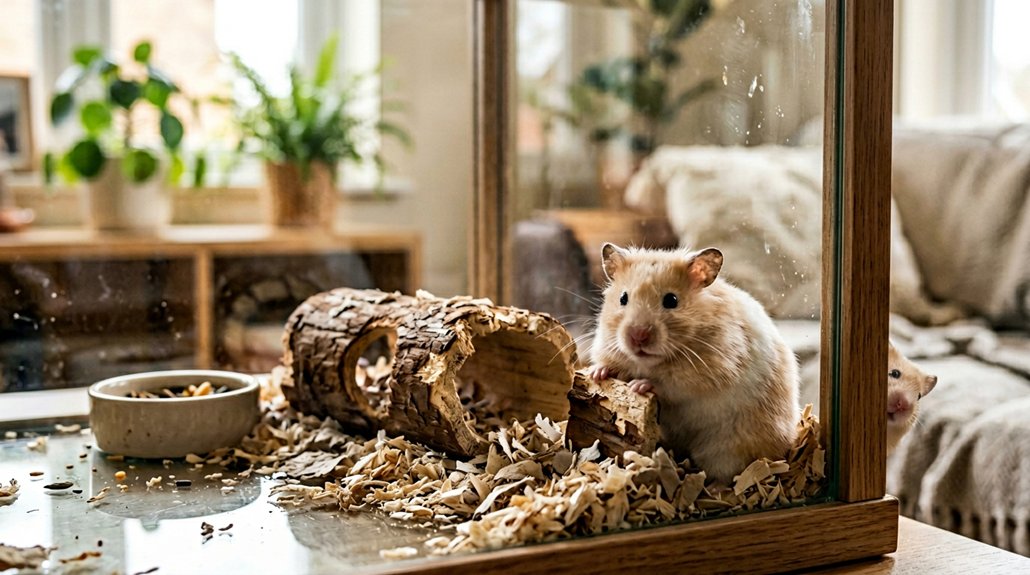
Avoid common cleaning mistakes that can affect your hamster’s well-being. Over-cleaning disrupts their familiar scents, causing stress and anxiety. Use paper-based or kiln-dried aspen bedding to effectively absorb moisture and odors, but be sure not to replace all the bedding at once. Steer clear of chemical-heavy cleaners, opting for natural alternatives like vinegar, and guarantee thorough rinsing to prevent residue. Proper ventilation and a regular cleaning schedule are key to maintaining a healthy environment. Discover additional insights and tips.
Key Takeaways
- Using scented bedding can trigger respiratory issues and discomfort for hamsters.
- Total bedding replacement disrupts familiar scents, causing anxiety and stress for the hamster.
- Failing to establish a regular cleaning schedule increases the risk of bacterial buildup and health issues.
- Neglecting spot cleaning allows waste accumulation, leading to unpleasant odors and an unhygienic environment.
- Using harsh commercial cleaning products can harm the hamster due to chemical exposure.
Key Cleaning Requirements for Healthy Hamsters
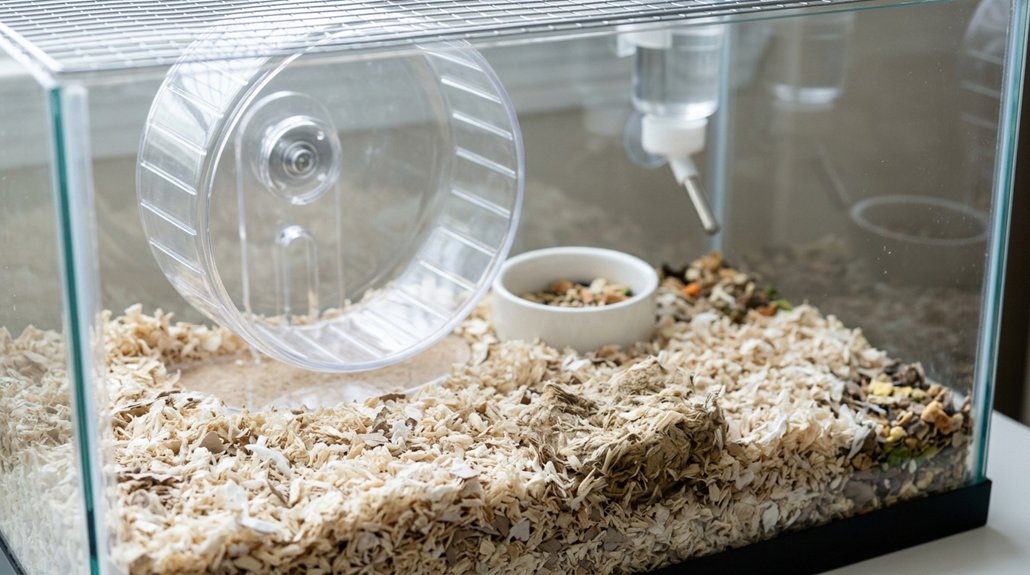
Maintaining a clean environment for your hamster is vital for its health and well-being, as daily spot cleaning of soiled bedding and droppings minimizes stress and supports hygiene. Understanding hygiene education is important, as proper cleaning frequency can prevent health issues for your pet. You should conduct a full cage cleaning every 1–2 weeks, using warm, soapy water or pet-safe disinfectants to guarantee thorough sanitation. Regular cleaning prevents odors effectively, which is best managed with correct cage sizes and ventilation rather than harmful scented products. Neglecting these practices can result in bacterial infections, emphasizing the importance of maintaining a routine. By adhering to these guidelines, you secure a safe, comfortable, and stress-free environment for your hamster.
Avoid Over-Cleaning Your Hamster’s Cage
It’s essential to avoid over-cleaning your hamster’s cage, as maintaining their natural scent fosters a sense of security and comfort. Focus on performing daily spot cleaning to efficiently remove soiled bedding and droppings while preserving familiar scents. By balancing hygiene with your hamster’s inherent need for a stable environment, you can help prevent stress-induced behaviors and promote their overall well-being.
Maintain Hamster’s Natural Scent
A balanced approach to cleaning your hamster’s cage plays an essential role in maintaining their natural scent, which is important for their sense of security and well-being. Hamsters rely on scent cues for comfort, and excessive cleaning disrupts this familiar environment. These small creatures have scent sensitivity, and stripping away too many familiar smells can lead to confusion and anxiety. To prevent this, instead of over-cleaning, retain some clean bedding during deep cleans to preserve their natural scent. Regular full cage cleans every 1–2 weeks are sufficient, allowing you to maintain cleanliness while ensuring your hamster feels secure throughout. Keeping their environment consistent by respecting their scent sensitivities helps reduce stress-related behaviors and fosters a peaceful atmosphere for your hamster.
Focus on Spot Cleaning
Daily spot cleaning plays an essential role in keeping your hamster’s cage hygienic and stress-free. Employing effective spot cleaning techniques, you should focus on removing soiled bedding and droppings each day. This minimizes stress by maintaining a healthy environment, and helps your hamster remain comfortable. Clean areas where urine is present and take out old food to prevent spoilage. However, retaining some clean bedding is vital for preserving familiarity, considering your hamster’s scent sensitivity. Over-cleaning, especially through frequent full cage cleans, can disturb these scent marks, triggering behavioral issues as your pet relies on familiar smells for security. Aim to conduct full cage cleanings every 1–2 weeks. Following a consistent cleaning schedule supports both hygiene and your hamster’s well-being.
Spot vs. Full Cleaning Guides
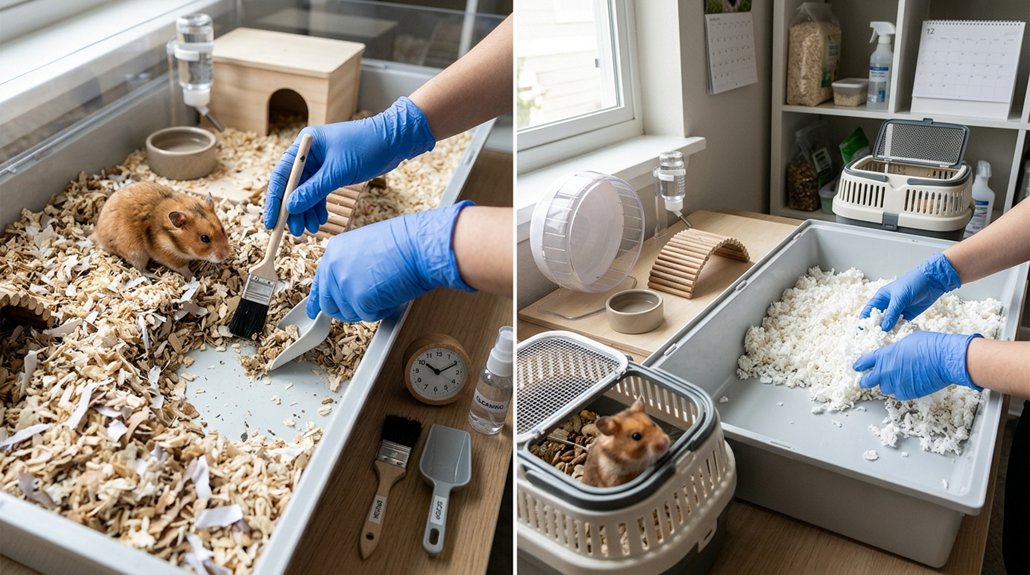
When caring for your hamster, balancing daily spot cleaning and less frequent full cleans is essential to maintaining their well-being. Spot cleaning every day by removing soiled bedding and droppings keeps the environment hygienic and reduces your pet’s stress, while preserving familiar scents guarantees they feel secure and comfortable. A full cage cleaning should happen every 1-2 weeks, using warm, soapy water or pet-safe disinfectants, but remember to retain some original bedding to avoid behavioral disruptions.
Daily Spot Cleaning Benefits
Often overlooked in hamster care routines, daily spot cleaning plays an essential role in maintaining a healthy and comfortable environment for your furry friend. Regularly attending to high-traffic areas and soiled spots guarantees a clean habitat, greatly contributing to stress reduction and overall well-being. This daily cleaning practice allows you to swiftly remove soiled bedding and droppings, minimizing the buildup of unpleasant odors and harmful bacteria. Importantly, it also reduces the need for frequent full cage cleans, which might otherwise provoke anxiety or behavioral changes in your hamster.
Benefits of daily spot cleaning include:
- Stress reduction: Minimizes disturbances, helping your hamster feel secure.
- Health improvement: Prevents bacteria and odor development.
- Behavioral stability: Encourages familiarity, promoting a comfortable environment.
Importance of Scent Preservation
In maintaining a hamster’s environment, ensuring both cleanliness and familiarity is key. Preserving scent recognition during cleaning is essential for behavioral stability. Daily spot cleaning, removing soiled bedding and droppings, keeps the enclosure hygienic without disrupting scent markers. Full cleaning, necessary every 1–2 weeks, should use warm, soapy water but retain some bedding to prevent anxiety from a sudden scent loss. A deep clean devoid of familiar scents can provoke stress, leading to behavioral issues such as hiding or aggression.
| Cleaning Type | Frequency |
|---|---|
| Spot Cleaning | Daily |
| Full Cleaning | Every 1–2 weeks |
| Spot Benefits | Hygienic space |
| Full Clean Tips | Preserve scents |
Avoid Unsafe Cleaning Products
The allure of commercial cleaning products with their bold labels and promises of a sanitized environment can be tempting, but for hamster owners, these products often spell danger. Many contain harsh chemicals and fragrances which can irritate your hamster’s sensitive respiratory system. Prioritize hamster safety by skipping bleach and ammonia-based cleaners, as their toxic fumes can cause serious health problems if inhaled. Instead, consider natural alternatives such as vinegar and baking soda, which effectively eliminate odors without harmful side effects.
- Natural choices like vinegar and baking soda guarantee hamster safety while cleaning.
- Avoid bleach and ammonia: their fumes are toxic and can harm hamsters’ health.
- Scented and “pet-safe” cleaners may still pose risks from allergic reactions.
Always thoroughly rinse items to prevent residue from affecting your pet.
Keeping Your Hamster’s Home Smelling Familiar
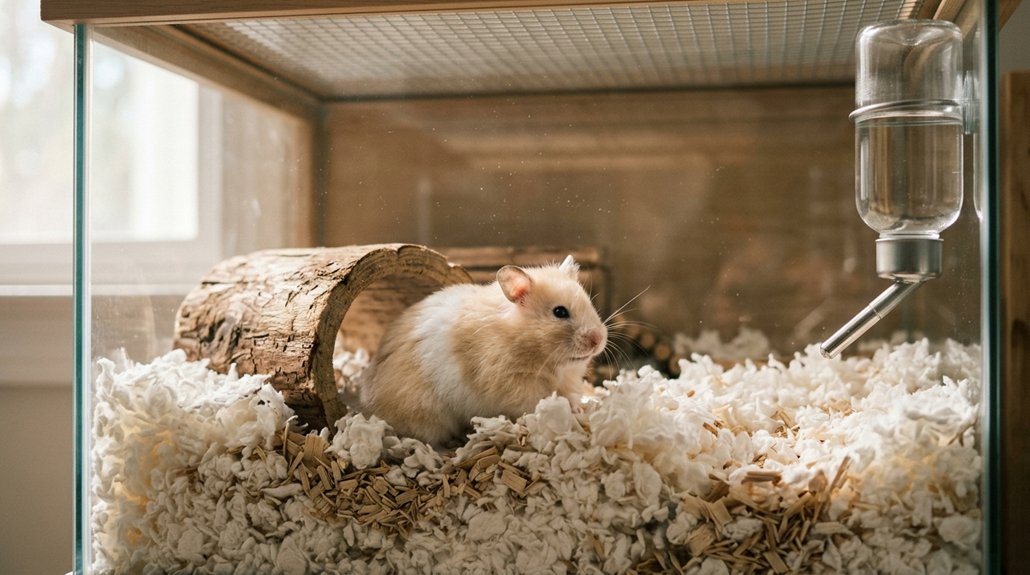
While avoiding unsafe cleaning products is important for your hamster’s health, ensuring their habitat smells familiar is equally essential. Hamsters possess a strong scent sensitivity, making familiar territory imperative for their comfort. Preserve some clean, soiled bedding during deep cleanings; this retains their scent profile, providing security amidst the new, sanitized environment.
| Key Practice | Benefit |
|---|---|
| Save soiled bedding | Maintains familiar territory |
| Spot clean daily | Manages scent without disruption |
| Avoid heavy fragrances | Prevents respiratory irritation |
| Minimal habitat changes | Supports their scent sensitivity |
Frequent rearranging and using scented cleaners disturb the hamster’s environment, heightening stress. Consistently applying these practices will help maintain a relaxed, healthy habitat for your pet.
Identify and Prevent Common Odors in Your Hamster’s Cage Cleaning
When managing your hamster’s habitat, it’s essential to perform daily spot cleaning to remove soiled bedding and droppings, as this prevents odor build-up and contributes to a healthier living space. Make sure to utilize unscented, absorbent materials like paper-based bedding or kiln-dried aspen shavings, as they effectively manage waste while avoiding irritation to your pet. Additionally, providing proper ventilation and regular thorough cleaning with warm, soapy water helps maintain a fresh environment, allowing for odor control without disrupting your hamster’s need for familiar scents.
Spot Cleaning Techniques
Maintain a fresh and comfortable habitat for your hamster by mastering effective spot cleaning techniques. Daily spot cleaning is essential to reduce odors and stress, ensuring your furry friend thrives. Focus on removing soiled bedding and uneaten food promptly. This proactive cleaning frequency prevents mess from building up. Pay particular attention to high-traffic areas where droppings accumulate, streamlining the spot cleaning process. Uphold hygiene using non-scented, pet-safe disinfectants, sensitive to your hamster’s respiratory system. These regular practices help maintain hygiene, prolonging periods between deeper cleans, typically required every 1–2 weeks.
- Remove uneaten food daily: Helps minimize odors and prevent stress.
- Use pet-safe disinfectants: Protects your hamster’s delicate respiratory health.
- Identify high-traffic areas: Efficiently manage spot cleaning needs.
Odor Neutralizing Strategies
Attention to effective spot cleaning goes hand-in-hand with employing odor neutralizing strategies, essential for a healthy hamster environment. Daily removal of soiled bedding and droppings aids in immediate odor elimination, stopping scents before they become entrenched. Full cage cleanings every 1–2 weeks with warm, soapy water or pet-safe disinfectants guarantee thorough odor control. Adequate ventilation in your hamster’s cage is important for scent retention prevention, helping disperse smells instead of allowing buildup. Steer clear of heavily scented cleaning products; these can disrupt your hamster’s respiratory health. Temperature and humidity control also play roles in reducing odors related to moisture. A fresh, clean habitat not only keeps odors at bay but also promotes your pet’s contentment and well-being.
Bedding Selection Tips
Choosing the right bedding is essential for creating a healthy and odor-free environment in your hamster’s cage. Opt for safe bedding types like paper-based materials or kiln-dried aspen shavings to prevent odors and guarantee your pet’s comfort. These options are non-irritating and facilitate odor control by absorbing moisture effectively. A bedding depth of 20–30 cm is recommended to enable natural burrowing, preventing smell accumulation.
Avoid scented or unsuitable options such as cotton wool or pine shavings, which can cause respiratory issues and disrupt natural behavior. Regular spot cleaning and deep cleaning every 1–2 weeks stop odors from building up. Additionally, utilizing cages with mesh tops for proper ventilation minimizes odor through enhanced air circulation.
- Choose safe, non-scented bedding
- Maintain appropriate bedding depth
- Guarantee cage ventilation
Enhance Cage Hygiene With Proper Ventilation
While ensuring your hamster’s habitat stays clean and healthy, it’s essential to prioritize ventilation within the cage. Proper airflow management offers significant ventilation benefits, helping to alleviate potential respiratory problems in hamsters. Closed plastic cages can trap moisture and fumes, increasing the risk of health issues. Opt for cages with mesh lids or open designs, allowing efficient air circulation to minimize ammonia buildup from urine, which contributes to unpleasant odors and health hazards. Regularly check the air quality to identify and address issues early. Consistent ventilation creates a fresher environment, nurturing an active and happy hamster. Proper airflow complements cleanliness by balancing ventilation with maintaining familiar scents, reducing stress during cage maintenance and keeping your pet’s habitat healthy.
Tips for a Hamster-Friendly Cleaning Routine
Proper ventilation is a foundational step towards maintaining a clean and healthy environment for your hamster. Utilize cages with mesh lids for maximum airflow to mitigate harmful odors and dampness. Integrating daily spot cleaning into your routine is pivotal. By promptly removing soiled bedding and droppings, you minimize stress and support your hamster’s well-being. Adopting a full cage cleaning schedule every 1-2 weeks guarantees sanitation. Use warm, soapy water or pet-safe disinfectants to clean, and maintain familiarity by reserving some clean bedding with your cleaning tools. Never neglect cage accessories; regularly inspect and clean toys and food dishes to halt bacteria buildup. Always avoid heavily scented products—a safer choice is unscented alternatives for a hamster-friendly routine.
- Conduct daily spot cleaning.
- Opt for unscented cleaning products.
- Regularly clean cage accessories.
Avoid Bedding Replacement Mistakes
Ensuring your hamster’s bedding provides both comfort and safety requires strategic attention to detail. Selecting suitable bedding materials is essential. Opt for paper-based bedding or kiln-dried aspen shavings to prevent respiratory issues. Your hamster’s burrowing behavior needs a bedding depth of 20–30cm to mimic their natural environment, reducing stress.
| Mistake | Consequence |
|---|---|
| Using scented shavings | Respiratory issues |
| Insufficient bedding depth | Hinders burrowing behavior, increases stress |
| Total bedding replacement | Disrupts sense of security due to loss of familiar scents |
| Neglecting spot cleaning | Leads to waste buildup and potential health issues |
Avoid completely changing all bedding at once. This disrupts your pet’s sense of safety; hamsters rely heavily on familiar scents. Regular 1–2 week full cleanings maintain hygiene without overwhelming them. Spot cleaning prevents waste accumulation and bacteria growth in their habitat.
Learn Cleaning Best Practices From Hamster Owners
Though often underestimated, adopting efficient cleaning practices guarantees a healthy and stress-free environment for your hamster. Integrate cage accessories into your routine to facilitate thorough cleaning. Develop reliable cleaning schedules by spot cleaning daily to remove soiled bedding and droppings. Full cleanings, essential every 1–2 weeks, should be performed with warm, soapy water or pet-safe disinfectants. Your cleaning strategy must also consider the bedding depth; maintaining 20–30 cm accommodates natural burrowing instincts, important for mental well-being.
Professional tips for optimized cleaning:
- Monitor air quality with proper ventilation to prevent respiratory issues, favoring cages with mesh lids.
- Ascertain larger cage size for effective odor control and to support healthier living conditions.
- Opt for non-scented bedding to avoid irritating your hamster’s sensitive respiratory system.
Frequently Asked Questions
What Is the Most Common Cause of Death in Hamsters?
The most common cause of death in hamsters is wet tail, a bacterial infection. Prioritizing hamster health through disease prevention, such as maintaining clean habitats and seeking prompt veterinary care, enhances their longevity and well-being considerably.
Can Hamsters Hear You?
Yes, they can. Imagine your hamster perking up its ears when it hears you, recognizing your voice within its exceptional hearing range. This illustrates hamster communication’s complexity, tied deeply to auditory perception and environmental awareness.
How Often Should Hamsters Be Cleaned?
You’re supposed to spot clean daily to remove soiled areas. For thorough cage maintenance, conduct a full clean every 1–2 weeks to manage odor and bacteria, while leaving some familiar bedding to prevent stress.
Does a Hamster Recognize Its Owner?
Yes, a hamster can recognize its owner through scent and sound. Your consistent interactions and positive experiences, like gentle handling and treats, strengthen the bonding and improve the hamster’s behavior, promoting familiarity and recognition.
Conclusion
In ensuring your hamster’s well-being, have you considered how your cleaning routine impacts their comfort and health? Effective cleaning practices go beyond just maintaining a tidy cage; they’re pivotal for preventing stress and health issues. By avoiding over-cleaning, choosing safe products, and ensuring proper ventilation, you create a familiar yet hygienic environment. As you adopt these best practices and learn from experienced owners, your hamster’s habitat becomes a safe haven, enhancing their quality of life markedly.