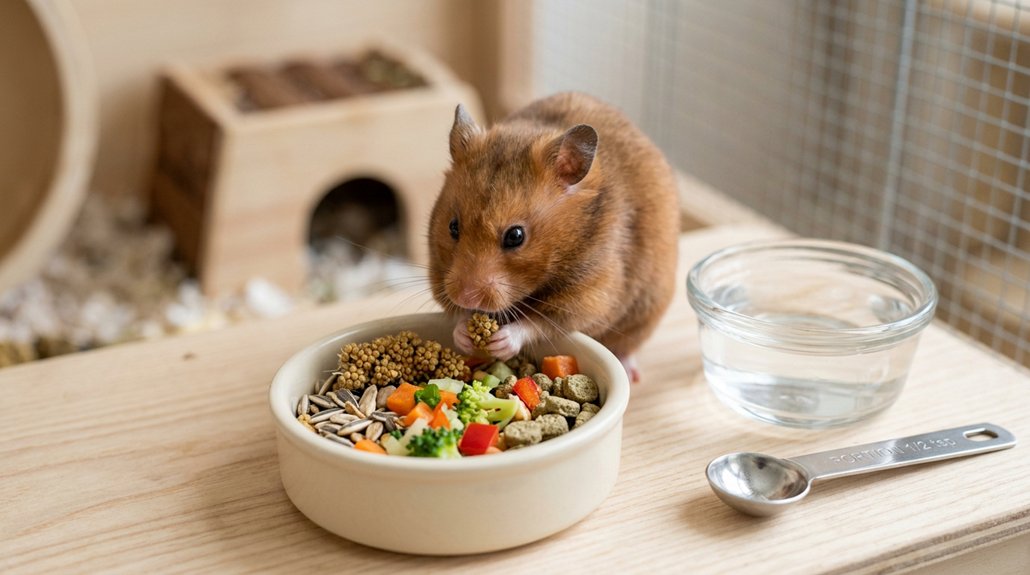
To guarantee your hamster’s ideal health, provide a diet primarily of high-quality commercial pellets, making up 90% of their intake. Incorporate fresh vegetables like kale and spinach for essential nutrients. Limit treats such as fruits, seeds, and nuts to maintain dietary balance. Guarantee a fresh supply of clean water daily. Adjust the diet according to age and activity level, and watch for any changes in behavior or weight. There’s more to discover for a truly balanced approach.
Key Takeaways
- Provide 1/8 cup of high-quality commercial hamster pellets daily for balanced nutrition.
- Include fresh vegetables like kale or spinach, comprising 20% of the diet.
- Offer fresh fruits like apples or bananas occasionally, ensuring seeds are removed.
- Maintain constant access to fresh, clean water, changing it daily.
- Limit treats like unsalted nuts to once a week to prevent dietary imbalance.
Building a Nutritional Foundation for Your Hamster
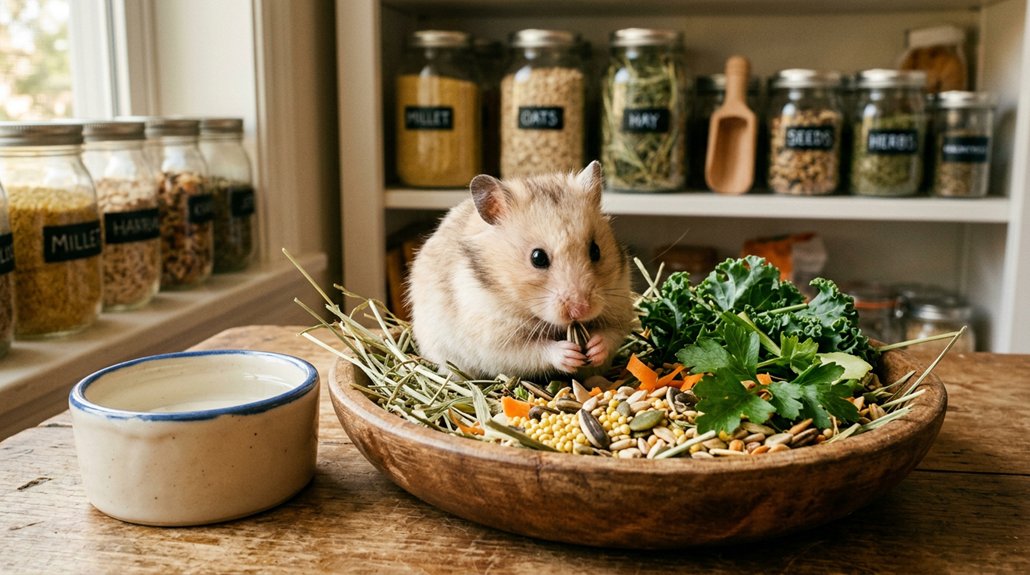
While feeding your hamster, establishing a strong nutritional foundation is crucial for their health and longevity. Hamster feeding should focus on balanced dietary habits that include primarily high-quality commercial pellets, constituting about 90% of their diet to guarantee they receive essential nutrients. Fresh vegetables like leafy greens and bell peppers should complement their meals, making up around 20% of their intake, while avoiding items like iceberg lettuce, which offer minimal nutritional value. Treats, including fruits and seeds, ought to be provided sparingly to prevent obesity and nutritional imbalances. It’s key to monitor portion sizes, generally not exceeding 1/8 cup daily, and remove any uneaten fresh food within 24 hours. Always maintain access to fresh, clean drinking water to keep them well-hydrated.
The Essential Role of Pellets in Your Hamster’s Nutrition
When selecting a diet for your hamster, it’s crucial to prioritize pellets as they provide a balanced array of nutrients, including 15-25% protein and 35-40% carbohydrates. Proper pellet intake mitigates the risk of selective eating, a behavior often observed with seed mixes, by ensuring your hamster consumes all necessary nutrients. Always adhere to the manufacturer’s portion guidelines to maintain a healthy weight and prevent nutritional deficiencies.
Balanced Nutrient Delivery
Proper nutrition is essential for maintaining your hamster’s health, and commercial pellets are a significant component of this balanced diet. These pellets are cleverly formulated to prevent nutritional deficiencies by offering a specific protein range of 15-25%, along with carbohydrates at 35-40%. It’s vital to follow feeding schedules that include a few tablespoons of pellets daily, ensuring your pet gets the right portion without the risk of obesity. Supplementing with fresh vegetables and occasional treats is beneficial, but don’t rely excessively on non-pellet foods, as it could unbalance your hamster’s diet. Regular observation of your hamster’s eating habits, combined with adherence to manufacturer guidelines, maintains their weight and health, promoting ideal nutrient intake from their daily meals.
Preventing Selective Eating
Despite the temptation to allow your hamster to indulge in loose seed mixes, understanding the fundamental role of commercial pellets can prevent selective eating habits. Pellets form the cornerstone of a balanced diet by providing essential nutrients, eliminating the risk of selective feeding which leads to dietary deficiencies. Aim for 90% of their intake from pellets, following specific product guidelines to address their nutritional needs consistently. This structured approach promotes proper nutrition education for both you and your pet.
| Aspect | Importance |
|---|---|
| Selective Feeding | Prevented by consistent pellet composition |
| Dietary Deficiencies | Reduced through complete nutrient profiles |
| Nutrition Education | Enhanced by clear feeding guidelines |
| Feeding Habits | Beneficially shaped to avoid pickiness |
| Consistent Nutrient Intake | Maintained by balanced pellet formulation |
Monitor portion sizes to maintain healthy feeding habits.
The Benefits of Fresh Vegetables in Your Hamster’s Diet
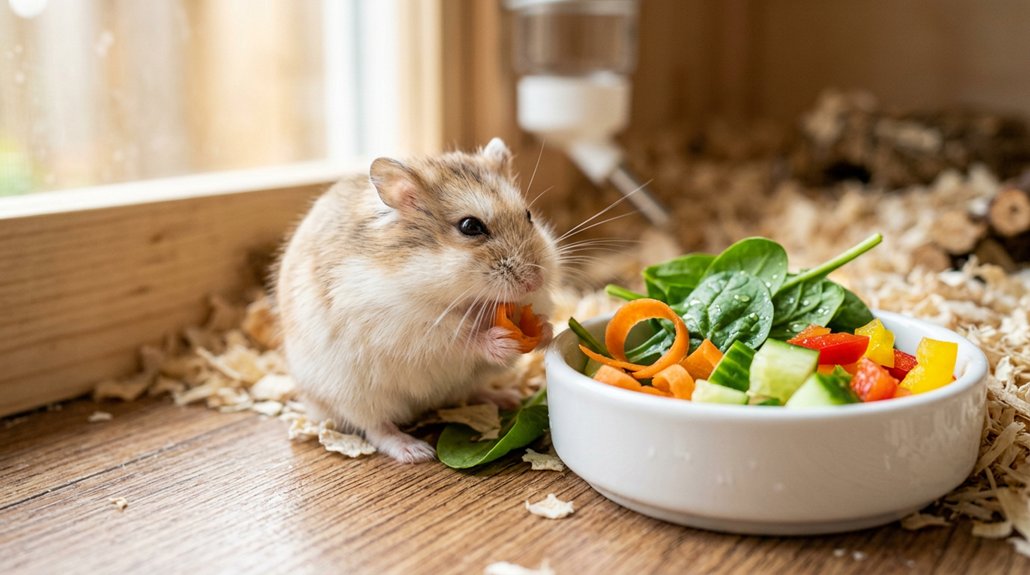
Integrating a healthy portion of fresh vegetables into your hamster’s diet offers numerous health benefits. With effective vegetable selection, you guarantee your pet receives the necessary vitamin benefits for ideal well-being. Fresh vegetables should account for approximately 20% of the daily diet. Leafy greens such as kale, dandelion greens, and spinach are particularly advantageous due to their high nutrient density and low-calorie content. These foods provide essential vitamins and minerals for overall health. Serving vegetables in bite-sized pieces helps prevent choking and promotes foraging behavior, which is vital for mental stimulation. Avoid iceberg lettuce due to its low nutritional value. Carrots and cucumbers are more nutrient-rich alternatives. Regularly including fresh vegetables boosts digestive health and helps manage weight when paired with pelleted foods.
Balanced Treats: Managing Fruits, Seeds, and Nuts Wisely
When managing your hamster’s diet, treats like fruits, seeds, and nuts should be given judiciously to maintain their health. Incorporating treat variety guarantees your hamster stays engaged and nutritionally balanced. Follow these moderation measures:
- Fruits: Offer fresh options like apples or bananas sparingly. Remember to remove seeds or pits to avoid harmful health effects.
- Seeds: Provide non-seasoned sunflower seeds occasionally due to their high fat content. They shouldn’t dominate the diet.
- Nuts: Unsalted nuts are ideal but limit them to once a week to prevent dietary imbalances and pouch issues.
- Variety: Alternate treats, including occasional protein sources like dried mealworms, to keep your hamster’s diet interesting and varied.
Maintain balance to protect your hamster from obesity and guarantee proper health.
Maintaining Hydration: Ensuring Fresh, Clean Water for Hamsters
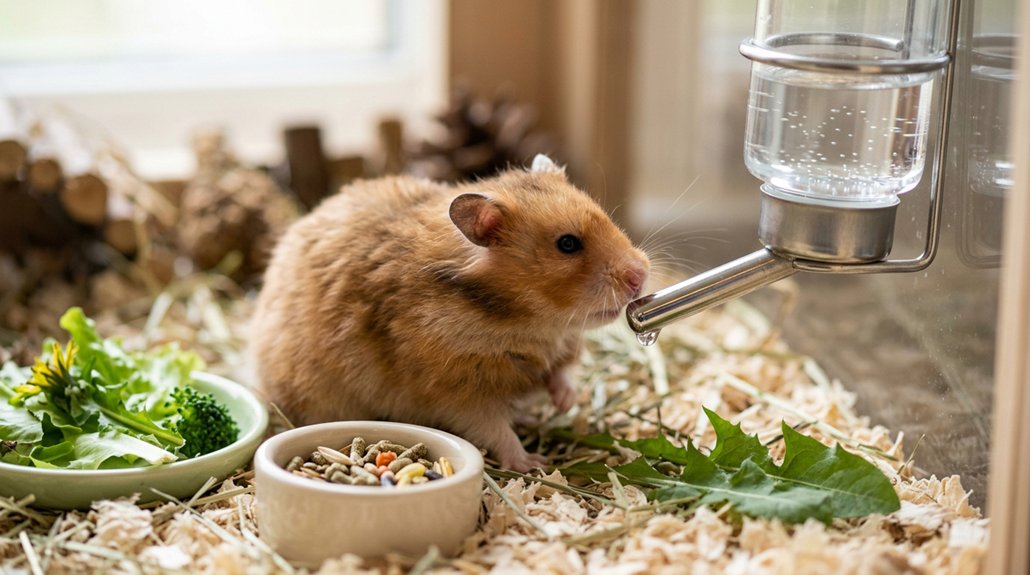
To guarantee your hamster stays hydrated, maintaining a clean water supply is paramount for its health. Opt for a water bottle with a valveless sipper tube to prevent leaks and allow easy access; regularly check for any obstructions. Additionally, routinely clean the bottle and change the water to avoid contamination by mold or bacteria, supporting your hamster’s hydration needs efficiently.
Importance of Cleanliness
While it’s easy to overlook, maintaining a hamster’s hydration through fresh, clean water is a fundamental aspect of their overall health and well-being. The water quality and bottle design both play essential roles in this process. Here’s how to guarantee your hamster’s hydration needs are met:
- Daily Water Changes: Replace water every day to prevent bacterial growth and guarantee freshness.
- Bottle Design: Use a bottle with a valveless sipper tube for easy, leak-free access, enhancing water quality.
- Regular Cleaning: Clean the water bottle regularly to stop blockages and maintain hygiene.
- Monitor Intake: Keep an eye on water consumption, as any reductions might signal health problems needing veterinary attention.
Water Bottle Selection
How do you choose the best water bottle for your hamster? Opt for a design with a valveless sipper tube, as it minimizes leaks and blockages, providing an efficient drinking experience. Consider tube sizes carefully; a smaller diameter is preferable because it’s easier for hamsters to use. Ensuring the availability of fresh, clean water is paramount. Replace the water daily to maintain ideal hydration and reduce contamination risks. Regularly inspect the water bottle for leaks and blockages, ensuring a consistent water supply. Additionally, frequent cleaning of the bottle is necessary to prevent mould and bacterial growth, which can harm your pet. Prioritize these features when selecting a water bottle, and you’ll help maintain your hamster’s health and hydration effectively.
Routine Maintenance Tips
Although maintaining proper hydration is critical for a hamster’s health, it requires attention to detail and discipline. Consistently provide fresh, clean water by following these routine maintenance tips:
- Hydration Frequency: Guarantee daily water changes to prevent bacterial growth and contamination, maintaining ideal purity for your hamster.
- Water Temperature: Keep it at a moderate temperature, avoiding extremes that can deter drinking or cause discomfort.
- Equipment Maintenance: Clean the water bottle regularly, removing residue and guaranteeing the sipper tube isn’t blocked or leaking. A smaller diameter tube facilitates easier sipping.
- Functionality Checks: Conduct daily checks on the bottle’s integrity, confirming it dispenses water properly and is readily accessible, fulfilling your hamster’s hydration needs.
These steps will secure your pet’s health with ease.
Tailoring Your Hamster’s Diet: Monitoring and Adjusting for Health
Ensuring your hamster’s diet is tailored to their specific needs requires consistent monitoring and adjustments. Begin by observing their food intake and weight regularly. Dietary adjustments should be based on activity monitoring, with portion sizes tailored to your hamster’s age, breed, and activity level. Pregnant or nursing hamsters may require increased nutritional intake. Aim for about 1/8 cup of pellets daily, complemented by appropriate amounts of fresh vegetables and fruits. Introduce new foods gradually to avoid digestive upset. Watch for changes in droppings or appetite, which could indicate health issues requiring veterinary attention. Regularly check for spoilage and remove uneaten food to prevent health risks. A clean environment is essential for maintaining your hamster’s overall health.
Frequently Asked Questions
What to Give Hamsters to Eat Every Day?
You’ll feed your hamster high-quality pellets daily as the main diet, making up 90% of intake. Add vegetables like leafy greens. Offer small fruit servings sparingly. Keep feeding frequency consistent, ensuring clean water’s always available.
What Should You Feed a Hamster Daily?
Imagine a tiny food pyramid tailored for hamsters: Start with quality pellets filling 90% of the menu, sprinkle in fresh veggies for a vibrant, 20% boost, and offer occasional fruity treats. Water’s essential for maintaining nutritional balance.
What to Never Feed Hamsters?
You should never feed hamsters harmful foods like grapes, raisins, onions, or citrus fruits, as they’re toxic snacks causing serious health issues. Additionally, avoid high sugar or fat foods, chocolate, and never provide live prey.
Can I Give My Hamster Scrambled Eggs?
Think of scrambled eggs as a power-up for hamsters. Yes, you can give them occasionally. They offer high-quality protein sources, essential nutrients, and variety. Just guarantee they’re plain and monitor for any adverse reactions.
Conclusion
In caring for your hamster’s health, guarantee a balanced diet. Provide pellets for essential nutrients, offer fresh vegetables for variety, and manage fruits, seeds, and nuts as treats. Ascertain fresh, clean water is always available. Monitor your hamster’s health, adjust the diet as needed, and observe any changes in behavior. Prioritizing diverse nutrition, consistent hydration, and vigilant monitoring guarantees a thriving, healthy hamster. A balanced diet isn’t just crucial—it’s foundational for your pet’s wellbeing.