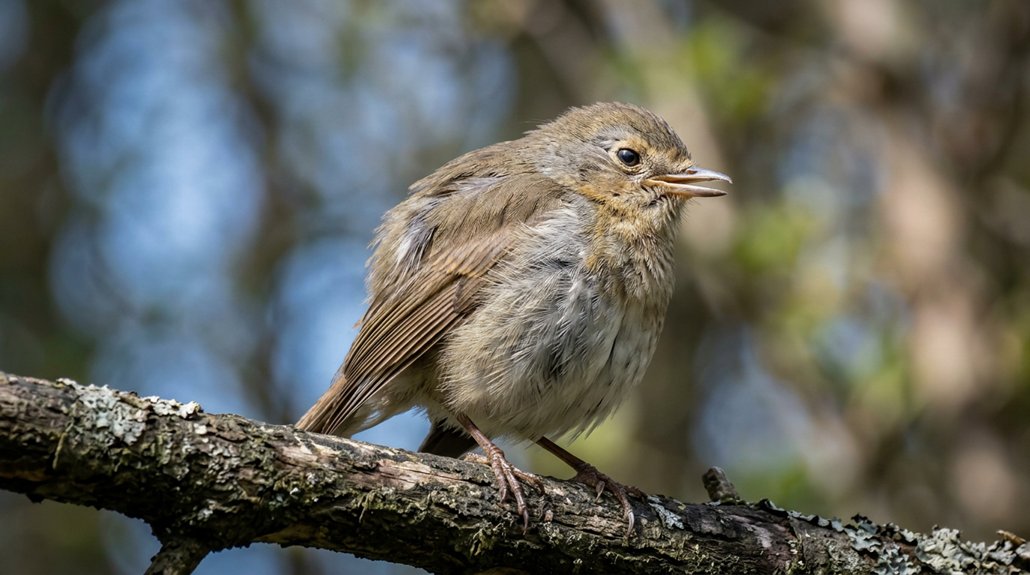
You can recognize a bird health emergency when your bird has open-mouth breathing, persistent panting, wheezing, blue or pale gums, collapse, seizures, severe weakness, or heavy bleeding. Sudden refusal to eat or drink, a sharp drop in droppings, or rapid weight loss also needs prompt attention. Don’t handle your bird more than necessary, and keep it warm while you contact an avian veterinarian right away. There’s more to know about first aid and safe stabilization.
Key Takeaways
- Open-mouth breathing, persistent panting, gasping, wheezing, or visible chest effort are urgent signs of respiratory distress.
- Blue-gray or pale gums, fainting, collapse, or sudden weakness need immediate veterinary care.
- Seizures, severe incoordination, head tilt, paralysis, or inability to perch are critical neurologic emergencies.
- Continuous bleeding, fractures, prolapse, or deep wounds require rapid first aid and urgent avian evaluation.
- Refusal to eat, major droppings changes, or 5–10% weight loss can signal serious illness and should prompt care.
What Bird Symptoms Are Emergencies?
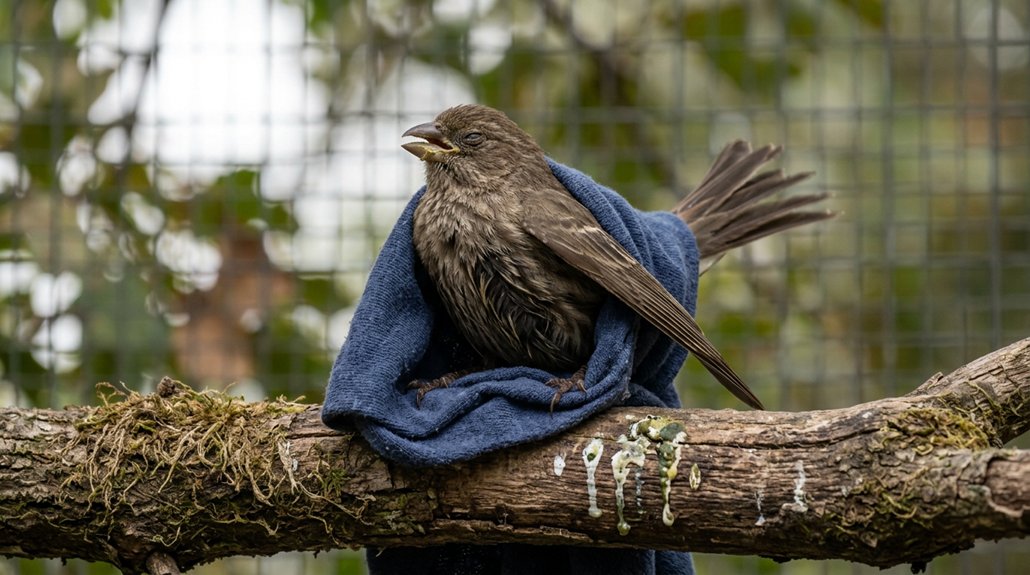
When a bird shows any sudden breathing difficulty—such as open-mouth breathing, persistent panting, or severe tail-bobbing—it’s an emergency, and you should minimize handling and seek veterinary care immediately. You should treat weakness, collapse, seizures, or sudden unresponsiveness as urgent, especially if the bird can’t perch or grasp. Continuous bleeding, a visible fracture, a deep wound, or a broken blood feather that still bleeds after 4–5 minutes of pressure also needs prompt treatment. Rapid weight loss, refusal of food or water, or passing whole seed or far fewer droppings signals serious illness. Obvious trauma, severe eye or nasal discharge with lethargy, prolapse, and poisoning or fume exposure all need immediate care. If the bird arrests, avian CPR may be necessary. Feather molting isn’t an emergency.
Bird Emergency Signs You Should Never Ignore?
You should treat open-mouth breathing, tail-bobbing, wheezing at rest, sudden collapse, or an inability to perch as critical warning signs that need immediate veterinary attention. You should also act urgently if you notice marked lethargy, a fluffed posture, sitting on the cage floor, bleeding, fractures, prolapse, or large wounds. If your bird won’t eat for more than 24 hours or has major droppings changes, you shouldn’t wait for symptoms to worsen before seeking care.
Critical Warning Signs
Critical warning signs in birds often appear suddenly and can worsen quickly, so any open-mouth breathing, audible squeaks, persistent tail-bobbing, or other forced respiration should be treated as a respiratory emergency requiring immediate veterinary care. You should also watch for behavioral changes such as fluffed posture, sitting low on the perch or cage floor, marked lethargy, or refusing food for 12–24 hours. Feather abnormalities, especially poor condition with weakness, can accompany serious illness. Visible bleeding, a broken blood feather, fractures, bright red droppings, or uncontrolled hemorrhage are urgent. Neurologic signs, including seizures, head tilt, paralysis, severe incoordination, or sudden collapse, are critical. Sudden severe weight loss, a sharp keel, whole seed in droppings, decreased droppings, or inability to perch or grip normally all signal a serious emergency needing prompt veterinary assessment.
Immediate Vet Action
Immediate veterinary action is required if a bird suddenly refuses to eat or drink, especially if weight loss or a sharply prominent keel is present, because birds can decline rapidly. You should treat open-mouth breathing, persistent tail-bobbing, audible squeaks, nasal or ocular discharge, and blue or pale mucous membranes as respiratory emergencies. If your bird collapses, seizes, becomes paralyzed, can’t stand or grasp, or is markedly lethargic, seek care now. Severe bleeding, fractures, or a prolapsed organ need direct pressure and rapid transport to an avian vet. Passing whole seed, severe diarrhea, blood in droppings, or major droppings changes with anorexia also warrant immediate diagnostics. Oxygen supplementation may be needed during stabilization, and you shouldn’t wait for signs to worsen.
How to Check Droppings, Appetite, and Weight?
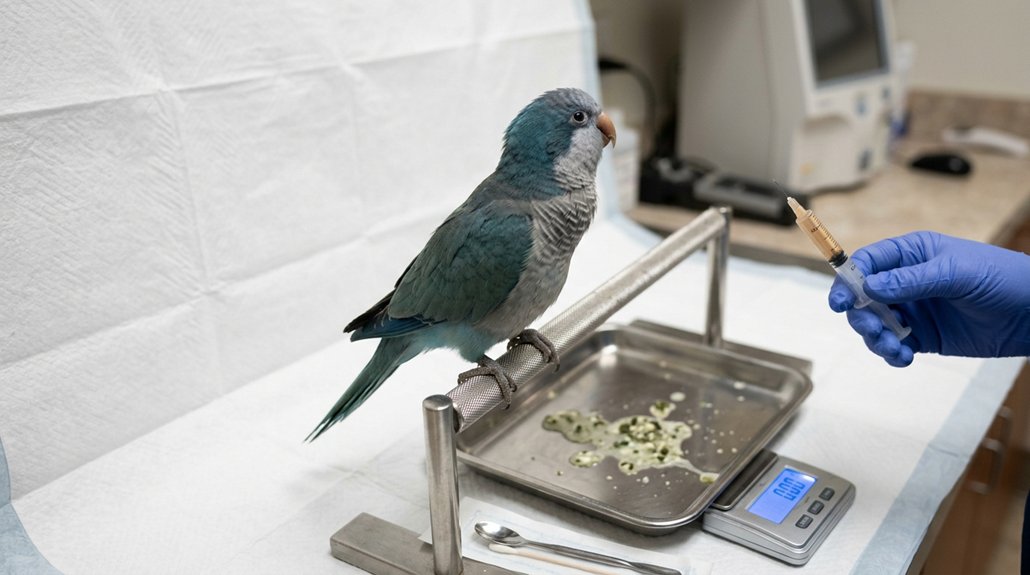
Regular monitoring of droppings, appetite, and weight is one of the most reliable ways to catch bird illness early. Check dropping patterns daily: you should see feces, urates, and urine, with color and texture matching your bird’s normal baseline. Sudden shifts to watery, bloody, greenish-black, or markedly reduced droppings, or diarrhea, need attention. With appetite monitoring, note how much food is removed and whether whole seeds appear in droppings; if your bird stops eating or loses interest, treat it as an urgent warning. Weigh your bird regularly on a kitchen or postal scale, and palpate the keel: a sharp keel suggests weight loss, while a rounded keel is more normal. Track drinking and droppings frequency for signs of dehydration or gastrointestinal disease, and contact an avian veterinarian if anything deviates.
When to Call an Avian Vet Right Away?
You should call an avian vet right away if your bird has any breathing trouble, including open-mouth breathing, tail-bobbing, or gasping, because respiratory distress can signal a life-threatening emergency. You also need urgent care if your bird becomes suddenly lethargic, collapses, can’t stand or grasp, or shows seizures, since these signs can reflect systemic illness or neurologic compromise. Abnormal droppings, especially if they’re paired with anorexia or rapid weight loss, can indicate a serious decline and shouldn’t be monitored at home.
Breathing Trouble
Breathing trouble in birds is always concerning, and certain signs mean an avian emergency is underway. If you see open mouth breathing, tail bobbing, or hear wheezing, crackling, or ticking, your bird needs immediate avian care. A sudden rise in respiratory rate, pronounced labored breaths, or visible chest and abdominal effort, including panting, is also urgent because birds often compensate until disease is advanced. Nasal or ocular discharge, sneezing with noisy breathing, or hoarseness with lethargy should be evaluated the same day. If your bird’s mucous membranes look blue-gray, or it faints or collapses, treat this as life-threatening and call an emergency veterinarian now. Keep handling minimal, place the bird in a dark carrier, and maintain warmth at 80–88°F with humidity if tolerated.
Sudden Lethargy
Sudden lethargy in a bird—marked by a sharp drop in activity, sitting low on the perch or cage floor, or reluctance to grip—warrants an immediate call to your avian veterinarian, because birds often mask illness until they’re seriously ill. Watch for concurrent behavioral changes, fluffed feathers, closed eyes, a prominent keel bone, or weight loss, which suggest energy depletion and possible systemic disease. If lethargy appears with open-mouth breathing, tail-bobbing, discharge, incoordination, seizures, head tilt, or bleeding, treat it as an emergency. If your bird abruptly stops eating or drinking, don’t wait; anorexia can signal advanced illness. While you arrange care, keep the bird warm, minimize handling, and transport it quickly. Ongoing feather maintenance decline can also accompany sudden weakness.
Abnormal Droppings
A sudden, persistent change in droppings—especially watery, profuse, or very loose stool—warrants prompt avian veterinary attention, and it’s an emergency if your bird is also lethargic or eating less, because dehydration can develop quickly. You should also treat visible blood, black tarry stool, or bright red blood as an immediate emergency. If you notice very few or no droppings for 12 hours or more, or your bird passes whole seeds, seek urgent care; these signs can indicate anorexia, crop stasis, or GI obstruction. Check urate coloration closely: yellow, green, or unusually pale urates may signal hepatic disease, infection, or severe illness. A foul odor, mucus, undigested food, or a major shift in feces-to-urate ratio also deserves immediate evaluation and hydration assessment by an avian vet.
Bird First Aid You Can Safely Do at Home
When you can safely provide first aid at home, focus on stabilization while you arrange avian veterinary care. If your bird is bleeding, use basic woundcare: apply firm direct pressure with a clean cloth or towel for 4–5 minutes, then use styptic powder or a small dab of super glue only after bleeding slows. If it’s chilled, increase ambient temperature to 80–90°F with a wrapped heating pad or heat lamp and monitor closely. If it’s weak and not eating, offer one drop at a time of diluted Karo or pancake syrup, up to 5–6 drops total, then call your avian vet promptly. For severe respiratory distress, minimize handling, and seek emergency care immediately. Use feather cleaning techniques only if needed.
How to Set Up a Warm Bird Hospital Cage
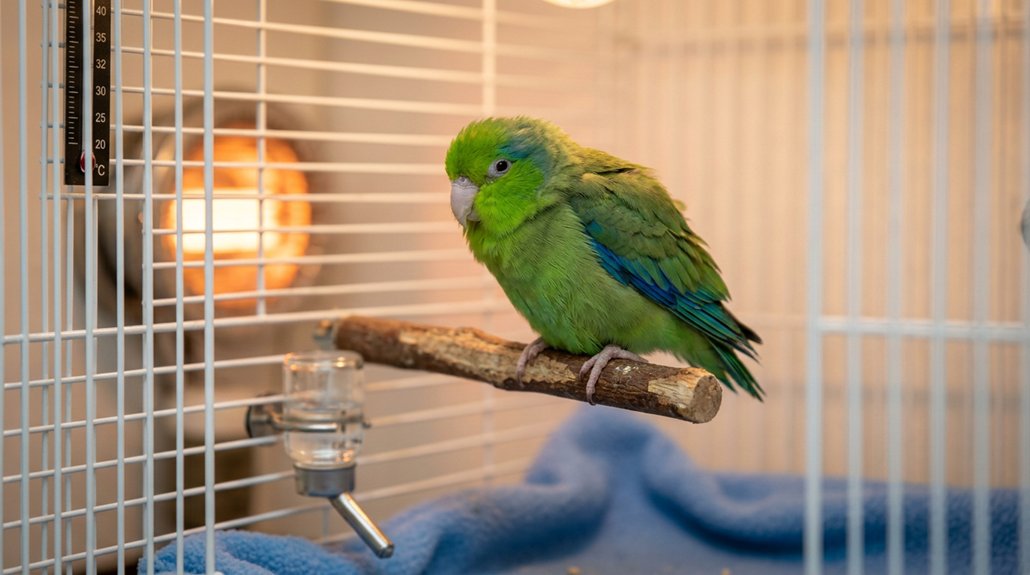
Set up a small hospital enclosure—ideally an aquarium or a smaller cage—with the perches removed and soft padding on the floor so your bird can rest securely and won’t fall. Place food and water directly in front of the bird. Keep the cage at 80–90°F using a low-setting heating pad under half the base or a space heater, creating a thermal gradient so the bird can choose comfort. For respiratory illness, aim for 85–88°F and about 70% humidity by covering the enclosure or adding warm water nearby. A portable incubator can help if you have one. Keep the head slightly elevated, limit handling, and cover the cage to reduce stress. Watch for open-mouth breathing or increased effort. Keep transport paths clear.
How to Build a Bird Emergency Kit
Once your bird’s hospital cage is ready, the next step is to assemble a bird emergency kit so you can act quickly if its condition worsens. Include a digital gram-scale with 0.1–1 g resolution and weigh your bird daily; a 5–10% loss means you should contact your vet immediately. Pack a thermometer, heating pad, and towel to keep the cage near 80–90°F. Add a 1–5 mL syringe, eye dropper, small bowl, electrolyte packets, and Karo or pancake syrup for 5–6 drops if hypoglycemic. Keep styptic powder, sterile saline, scissors, gloves, restraint towel, medical records, photos, medication history, travel safe carriers, and emergency contactcards.
Frequently Asked Questions
What Is the 3-3-3 Rule for Birds?
It’s a triage rule: if your bird won’t eat for 3 hours, drink for 3 days, or pass droppings for 3 weeks, you should seek veterinary care; during flight training or feather molt, act sooner.
How Do Birds Act When They Are Sick?
You’ll notice subtle changes: your bird may seem lethargic, hold a lethargic posture, show fluffed feathers, a quiet appetite, drooping wings, and less movement. It may sleep more, hide, or become unusually quiet, fearful, or irritable.
Can a Sick Bird Recover on Its Own?
Sometimes, but you shouldn’t assume it will. Your bird’s immune response may handle minor issues, yet true anorexia, breathing trouble, or bleeding rarely resolve with home remedies. If you’re concerned, seek an avian vet promptly.
How to Know if a Bird Is Asking for Help?
You’ll notice a bird asking for help when its signals flare like warning lights: vocal changes, posture shifts, less eating, fluffed feathers, open-mouth breathing, tail-bobbing, sudden weakness, or bleeding—those signs mean you should contact a veterinarian immediately.
Conclusion
When your bird’s breathing turns ragged, its feathers stay fluffed like a storm cloud, or droppings change color and texture, you’re seeing more than a small problem—you’re seeing a signal. You can act quickly, keep your bird warm, and call an avian vet before the condition deepens. With a calm eye and a prepared hospital cage, you’ve got the chance to turn a crisis into care, and give your bird a safer path back to health.