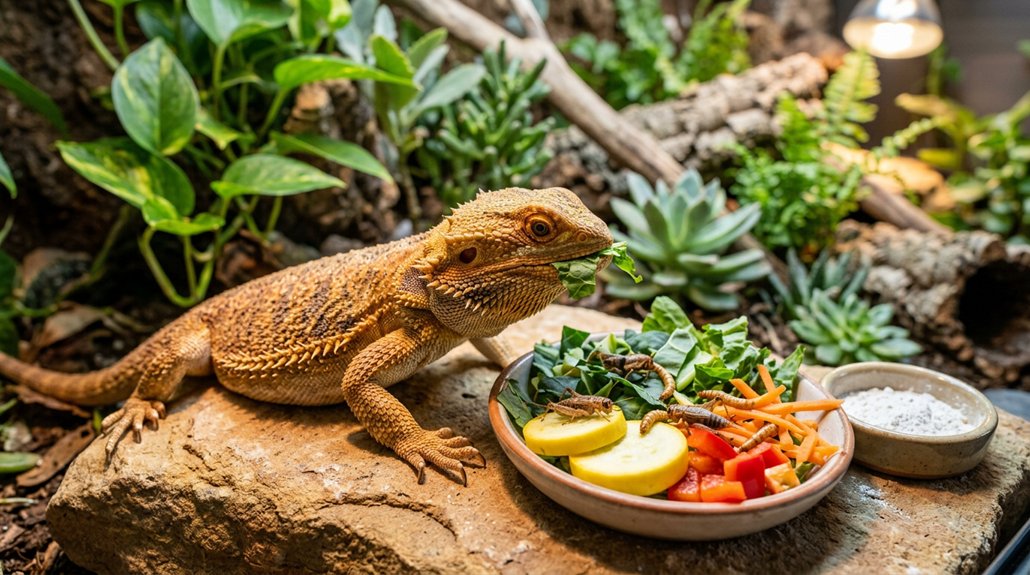
Feed your bearded dragon a balanced diet of 80% plant matter for adults and 70% insects for juveniles. Include protein-rich insects like crickets and Dubia roaches, alongside dark leafy greens such as collard and dandelion. Limit fruits to 10-20% due to sugar content. Provide fresh water daily and mist regularly. Use calcium supplements with Vitamin D3 2-3 times a week. Explore more to guarantee your dragon’s dietary needs are fully optimized for health and vigor.
Key Takeaways
- Feed adult bearded dragons a diet of 80% vegetables and 20% insects, adjusting the ratio for juveniles.
- Offer leafy greens daily, such as collards and dandelions, for essential nutrients.
- Provide protein-rich insects, like crickets or Dubia roaches, 2-3 times weekly for adults.
- Limit fruit to 10-20% of the diet to prevent digestive issues from excessive sugar.
- Ensure regular calcium supplementation with Vitamin D3 to maintain healthy bone structure.
Bearded Dragon Nutritional Basics
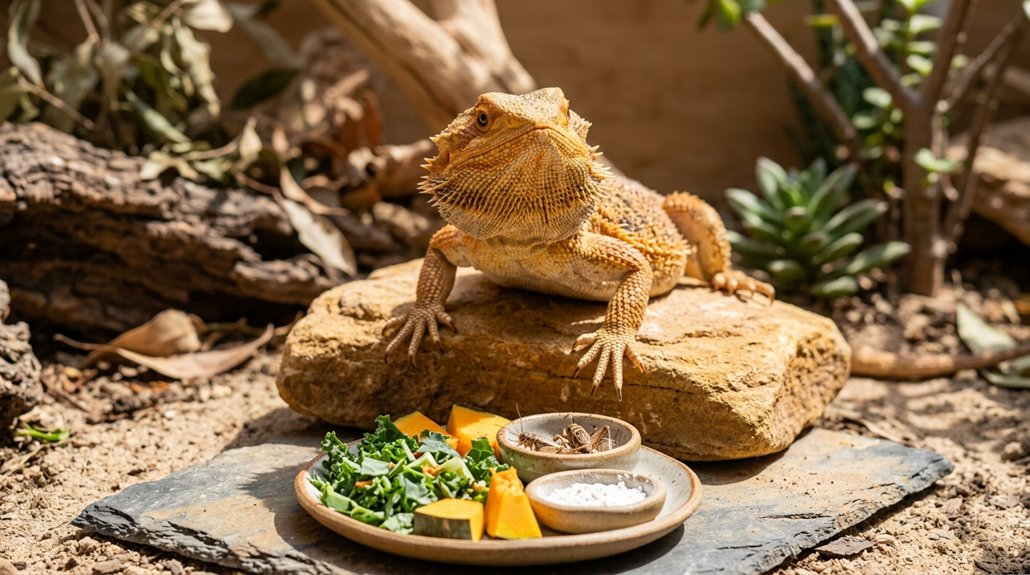
Understanding the nutritional needs of a bearded dragon is essential for guaranteeing its health and well-being. Familiarizing yourself with bearded dragon anatomy helps you appreciate their omnivorous dietary requirements, comprising roughly 80% plant matter and 20% insects for adults. Juveniles, however, demand the reverse ratio. For adults, a carefully curated mix of leafy greens and vegetables with small quantities of fruits (10-20% of plants) is important. Include protein-rich insects like crickets and Dubia roaches at suitable feeding frequencies based on their age and activity level. Fresh water availability is critical, as hydration mainly comes from moist foods. Monitor food intake vigilantly, making necessary adjustments to prevent obesity and maintain a balanced diet that supports your bearded dragon’s nutritional needs.
Nurturing Young Dragons: Best Diet
To guarantee ideal growth and development, young bearded dragons require a diet rich in protein sources, with approximately 70% comprised of insects such as crickets and worms. Confirming insect variety is essential for satisfying nutritional needs during significant growth milestones. Offer a mix of crickets, mealworms, and small roaches three times daily, allowing the dragon up to 60 insects each session. Supplement this with 20-50% plant matter, focusing on leafy greens like collard and dandelion greens. Introduce fruits like berries and melon gradually, ensuring they’re no more than 10-20% of the diet. Remove uneaten insects post-feeding to prevent spoilage. Additionally, make sure fresh vegetables remain available for snacking, aiding in hydration and overall nutrition.
Caring for Adult Dragons’ Diet
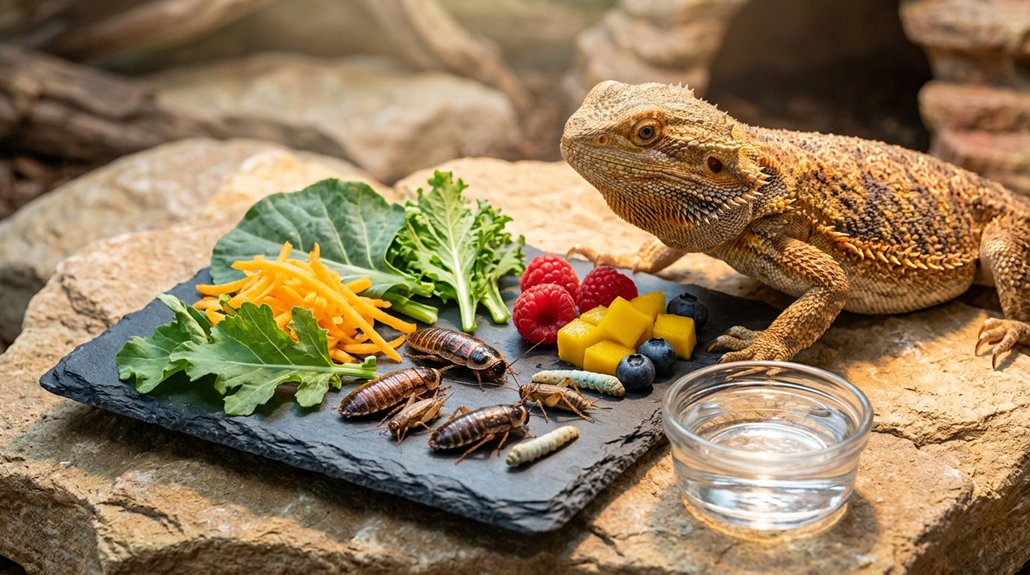
In managing an adult bearded dragon’s diet, you’ll need to maintain an approximate 80% plant to 20% insect ratio to support a healthy weight and prevent obesity. Make sure to feed insects no more than 2-3 times weekly, ensuring these do not exceed 50% of their total diet. Daily, provide a variety of fresh vegetables, primarily leafy greens, and limit fruit intake to 10-20%, while promptly removing uneaten insects to uphold a clean environment.
Balanced Plant-Insect Ratio
Maintaining the proper balance of plant and insect matter in the diet of adult bearded dragons is crucial for their health and longevity. With dietary flexibility, the ideal ratio is approximately 80% plant matter and 20% insects. Vegetables, especially dark leafy greens and colorful varieties, should form the diet’s backbone. Insect consumption should not exceed 50%, offered bi-weekly to align with nutrient tracking for weight management. Fruits, making up 10-20% of plant intake, should be occasional treats in bite-sized pieces. Regular monitoring of your dragon’s weight and food intake guarantees effective obesity prevention and health optimization.
“`markdown
| Component | Frequency |
|---|---|
| Leafy Greens | Daily |
| Colorful Veggies | Daily |
| Insects | 2-3 times per week |
| Fruits | Occasional treats |
| Weight Monitoring | Regularly |
“`
Essential Feeding Practices
When crafting the diet of adult bearded dragons, it’s essential to emphasize the incorporation of fresh vegetables over an excessive intake of insects. Aim for about 80% plant matter, featuring nutrient-rich leafy greens like collard greens and kale. Limit insects to only 20% of their intake, providing them once daily. Feeding schedules should be tailored to individual needs; monitor your dragon’s appetite and adjust quantities for ideal nutritional balances. Fruits, while nutritious, should remain treats—constituting merely 10-20% of the plant diet and offered in bite-sized pieces. To avoid obesity, precise dietary adjustments are vital, ensuring a leaner diet is maintained. Consistently evaluate their health and feeding response to make informed dietary decisions.
Top Insects for Nutrition
A balanced diet is essential for the health of bearded dragons, and providing them with nutrient-rich insects is imperative. Crickets are a popular choice due to their protein-rich nature; their benefits include supporting growth when offered daily to adults. Dubia roaches stand out for their nutrient density and low-fat profile, offering advantages such as ease of care and digestibility. Superworms are beneficial for adult dragons but should be carefully managed to prevent gut impaction, particularly in juveniles. Mealworms, due to their exoskeleton, are suitable for adults but should be limited for young dragons. Silkworms provide substantial protein and moisture, making them an all-round nutritious option.
- Crickets: High protein
- Dubia Roaches: Nutrient dense
- Superworms: Adult-only
- Mealworms: Moderate use
- Silkworms: Ideal moisture
Veggies Your Dragon Will Love
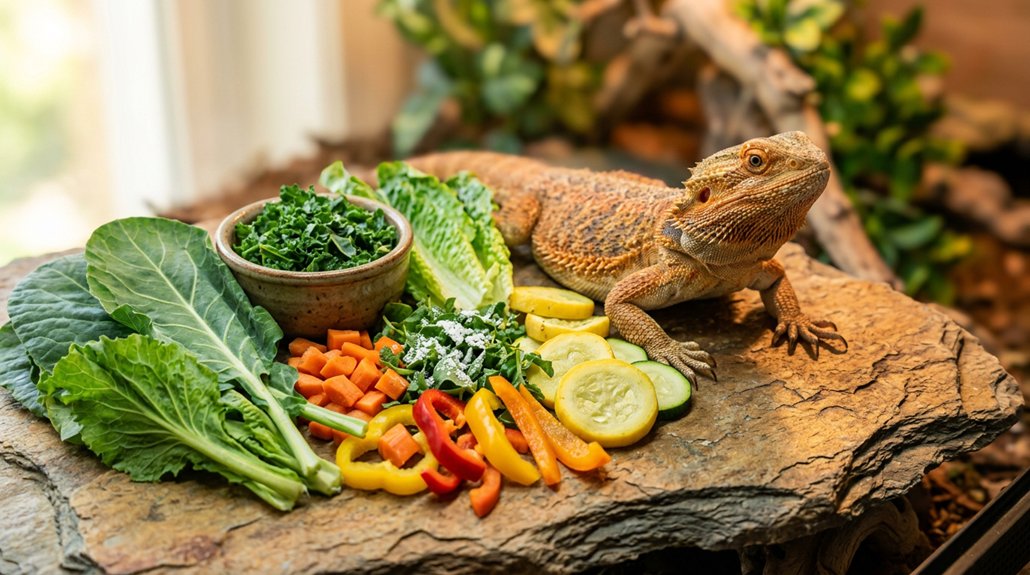
While nutrient-rich insects form an integral component of a bearded dragon’s diet, vegetables play an equally important role in ensuring their overall health and well-being. Vegetables should comprise 80-90% of your dragon’s plant-based intake, particularly focusing on dark leafy greens like collard and dandelion greens. These provide essential vitamins and minerals. Incorporate colorful veggies such as bell peppers and sweet potatoes, which are packed with nutrients your dragon needs. However, avoid toxic vegetables like mushrooms and rhubarb. Always chop these veggies into bite-sized pieces for easy consumption. Serve them daily to prevent nutritional deficiencies. A varied selection of vegetables maintains balanced nutrition and keeps your bearded dragon thriving. Ensuring diversity in their diet is key to peak health.
Fruits: Tasty Occasional Treats
Fruits offer a delightful yet occasional treat for your bearded dragon, serving to complement their primarily vegetable-rich diet. While fruit varieties like berries, melons, and apples are safe, they should only make up 10-20% of the total plant diet. Seasonal fruits can be introduced in moderation but take care to avoid citrus fruits due to their acidity. High-sugar fruits are potential culprits for digestive issues, so they should be limited.
Here’s what to keep in mind when feeding fruits:
- Introduce new fruits slowly to monitor for adverse reactions.
- Offer small, bite-sized pieces.
- Guarantee thorough washing to remove pesticides.
- Balance with a primarily leafy green diet.
- Adjust quantities seasonally to maximize variety and nutrition.
Hydrate and Supplement Your Dragon Right
Proper hydration is critical for your bearded dragon, primarily achieved through a diet rich in fruits and vegetables, complemented by a clean water bowl that should be changed regularly to prevent contamination. To optimize their bone health, supplement their diet with calcium powder to prevent metabolic bone disease, and pair it with vitamin D3 to enhance calcium absorption. Misting their enclosure can also aid in maintaining humidity levels and providing a natural hydration source.
Essential Water Practices
Providing adequate hydration for your bearded dragon is an essential component of its care. While they primarily get hydrated from fruits and vegetables, a water bowl in the enclosure is vital. Make certain it’s shallow, and change the water regularly to avoid contamination. Monitor hydration signs, such as lethargy or sunken eyes, which may indicate dehydration. Misting the enclosure can mimic natural hydration sources, boosting your dragon’s water intake.
Key practices to guarantee proper hydration include:
- Observe hydration signs: Look for lethargy, sunken eyes.
- Provide a water bowl: Keep it shallow, refill frequently.
- Regular misting: Simulate natural dew in dry environments.
- Hydrate through diet: Use moisture-rich fruits and veggies.
- Clean water: Maintain hygiene by changing water often.
Importance of Calcium
Although essential minerals are a staple in reptile care, calcium holds particular significance for bearded dragons due to its role in bone health and preventing metabolic bone disease. Guarantee your dragon’s metabolic health by integrating calcium sources into their diet. Offer calcium powder supplements 2-3 times weekly, especially for growing juveniles and breeding females. Bearded dragons need Vitamin D3 for effective calcium absorption, so adequate UVB lighting or supplementary Vitamin D3 is necessary. Include calcium-rich greens like collard and dandelion greens in their meals to naturally support their calcium needs. Monitor calcium intake and dietary variety closely, as deficiencies can lead to lethargy, weak bones, or deformities. Balancing calcium supplementation and natural sources is essential for robust health.
Avoid These Feeding Pitfalls for Healthier Dragons
When caring for a bearded dragon, it’s important to avoid common feeding pitfalls that can negatively impact their health. Ensuring appropriate feeding frequency and correct portion sizes is vital. Over-relying on mealworms and wax worms can lead to obesity—they should be occasional treats. Fruits, limited to 10-20% of the diet, prevent digestive issues, particularly high-sugar types.
Avoid these feeding mistakes:
- Obesity risk: Limit fatty, low-nutrient treats like mealworms.
- Digestive health: Keep fruit portions minimal to avoid digestive troubles.
- Toxic foods: Avocado and rhubarb pose serious health risks.
- Proper greens: Skip iceberg lettuce to prevent diarrhea and inadequate nutrition.
- Monitor and Adjust: Regular weight checks help tailor diet needs.
These guidelines will promote healthier dragons.
Frequently Asked Questions
Do Dragons Recognize Their Owners?
Yes, bearded dragon behavior suggests they do recognize their owners. Through visual and scent cues, they can identify familiar individuals. Your regular interaction and handling foster a recognizable bond, enhancing owner recognition, leading to excitement and calmness.
Do Bearded Dragons Need to Be Fed Every Day?
Coincidentally, bearded dragon feeding depends on age. Hatchlings need daily feeding, juveniles benefit from once-a-day insects, while adults have reduced dietary requirements, eating insects only 2-3 times weekly, yet daily vegetable access remains essential.
How Do Bearded Dragons Say Hello?
Bearded dragons greet you through head bobbing and waving, exemplifying classic reptile communication. Their open posture and eye contact are parts of bearded behavior, showing friendliness and curiosity. Occasionally, they might puff up, indicating varied comfort levels.
What Should You Never Feed a Bearded Dragon?
You’d think dragons would thrive on avocado and rhubarb, right? But these toxic foods will bust bearded dragons’ dietary restrictions. Also, skip iceberg lettuce and wild insects; they spell digestive doom. Fruits? Limit them to avoid obesity disasters.
Conclusion
In the grand tapestry of your bearded dragon’s health, you’re the weaver crafting each essential thread. By balancing insects, veggies, and the occasional fruit treat, you’re setting the stage for a vibrant life. Remember, hydration and supplements are the unsung heroes in this nutritional symphony. Avoid pitfalls by ensuring each meal is an intricate dance of nutrients. With diligence and care, your scaly companion will flourish, reflecting the meticulous diet you’ve so thoughtfully woven.