Does your dog turn into a barking machine the moment you start the car?
A lot of pet parents deal with this exact same headache.
Dogs bark in cars, and at loud noises, for one of two reasons: they want something, or they’re trying to make something stop. A reactive dog picks up on both signals fast, often before the engine even turns over.
Even if you’re just weighing whether to adopt a rabbit down the road, these same calming tricks work across species. The steps below come from real training sessions, not just theory.
I’m going to walk you through the exact steps that calm a reactive dog down, from crate training to counter-conditioning. Grab a coffee, and let’s get your car rides back to peaceful.
Key Takeaways
- Dogs bark in cars and at loud noises because they want something or fear something, so you need to find the root cause before you can fix the behavior.
- Gradual desensitization, reward-based training, and crates cut down car reactivity by building positive associations and limiting sensory overload over time.
- Counter-conditioning pairs scary sounds with treats to rewire your dog’s brain, turning fear responses into calm, positive ones.
- Anxiety wraps, white noise machines, soothing scents, and safe spaces work best when paired with exercise and mental stimulation.
- Consistent daily positive reinforcement turns calm behavior into a habit, so settling down becomes your dog’s default instead of barking.
Understanding Reactive Barking
Your dog barks in the car or jumps at loud noises for a simple reason: something scares them, or something excites them past the point of self control. Car reactivity is one of the most common pet concerns dog owners bring up in training sessions.
Some dogs react way harder than others. Breed, past experience, and how their nervous system is wired all play a part.
What triggers barking during car rides and loud noises?
Your dog barks in the car for a bunch of solid reasons, and most of it comes down to sensory overload. Here’s what’s usually driving the noise:
- Excitement: New sights, smells, and sounds flood in through the window, and your dog barks to process it all.
- Anxiety: Some dogs link cars with scary past experiences, so the vehicle itself becomes the trigger.
- Frustration: A barrier between your dog and something they want, like another dog or a squirrel, sets off a barking fit.
- Motion sickness: The movement of the car unsettles anxious dogs and can make them feel physically sick.
- Noise sensitivity: Fireworks, sirens, and construction sounds can trigger a fear response tied to real pain memories.
That motion sickness piece matters more than most owners realize. According to a 2022 CarGurus pet travel study, 58% of dogs deal with over-excitement in the car, 48% struggle with anxiety, and 44% get nauseous. If your dog falls into that 44%, training alone won’t fix the barking until you treat the upset stomach first.
Each time your dog hears a scary sound, the fear response gets a little stronger. Genetics, early socialization, and past experience decide how intense that reaction gets.
A dog raised around lots of different sounds usually handles loud noises better than one raised in a quiet house. Medication can help too, when anxiety runs high enough that dog training alone can’t reach it.
Behavior modification and positive reinforcement work together to reshape how your dog responds to these triggers. Building your dog’s impulse control takes patience, but it pays off in calmer rides and quieter evenings at home.
A dog’s bark tells you what their nervous system needs to hear.
Why do some dogs react more intensely than others?
Genetics play a huge role in how much barking you’ll hear. Breeds like the bordercollie were bred for generations to herd livestock and bark on the job, so that instinct still runs in their DNA today.
Personality matters too. A naturally anxious dog reacts louder and faster than an easygoing one, and past experience shapes that reaction even more.
Here’s a quick rundown of what tends to crank up the volume:
- Health issues: Joint pain, failing eyesight, or doggy dementia make dogs jumpier and more reactive.
- Age: Senior dogs with limited mobility often get bored and confused, which shows up as barking.
- Environmental shifts: A new routine or a rearranged living room can stress your dog out fast.
- Learned habits: If barking ever earned your dog attention, food, or play, that habit sticks around.
Understanding these factors explains why some pups react hard while others barely blink. That knowledge sets you up for the next part: managing barking in the car, one of the toughest spots for most dog owners.
Managing Barking in the Car
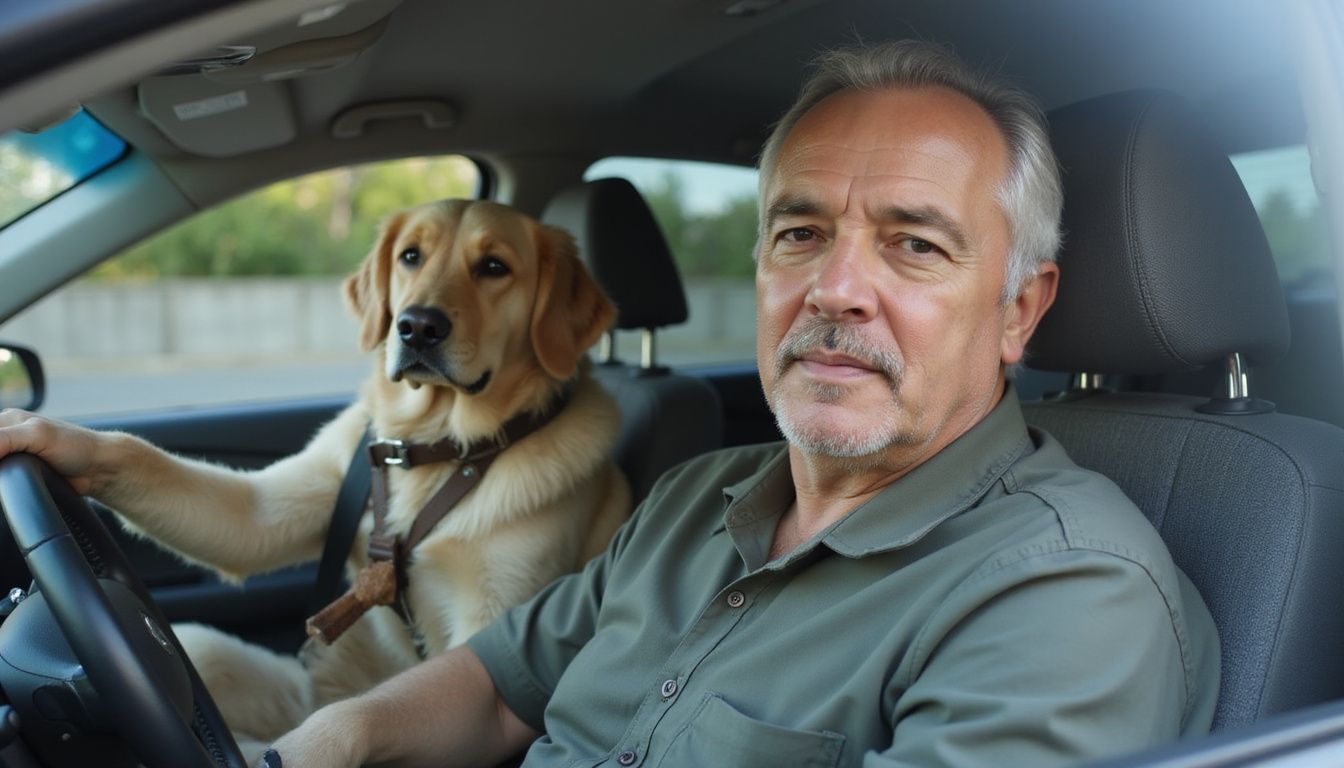
Car rides and vehicle trips don’t have to sound like a concert gone wrong. You can teach a reactive dog to settle down using a few simple tools and dog training methods that actually work.
How can crates or barriers help calm my dog in the car?
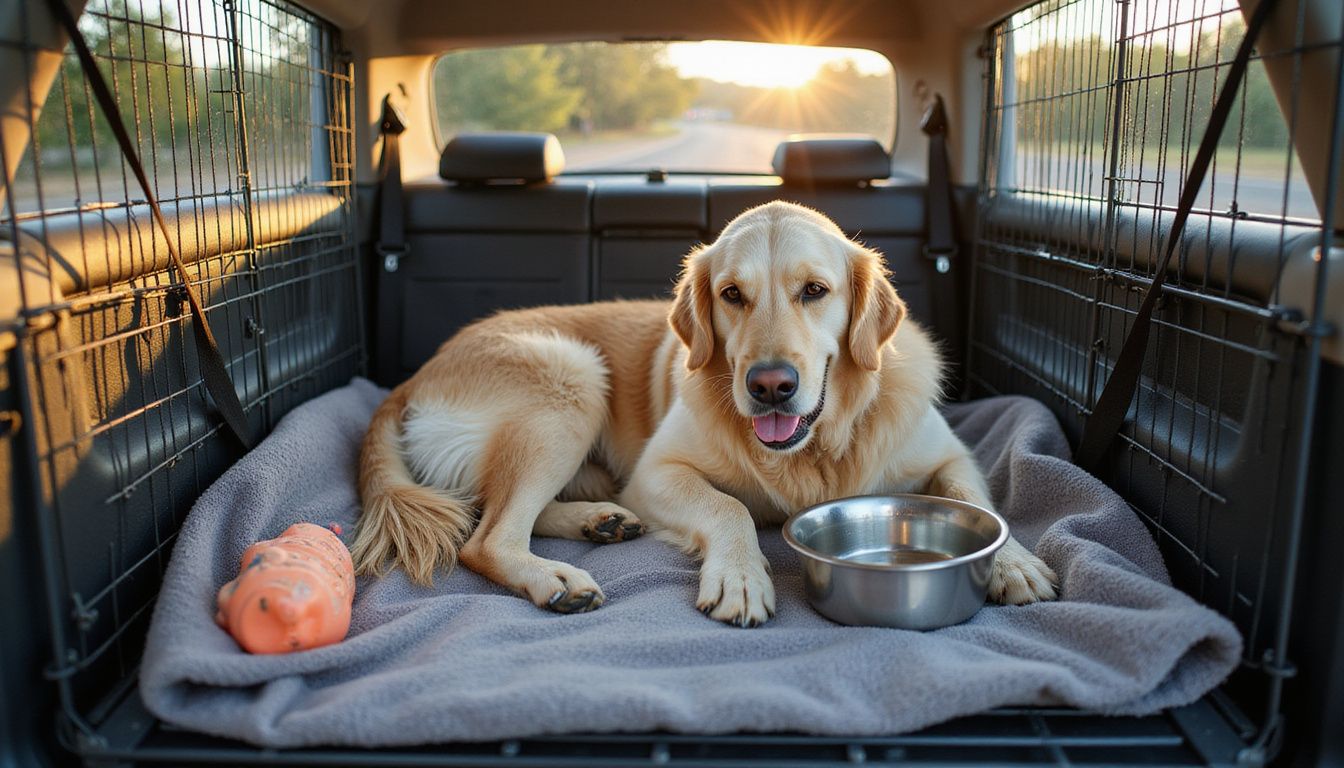
Crates and barriers work like a shield against the chaos of the road. They block your dog’s view of passing cars, pedestrians, and other triggers that spark barking fits, which cuts down on the sensory overload that makes reactive dogs lose it.
Crates also limit movement while you drive, which can ease the pain and nausea behind a lot of excessive barking. According to a US travel survey from the American Automobile Association (AAA) and Kurgo, 83% of drivers agree an unrestrained dog is dangerous, yet only 16% actually use a pet restraint. In a 30 mph crash, an unrestrained 80-pound dog can slam forward with 2,400 pounds of force. That’s not just a training tip anymore. That’s a safety must.
A few extra tools help even more:
- Window screens, car blinds, or tinting to block visual triggers
- Familiar bedding inside the crate for a sense of security
- A crate lined with home scent to turn it into a cozy den
One owner introduced a padded travel crate for a high-energy bordercollie mix that barked nonstop during short neighborhood drives. She followed a staged plan over ten days: five minutes stationary in the crate on days one through three, engine running on day four, then two-minute drives from days five through ten. Average barking episodes per five-minute drive dropped from eighteen to just four, and calm settled time jumped from twelve percent to sixty-two percent. In under two weeks of short, consistent practice, those drives went from nonstop barking to quiet naps.
Training your dog to accept a crate takes some patience, but it pays off big. Start with short sessions at home before you ever hit the road, so the crate becomes a safe space instead of a cage.
Crates also work well when you’re driving with more than one dog. Giving each pup their own zone stops excitement and anxiety from bouncing between them, and keeps the whole trip calmer.
A calm dog in a crate is a dog who trusts the journey ahead.
What is gradual desensitization to car rides?
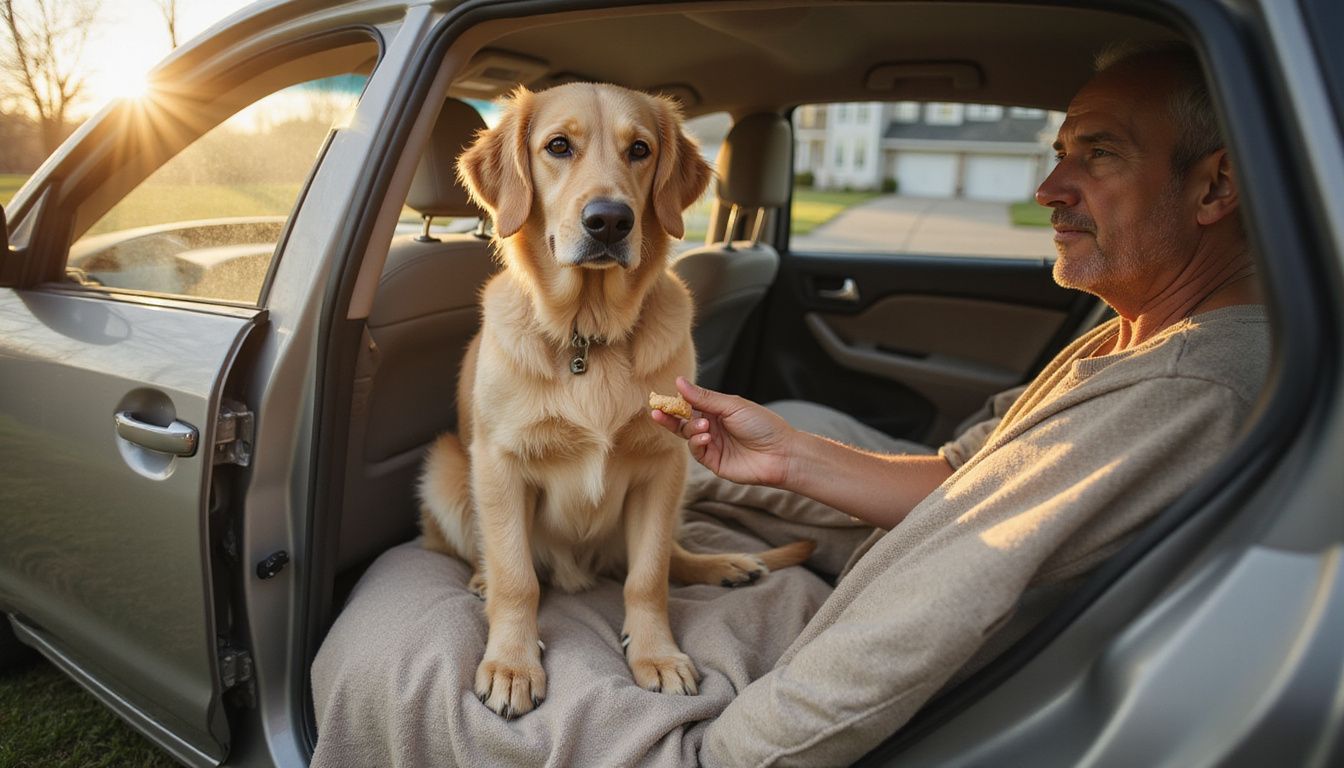
Crates and barriers create a safe space, but gradual desensitization takes things further. Dog trainer Zak George shared this exact approach on Facebook, and it builds positive associations with car rides through slow, steady exposure instead of forcing your dog into something stressful.
- Start with your dog sitting in the stationary car at home, rewarding quiet behavior with dog treats and praise to establish that calm equals good things.
- Open and close the car door a few times without starting the engine, so your dog learns that the door opening doesn’t mean an instant trip.
- Turn on the engine while your dog stays in the parked car, so your pup gets used to the sound without any movement.
- Take short trips around your driveway or neighborhood, building trip time slowly as your dog shows confidence and relaxation.
- Teach your dog that staying calm leads to the door opening and the trip ending on a good note.
- Take regular breaks on longer drives to prevent overwhelm and to reinforce that car trips don’t last forever.
- Use familiar bedding in the vehicle to boost comfort and give your dog a sense of security during these sessions.
- Vary trip times and destinations so your dog doesn’t link every car ride to one specific event or emotion.
- Bring in a second person for early sessions, so one of you can drive while the other rewards calm behavior.
- Talk to a veterinarian or behavior expert if your dog shows car sickness or intense fear that doesn’t ease up with gradual exposure.
One reward-based marker training protocol followed this timeline: days one and two had the dog sitting in the open car for three minutes with treats for calm behavior, days three and four added door closures for two minutes, and day five brought in the engine running for one minute. Days six through nine featured two-minute drives with one treat per calm minute. By day nine, a clear marker word produced calm entry behavior in eight out of ten attempts. Small, frequent rewards paired with a consistent marker made the difference between a struggle and a calm entry every single time.
How do I use reward-based training during car trips?
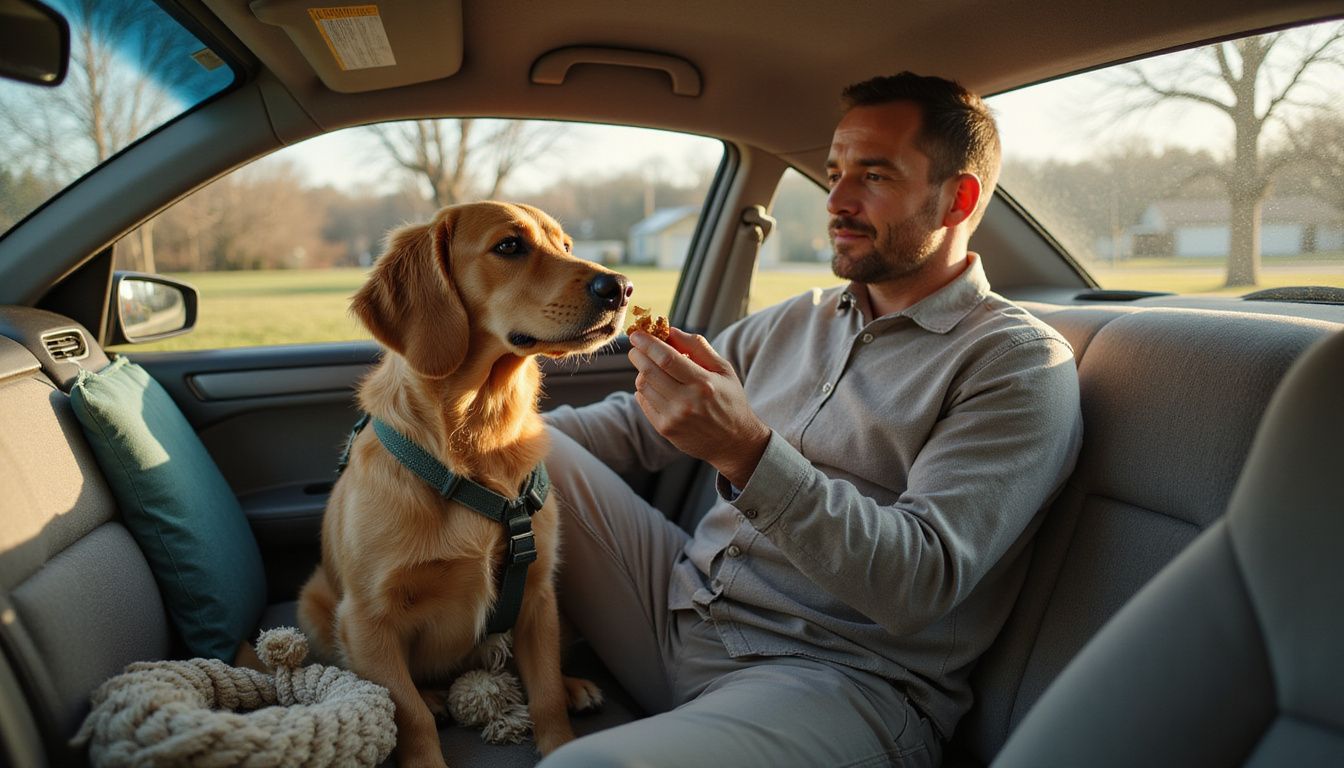
Once your dog feels good with stationary car practice, you’re ready to layer in active rewards during real drives. This turns car time into something your dog actually looks forward to.
- Start sessions in the parked car, rewarding calm behavior with dog treats or praise before you move to active drives.
- Practice once or twice a day for two to three minutes, keeping sessions short so your dog stays focused and enthusiastic.
- Catch quiet, relaxed moments, then mark the behavior right away with a clear word like “yes” before you reward it.
- Use fun cue words like “meatball,” “sushi,” or “lasagna” to add structure and a little fun to your dog behavior modification sessions.
- Reward your pup the instant they settle into their crate or spot, building positive links with car confinement.
- Pair dog toys or pet accessories with car rides, so your dog connects travel time with fun instead of stress.
Practice this consistently every day. Reliable behavior comes from repetition and predictable rewards, not one lucky car ride.
Addressing Barking at Loud Noises

Your dog’s ears perk up at every thunderstorm, firework, or siren, and suddenly your pup turns into a barking machine. Loud noises trigger real fear in a reactive dog, and you can teach your furry friend to stay calm instead of losing it.
How do I identify specific noise triggers for my dog?
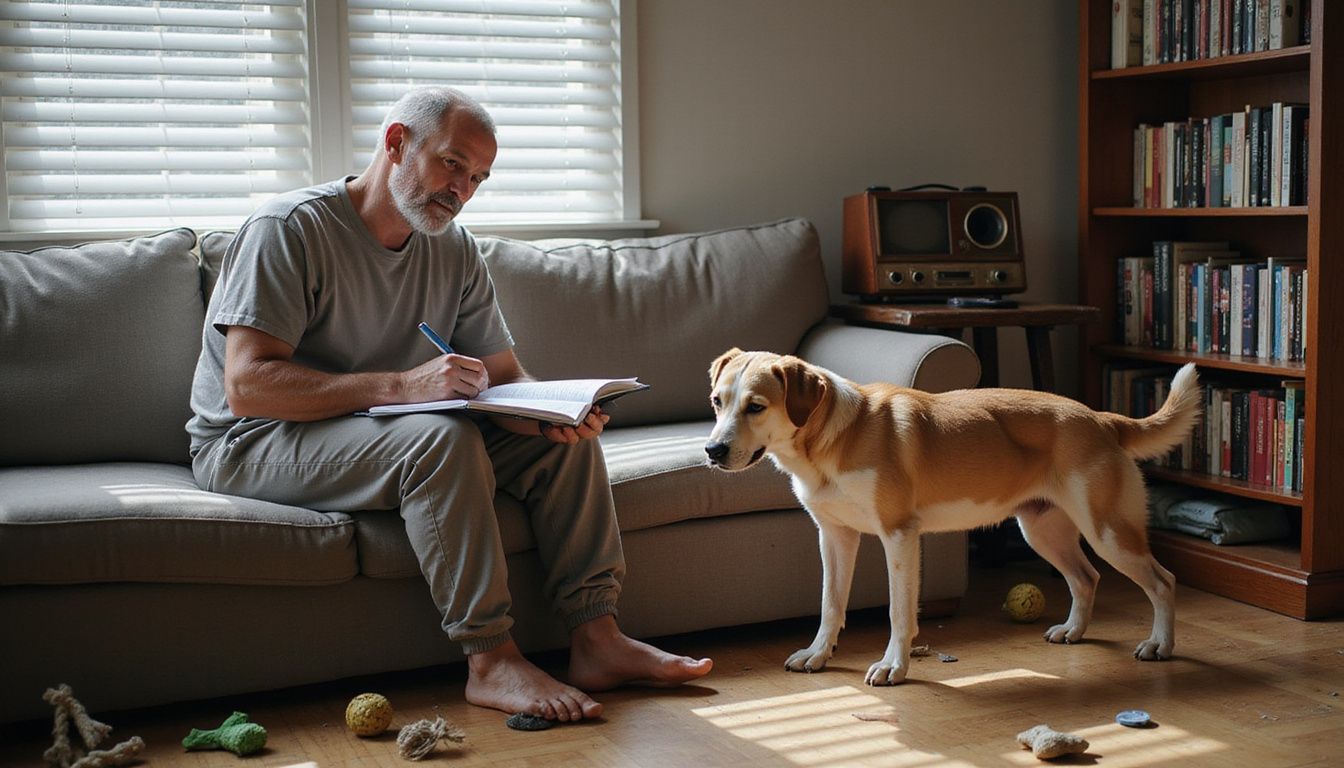
Figuring out what sounds stress your dog takes patience and a little detective work. Start tracking patterns today so you understand your pet’s reactions better.
- Keep a diary of barking episodes, noting the time, place, and what noise happened right before your dog reacted.
- Watch body language closely when sounds hit. Pinned ears, a tucked tail, panting, or trembling often show up before the barking starts.
- Notice predictable timing, like repeat delivery trucks or a neighbor’s routine, so you can prepare and step in early.
- Play a radio or white noise machine to mask background sound and pinpoint exactly which noise sets your dog off.
- Record video during barking episodes to bring to your vet appointment, since a vet can spot anxiety patterns you might miss.
- Watch for sudden changes in barking behavior, since new or worsening noise sensitivity sometimes points to a health issue.
One household played a white noise unit in the living room during regular afternoon delivery hours for seven days straight. Recorded barking during those predictable delivery windows fell by fifty-five percent compared to days without the white noise, and the family noticed fewer anticipatory alerts before the truck even showed up. Turning on white noise during that delivery window cut barking almost in half and let everyone step outside without the usual chaos.
What are effective counter-conditioning techniques for noise anxiety?

If you’re weighing whether to adopt a rabbit down the road, this next part still applies. Counter-conditioning works the same way across species. You pair a scary sound with something your pet loves, and their brain slowly starts treating that sound as good news instead of a threat.
Here’s how to counter-condition your dog to a scary noise:
- Introduce a quiet version of the trigger sound paired with treats, practicing once or twice daily for two to three minutes.
- Reward calm behavior before your dog starts reacting, catching that peaceful moment and reinforcing it right away.
- Play soft recordings of the sound at low volume, raising it only after your dog shows relaxed body language across several sessions.
- Use the bucket game to build impulse control, helping your dog stay composed when food and noise show up together.
- Set up a quiet retreat where your dog can escape overwhelming noise, stocked with familiar bedding and toys.
- Pair this training with anxiety wraps or soothing scents like lavender, which help your dog relax while learning these new associations.
According to Omaha and Los Angeles based dog behavior expert David Codr of Dog Gone Problems, who also works with clients around Santa Monica and West LA, the real trick is starting the trigger sound at a volume so low your dog doesn’t react at all. Mark and reward that calm, then raise the volume bit by bit over multiple sessions. Codr used this exact method to help two cocker spaniels, Rio and Luca, work through severe noise reactivity, and it fixes the most common mistake owners make: starting too loud, too soon.
How can I create a safe, quiet space for my dog?
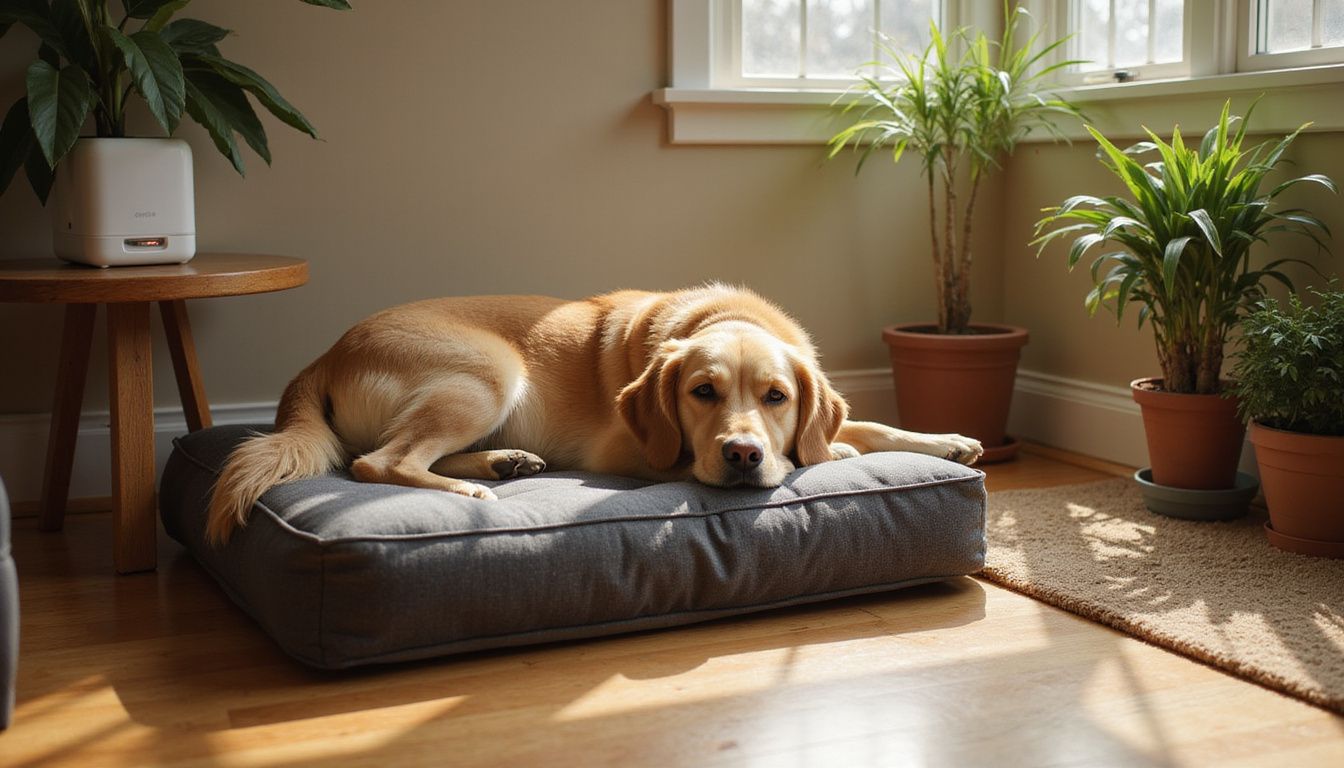
Your dog needs a calm retreat when the world gets loud and chaotic. Building this sanctuary takes simple steps and makes a real dent in barking and anxiety.
- Close curtains or blinds in your dog’s area to block outside visual triggers.
- Rearrange furniture to limit window access, which cuts down on both noise and passing traffic your dog can see.
- Add a supportive, spacious orthopaedic pet bed to the space. The SpineAlign™ Dream Bed, built by veterinarian Dr. Chris Brown, uses orthopedic memory foam to keep your dog’s joints in a neutral, comfortable position while they decompress.
- Mask disruptive sounds with a radio or white noise machine to cover the vehicle noise and voices that usually set off barking.
- Set this quiet zone up away from high-traffic areas, so deliveries and guests don’t disturb it.
- Stock the space with calming aids like anxiety wraps or soothing scents to help settle your dog’s nervous system.
General Tips for Calming a Reactive Dog
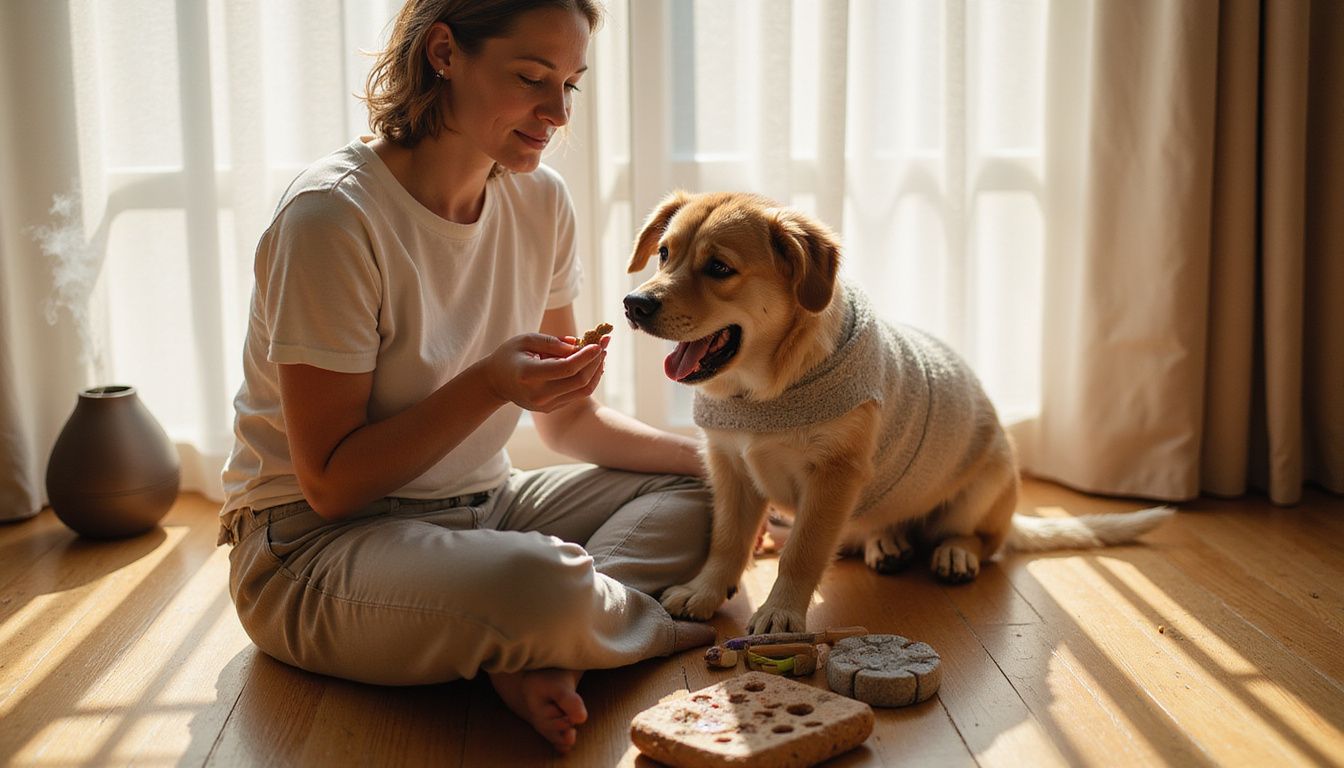
You can calm a reactive dog through positive reinforcement, anxiety wraps, soothing scents, exercise, and mental stimulation. Here’s how these tools work together to change your furry friend’s behavior.
How does consistent positive reinforcement help calm my dog?
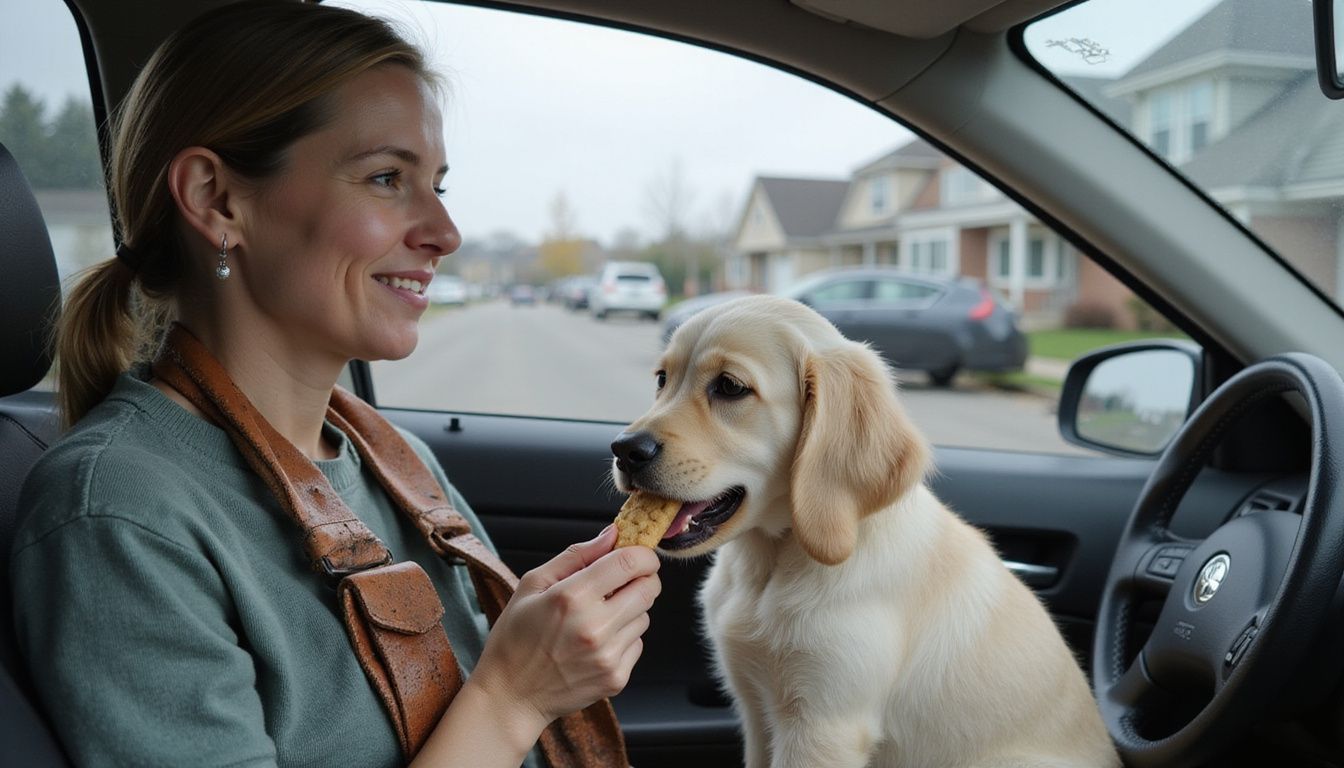
Your dog learns fast when good things follow good behavior. Every time your pup stays quiet during a car ride or a loud noise, offer praise, a treat, or a favorite toy right away.
That immediate reward turns good choices into habits. Dogs who get regular positive reinforcement build stronger, calmer responses to stressful situations over time.
Repetition is the marker word here, and yes, the pun is intended. Your dog’s brain starts linking quiet moments with good things, and anxiety wraps or soothing scents can support that, but your steady praise does the heavy lifting.
Reward the calm before your dog even asks for it. Waiting until after the barking starts teaches nothing.
It doesn’t matter if your dog missed puppy classes as a pup. These habits build at any age, as long as you stay consistent. Over weeks and months, calm behavior becomes your dog’s default instead of reactive barking.
Now that reinforcement is locked in, the next step is layering in specific counter-conditioning for noise anxiety.
What calming aids like anxiety wraps or soothing scents can I use?
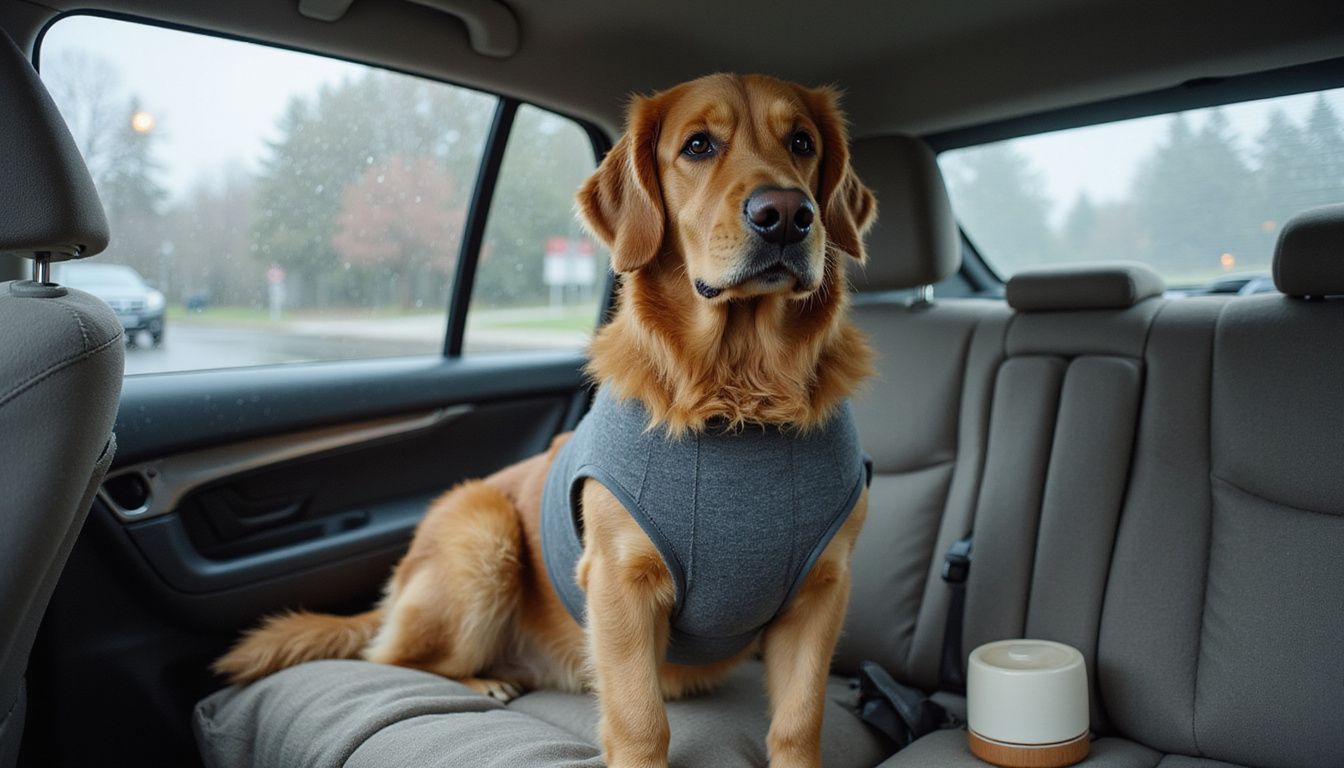
While you’re considering adding a rabbit to your family, it helps to know how calming aids work for dogs too. Many of these tools benefit anxious pets across different species, offering practical ways to manage stress. Here’s what you should know about the products that reduce your dog’s reactivity:
| Calming Aid Type | How It Works | Best For | Application Tips |
|---|---|---|---|
| Anxiety Wraps | Gentle, steady pressure around the torso mimics swaddling. This deep pressure calms the nervous system and offers tactile comfort during stressful moments. | Car rides, thunderstorms, loud fireworks, general anxiety | Introduce it gradually over several days. Let your dog wear it for short stretches first, and pair it with treats or play. |
| Soothing Scents | Aromatherapy products mask environmental triggers that lead to barking. Lavender, chamomile, and dog-safe calming oils reduce the stress response. | Noise sensitivity, car anxiety, reactions to household sounds | Apply scents gradually in your dog’s space. Start with low concentrations and watch for allergic reactions. |
| White Noise Machines | Steady background sound masks the external noise that triggers barking, so your dog can’t lock onto sudden loud sounds. | Barking at traffic, sirens, neighbors, environmental noise | Play it before triggering events happen, keep the volume moderate, and combine it with other calming strategies. |
| Familiar Bedding | Scent-soaked bedding from home gives your dog reassurance during car trips, since they recognize the comfort item and feel safer. | Car anxiety, separation stress, new situations | Place worn bedding in the car or crate, and refresh it weekly with your scent. |
| Companion Support | Another calm dog’s presence naturally lowers stress hormones and encourages relaxation. | General reactivity, car rides, noise events | Make sure the companion dog is genuinely calm, and introduce them gradually while you watch how both dogs react. |
If you’re weighing affordable options while testing out dog behavior modification, here’s the real math: anxiety wraps run eighteen to forty-five dollars and last six to twenty-four months of typical use. Plug-in scent diffusers cost twelve to twenty-eight dollars, plus about six dollars a month for refill pads, and white noise machines run anywhere from twenty to one hundred dollars depending on features. Bundle a wrap (styles range from classic swaddle designs to pullover options like the Towel Hoodie) with a diffuser for a three-month trial, and you’re looking at fifty-four to one hundred twenty dollars total. That’s a small investment for tools you can pair directly with training, without committing to anything major upfront.
Calming aids work best when you pair them with real behavior modification, not as a stand-alone fix. Introduce anything new slowly, since fast changes can backfire and add stress instead of removing it.
Mixing a few tools together often works better than using just one. Try combos like:
- An anxiety wrap paired with white noise during car rides
- Soothing scents layered with familiar bedding for thunderstorms
- A wrap plus a safe, quiet retreat space for firework season
Introduce these gradually too. Maybe week one is just the wrap, and week two you add a scent in the car. Watch how your dog responds to each one, since some dogs love pressure wraps but ignore scents entirely, and others do better with white noise alone.
Talk with your veterinarian before you start any new calming aid routine. They know your dog’s health history and any medication interactions, and some scents can bother certain breeds’ airways more than others.
How can exercise and mental stimulation reduce my dog’s stress?

Your dog’s stress drops fast when they get enough exercise and mental challenges. Physical activity burns off the nervous energy behind a lot of reactive barking, and it helps your dog focus.
A tired dog is a happy dog. That holds true whether you’re weighing a pet rabbit down the road or you already live with a reactive dog today.
Regular walks, fetch, and play tire out your dog’s body, which cuts the frustration behind excessive barking. Training games, especially impulse control work like the bucket game, build calm focus in a way that walks alone can’t.
A few easy ways to add mental stimulation:
- Puzzle toys that make your dog work for treats
- Short, five-minute training games throughout the day
- Sniffing games or a snuffle mat at mealtime
- A rented Sniffspot session for safe, off-leash exercise
That last one deserves a closer look. According to a 2026 Sniffspot survey of over nine thousand dog owners, reactivity toward other dogs is the most common behavioral challenge owners deal with, and 15.7% of dogs show fear or aggression around other dogs. Private, fully fenced Sniffspot rentals solve that problem directly, giving your dog real exercise time away from public triggers, by the hour, without the stress of a crowded dog park.
Adequate stimulation heads off the frustration that leads to barking, and it makes your whole home calmer. Calming aids work best layered on top of this foundation, not instead of it.
Conclusion
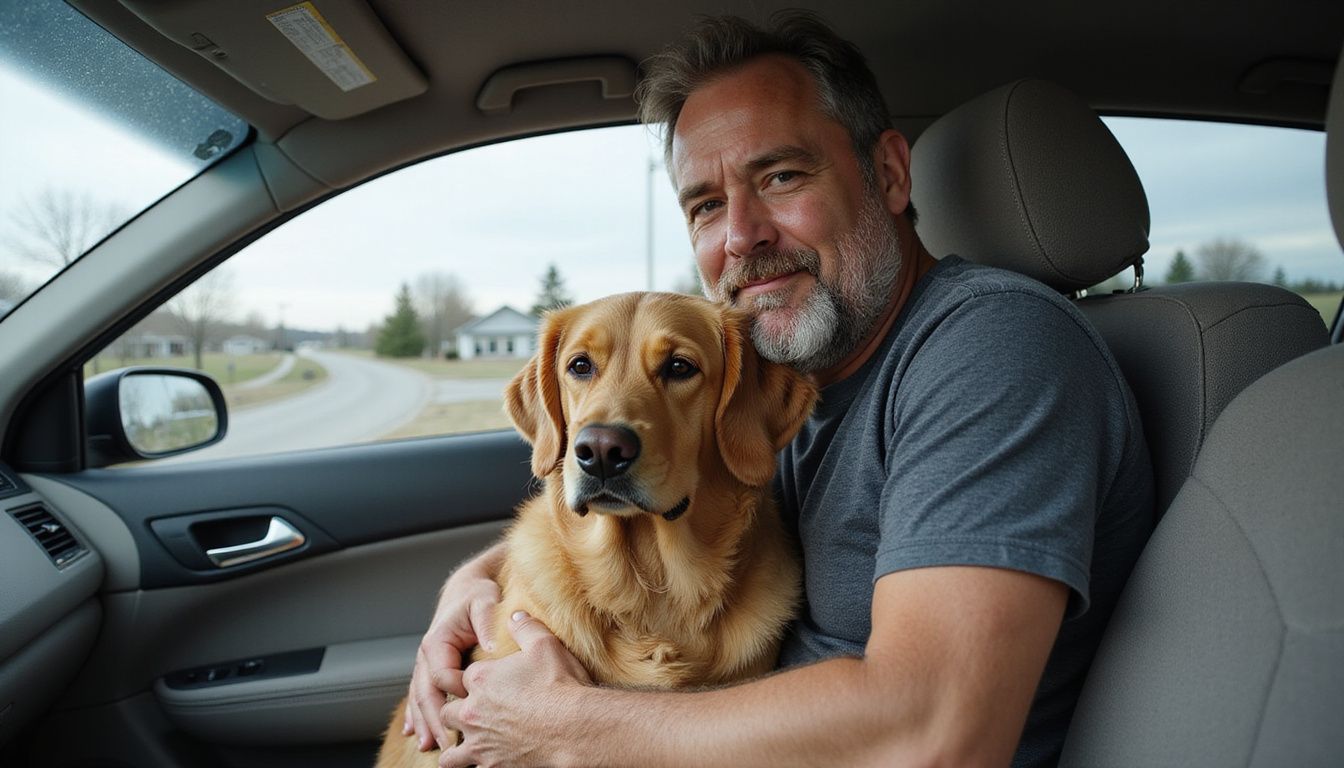
Calming a reactive dog takes patience and the right approach, but you now have real tools to make progress.
Barking always comes down to one of two things: your dog wants something, or they’re trying to stop something. Address that root cause, and you’ll get further than punishment ever will.
Gradual desensitization, reward-based training, and a safe, quiet space turn anxious pups into calmer companions in the car and during loud noises. Start small with just one strategy, whether that’s using car blinds to block distracting views, playing the bucket game to build impulse control, or adding a marker word to reinforce calm behavior.
Stick with positive reinforcement, exercise, and mental stimulation, and your dog’s confidence will grow. Soon enough, car rides and thunderstorms turn from stressful events into moments you can both handle together.
FAQs
1. Why does my dog bark like crazy in the car?
Dogs often bark in cars because of pent-up energy or anxiety about the motion and confined space. David Codr, a dog trainer featured in many dog gone problems columns, notes that a 20-minute walk before car rides can reduce barking by helping high-energy breeds like bordercollies or cocker spaniels settle down. Start with short trips around the block and gradually increase the distance as your dog stays calm.
2. How can I stop my dog from barking at loud noises?
Start small by playing quiet recordings of thunder or fireworks, then reward calm behavior with dog treats or cat treats. Puppy classes in Santa Monica or west LA often teach this desensitization method, which typically takes 4 to 6 weeks to show real results. Keep sessions short, around 5 minutes, so your dog doesn’t get overwhelmed.
3. Does my dog’s health affect how reactive they are?
Yes, physical discomfort is a major trigger for reactive barking. Dr. Chris Brown often notes that joint health, gut health, and dental health all play a role in a dog’s mood, and a 2023 veterinary study found that nearly 60% of reactive behavior in dogs is linked to undiagnosed chronic pain. Products like spinealign™ support joint and spine health, which can ease the physical stress that leads to barking.
4. Are some dogs just born more reactive than others?
Some breeds, especially herding dogs like cocker spaniels and bordercollies, are naturally more alert and quick to react to noise and motion. Genetics do play a part, but consistent training still makes a huge difference for any dog.
5. Where can I find more tips on calming a reactive dog?
Local trainers in Los Angeles, CA and Omaha, NE offer hands-on classes for reactive dogs, usually running 6 to 8 weeks. You can also follow pages like Luca’s Facebook page for real stories, advice on pet concerns like anal glands and sensitive skin, and info on repeat delivery services for calming products.