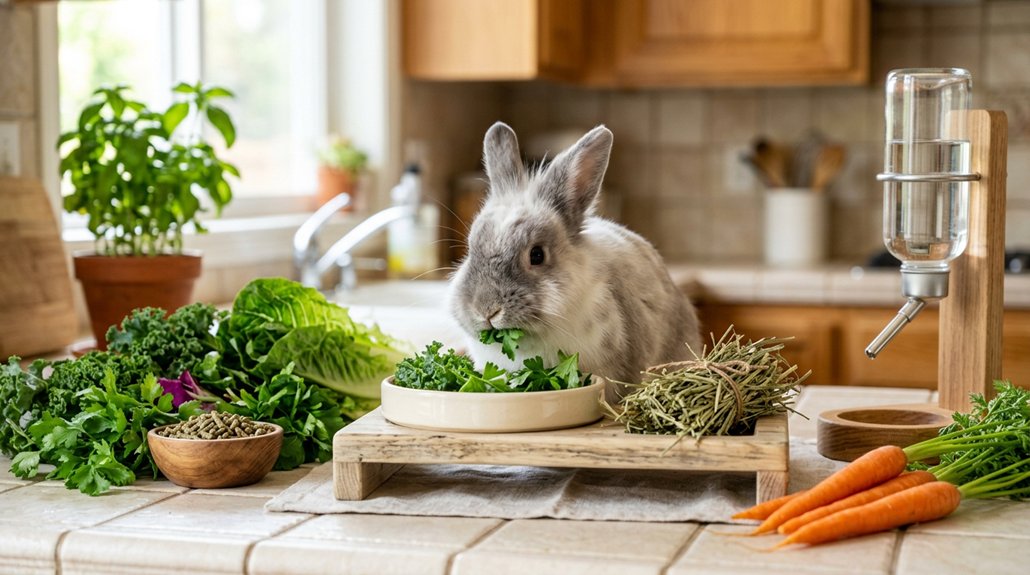
For ideal rabbit health, your rabbit’s diet should be primarily composed of high-quality hay, making up 85% of their daily intake. Select fresh hay types like Timothy or Orchard grass for essential fiber and digestive maintenance. Include limited pellets, specifically those high in fiber, around 1/4 cup daily for weight control. Gradually incorporate fresh leafy greens and restrict treats like fruits to occasional indulgences. Monitoring their eating patterns guarantees health stability. More insights await further exploration.
Key Takeaways
- Provide unlimited access to fresh, mold-free hay as 85% of the rabbit’s diet for optimal digestive and dental health.
- Offer 1-2 cups of fresh, diverse leafy greens per 4 pounds of rabbit body weight daily.
- Limit high-quality pellets to 1/4 cup daily, ensuring they contain at least 18% fiber.
- Treats and fruits should be given sparingly, no more than 1-2 tablespoons weekly per 6 pounds of body weight.
- Ensure all foods are fresh and free from mold and pesticides, and avoid harmful vegetables and toxic plants.
Understanding the Basics: Why Hay Is Essential in a Rabbit’s Diet
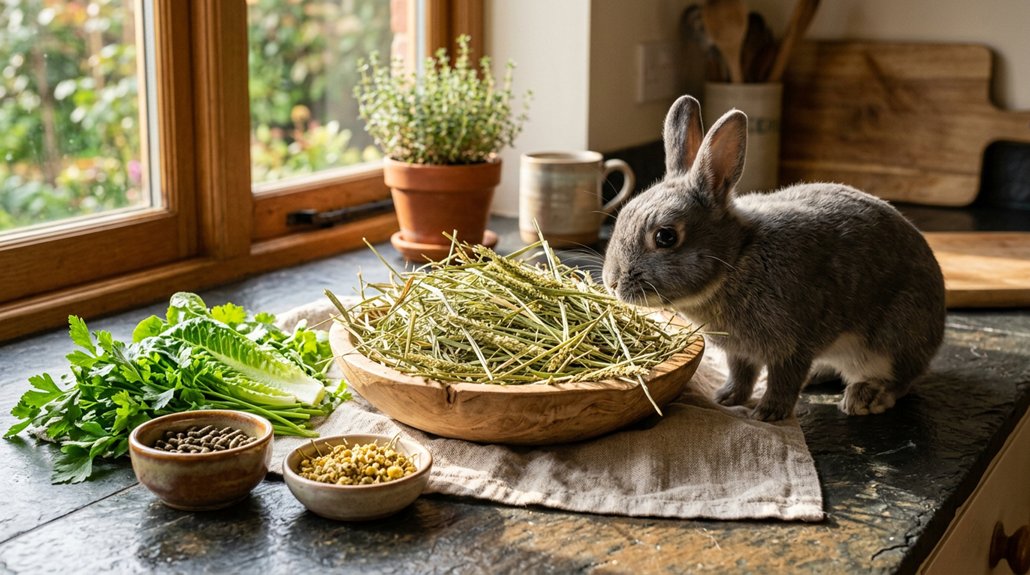
When considering a rabbit’s diet, think of hay as the cornerstone. It’s essential for providing the long-stemmed fiber necessary for optimal digestive health. Consuming hay stimulates natural grazing behaviors and helps maintain healthy gut flora. The fiber in hay plays a significant role in preventing gastrointestinal stasis, a condition that can be life-threatening for rabbits. Allowing unlimited access to fresh grass hay guarantees rabbits continually produce gut motility.
Hay benefits extend to dental health as well. Encouraging natural chewing facilitates tooth wear, offering protection against dental disease—a common affliction due to ever-growing incisors and molars. It’s important to confirm hay is free from mold or dust to prevent respiratory or digestive complications, underscoring the fiber significance for all-encompassing health. Fresh hay equates to a thriving, happy rabbit.
Selecting the Perfect Hay: Types and Benefits for Your Rabbit
Although hay constitutes a large proportion of a rabbit’s diet, selecting the right type can greatly enhance your pet’s health. Timothy hay is essential for adults, offering ideal fiber and perfect hay texture. In contrast, alfalfa’s richness suits only young and nursing rabbits. Diversifying with orchard grass, brome, or oat hay introduces valuable nutrients and promotes chewing, fundamental for dental and digestive health. Proper hay storage is critical; guarantee a dry, mold-free space to maintain freshness. Quality control mitigates spoilage risks. Varied textures combat dietary monotony, guaranteeing balanced consumption and satisfaction.
Here’s a concise overview of hay options:
| Hay Type | Ideal For |
|---|---|
| Timothy | Adult rabbits |
| Alfalfa | Babies, nursing mothers |
| Orchard Grass | All ages, variety addition |
| Brome | All ages, fiber benefits |
| Oat | All ages, texture diversity |
How Pellets Fit Into Your Rabbit’s Diet Safely
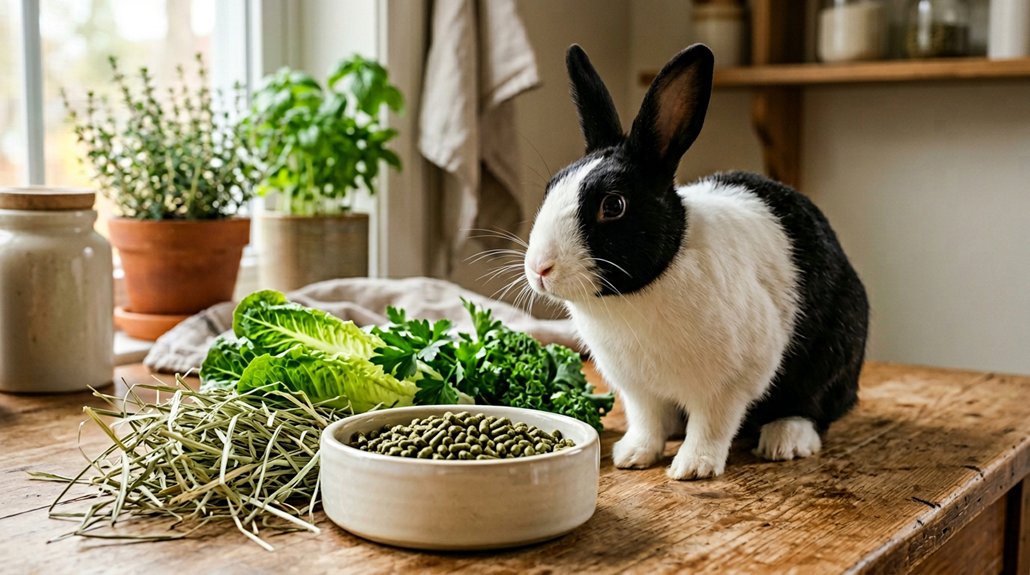
When incorporating pellets into your rabbit’s diet, it’s essential to select high-quality varieties primarily made from timothy hay and guarantee a minimum of 18% fiber to support ideal digestion and prevent common health issues. Limit pellet intake to 1/4 cup daily for rabbits weighing 6-10 pounds, as excessive portions increase the risk of obesity and dental problems. Finally, shifting your rabbit gradually to a new pellet formula over multiple days will minimize digestive disturbances and facilitate adaptation.
Pellet Nutrient Composition
In ensuring ideal health for your rabbit, understanding pellet nutrient composition is pivotal. Pellets, though only 5% of your rabbit’s diet, provide concentrated nutrients that complement hay and vegetables. High-quality pellet types should primarily consist of timothy hay, boasting at least 18% fiber for best digestive health. When evaluating pellet ingredients, adhere to these four guidelines:
- Select timothy hay-based pellets with a minimum of 18% fiber.
- Avoid pellets containing seeds, nuts, or colorful additives, which can cause obesity and dental issues.
- Gradual shift to new pellets over several days is essential to mitigate digestive disturbances.
- Utilize pellets as a supplementary food source, ensuring hay and vegetables form the core of the diet.
Portion Size Guidelines
Proper portion control is vital for maintaining your rabbit’s health and weight. For rabbits, pellets should be a minimal part of their diet, constituting about 5%. An adult rabbit weighing 6-10 pounds should consume 1/4 cup of pellets daily, while those under 5 pounds require just 1/8 cup. Opt for high-fiber pellets derived from timothy hay, avoiding formulations with seeds, nuts, or colorful additives, as these can lead to health complications. Regular monitoring of your rabbit’s weight is critical. Based on fluctuating factors like age and activity level, dietary adjustments might be necessary to guarantee ideal nutrient intake. Always tailor pellet portions to align with your rabbit’s specific physiological requirements to promote overall well-being.
Gradual Diet Transition
Controlling portion sizes is just one aspect of optimizing your rabbit’s dietary plan. Maneuvering transition challenges requires precision, especially when introducing pellets. A gradual diet shift, spanning 7 to 10 days, will safeguard their digestive health. Integrate pellets with these key guidelines:
- Pellet Proportion: Limit pellets to 5% of the daily intake.
- Calibrate Quantity: An adult rabbit weighing 6-10 pounds needs about 1/4 cup of timothy-based pellets.
- Droppings Monitoring: Monitor for any changes in droppings, such as stickiness, which can signal digestive issues.
- Select Wisely: Choose high-quality pellets devoid of seeds and sugars to prevent health issues.
If signs of distress appear, consult your veterinarian promptly to guarantee wellness.
How to Safely Offer Fresh Leafy Greens to Your Rabbit
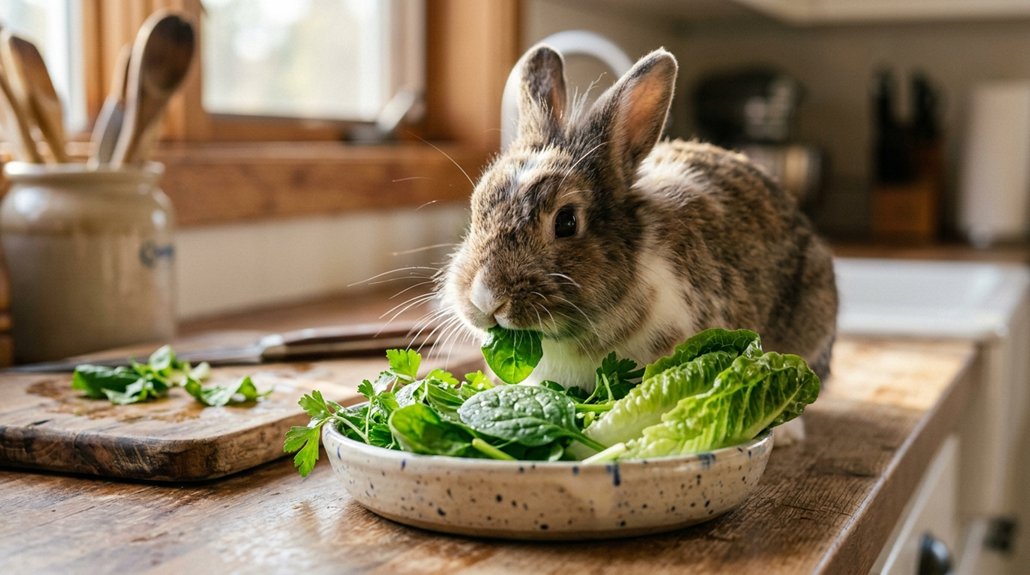
When incorporating fresh leafy greens into your rabbit’s diet, it is crucial to do so safely and systematically to promote ideal health. Fresh, washed leafy greens, such as spinach, celery, cabbage, and parsley, must be introduced gradually to bolster digestive health and mitigate gastrointestinal distress. Start with a large handful daily, selecting at least three different types to enhance nutritional variety and monitor closely for signs like soft stools or diarrhea that indicate digestive imbalance. For adult rabbits, aim for 1-2 cups of fresh vegetables per 4 pounds of body weight, evenly dispersed across two meals, facilitating effective observation of dietary tolerance. Always verify freshness of produce, as spoiled or moldy greens could adversely impact your rabbit’s health and provoke serious complications.
Limited Treats: Introducing Fruits as Occasional Indulgences
Introducing fruits as occasional treats in a rabbit’s diet requires precise attention to portion control and frequency to prevent adverse health outcomes. Limit fruit treats to 1-2 times a week, with each serving no more than 1-2 tablespoons per 6 pounds of body weight, ensuring that high-sugar fruits, like bananas and grapes, are restricted to just a few monthly servings. Emphasize safe fruit options such as apples and berries, always ensuring they’re washed thoroughly to remove any pesticide residue, promoting a healthy indulgence without risking obesity or dental issues.
Appropriate Fruit Portions
Feeding rabbits fruits as occasional treats necessitates precision to maintain their ideal health. The complexities of fruit digestion and the potential sugar impact on your rabbit’s system demand careful portion control. For best results, adhere to these evidence-based guidelines:
- Portion Size: Limit intake to 1-2 tablespoons per 6 pounds of body weight, per serving.
- Frequency: Serve fruits 1-2 times weekly to mitigate excessive sugar intake disruptors.
- Fruit Selection: Opt for small amounts like a halved grape, a 1/4-inch banana slice, or a 1-inch apple or carrot cube.
- Preparation: Wash fruits thoroughly to eliminate pesticides, ensuring they’re fresh and mold-free.
This methodical approach will help prevent obesity and digestive issues, while still allowing your rabbit to enjoy occasional indulgences safely.
Frequency of Indulgence
Occasionally, it is important to evaluate the frequency with which treats, particularly fruits, are incorporated into a rabbit’s diet. This is crucial due to the sugar impact associated with fruit introduction. Offering fruits 1-2 times weekly, limiting to 1-2 tablespoons per 6 pounds of body weight, is advisable. High-sugar fruits, such as bananas and grapes, demand even stricter regulation, capped at 2-3 servings monthly to mitigate obesity risks and subsequent health complications. Fruit introduction should always commence with minimal quantities, carefully observing for digestive disturbances like soft stools. It’s important that these indulgences constitute no more than 10% of the rabbit’s overall dietary intake. Prioritizing hay, leafy greens, and select pellets supports nutritional equilibrium and promotes ideal health outcomes.
Safe Fruit Options
When offering fruits as treats for rabbits, moderation is key to maintaining their health. Due to their high sugar content, fruits should be strictly limited to 1-2 times per week, with portion control of 1-2 tablespoons per 6 pounds of body weight. The appropriate fruit selection is essential to avoid health issues. Consider these safe options:
- Apples: Small slices without seeds.
- Berries: Nutrient-rich, offered sparingly.
- Bananas: A quarter-inch slice, no more.
- Grapes: Halved to prevent choking, one grape per occasion.
Take treat precautions by thoroughly washing fruits to eliminate pesticides and checking for freshness and mold. Overfeeding can prompt obesity and digestive disturbances. Therefore, meticulous monitoring of the total treat intake safeguards your rabbit’s well-being.
Ensuring Fresh Water: Importance and Best Practices
To guarantee ideal health, providing rabbits with constant access to fresh, clean drinking water is vital. Evaluate the water temperature, as rabbits favor room-temperature water. Utilizing a ceramic bowl promotes stability, minimizing risks of accidental tipping and potential dehydration. Bowl cleanliness is important; bacteria proliferate quickly. It’s recommended to clean the bowl every few days while replacing water daily. This protocol maintains maximum water quality, supporting hydration and preventing infections. Monitor water consumption vigilantly. Variations in drinking patterns may signal underlying health challenges, including dehydration or illness. Bowls are preferred over bottles due to ease of access, greatly improving fluid intake. Implementing these practices guarantees that your rabbit remains hydrated, safeguarding their physiological wellness and promoting longevity.
Foods to Avoid for Optimal Rabbit Health and Safety
When considering your rabbit’s diet, it’s essential to eliminate muesli-style foods, which can exacerbate dental disease and obesity due to their disproportionate sugar and fat content. Refrain from offering processed human foods and certain vegetables, such as kale and spinach, which introduce harmful oxalates and goitrogens into their system. Always monitor their response to dietary changes, swiftly removing any items that precipitate gastrointestinal distress, and consult a veterinarian if adverse symptoms persist.
Harmful Ingredients in Food
Although rabbits are often perceived as resilient creatures, their digestive systems are highly sensitive and require careful dietary management to prevent health issues. Consuming toxic food and items with high sugar content can lead to serious digestive issues and gas formation. For ideal rabbit health, consider these guidelines to avoid harmful ingredients:
- Avoid Muesli-style Foods: These contribute to dental health problems and obesity risks due to imbalanced nutrition and selective feeding.
- Limit High-Sugar Fruits: Bananas and grapes should be given sparingly, no more than 2-3 times a month, to prevent sugar content issues.
- Eliminate Processed Foods: Items like chocolate and bread disrupt the rabbit’s digestion.
- Restrict Certain Vegetables: Vegetables like broccoli and kale can cause gas and contain high levels of harmful compounds.
Dangerous Plant Species
Rabbits, possessing a uniquely sensitive digestive system, are particularly vulnerable to the consumption of certain plant species, making it essential to meticulously manage their exposure to various flora. Understanding which toxic plants pose a threat is critical for your rabbit’s health. For instance, ingesting bluebells, holly, or jasmine can precipitate severe health disturbances due to their toxic properties. Such dangerous flowers must be strictly avoided. Additionally, even common vegetables like broccoli could lead to painful gas accumulation, inducing gastrointestinal distress. Meanwhile, specific leafy greens, such as kale and spinach, contain oxalates and goitrogens that pose long-term health risks when consumed regularly. Always verify the safety of any new plants before introducing them to your rabbit’s diet, as even household varieties may harbor hidden dangers.
Improper Treat Portions
In maximizing rabbit health, vigilant control over treat portions is imperative. Treat overindulgence can lead to obesity and digestive disorders. Implement precise portion control by avoiding these critical errors:
- Muesli-Style Foods: Avoid these due to their low fiber and high sugar, which contribute to dental diseases and obesity.
- Fruit Treats: Limit these to 1-2 times weekly. Specifically, restrict high-sugar fruits like bananas and grapes to 2-3 times monthly to prevent digestive issues.
- Processed Human Foods: Never offer chocolate, cookies, or pasta as they severely disrupt delicate GI systems.
- Leafy Greens in Excess: Broccoli, kale, and spinach cause gas and long-term health issues in large quantities.
Maintain a rigorous examination of all consumables to guarantee rabbit safety and peak health outcomes.
Monitoring and Understanding Rabbit Eating Patterns
How can you effectively guarantee your rabbit’s health and well-being through their eating patterns? Focus on thoroughly monitoring eating behaviors and appetite. Begin with evaluating hay intake, which should compose 85% of their diet. Unlimited access to high-quality hay guarantees digestive efficiency. Observe leafy green consumption, aiming for diversity with a combination of at least three types:
| Food Type | Ideal Consumption | Diet Percentage |
|---|---|---|
| Hay | Unlimited | 85% |
| Leafy Greens | 1-2 cups per 4 lbs. of body weight | Varies |
| Pellets | 1/4 cup | 5% |
| Treats | Limited | Minimal |
| Water | Fresh, constant supply | Essential |
Careful attention to droppings and body weight changes can identify health issues. Firm, round droppings exemplify proper dietary balance. A sudden shift in these parameters may necessitate veterinary evaluation. Regular monitoring is critical.
Tailoring Diets to Meet Special Needs of Rabbits
After observing and understanding your rabbit’s general eating patterns, it’s important to address the specific dietary needs of rabbits with special requirements. Recognizing dietary challenges helps maintain ideal health. Tailoring diets can accommodate individual preferences and physiological demands. Here’s an expert analysis:
Understanding your rabbit’s dietary needs ensures their health and accommodates individual preferences and physiological demands.
- Long-haired rabbits: They require increased protein and pellet intake, supporting grooming and health.
- Overweight rabbits: Reduce pellet consumption, prioritizing a high-fiber hay-based diet to manage weight effectively.
- Pregnant/nursing rabbits: Alfalfa hay and nutrient-dense pellets are essential for meeting elevated energy and nutritional demands.
- Sick/underweight rabbits: Include more calorie-dense foods and verify hay and fresh greens are part of their diet.
Consult a veterinarian for evidence-based, tailored dietary advice for rabbits facing specific health concerns or restrictions.
Ensuring a Safe, Stimulating Space for Happy Rabbits
When considering the overall well-being of your rabbit, a carefully designed environment is essential for its health and happiness. Providing safe habitats free from predators and hazards reduces stress, fostering natural behaviors like exploration and social interactions. Rabbit enrichment, through engaging toys and various textures, stimulates their physical and mental activity, mitigating boredom. Incorporate hiding spots to enhance environmental comfort, ensuring your rabbit feels secure. Promote regular social interactions by allowing opportunities to engage with other rabbits, improving emotional health and reducing feelings of loneliness. Here’s a quick table to guide your rabbit’s enriching environment:
| Aspect | Benefit |
|---|---|
| Safe habitats | Reduces stress and threats |
| Engaging toys | Stimulates physical and mental activities |
| Varied textures | Enhances comfort and security |
| Socialization | Boosts emotional health |
Frequently Asked Questions
What Can I Give a Rabbit to Eat Every Day?
You should supply your rabbit with unlimited hay due to its digestive benefits and dental wear. Introduce a vegetable variety daily, focusing on different leafy greens to guarantee a balanced nutrient intake. Incorporate timothy-based pellets sparingly.
What Can I Feed My Bunny Every Day?
Provide your bunny with fresh greens like spinach, various hay types for fiber, and limited treat options such as berries. Guarantee hydration with a ceramic water bowl. Balance these for ideal rabbit health and happiness.
What Is the 3-3-3 Rule for Bunnies?
The 3-3-3 rule for rabbit diet involves 85% hay, 10% leafy greens, and 5% pellets. These proportions are critical health tips, promoting gastrointestinal health and proper dental wear through evidence-based nutrition. Don’t neglect fresh water.
How Do You Say “I Love You” in Rabbit Language?
In rabbit bonding, “I love you” translates through nose nudges and binky leaps. Bunny communication mirrors trust and joy, as relaxed postures and grooming indicate safety. Their affectionate following dances in the shadows of steadfast commitment, a profound connection.
Conclusion
In the grand tapestry of rabbit care, diet is the keystone, much like the sun to a thriving garden. Hay forms the fertile soil, supporting robust digestion. Pellets, analogous to essential nutrients, must be administered judiciously, while fresh greens mimic the morning dew, invigorating health. Reserve fruits as rare, delightful blooms. Shun dietary hazards, akin to invasive weeds. By carefully cultivating this dietary landscape, you nurture a vibrant, flourishing companion, steadfast in health and spirit.