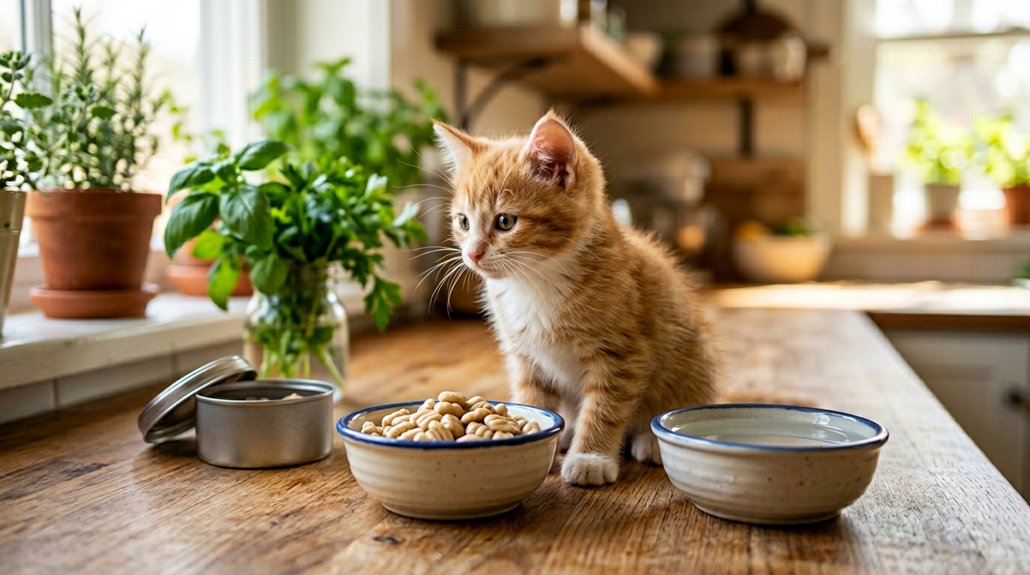
To guarantee healthy growth in your kitten, provide a balanced diet with at least 30% high-quality protein for rapid development. Include DHA and taurine, essential for vision and heart health. Opt for kitten-specific food, rich in fats and calories per AAFCO standards, and mix wet and dry food for hydration and dental benefits. Fresh water should always be accessible. Avoid cow’s milk and toxic foods like onions and garlic. Discover more to optimize your kitten’s health.
Key Takeaways
- Ensure the diet contains at least 30% protein to support rapid kitten growth and development.
- Gradually introduce high-quality solid foods rich in calcium, DHA, and taurine for balanced nutrition.
- Provide constant access to fresh water, especially when feeding dry kibble.
- Mix wet food and kibble to encourage hydration and promote dental health.
- Avoid cow’s milk and raw proteins due to digestive and infection risks.
Foundational Nutrition Essentials for Kittens
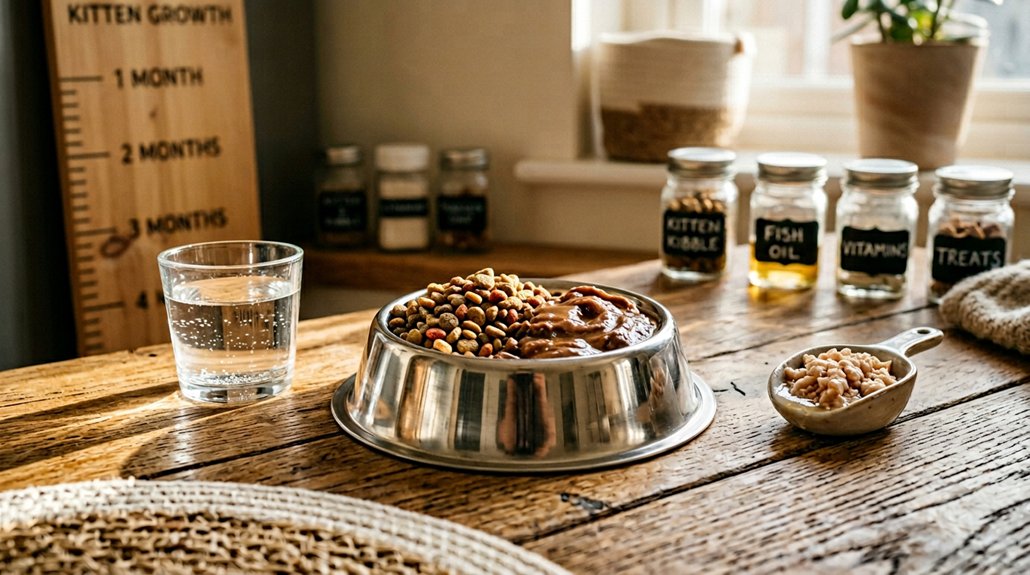
Guaranteeing ideal health and development for your kitten hinges on a diet purposefully designed to meet their unique nutritional requirements during their critical growth phase. Prioritize feeding schedules to guarantee regular intake of essential nutrients such as protein, which should constitute at least 30% of their diet, supporting their rapid growth. Implement portion control when shifting from weaning at 5-7 weeks, gradually introducing high-quality solid food rich in calcium, DHA, and taurine. These nutrients are crucial for strong bones, optimum brain development, and overall bodily function. As recommended by AAFCO, kitten food must contain higher fat and calories than adult cat food due to their elevated energy needs. Guarantee constant access to fresh water, especially with dry kibble, to maintain hydration.
Top Food Options for Kittens
To support kittens’ rapid growth and development, selecting the right type of food is essential for meeting their specific dietary needs. Wet food offers high moisture content, aiding digestion and hydration, while being a favorite among picky eaters. High-quality kibble, with various flavors, benefits dental health through its crunchy consistency and allows easy control over feeding schedules. Combining wet and dry food fosters a balanced diet, aiding hydration and providing variety.
| Food Type | Benefits | Recommendations |
|---|---|---|
| Wet Food | High moisture, easy digestion | Ideal for picky eaters |
| Dry Food | Supports dental health, portion control | Nutrient-rich kibble |
| Mixed Feeding | Balanced nutrition, variety, hydration | Wet and dry combination |
| Quality Brands | Essential nutrients, DHA, protein | Royal Canin, Hill’s Science Diet |
| Adjusting Diets | Gradual introduction, prevents upset | Different textures/flavors |
Introducing Safe Supplementary Foods for Kittens
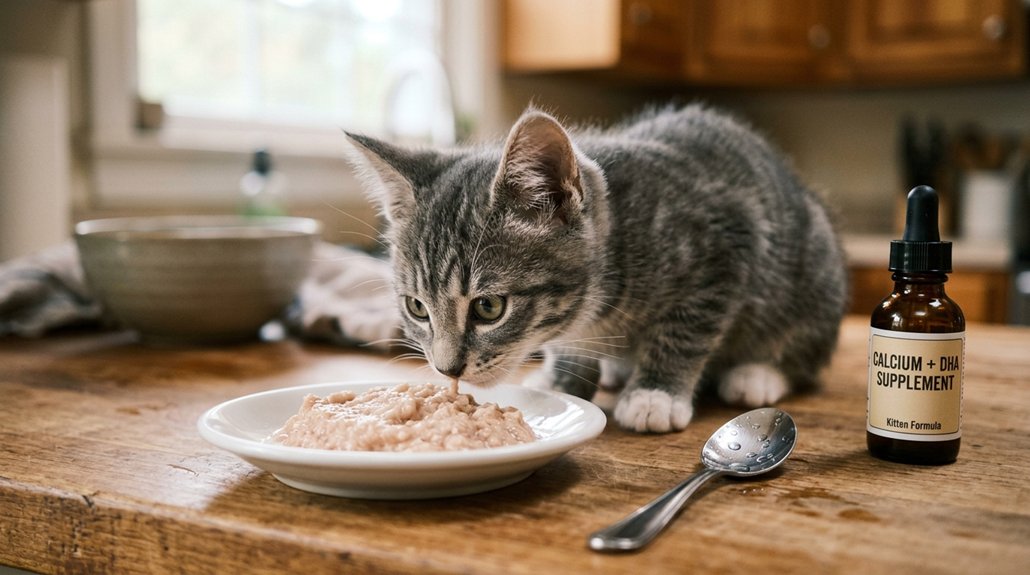
When expanding your kitten’s diet with supplementary foods, it’s crucial to confirm these additions are both safe and beneficial for their health. Safe food swaps include scrambled eggs, which provide essential vitamins and amino acids without added salt or seasonings. Cooked lean meats, served sparingly, can also enhance your kitten’s nutritional intake—just verify they’re neither greasy nor processed to prevent gastrointestinal issues. For an additional nutrient boost, small amounts of salad greens offer fiber. Introducing each new food one at a time allows you to monitor for any adverse reactions over 24 to 48 hours. Avoid cow’s milk, which often leads to digestive issues, and be cautious with raw proteins due to bacterial risks. These kitten treat ideas guarantee healthy growth.
Ready to Switch Foods? Do It Safely
Having explored options for enhancing your kitten’s dietary intake with safe supplementary foods, you can now focus on the prudent introduction of new food types. Adjustment tips are essential for a smooth food change, ensuring your kitten’s health isn’t compromised. Begin by mixing 25% new food with 75% old food over a span of 4 to 7 days. Monitor your kitten closely for any digestive issues such as vomiting or diarrhea. Gradually increase the proportion of new food if no adverse reactions occur.
Introduce only one new food item at a time to efficiently identify potential problems. If distress or refusal to eat arises, seek veterinary guidance. Such vigilance promotes a safe, effective adjustment for your kitten’s developing digestive system.
Common Foods to Avoid for Kittens’ Safety
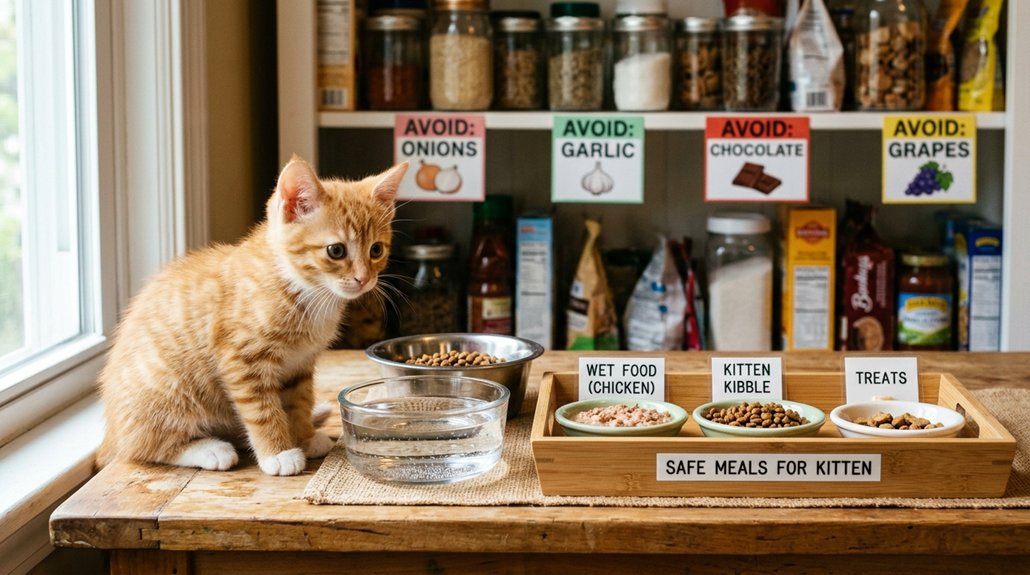
Guaranteeing your kitten’s safety from harmful foods is vital for their healthy development. Certain items, like cow’s milk, can cause significant digestive issues due to kittens’ lactose intolerance, leading to diarrhea and discomfort. It’s imperative to exclude toxic foods such as onions and garlic, which can induce anemia with severe health implications. Avoid raw proteins, including chicken and fish, due to potential Salmonella and E. coli infections. Chocolate and caffeine are highly toxic, potentially causing rapid heart rate and seizures. Furthermore, steer clear of feeding human leftovers, which can result in gastrointestinal issues and lack the specific nutrients kittens need. Prioritize a diet designed for feline growth, avoiding these dangerous foods to safeguard your pet’s health and safety.
Frequently Asked Questions
What Is the Best Food for Kitten Growth?
You should choose high-quality kitten food rich in essential nutrients for ideal kitten nutrition. Focus on formulas with 30% protein, fortified with growth supplements like calcium, DHA, and taurine for bone, brain, and eye development, ensuring healthy growth.
What Is the 3-3-3 Rule for Kittens?
The 3-3-3 rule outlines kitten adjustment phases: first three days (settling, safe space), next three weeks (socialization tips, fostering kitten bonding), and three months (comfort, personality). It’s essential for promoting social behavior and trust.
What Is the One Meat to Never Feed a Cat?
Never feed a cat raw fish due to raw meat dangers. It ranks high on the toxic food list by causing thiamine deficiency, leading to neurological issues. Always prioritize safety by consulting a vet about dietary choices.
What Can I Give My Kitten to Help Him Grow?
Rome wasn’t built in a day; provide high-quality kitten food with over 30% protein for ideal nutrition. Include hydrating wet food, varying textures, and added cooked meats to support growth milestones. Regular weight checks guarantee balanced development.
Conclusion
In the symphony of a kitten’s growth, you’re the conductor, orchestrating their health through nutrition. Each choice you make, from foundational essentials to introducing safe supplementary foods, builds a crescendo of thriving robustness. Shift with care to avoid disharmonies, and steer clear of harmful temptations. With a scientific compass guiding you, these decisions weave a tapestry of health, promising your kitten a vibrant future where curiosity meets strength, and they embrace their world with playful exuberance.