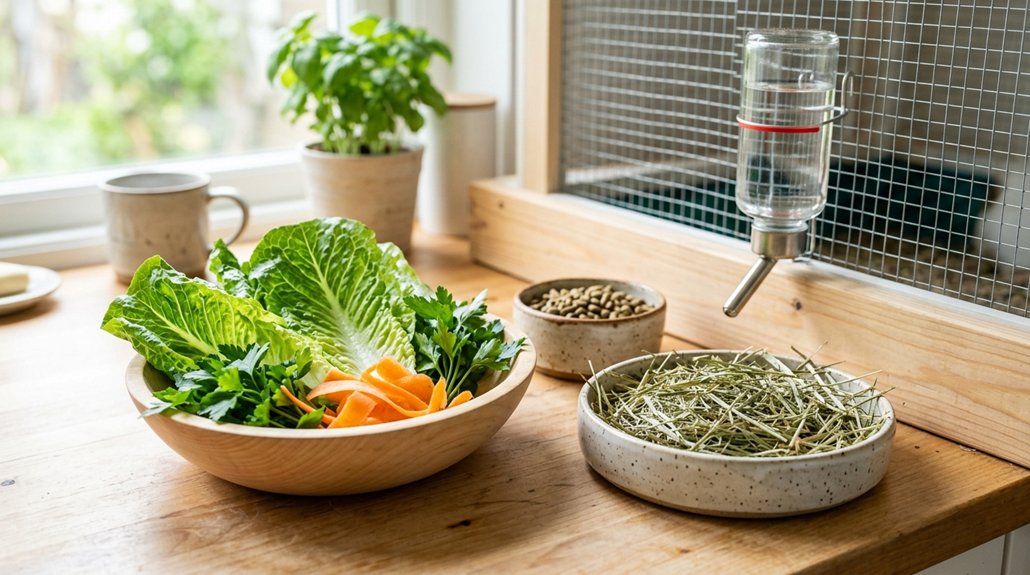
To nourish your guinea pig properly, offer fresh hay daily, which should make up 85-90% of their diet. Complement this with 1/8 cup of grass-based pellets fortified with Vitamin C. Incorporate a variety of fresh vegetables, focusing on leafy greens and vitamin C-rich options like bell peppers. Always provide fresh water. Steer clear of iceberg lettuce and potatoes. With these basics, you’ll guarantee their health, and there’s more to uncover about their dietary needs.
Key Takeaways
- Provide unlimited fresh hay, such as timothy or orchard, for dental health and proper digestion.
- Supplement daily with 1/8 cup of grass-based pellets fortified with Vitamin C.
- Offer 1/2 to 1 cup of fresh vegetables, focusing on leafy greens and Vitamin C-rich options.
- Avoid toxic foods such as iceberg lettuce and potatoes, and ensure constant access to fresh water.
- Monitor weight and health regularly, adjusting diet as necessary for optimal well-being.
Essential Components of a Guinea Pig Diet
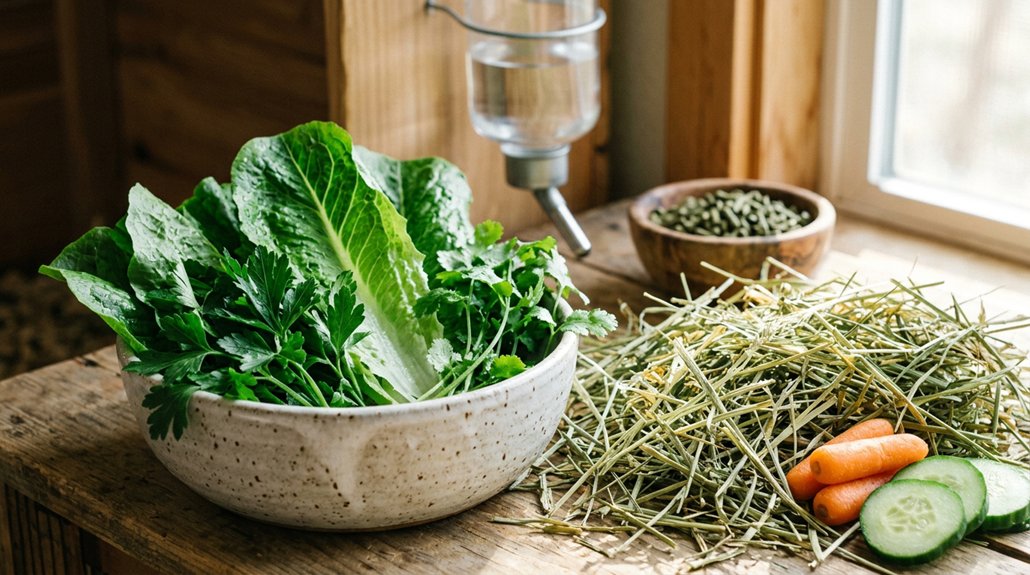
Though guinea pigs are small creatures, their dietary needs are specific and essential for maintaining good health. Providing the right balance of nutrients is key. While fresh hay should primarily make up their diet, consider hay alternatives if necessary. Confirm whatever hay you choose is fresh and suitable. Incorporate approximately 1/8 cup of grass-based pellets daily. These pellets fulfill essential nutrient requirements, especially Vitamin C, which guinea pigs can’t synthesize. There are different pellet types available, but choose ones fortified with Vitamin C and free from artificial ingredients. Introduce new foods gradually to prevent digestive issues. Also, monitor your guinea pig’s eating habits to detect any abnormalities early. Don’t forget to provide fresh vegetables daily for added vitamins.
Why Unlimited Hay and Grass Are Vital
Ensuring your guinea pig has unlimited access to fresh hay and grass isn’t just beneficial—it’s imperative. Hay and grass should make up 85-90% of their diet, offering essential fiber for digestion and preventing issues like gut stasis. High-quality options such as timothy or orchard hay support dental health by naturally wearing down constantly growing teeth.
| Essential Need | Benefit | Consequence of Neglect |
|---|---|---|
| Unlimited Hay | Proper Digestion | Gut Stasis |
| Grazing Behavior | Foraging Benefits | Mental Distress |
| Dental Support | Dental Health | Overgrown Teeth |
| Hydration Source | Added Nutrients | Nutrient Deficiency |
Frequent grazing taps into their natural instincts, fostering mental well-being. Grass is important for hydration and nutrients, particularly critical for indoor pigs. A lack of these essentials can lead to obesity or dental disease, stressing the significance of a fiber-rich diet.
How to Choose the Best Pellets for Your Guinea Pig
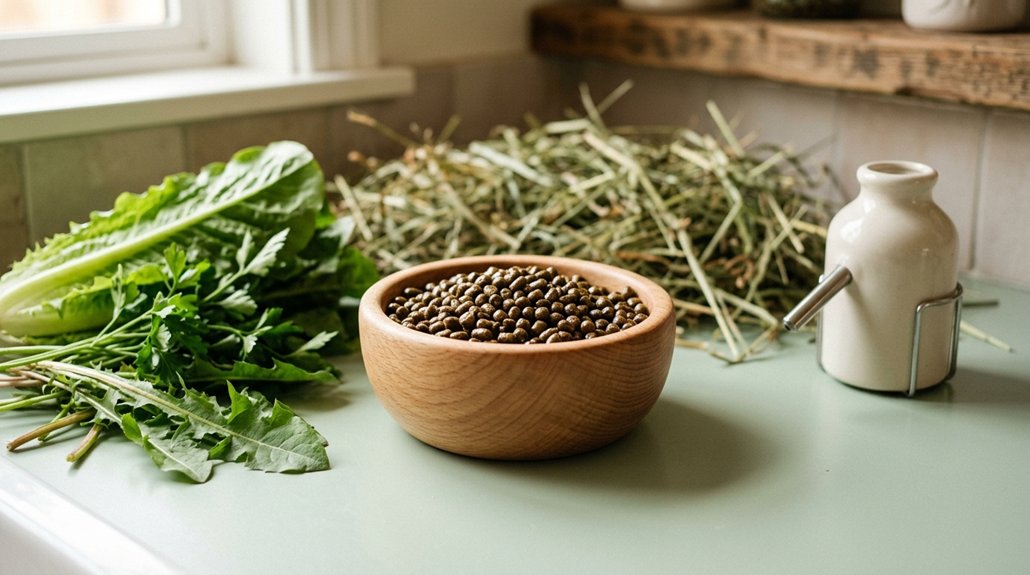
When choosing the best pellets for your guinea pig, prioritize grass-based options specifically formulated for their dietary needs, ensuring essential nutrient intake like Vitamin C. Aim for pellets that are high in fiber and low in protein and calcium to support their health and prevent issues such as obesity and bladder stones. Check for freshness and proper storage, and be mindful of muesli-style mixes that might encourage selective eating, compromising their balanced diet.
Selecting High-Quality Ingredients
Selecting the right pellets for your guinea pig, while essential, doesn’t have to be an intimidating task if you know what to look for. Focus on grass-based pellets as they offer ideal nutritional benefits. Avoid muesli mixes with seeds or dried fruits, which can lead to obesity and digestive issues. Ingredient sourcing is key—ensure the pellets are specifically formulated for guinea pigs and fortified with Vitamin C. Check expiration dates and store them properly in a dry, cool place.
| Aspect | Recommendation | Reason |
|---|---|---|
| Base Ingredient | Grass-based pellets | Ideal nutrition |
| Additional Ingredients | No seeds or dried fruits | Avoid unhealthy additives |
| Vitamin C | Fortified | Prevent deficiency |
| Storage | Dry, cool, dark place | Maintain freshness |
Monitor your guinea pig’s health and adjust their pellet intake as needed.
Understanding Vitamin C Needs
Choosing the right pellets not only hinges on high-quality ingredients but also understanding the indispensable vitamin C needs of your guinea pig. Due to their unique guinea pig physiology, they can’t synthesize vitamin C, making them reliant on external sources. To guarantee effective vitamin absorption and maintain their health, opt for grass-based, vitamin C-fortified pellets. Always verify the “best before” dates on packaging to confirm the vitamin’s potency. An adult guinea pig typically requires about 1/8 cup of pellets daily, with adjustments for growth, pregnancy, or nursing. Steer clear of muesli-style mixes; their scattered seeds and dried fruits lack essential vitamin balance. Prioritize products that support your pet’s physiological needs and prevent deficiencies.
Adding Fresh Veggies and Fruits
Incorporating a variety of fresh vegetables into your guinea pig’s diet is vital for their overall health, with leafy greens like romaine and kale providing a nutritious base. Make certain you include high vitamin C veggies such as bell peppers and broccoli regularly, as guinea pigs can’t produce this essential vitamin on their own. While fruits can be a delightful treat, offer them sparingly and choose options like apples that are lower in sugar, always making sure all produce is well washed before serving.
Daily Veggie Diversity
When considering the best diet for your guinea pig, it’s important to prioritize daily veggie diversity. Offering a daily veggie variety boosts digestive health, as a mix of textures and flavors guarantees nutrient balance and prevents deficiencies. Include 1/2 to 1 cup of fresh vegetables per guinea pig, focusing primarily on leafy greens. Incorporate small portions of vitamin C-rich choices like bell peppers and broccoli while gradually introducing new veggies to avoid digestive upset. High-sugar fruits should be limited to occasional treats; instead, opt for lower-sugar options such as cucumbers and minimal carrots. Be vigilant with gas-producing vegetables like cauliflower to prevent bloating. Rotating veggies encourages adaptability, maintaining not only interest but also peak health for your guinea pig.
Essential Vitamin C Sources
Vitamin C is indispensable for your guinea pig’s health, as they can’t synthesize this essential nutrient on their own. Including fresh vegetables and fruits in their diet daily is vital. Bell pepper benefits are significant, as they’re high in Vitamin C and low in sugar. Opt for red or green varieties to boost their nutrition. Parsley, available in multiple varieties, also offers a Vitamin C punch, promoting both freshness and flavor diversity. To guarantee the best intake, provide each guinea pig with 1 cup of fresh veggies daily, ensuring a mix like broccoli and leafy greens. Remember, introduce new veggies gradually to avoid tummy troubles. Keep their meals exciting with varied textures and tastes to support their overall health effectively.
Safe Fruit Treats
While fresh vegetables offer your guinea pig undeniable health benefits, fruits can add a delightful twist to their diet. Incorporating a fruit variety, such as apples (sans seeds), berries, and small banana slices, can make their meals more exciting. However, due to high sugar content, it’s essential to practice treat moderation. Limit fruit treats to small portions, perhaps a few times a week, to prevent health issues like obesity and diabetes. Fresh vegetables like parsley, bell peppers, and leafy greens should form the core of their diet, providing critical nutrients like Vitamin C. Always introduce new fruits gradually to avoid digestive upset and watch for adverse reactions. Remember to wash all produce thoroughly to eliminate pesticides and residues.
Avoiding Dangerous Foods and Clippings
Although guinea pigs may seem enthusiastic to sample various foods, it’s critical to shield them from dangerous options that could compromise their health. Toxic plants and substances, like iceberg lettuce and potato, contribute to improper nutrition. Stick to fresh grass and herbs instead of feeding lawn mower or grass clippings, as these can disrupt their digestive systems, leading to severe health issues. Avoid giving foods such as garlic, avocado, coconut, and citrus fruits, which can pose significant health risks. Always verify vegetables are safe, washing them thoroughly to remove pesticides and harmful residues. Pay close attention to your guinea pig’s digestion and droppings, as these can indicate if something is amiss with their diet.
Vitamin C: Why It’s Crucial and How to Ensure Adequate Intake
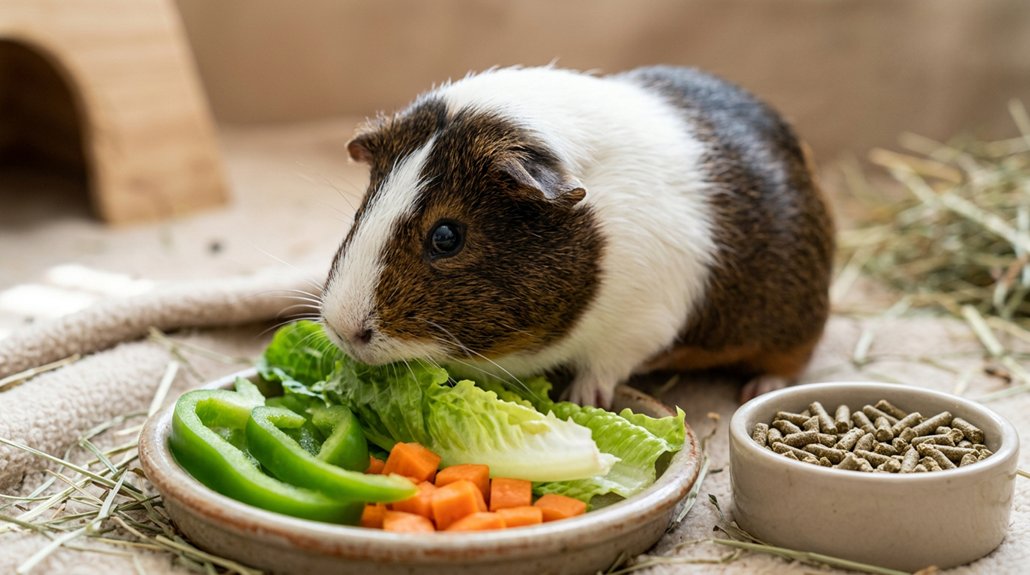
Just as avoiding harmful foods is essential for your guinea pig’s health, ensuring they receive adequate nutrition plays a key role in their overall well-being. Vitamin C is important for them because they can’t synthesize it, making vitamin absorption critical to prevent deficiencies like scurvy. You should provide a daily dosage of 30 mg for each adult guinea pig, typically through supplementation. To naturally boost their intake, include vitamin C-rich foods like bell peppers, parsley, and broccoli in their diet. Fresh vegetables high in this essential nutrient should comprise at least one cup of their daily consumption. Remember, vitamin C degrades fast with heat and light, so offer fresh foods and verify supplement expiration dates for best efficacy.
Ensuring Fresh Water and Proper Feeding for Guinea Pigs
Providing fresh water and proper feeding are essential components of maintaining a guinea pig’s health. Begin with guaranteeing fresh, clean water is always available. Check it twice daily, especially during winter, to prevent freezing. Monitoring water temperature can markedly impact their hydration. Always use a water bottle to reduce spills and improve access, inspecting it regularly to verify it’s working properly. Clean the bottle weekly to eliminate bacterial growth. Daily replacement of water is critical for keeping your guinea pig hydrated. Observing your pet’s drinking habits provides insights into its health—any changes might necessitate a vet visit. Implement these hydration tips to guarantee your guinea pig remains healthy and satisfied, as water is just as fundamental as their daily dietary intake.
How to Monitor and Adjust Your Guinea Pig’s Diet for Optimal Health
Keeping your guinea pig’s water fresh and available is essential, but equally important is monitoring and adjusting its diet to sustain ideal health. Regularly weigh your guinea pig, guaranteeing it maintains a healthy weight by adjusting pellet and fresh vegetable portions as needed. Check droppings for consistency and quantity—changes might signal digestive health issues or necessitate dietary adjustments. Introduce new foods gradually; if any cause digestive upset, remove them promptly. Offer a diverse mix of five to six vegetables daily, focusing on Vitamin C-rich options to ensure a balanced nutrient intake. Track water consumption, adjusting the diet if you notice reduced hydration or urination changes. These strategies help maintain your guinea pig’s overall health.
Frequently Asked Questions
What Should Guinea Pigs Eat Every Day?
Focus on guinea pig nutrition by offering fresh hay daily for digestion, a tablespoon of pellets for nutrients, and veggies for vitamin C. Daily feeding guarantees health. Gradually introduce new foods and provide fresh water consistently.
How to Treat Guinea Pigs With Ivermectin?
Think of your guinea pig as an enthusiastic sailor charting calm waters. Administering 0.2 mg/kg of ivermectin is the steady compass. Consult a vet for smooth navigation, ensuring treatment sails seamlessly without unforeseen squalls.
What Is the Number One Cause of Death for Guinea Pigs?
Vitamin C deficiency tops the list for shortening your guinea pig’s lifespan. It’s essential for preventing scurvy, a common guinea disease. Ascertain their diet includes fresh veggies and pellets fortified with vitamin C to keep them healthy.
What Should Guinea Pigs Not Eat Every Day?
You shouldn’t feed a guinea pig toxic plants or foods high in starch daily. Avoid iceberg lettuce, garlic, onions, potatoes, and high-sugar fruits. These can introduce guinea pig toxins and lead to significant health issues.
Conclusion
Ensuring your guinea pig receives a balanced diet might seem complex, but with some planning, it’s manageable and essential for their health. While it’s a commitment, the benefits of a healthy, vibrant pet outweigh the effort. Unlimited hay, fresh water, and vitamin C-rich foods form the cornerstone of their diet, and avoiding harmful foods prevents issues. By monitoring their habits and adjusting as needed, you’re guaranteeing your furry friend a happier, healthier life.