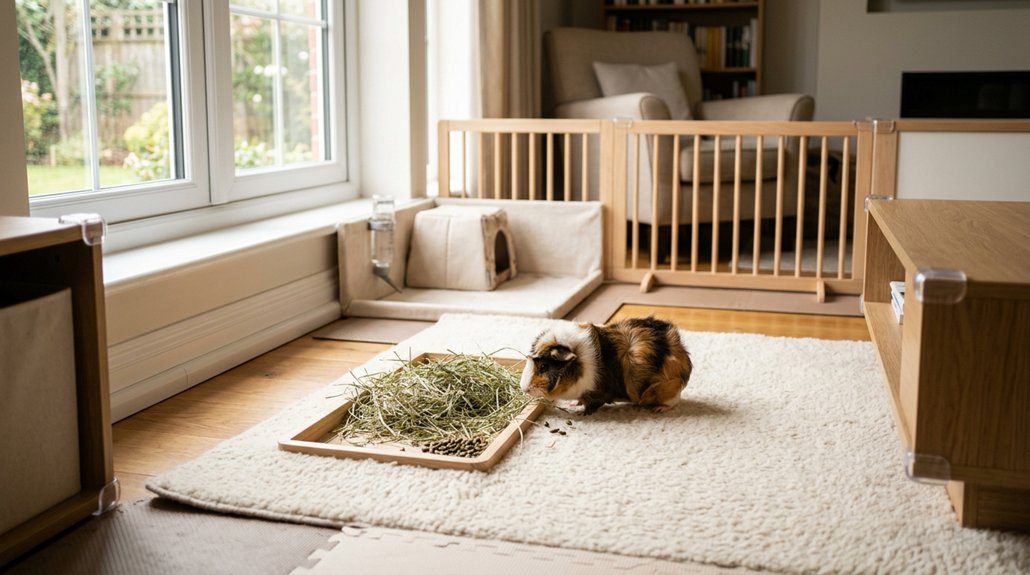
To guinea pig-proof your home, start by securing toxic plants, cleaners, and medications out of reach. Cover electrical wires to prevent chewing and block off tiny spaces to avoid entrapment. Use chew-proof barriers and seal gaps to protect curious explorers. Set up safe areas with sturdy barriers and provide appropriate toys to deter hazardous gnawing. Regular cage cleaning and monitoring their behavior helps maintain a safe haven. Discover more on creating a secure environment for your pet.
Key Takeaways
- Secure toxic plants, cleaners, and medications out of guinea pigs’ reach to prevent poison exposure.
- Cover and tape down electrical cords to reduce the risk of chewing and electrocution.
- Block gaps and tiny spaces with barriers to prevent entrapment behind or beneath furniture.
- Remove small objects from accessible areas to prevent choking hazards.
- Use chew-proof barriers and toys to redirect chewing behavior and ensure safety.
Identifying Household Dangers for Guinea Pigs
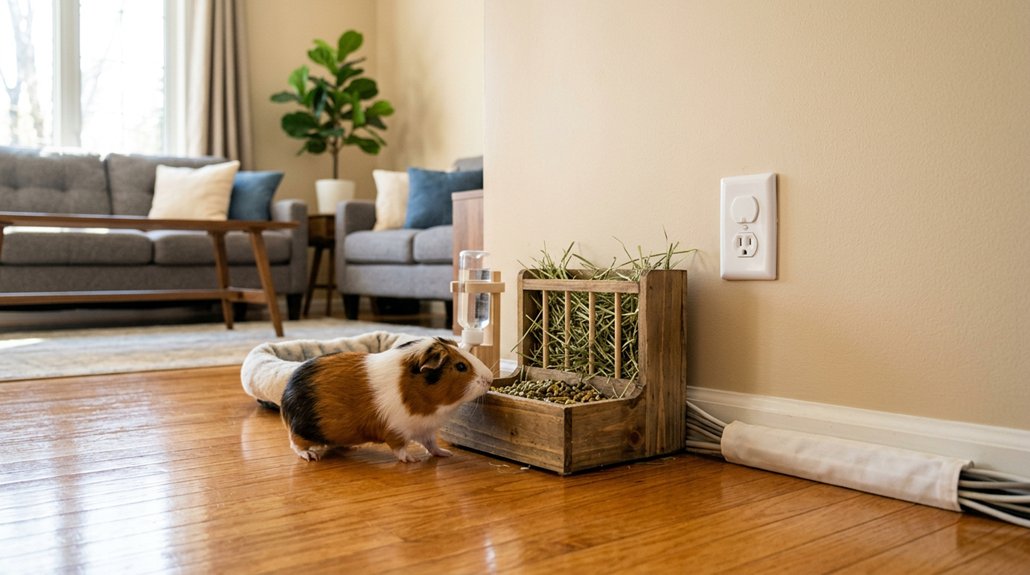
When you’re preparing your home for a new guinea pig, it’s important to identify potential dangers that lurk around the house. Conduct a hands-and-knees inspection to spot natural toxins such as toxic plants, which can be fatal if ingested. Secure any household cleaners and medications well out of reach—guinea pigs are curious and could easily nibble on these harmful substances. Floor hazards like loose cords should be addressed immediately. Use cord protectors to prevent chewing, which could lead to electrocution. Additionally, block off tiny spaces behind or beneath furniture to prevent entrapment. Always keep an eye on areas where guinea pigs may encounter other pets or sharp objects, ensuring that the environment is both welcoming and secure for your furry friend.
Setting Up Safe Exploration Areas
As you set up safe exploration areas for your guinea pigs, start by conducting a thorough hands-and-knees inspection of your home to eliminate hazards like power cords and toxic plants. Block off access to vulnerable spots behind appliances and furniture using sturdy barriers, ensuring these curious creatures can’t slip into dangerous nooks. Always keep a close eye on your guinea pigs’ behavior within these zones so you can promptly address any new risks and adjust the setup for their safety.
Inspect Environment Thoroughly
Before allowing your guinea pigs to explore, it’s crucial to perform a thorough hands-and-knees inspection of your home to guarantee their safety. Identify potential hazards, such as sharp objects and toxic plants, and remove or secure them. Make certain all power cords are covered with protectors to prevent chewing, reducing electrocution risks. Alert household members to your guinea pigs’ roaming time, so they navigate carefully and avoid accidental injury. For environmental enrichment, select safe toys designed for small animals that are free from choking hazards. Securely store household chemicals and medications, eliminating the risk of accidental ingestion. Blocking gaps under furniture should wait till a later step, but for now, focus on creating a welcoming and hazard-free space for your furry friends.
Block Hazardous Nooks
Once you’ve confirmed your home is free from immediate hazards, the next step involves proactively blocking hazardous nooks to set up safe exploration areas for your guinea pigs. Start with a thorough blockage assessment by conducting a hands-and-knees inspection to spot small gaps that could trap them, particularly in tight corners or behind furniture. Use materials like wood panels or cardboard for effective corner protection, ensuring gaps at baseboards and near appliances are sealed. These barriers prevent your guinea pigs from accessing under-appliance areas and crowded spaces. It is crucial to regularly check and adjust these barriers for ongoing safety. Communicate the importance of maintaining these precautions to household members to avoid unintentional openings that could lead to unsafe exploration.
Monitor Guinea Pig Behavior
When setting up safe exploration areas for your guinea pigs, vigilance is key to ensuring their well-being. Regular observation techniques help you understand guinea pig behavior, allowing for tailored exploration zones. Start by blocking small nooks to prevent them from getting stuck. Use childproof playpens to set safe boundaries. Monitor chew tendencies closely and remove hazards like cords or plants they might nibble. Tailor the environment by noting areas causing stress and adjust to boost their confidence and comfort. Here’s how to manage these considerations effectively:
| Observation Techniques | Hazard Identification | Stress Management |
|---|---|---|
| Watch during playtime | Block small spaces | Note anxious areas |
| Record behavior | Remove cords | Adjust environment |
| Identify preferences | Eliminate hazards | Promote relaxation |
Preventing Chewing Hazards in Your Home
Guinea pigs, with their curious nature, can transform households into potential minefields of chewing hazards if precautions aren’t taken. Start by introducing chew safe materials such as applewood sticks or untreated wicker to your guinea pig’s environment to satisfy their need to gnaw. Distraction toys can also effectively channel their chewing behavior away from household items. Cover and tape down power cords using protective coverings to eliminate electrocution risks. Make sure toxic household plants like lilies and azaleas are completely out of reach or removed. Regular inspections for small gaps and potential sticking spots are essential, as curious guinea pigs might try to squeeze through. By taking these proactive steps, you’ll cultivate a safe and playful environment for your furry friend.
How to Block Dangerous Spots in Your Home?
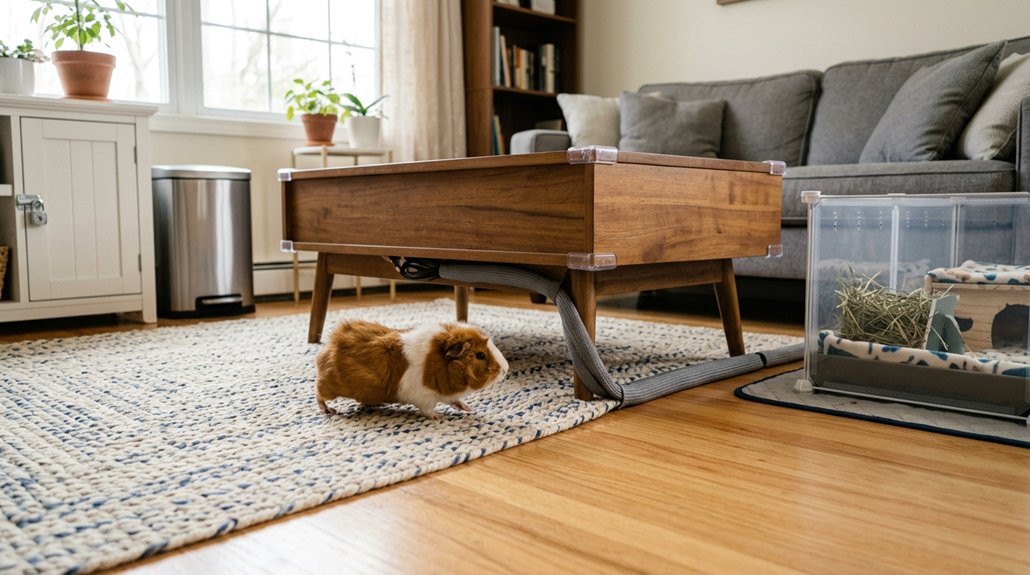
To effectively block dangerous spots in your home, utilize materials like cheap wood panels or baby gates to seal off areas under furniture and appliances where guinea pigs might get trapped. Additionally, consider customizing barrier solutions by placing heavy furniture in front of hazards like vents or using foam or sealant to fill gaps at baseboards. These strategic measures will not only prevent accidents but also guarantee your furry friends have a safe environment to explore.
Effective Blocking Materials
In tackling the challenge of guinea pig-proofing your home, consider employing various effective blocking materials to safeguard these curious pets from potential hazards. Start with simple blockage solutions like cheap wood panels or cardboard cutouts to block off small spaces beneath appliances and furniture. These barrier materials prevent your guinea pigs from becoming trapped or exploring unsafe areas. For high-traffic zones and staircases, install gate-style barriers made from metal or plastic to enforce boundaries. Flexible mesh or plastic baby-proofing materials are perfect for irregular spaces, offering adaptable protection. To prevent hiding and squeezing into tight spaces, fill gaps at baseboards or wall corners with foam pipe insulation or weather stripping. Secure cabinets with heavy-duty tape or adhesive safety locks to avert access to harmful items.
Customized Barrier Solutions
While effective blocking materials form the foundation of guinea pig-proofing, personalized solutions cater to your home’s unique needs. Use affordable wood panels or cardboard to craft creative barrier designs that perfectly fit under furniture or appliances. Adjust their height to prevent adventurous jumps. For areas with cords or sharp items, employ plastic tablecloths or shower curtains as temporary shields—securely attach them to remain in place. Installing baby gates or high C&C gates in doorways can effectively restrict access to rooms with additional hazards.
Don’t neglect barrier maintenance tips: regularly inspect these solutions to guarantee they’re stable and effective. Guinea pigs are curious creatures and may attempt to chew or climb, so keep adjusting your barriers to maintain safety and security.
Guinea Pig Safety Supplies You Need
Creating a safe environment for your guinea pigs involves securing specific safety supplies that address their instinctual behaviors and vulnerabilities. As you initiate guinea pig proofing essentials, start with the following items to guarantee a safe space creation:
- Chew-Proof Barriers: Use sturdy wood panels or child-proof playpens to block off hazardous areas and keep small spaces inaccessible, preventing your guinea pigs from getting stuck.
- Cord Protectors: Invest in tubing or cord covers to shield electrical wires, vital for reducing the risk of dangerous chewing and potential electrocution.
- Absorbent Bedding Materials: Stock up on fleece or puppy pads. They’re fundamental for maintaining cleanliness and managing mess, creating a comfortable home while protecting your guinea pigs’ sensitive feet from dampness.
Emergency Responses to Guinea Pig Accidents
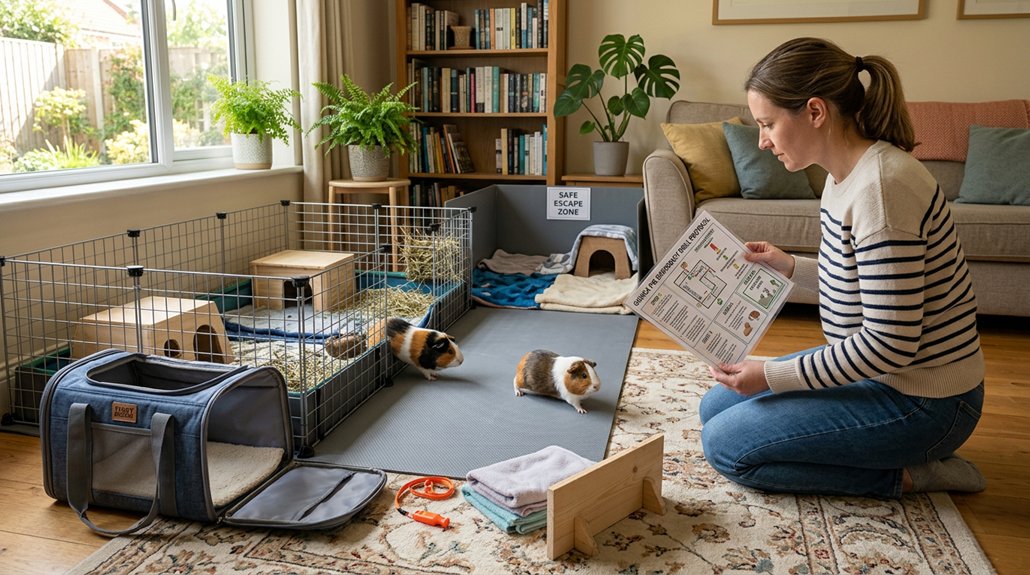
If your guinea pig encounters an accident, quick and informed responses are essential to guarantee their safety and well-being. First, recognize signs of distress or injury—lethargy, unusual vocalizations, or appetite changes—to prompt timely action. Keep emergency protocols in place, with readily accessible contact numbers for your veterinarian and poison hotlines. Always have a guinea pig-specific first aid kit, including antiseptic ointment, gauze, and bandages. Familiarize yourself with basic first aid procedures, like addressing minor cuts or scrapes, and know when professional help is necessary. Establish an emergency plan with easy access to your nearest veterinary clinic, ensuring a swift response. By doing so, you’ll be prepared to handle accidents effectively, safeguarding your pet’s health.
Keeping Their Habitat Clean and Healthy
A clean habitat is essential for keeping your guinea pigs healthy and happy. Effective bedding maintenance and systematic cleaning routines help prevent health issues. Here’s how you can guarantee your furry friends thrive:
- Daily Care: Change bedding at least daily or as needed. Use absorbent materials like fleece or paper-based options to control odors and manage waste efficiently.
- Disinfection: Clean the entire cage every other day using a mixture of white wine vinegar and dish soap. This step disinfects surfaces, guaranteeing a germ-free environment.
- Hydration & Nutrition: Wash food bowls and water bottles daily to prevent bacterial growth, providing your guinea pigs with safe, fresh hydration and nutrition.
Also, check and clean soiled toys weekly to keep the habitat enjoyable.
Frequently Asked Questions
How to Guinea Pig Proof Your House?
To guinea pig-proof your house, start by conducting a safety inspection. Remove hazards, create safe playspaces with barriers, cover cords, monitor roam areas, use absorbent pads, and guarantee everyone knows the guinea pigs’ location for safety.
What Does Popcorning Mean in a Guinea Pig?
Imagine popcorn popping energetically; that’s popcorning in guinea pigs. This behavior signals their happiness and excitement. When your guinea pig starts leaping and racing around, they’re expressing joy, feeling safe and content in their environment.
Can I Leave My Guinea Pig Alone for 7 Days?
No, you shouldn’t leave your guinea pig alone for 7 days. Prioritize guinea pig care by arranging a pet sitter. These vacation tips guarantee their safety with fresh food, companionship, and a clean living environment while you’re away.
What Are Guinea Pigs Most Afraid Of?
Guinea pigs’ common fears include loud noises, sudden movements, large animals, bright lights, and strong odors. Guarantee their environment minimizes these stressors, providing a stable, safe atmosphere with dark, quiet spaces for them to retreat and relax.
Conclusion
You’ve transformed your home into a virtually indestructible fortress against the tiniest of invaders—your charming guinea pigs. Ironically, while you’re mastering security protocols worthy of fortifying a castle, your guinea pig’s greatest thrill might just be a cardboard box. But these furry adventurers deserve expert-level safety. Always keep emergency supplies ready and maintain a clean habitat. Your watchful care guarantees their delightful squeaks are about joy, not distress. Your vigilance is their best defense.