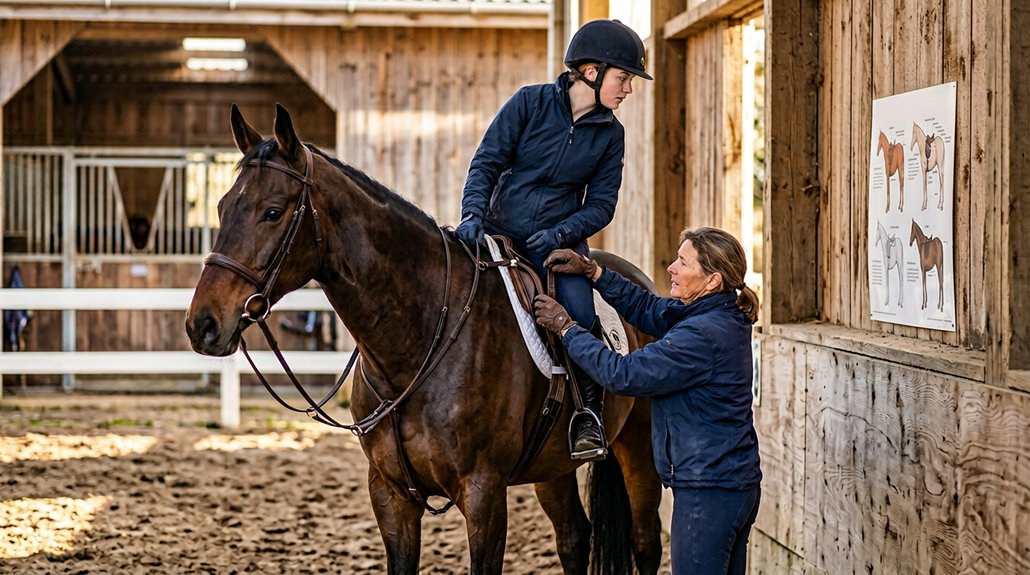
When choosing a horse as a beginner, focus on calm temperaments and guarantee the horse matches your riding goals. Prioritize breeds like American Quarter Horse or Morgan for their gentle nature. Assess your budget for ongoing expenses and consider the long-term commitment. Expert advice and pre-purchase vetting are essential to confirm the horse’s health and suitability. Aligning your needs with the right horse can make the journey rewarding, and there’s much more to discover ahead.
Key Takeaways
- Evaluate the horse’s temperament; it should be calm and predictable for safe beginner interactions.
- Consult experts to assess horse compatibility with your skills and riding goals.
- Ensure the horse has a mature, well-trained background for reliable handling and skill development.
- Perform a pre-purchase health evaluation to confirm the horse’s soundness and suitability.
- Budget for ongoing costs like board, feed, and equipment to ensure sustainable horse ownership.
What a Beginner Needs in a Horse
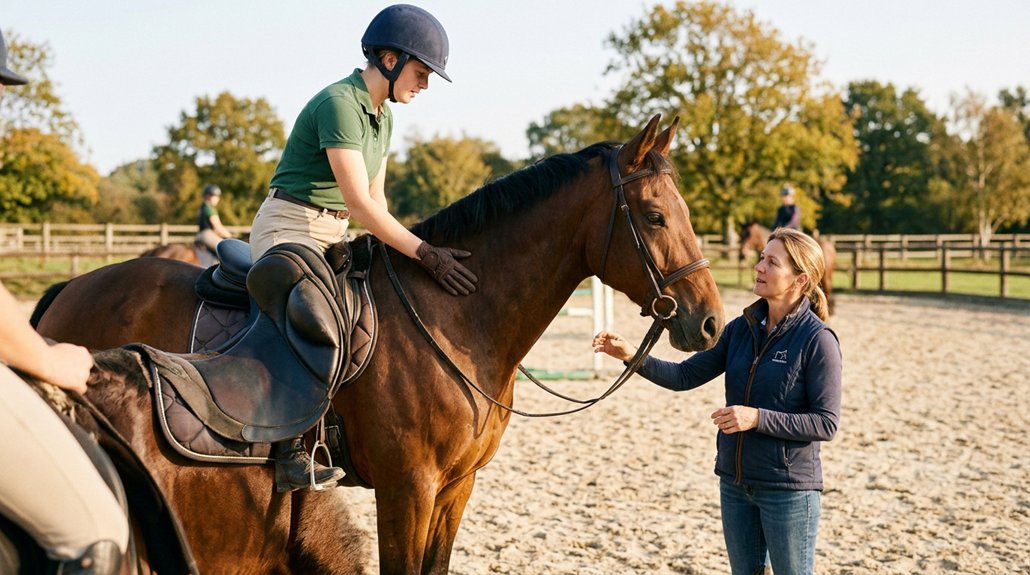
When you’re setting out to choose a horse as a beginner, it’s essential to zero in on key characteristics that will support your learning journey. A calm demeanor is invaluable, allowing you to make mistakes safely. Focus on selecting a mature, well-trained horse—this reliability eases your path into different riding styles. Breeds like the American Quarter Horse, Arabian, and Morgan are exceptional choices due to their calm temperaments and adaptability. Each horse’s individual temperament varies, irrespective of breed, so it’s important to assess personality closely. A smooth ride enhances comfort, while patience and predictability in various situations make handling easier, establishing a solid foundation for your skills. Prioritize a horse’s horse training background to guarantee a supportive companion.
Understand Your Riding Goals
Why is it so vital to understand your riding goals when choosing a horse? Your goal assessment forms the foundation of selecting a horse that complements your aspirations—be it leisure riding, competition, or specific disciplines like jumping or dressage. Different horses specialize in diverse areas; thoroughbreds might suit racing and jumping, while stock breeds like the American Quarter Horse excel in trail and ranch work. Future planning is essential, as your skills evolve, you may desire a more specialized horse to meet competitive ambitions. Consult experienced instructors to guarantee your horse aligns with realistic goals and skill levels. Exploring resources like online platforms and community connections will help find a horse matching your riding dreams and experiences, setting you up for success.
Budget for Horse Ownership Costs
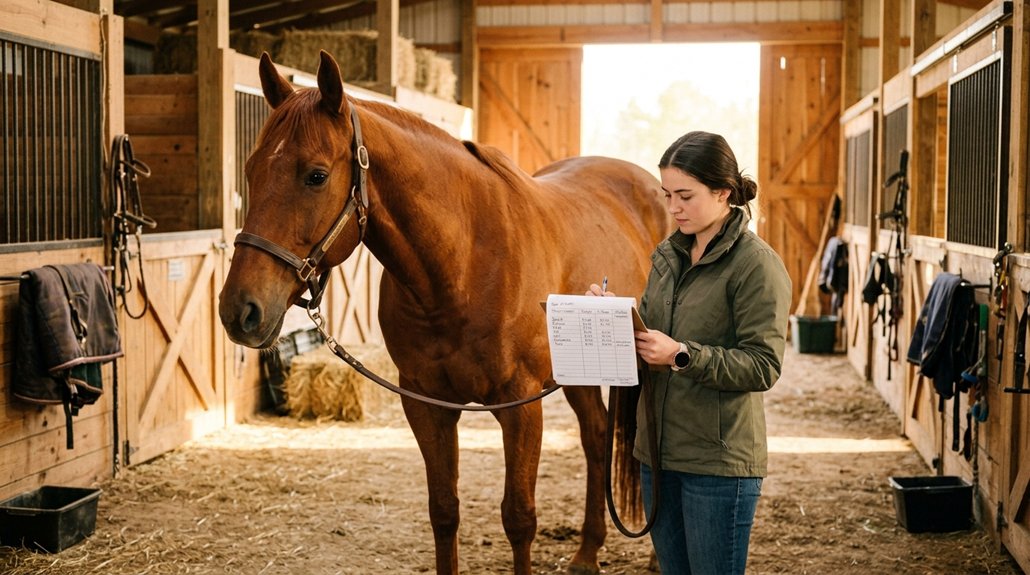
Before committing to horse ownership, you should understand the wide range of monthly expenses, including board and the costs for essential equipment, insurance, and emergencies. Don’t overlook the importance of budgeting for ongoing care, such as feed and veterinary expenses, which can quickly add up. Exploring cost-effective alternatives like pasture board or sharing responsibilities can make this rewarding pursuit more manageable.
Monthly Expenses Overview
Budgeting for horse ownership is a crucial step toward ensuring your equestrian journey is both sustainable and enjoyable. You’ll need to account for monthly expenses like feed, with feeding schedules tailored to your horse’s needs, and training costs, which can vary depending on your goals and location. Boarding options range from pasture board costing $200 to $600 a month, to full-care facilities that may reach up to $2,500. Don’t forget shoeing, supplements, and grooming, all fundamental for maintaining your horse’s well-being. Initially, plan for a $1,000 investment in tack and equipment. Location plays a significant role in costs, as urban areas tend to charge more. Balancing these expenses is essential for a rewarding equestrian experience.
Insurance and Emergencies
Although purchasing horse insurance might seem like an optional expense, it’s an essential safeguard against unforeseen events that can result in substantial financial strain. Think of insurance as a safety net similar to your car or house insurance. Insurance types for horses can include coverage for:
- Accidents – If your horse gets injured, veterinary expenses could skyrocket.
- Illness – Coverage for unexpected health issues offers peace of mind.
- Theft – In case your horse is stolen, insurance can mitigate financial loss.
- Mortality – This covers the value of a horse in case of death.
It’s wise to set up emergency funds. Keep in mind that emergency veterinary care can surpass regular costs, stressing the importance of financial preparedness for your equine companion.
Cost-Effective Alternatives
Exploring cost-effective alternatives to horse ownership can greatly alleviate the financial burden for beginners. One option is leasing, which provides the thrill of horse riding without the full financial commitment. Leasing benefits include shared responsibility for care costs and experiencing different horses. Evaluate the lesson value of riding programs—they’re an excellent way to gain practical skills and knowledge without immediate ownership pressures. Lessons offer exposure to different riding styles and horse behaviors, essential for budding equestrians.
As you consider ownership, recognize that total monthly expenses, including board and healthcare, can outweigh the upfront price tag. Basic tack sets you back about $1,000, making leasing or lessons a wise step to test commitment. Weigh these options to guarantee a sustainable, enjoyable equestrian experience.
Focus on Calm Temperaments for Beginners
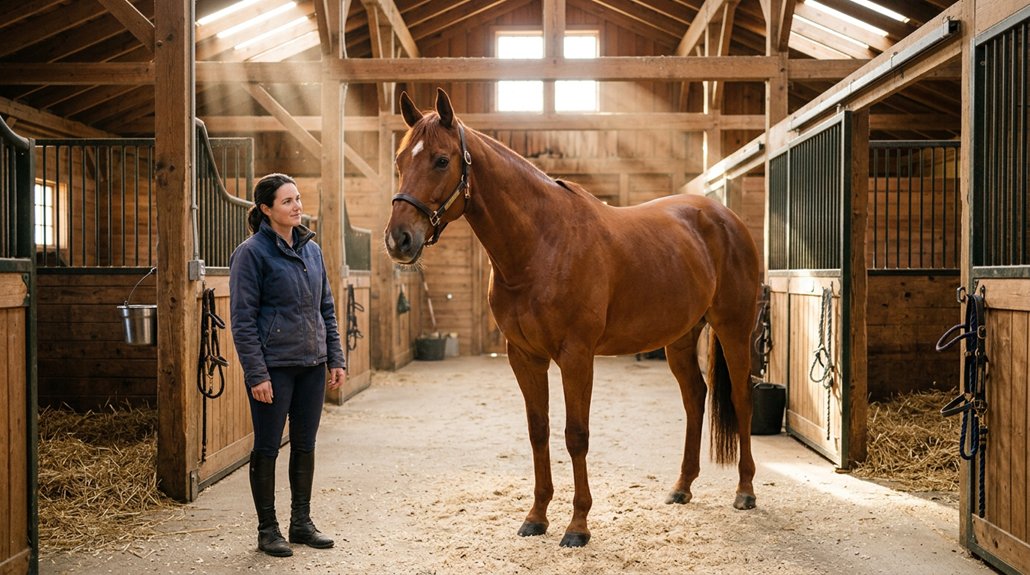
When starting out as a rider, selecting a horse with a calm temperament is crucial to guarantee a safe and positive learning experience. Choosing a horse with a calm demeanor and forgiving nature can greatly ease your shift into horseback riding. Here’s what to look for:
Opt for a horse with a calm temperament to ensure a safe and enjoyable riding journey.
- Maturity Matters: Mature horses are often more predictable and patient, perfect for learning.
- Breed Choice: Consider breeds known for their gentle nature like the American Quarter Horse, Arabian, or Morgan.
- Responsive and Calm: A horse that responds calmly to cues helps build confidence.
- Bond Building: Regular positive interactions with a placid horse aid in developing essential skills.
Seek Expert Advice
Seeking expert advice is essential for selecting the right horse as a beginner, as it provides invaluable insights and guarantees a well-informed decision. Engaging in trainer consultations is a key step, as experienced trainers can identify compatible horses based on your skill level and riding goals. Don’t underestimate the power of recommendations from knowledgeable friends and local equestrian communities, either—they’re gateways to valuable connections. Explore online resources like equestrian forums and breed-specific groups to collect diverse expert opinions and shared experiences from horse owners. Before purchasing, arranging for a professional evaluation or a pre-purchase exam from a veterinarian confirms the horse’s health and suitability. Additionally, attending local riding schools offers practical lessons and interactions with various horse breeds and temperaments.
Choose the Right Horse Size for You
Determining the right horse size for you is essential in fostering a safe and enjoyable riding experience. Begin by understanding horse measurements and ensuring a proper fit to complement your riding goals. Consider these guidelines:
- Rider’s Height: For general riding, your inseam should be less than or equal to 60% of the horse’s height to maintain balance.
- Weight Carrying Capacity: Ideally, your horse should carry 15–20% of its body weight, including both rider and saddle, to avoid health issues.
- Discipline-Specific: For jumping, keep inseam at 45-55%, and for dressage, at 40-50% of the horse’s height for peak dynamics.
- Future Growth: Young riders might outgrow smaller horses, so anticipate future size needs.
Consult with experienced instructors for tailored advice on horse size.
Pre-Purchase Vetting Essentials
Now that you’ve considered the ideal horse size for your needs, it’s time to focus on pre-purchase vetting—a critical step in confirming your future horse is a healthy match. A standard pre-purchase veterinary exam costs around $500 and is pivotal for identifying underlying health issues. Depending on the horse’s value, more extensive vetting procedures, like scans and x-rays, may be necessary to assure soundness.
Ascertain a negative Coggins Test is available to confirm the horse is free of equine infectious anemia, meeting transportation requirements. Observing the horse’s behavior during these health assessments can reveal potential issues.
Consider requesting a trial period to evaluate the horse’s real-world suitability before purchase.
| Vetting Aspect | Importance |
|---|---|
| Pre-purchase exam | Identifies underlying health issues |
| Scans and x-rays | Assures soundness in performance horses |
| Negative Coggins Test | Confirms horse is free of equine infectious anemia |
| Behavioral Observation | Spots lameness or behavioral issues |
| Trial Period | Evaluates real-world suitability |
Explore Beginner-Friendly Breeds
When you’re selecting a horse as a beginner, focusing on breeds with temperaments that match your needs is essential. Consider the American Quarter Horse for its reliability or a Morgan for its friendly nature, both offering an excellent balance for novice riders. Don’t forget to evaluate key characteristics like trainability and size, which are vital for ensuring a comfortable and enriching riding experience.
Identifying Suitable Horse Breeds
While starting your journey into the world of horseback riding, selecting the right breed is essential to guarantee a positive experience. Consider horse personality and breed traits when evaluating options. Some breeds are known for their beginner-friendly nature:
- American Quarter Horse: With an even temperament and reliability, it’s great for beginners. It stands between 14 to 16 hands and can live 25 to 35 years.
- Arabian: Praised for its calm disposition and endurance, geldings are especially steady for novices.
- American Paint Horse: Its social and intelligent nature makes training easy, perfect for children and beginners.
- Morgan: Known for being versatile and attentive, this breed offers a forgiving nature and readiness to please, standing 14 to 15 hands tall.
Select a breed that matches your comfort level and riding goals.
Key Characteristics to Consider
Having identified several beginner-friendly breeds, let’s explore the key characteristics you’ll want to evaluate when selecting your perfect equine partner. Consider the horse personality—opt for breeds like the American Quarter Horse or American Paint Horse, known for their calm and forgiving characters. A steady personality guarantees a safer learning environment. Evaluate the training history of the horse to gauge how well it’s been conditioned to interact with novices. The Thoroughbred, with proper training, showcases a desirable steady temperament for beginners.
| Breed | Key Characteristic |
|---|---|
| American Quarter Horse | Calm temperament, reliable |
| Arabian | Calm, less likely to spook |
| American Paint Horse | Easygoing, intelligent |
| Morgan | Forgiving nature, social |
In these breeds, balance and gentle demeanor greatly enhance the learning journey.
Matching Breeds to Needs
Although selecting the right horse as a beginner might seem overwhelming, understanding your specific needs can simplify the process. Begin by evaluating breed advantages and temperament traits. Here’s a shortlist of beginner-friendly equine breeds:
- American Quarter Horse: Renowned for its calm demeanor and adaptability, this breed suits various activities and has a lifespan of 25 to 35 years.
- Arabian Horse: Known for endurance and a gentle disposition, the calm nature of geldings makes them ideal for new riders.
- American Paint Horse: With intelligence and an easy-to-train nature, these horses are family favorites.
- Morgan Horse: Versatile and forgiving, Morgans offer social engagement, enhancing your riding skills.
Each breed presents unique traits to help foster a harmonious connection between rider and horse as you commence your equestrian journey.
Prepare for the Long Haul
Many people don’t realize that owning a horse is more than just a hobby; it’s a long-term commitment that requires substantial dedication. You’re not only investing time and money but also your emotional energy. It’s vital to understand that monthly care costs can vary between $200 and $2,500, influenced by your choice of boarding and care. Don’t just focus on the initial purchase price; the ongoing financial responsibilities are often higher. Patience is key, as finding the right horse may take time, essential for a satisfying experience. Recognize the daily care demands, routine veterinary visits, and potential emergencies. Approach horse ownership prepared, ensuring a well-informed commitment to your horse’s well-being over its entire life.
Frequently Asked Questions
What Is the 1/2/3 Rule for Horses?
The 1/2/3 rule for horses advises that your horse’s age should be within three years of yours, its weight at least double yours, and its height 1.5 times yours, ensuring safer, more balanced horse care.
What Is the Best Horse for Beginner Owners?
You might worry that Arabians have too much energy, but their calm, adaptable nature is ideal. Look for breeds like American Quarter Horses or Morgans with steady temperaments, suiting your rider experience and manageable maintenance needs perfectly.
How to Pick a Horse for Beginners?
Focus on a horse’s temperament and your riding style. Choose a calm, mature horse that matches your skill level. Spend time with potential horses, consult experienced instructors, and prioritize safety and compatibility to guarantee a positive experience.
What Are the 3 F’s for Horses?
The 3 F’s for horses are function, fitness, and fun. Don’t horse around when choosing; guarantee your choice aligns with your goals, considering horse behavior and basic care to make your equestrian journey enjoyable and educational.
Conclusion
Choosing your first horse is like selecting your compass for the journey ahead. It should point you toward growth, embodying both patience and steadiness. As you weigh your options—considering temperament, size, and breed—search for the partnership that feels like a well-fitted saddle, ready to support you on winding trails. Seek guidance from experts to guarantee a strong foundation, and remember: investing in a horse buys not just a companion, but a gateway to countless adventures.