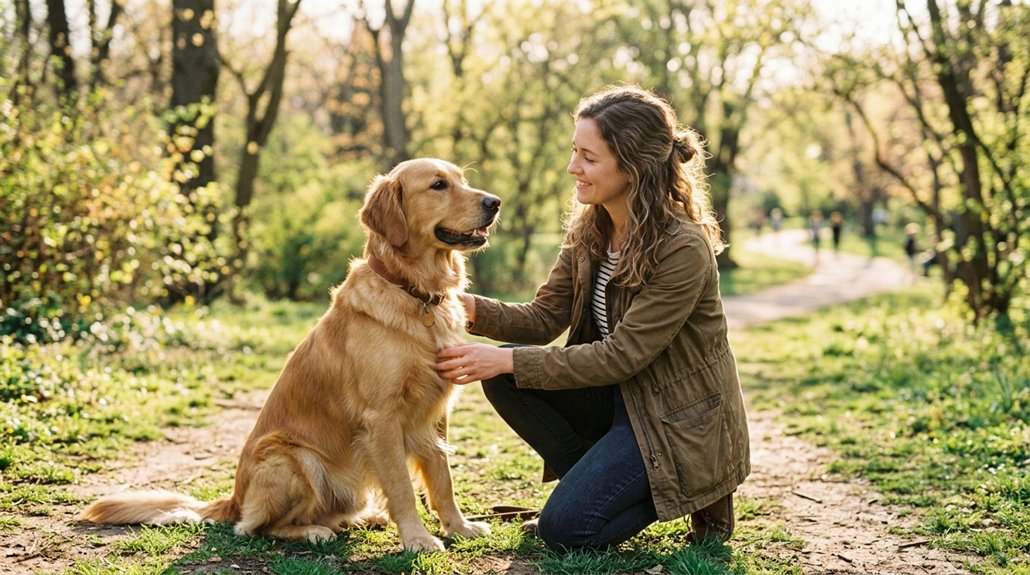
Good dog ownership involves meeting your dog’s crucial needs, including nutrition, exercise, and regular veterinary care. Establish a structured routine with consistent training and socialization, ensuring a safe living environment. Recognize your dog’s unique energy and personality traits to foster trust and bonding. Emphasize quality interactions and structured boundaries to address behavioral issues effectively. Understanding dietary and hygiene needs is essential for physical well-being, and more insights are available for a fulfilling dog-owner relationship.
Key Takeaways
- Provide balanced nutrition and maintain regular veterinary care for overall health.
- Establish a structured routine with consistent training, exercise, and socialization.
- Create a safe, hazard-free environment at home for your dog’s security.
- Fulfill your dog’s emotional needs through affection and tailored play based on personality.
- Monitor and address behavioral issues early with clear communication and consistent boundaries.
Defining Good Dog Ownership: Core Principles
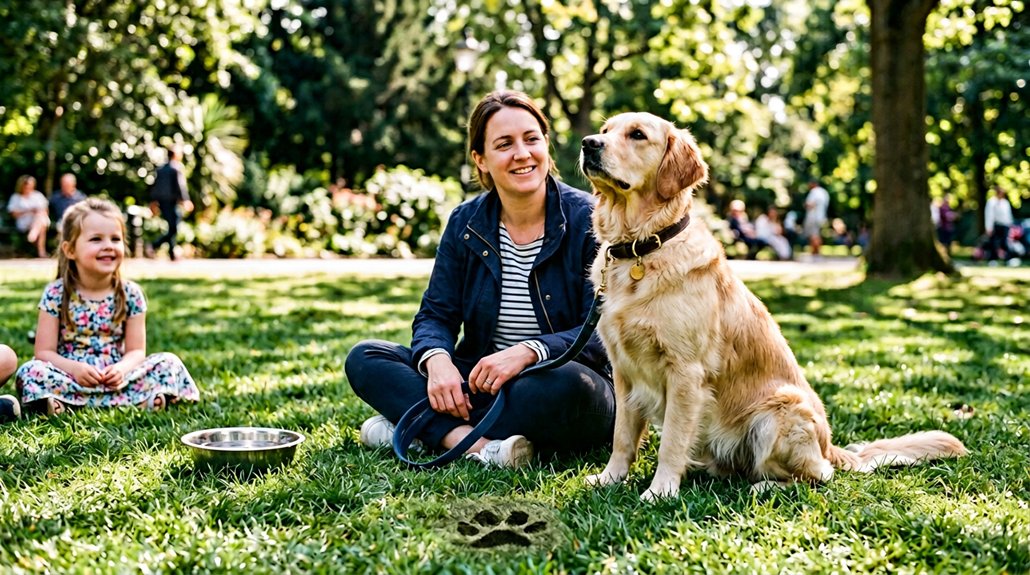
Responsible dog ownership embodies dedication and understanding. As a dog owner, you shoulder responsibilities that include satisfying your dog’s basic needs—ranging from food and water to exercise and affection. It’s important to guarantee regular veterinary care for maintaining ideal health, including vaccinations, routine checkups, and preventive measures such as dental hygiene and parasite control. Establishing a structured routine with consistent training, socialization, and playtime is critical for your pet’s mental and emotional health. Additionally, you must create a secure environment by eliminating hazards and providing safe, comfortable resting areas. Recognizing your dog’s individual needs, energy levels, and personality traits is fundamental to fostering trust and a positive relationship, which are the pillars of good dog ownership.
How to Choose the Right Dog for Your Lifestyle
Selecting the right canine companion is vital to guaranteeing harmony and fulfillment in your home. Effective dog breed selection begins with an analysis of lifestyle compatibility. Assess your daily activity level; a highly active individual may align well with energetic breeds such as Border Collies. Conversely, those in compact living environments might consider smaller, adaptable breeds like French Bulldogs. Evaluate energy needs and exercise requirements; your capacity to engage with your pet is essential. To ascertain temperament, meet with both puppy parents, which can provide genetic insights beneficial for your choice. Additionally, create a nurturing setting by assembling essential supplies—food dishes, a comfortable bed, and toys. Don’t forget to puppy-proof your home to guarantee safety and encourage positive exploration.
Establishing a Routine for Consistency and Comfort
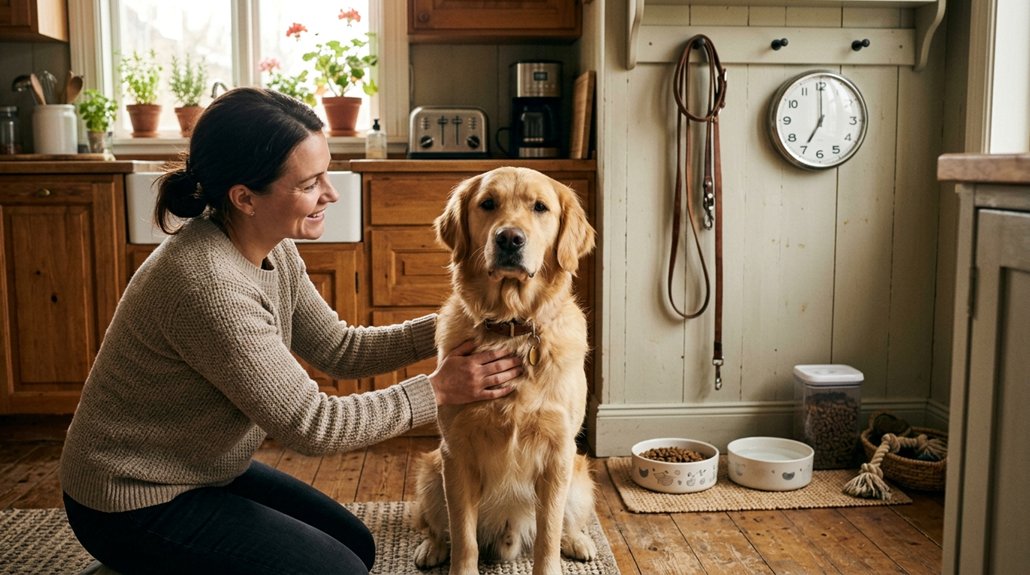
To provide your dog with consistency and comfort, focus on establishing a structured routine from the start. Regular mealtime scheduling, consistent training sessions, and structured play and exercise are essential for maintaining stability and promoting behavioral health. By implementing these elements, you guarantee your dog adapts effectively, reducing anxiety and fostering a secure environment.
Regular Mealtime Scheduling
Establishing a consistent feeding schedule is critical for maintaining your dog’s digestive health and ensuring their comfort. Regular mealtimes encourage meal anticipation, contributing to digestion stability. This predictability decreases anxiety and creates a calming eating environment, essential for ideal nutrient absorption. By feeding at the same times daily, you’re directly supporting their general wellbeing through regular bathroom habits, making house training smoother. Structuring mealtimes meticulously guards against overeating, a crucial component in managing weight effectively. Portion control tailored to their dietary needs prevents fluctuations in energy levels and gastrointestinal disturbances. A well-designed schedule strengthens the bond between you and your dog through routine, enhancing cooperation and reinforcing positive behaviors effortlessly. Precision in meal timing is indispensable for fostering this stability.
Consistent Training Sessions
Initiate a well-structured training regimen to enhance both the dog’s behavioral development and your relationship. Consistent training sessions, ideally 20–30 minutes daily, utilize clear commands to reinforce good behavior within a structured environment. Timing is essential. Designate specific periods in your daily schedule for training, fostering predictability and aiding in your dog’s comprehension of expectations. Employ positive reinforcement strategies to greatly bolster desirable behaviors, building trust between you and your canine companion. Regularly evaluate your training methods for effectiveness, making necessary adjustments to suit your dog’s evolving needs. This deliberate approach guarantees consistency and comfort throughout the learning process, ultimately fortifying obedience and confidence in your pet. Maintaining this disciplined routine is crucial to successful dog ownership.
Structured Play and Exercise
While consistent training sessions guarantee disciplined behavior, structured play and exercise are key to maintaining overall well-being. Tailor at least 30 minutes of physical activity daily to meet your dog’s age and breed-specific needs for effective exercise. Creative play through interactive games enhances bonding, socialization, and behavioral expression in a controlled setting. Consistent play, lasting 20–30 minutes, fosters engagement and combats boredom. Evaluate routinely and adjust based on fitness tracking data to confirm peak physical and emotional health.
Here’s a structured plan:
| Activity | Duration (minutes) |
|---|---|
| Physical exercise | 30 |
| Creative play | 20-30 |
| Evaluation/Adjust | Continuous tracking |
Follow these guidelines to support not just good behavior but also happiness and mental health in dogs.
Prioritize Early Socialization for a Well-Adjusted Dog
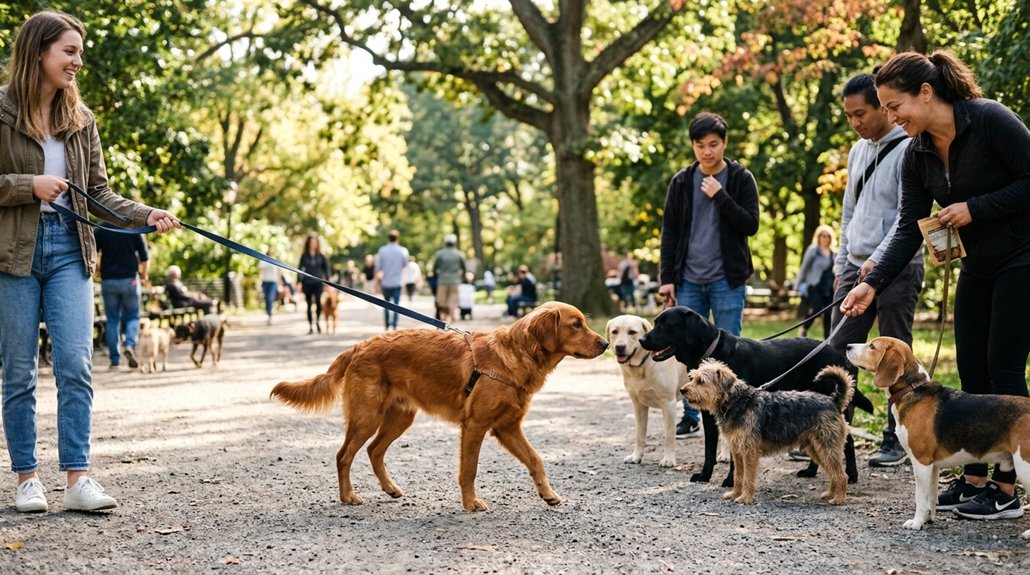
To guarantee your puppy matures into a well-adjusted dog, it’s crucial to prioritize controlled and positive social interactions. Focus on the quality of experiences by introducing your pet to well-trained adult dogs, which can profoundly impact their behavior and confidence. Adhering to a structured interaction ratio, such as 70/30 or 90/10, allows you to manage these encounters effectively while preventing future behavioral issues.
Emphasize Controlled Dog Interactions
Proper early socialization is vital for developing a well-adjusted dog, as exposing puppies to experienced, well-trained adult dogs fosters positive behavioral traits and minimizes aggressive or fearful tendencies. Structured play sessions offer socialization benefits by reinforcing puppy comfort through positive interactions with trained companions. Utilizing safe environments allows for the development of social skills without risking exposure to aggressive tendencies. Observational techniques play an essential role in understanding dog behavior, enabling you to tailor socialization efforts effectively. Engaging with knowledgeable dog owners guarantees these interactions occur in controlled settings, optimizing behavioral outcomes. By focusing on the quality of these exchanges, you enhance your dog’s confidence and adaptability, significant components of their emotional well-being and ongoing behavioral development.
Prioritize Quality Over Quantity
Recognizing the importance of structured interactions with well-trained dogs sets the stage for understanding why quality should surpass quantity when socializing puppies. High-quality socialization strategies involve exposure to well-trained adult dogs, focusing on interaction quality to guarantee ideal behavioral outcomes. Emphasizing a 70/30 or stricter (90/10) rule prioritizes meaningful interactions over mere exposure, fostering a puppy’s confidence and adaptability.
Begin observational analysis early, ideally when puppies are around two weeks old, to identify social compatibility by six weeks. This proactive approach aids in tailoring effective socialization strategies. Establishing a consistent routine during the critical socialization window is crucial; it reduces anxiety and develops self-regulation in puppies. Controlled environments with knowledgeable owners enhance safety, reducing the risk of adverse behavioral developments.
Foster Positive Social Experiences
Early socialization is the cornerstone of guaranteeing your puppy becomes a well-adjusted dog. Start before 16 weeks to prevent behavioral issues and promote social confidence. Facilitate puppy playdates with controlled interactions alongside well-trained adult dogs; this provides invaluable learning while minimizing negative encounters. Avoid interactions with untrained dogs, which can lead to fear or anxiety. Focus on diverse environments and experiences to improve adaptability. Implement a structured socialization approach, maintaining a positive-to-negative experience ratio of 70/30 or 90/10. Opt for smaller, high-quality social settings over larger gatherings to guarantee comfort and positive engagement. Your puppy’s ability to confidently navigate social landscapes will flourish with balanced exposure, fostering lasting positive behavior as they develop into adulthood.
Ensure Physical and Mental Fitness Through Exercise
Through consistent and thoughtfully tailored exercise, you can greatly improve your dog’s physical and mental fitness. Structured routines are essential to prevent obesity and promote overall health. Consider the following:
- Dog parks offer vast spaces for physical exertion, fostering socialization and engagement in outdoor adventures.
- Interactive toys serve as boredom busters, delivering mental challenges that stimulate cognitive capacities and combat anxiety-related behaviors.
- Agility training refines a dog’s natural instincts, heightens physical agility, and strengthens your bond during scheduled play times.
- Tailored exercise routines involving varied activities, like regular walks and structured games, enhance mental enrichment. This mitigates behavioral issues, ensuring happiness and balance.
Daily involvement in these areas requires commitment but pays dividends in maintaining your dog’s health. Properly managed, it yields a well-adjusted canine companion.
Setting Firm yet Fair Boundaries With Communication
Effectively setting firm yet fair boundaries involves clear communication strategies that lay the groundwork for a well-integrated family pet. Consistently using boundary reinforcement strategies through definitive commands and established routines directly guides your dog in understanding its role within your household. Employing communication techniques like simple expressions of disagreement aids in minimizing confusion about acceptable conduct.
Respecting your dog’s personal space and avoiding unnecessary interference or baby talk supports a balanced relational dynamic, reinforcing boundaries productively. It’s essential to maintain consistency in boundary adherence—failure to do so might encourage behavioral issues such as aggression, as dogs could try to assert dominance. Regularly reviewing and adjusting training methods guarantees ongoing communication effectiveness, maintaining relevant and respected boundaries for optimal coexistence.
Understanding Your Dog’s Dietary and Hygiene Needs
A well-rounded understanding of your dog’s dietary and hygiene requirements is essential for ensuring its overall health and longevity. To manage these effectively, focus on several key areas:
- Nutritional Guidelines: Tailor your dog’s diet to its age, breed, and lifestyle, ensuring it’s balanced with high-quality meat, vegetables, and grains.
- Weight Management: Regularly monitor your dog’s weight and nutritional intake with professional guidance to prevent obesity.
- Hygiene Practices: Maintain food safety by ensuring water availability and meticulous food bowl hygiene to prevent bacteria.
- Grooming Importance: Implement routine grooming practices like bathing, brushing, and nail trimming to maintain coat health and detect issues.
Additionally, prioritize dental care by brushing your dog’s teeth regularly to combat tartar and prevent diseases.
Recognizing and Addressing Behavioral Issues
While recognizing behavioral issues early in dogs is vital, it involves understanding nuanced signs like excessive barking or biting, which can emerge as early as six weeks. Identifying these behavioral red flags is essential in selecting compatible puppies and shaping their future temperament. For effective intervention strategies, incorporate consistent training routines and establish clear boundaries, preventing anxiety and aggression due to structural ambiguities. Engage your pet in socialization with well-trained dogs, maintaining controlled interaction ratios—such as 70/30 or 90/10—to mitigate issues in puppy behavior. By deploying a pragmatic training approach instead of reacting emotionally, you objectively evaluate and adapt strategies for behavioral challenges like separation anxiety or aggression, ensuring early intervention to prevent problem escalation and fostering ideal mental well-being.
Fostering a Loving and Respectful Dog-Owner Bond
When fostering a loving and respectful dog-owner bond, acknowledge your dog’s cognitive abilities and inherent worth as a family member, enhancing mutual trust and understanding. Developing a respectful relationship involves various strategic steps:
- Quality time: Engage in bonding activities such as playful interactions that provide emotional support and nurture attachment.
- Canine communication: Utilize consistent training with positive reinforcement to build trust and facilitate mutual respect, thereby enabling secure relationship development.
- Routine establishment: Develop clear boundaries and routines. This provides a positive environment, minimizing behavioral issues and strengthening familial hierarchy.
- Attachment nurturing: Conduct daily grooming and care. This acts as a reinforcing ritual, fostering emotional ties and demonstrating attentiveness to your dog’s needs.
These practices promote a profound and enduring connection.
Frequently Asked Questions
How Do You Tell if You Are a Good Dog Owner?
You’re a good dog owner if you prioritize dog care by meeting your pet’s needs and employ effective training techniques. Consistency in providing exercise, socialization, and attention signals your dedication, fostering a healthy, secure, and well-behaved dog.
What Is the 7 7 7 Rule for Dogs?
The 7-7-7 rule indicates 20% of newly adopted dogs adjust within the first week. You’ll focus on dog training in the first seven weeks to understand canine behavior, and strengthen bonds in the subsequent seven months.
What Smell Do Dogs Hate?
Dogs hate certain smells due to their scent aversion. Unpleasant odors like strong citrus, vinegar, isopropyl alcohol, and spices such as cayenne pepper can deter them. Overwhelming scents from perfumes and powerful cleaners also cause discomfort.
What Are the Qualities of a Good Dog Owner?
Oh, you think being a good dog owner is about prioritizing your canine over your morning coffee? It’s really just about responsible training, daily exercise, and pretending you enjoy walks at sunrise. Sounds glamorous, right?
Conclusion
As the caretaker of this living tapestry, your bond with your dog reflects your understanding and commitment. The leash symbolizes guidance and connection while the wagging tail signifies a horizon of mutual joy and trust. By weaving principles of responsible ownership into daily life, you nurture a harmonious symphony of wagging tails and happy hearts. Balance care and discipline like a precise metronome, and you’ll chart a course through the complex yet rewarding mosaic of good dog ownership.