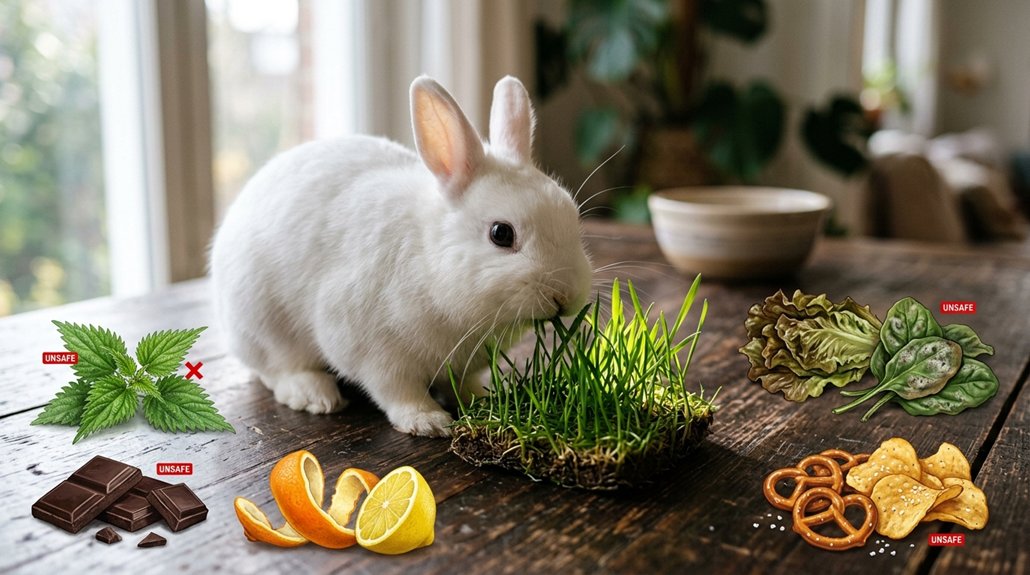
You must be cautious with your rabbit’s diet to prevent harmful effects. Avoid feeding rabbits avocados, chocolate, and onions as they contain toxic compounds that can be fatal. Fruit seeds, especially from apples and cherries, pose cyanide risks. Even potatoes and processed foods can disrupt digestion and cause obesity. Sticking to safe, fiber-rich options is essential for your rabbit’s health. For a deeper understanding of safe foods for rabbits, continue exploring.
Key Takeaways
- Avocado is toxic to rabbits due to persin, causing severe health issues and should be avoided entirely.
- Chocolate contains harmful theobromine and caffeine, leading to potential fatal outcomes for rabbits.
- Fruit seeds and pits have trace cyanide, posing risks of poisoning if ingested by rabbits.
- Onions, leeks, and garlic can cause oxidative damage to rabbits’ red blood cells, leading to anemia.
- Potatoes contain solanine and high starch content, disrupting rabbit digestion and can be harmful.
Importance of a Fiber-Rich Diet for Rabbits
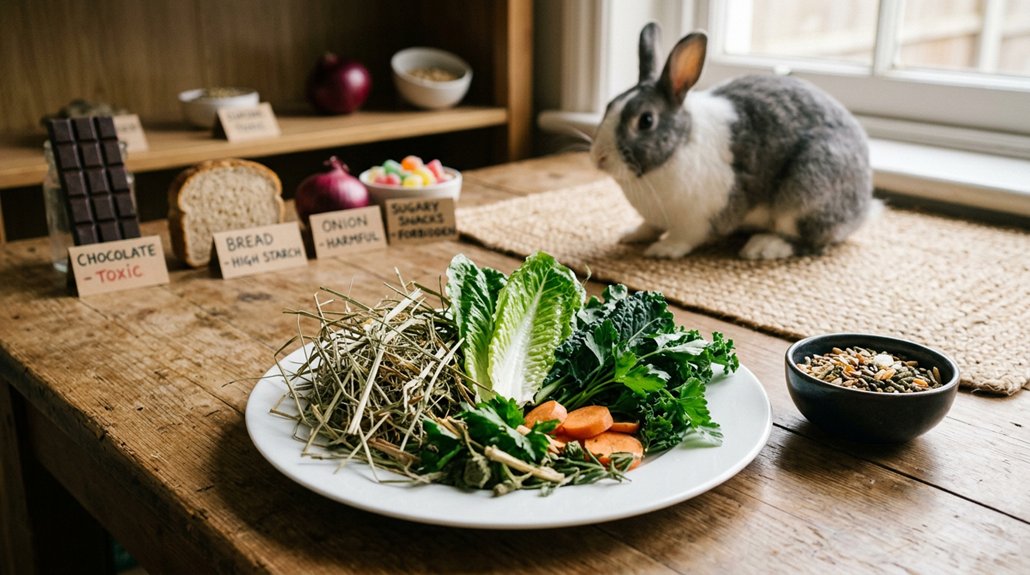
Given their unique digestive systems, it’s essential that rabbits maintain a fiber-rich diet to thrive. Incorporating high-quality hay as the primary fiber source guarantees peak digestive health and prevents gastrointestinal stasis, a potentially fatal condition. Fiber’s nutritional benefits include supporting proper gut function and aiding in the natural wear of rabbits’ continuously growing teeth. Without sufficient fiber, your rabbit might face dental issues and digestive complications, such as obesity. In addition to hay, consider feeding nutritionally appropriate leafy greens and vegetables, which complement hay by providing additional fiber and essential nutrients. Confirming your rabbit’s diet is rich in varied fiber sources will help maintain their overall well-being, making fiber an indispensable component of their dietary regimen.
Avocado: Why It’s Dangerous for Rabbits
When it comes to the well-being of your rabbit, it’s vital to steer clear of avocados due to the presence of persin, a toxic compound that can induce severe health problems. Symptoms of avocado toxicity can manifest as lethargy, rapid heartbeat, and respiratory distress, all of which necessitate urgent veterinary attention. Ingesting even small amounts of any part of the avocado can lead to congestive heart failure and potentially fatal outcomes, making it important to exclude this fruit from your rabbit’s diet entirely.
Toxic Compound: Persin Risks
Avocado toxicity is a significant concern for rabbit owners due to the presence of persin, a compound that poses serious health risks. Persin is present in all parts of the avocado, including the flesh, skin, and leaves, making avocados hazardous for rabbits. It’s essential to understand persin effects to guarantee rabbit safety. When a rabbit consumes avocado, even in small quantities, the toxic effects can lead to severe behavioral abnormalities, difficulty breathing, and more critical conditions like congestive heart failure. This underscores the importance of omitting avocados entirely from your rabbit’s diet. Veterinary experts strongly advise against feeding any part of this fruit to rabbits to safeguard their health and prevent potentially fatal outcomes. Prioritize your pet’s well-being by adhering to these guidelines.
Symptoms and Health Consequences
Understanding the risks associated with feeding avocados to rabbits extends to recognizing the specific symptoms and health consequences that arise from toxicity. Avocados contain persin, which can be extremely harmful. Here’s what you should watch out for and how to act:
- Respiratory Difficulties: Trouble breathing is a serious sign that shouldn’t be ignored. Seek immediate veterinary care.
- Behavioral Abnormalities: Unusual behavior or lethargy could indicate toxicity. It’s important to monitor and consult a vet for symptom management.
- Gastrointestinal Distress: Signs like diarrhea or vomiting require prompt intervention and treatment options to prevent further harm.
- Congestive Heart Failure: If left untreated, the situation could escalate to this fatal condition. Early detection and veterinary treatment are crucial.
Keep all avocado parts away from your rabbit for their safety.
Chocolate’s Toxicity: More Than a Sweet Threat
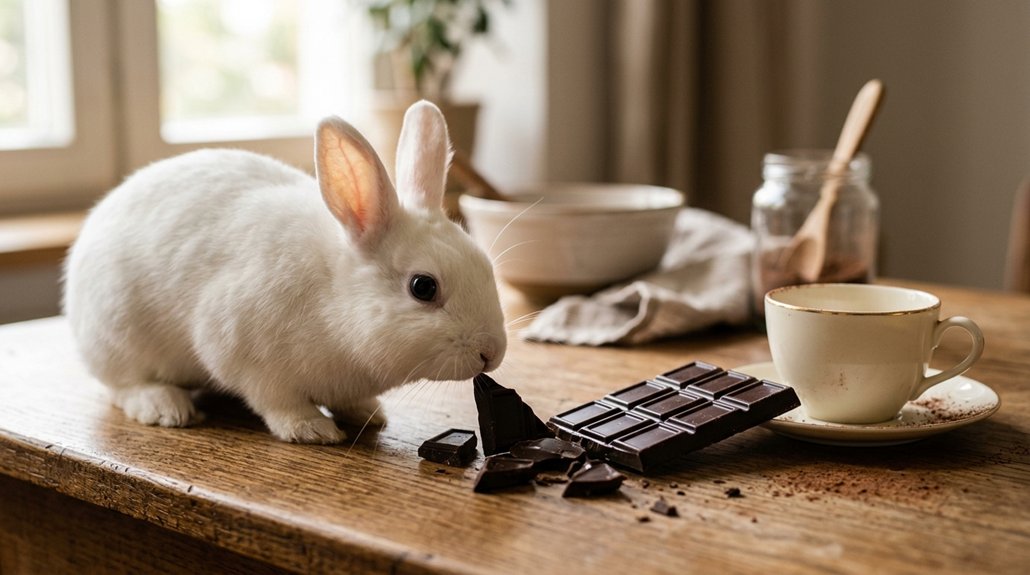
You’re probably aware that chocolate isn’t suitable for rabbits, but you might not know it contains theobromine and caffeine, which are highly toxic to them. Dark chocolate poses an even greater risk due to higher concentrations of these harmful compounds that can manifest in symptoms like diarrhea, hyperactivity, and elevated heart rate. Recognizing these symptoms and acting quickly is essential, as chocolate ingestion can be fatal without prompt treatment.
Harmful Compounds in Chocolate
Chocolate may be a delightful treat for humans, but it’s a hazardous substance for rabbits. The dangers primarily lie in the harmful compounds found in chocolate—namely theobromine and caffeine. The issue at hand stems from a rabbit’s limited capacity for chocolate metabolism. Unlike humans, rabbits can’t efficiently process these substances, putting their safety at risk. Dark chocolate, in particular, contains higher concentrations of these toxic compounds. Understanding chocolate’s threat guarantees you keep your pet safe. Consider these facts:
- Theobromine & Caffeine: Both compounds are toxic, especially concentrated in dark chocolate.
- Chocolate Metabolism: Rabbits have limited ability, leading to severe outcomes.
- Potential Fatality: Even small amounts can be lethal.
- Rabbit Safety: Always keep chocolate out of reach.
Symptoms of Rabbit Toxicity
While keeping chocolate far from a rabbit’s reach is essential, knowing the warning signs of chocolate toxicity can be a lifesaver. Chocolate contains theobromine and caffeine, both harmful to rabbits, leading to distressing symptoms if consumed. Initial signs include behavioral changes like unusual hyperactivity, followed by rapid panting, trembling, and an increased heart rate. These symptoms indicate a swift health deterioration that can quickly become severe without intervention. Dark chocolate poses a higher risk due to its higher concentration of toxic compounds compared to milk chocolate. Diarrhea may occur, exacerbating the rabbit’s condition. Immediate veterinary care is vital, as untreated chocolate toxicity can result in cardiac failure and, ultimately, could be fatal for your rabbit. Keep an eye out and act fast.
Cyanide Risks in Fruit Seeds & Pits for Rabbits
When considering the dietary needs of your rabbit, it’s crucial to recognize the hidden dangers lurking in seemingly harmless fruit seeds and pits. To guarantee fruit safety and maintain rabbit health, note that many fruit seeds—such as those from apples and cherries—contain trace cyanide, which is toxic to rabbits. Ingesting even small amounts can lead to:
Beware of fruit seeds; apple and cherry seeds contain cyanide, posing a toxic threat to rabbits.
- Cyanide Poisoning: This may result in symptoms like difficulty breathing and seizures.
- Immediate Veterinary Needs: Any sign of distress requires quick medical attention.
- Preventative Measures: Always remove fruit seeds and pits before serving.
- Consultation with a Vet: Seek advice on safe fruit practices to protect your rabbit’s well-being.
Being informed and cautious with their diet guarantees enhanced safety for your furry friend.
Why Avoid Onions, Leeks, and Garlic in Rabbit Meals
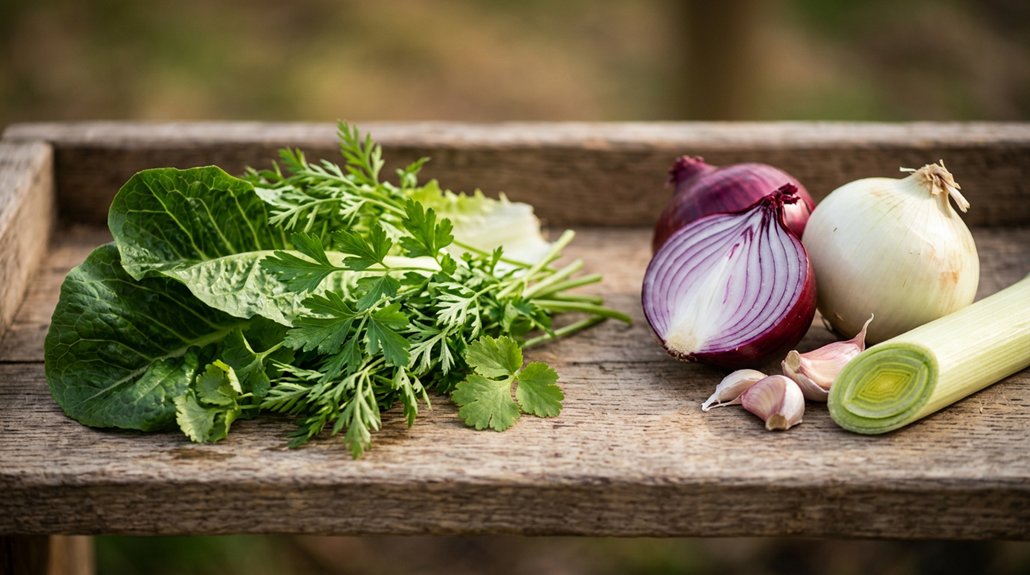
In the domain of rabbit care, awareness of toxic foods is essential, and onions, leeks, and garlic are particularly concerning due to their dangerous n-propyl disulfide content. This compound can wreak havoc on rabbit nutrition by causing oxidative damage to red blood cells, leading to hemolytic anemia. Symptoms such as pale gums, lethargy, and ataxia signal urgent veterinary intervention. Even small amounts can be perilous, so these foods should be entirely excluded from your rabbit’s diet. Rabbit dietary restrictions require vigilance, as their immune system can be severely compromised by oxidative stress from these vegetables. Remember, both raw and cooked versions are harmful, emphasizing the importance of ensuring all traces are removed from meals to safeguard your pet’s health.
Raw Potatoes: A Hidden Hazard for Rabbits
Raw potatoes pose a significant risk to rabbits due to the toxic alkaloid solanine they contain. Solanine can lead to digestive issues such as decreased appetite, abdominal pain, and lethargy, compromising rabbit health. To understand how critical it is to keep raw potatoes away from rabbits, consider the following:
- Potato Toxicity: Solanine toxicity necessitates immediate veterinary care to prevent lasting harm.
- Gastrointestinal Disruption: High starch and calorie content in raw potatoes can upset a rabbit’s digestive system.
- Plant Parts: Every part of the raw potato plant—skin, eyes, and tubers—holds potential danger.
- Dietary Needs: Prioritize high-fiber foods like hay and leafy greens for ideal rabbit health.
Keeping these points in mind guarantees your rabbit stays healthy and happy.
Processed Foods: Obesity and Digestive Dangers
Though they might seem tempting treats, processed foods pose considerable risks to your rabbit’s health. High in carbohydrates and sugars, items like bread, cookies, and pasta can cause severe digestive issues such as enterotoxaemia. These foods disrupt your rabbit’s delicate digestive system, impacting their digestive health negatively by leading to abnormal stool consistency and potentially life-threatening gastrointestinal stasis. Additionally, the excessive calories and sugar in processed snacks greatly elevate the risk of obesity, which may develop into serious long-term health complications. For ideal well-being, it’s essential to steer clear of processed foods and focus on meal alternatives that align with a rabbit’s natural dietary needs. Providing fresh, high-fiber options like leafy greens will support their overall health.
Spotting Dietary Issues in Rabbits
Recognizing the impact of poor dietary choices on your rabbit’s well-being is important in guaranteeing their health remains ideal. Monitoring behavior is essential to spot potential dietary issues. Look for signs like:
- Diarrhea or Soft Stools: These can signal digestive problems or food intolerance, necessitating immediate dietary adjustments.
- Lack of Appetite or Refusal to Eat: This might indicate discomfort from inappropriate food choices or an underlying health condition.
- Drooling or Difficulty Chewing: Such symptoms suggest dental problems, potentially worsened by unsafe foods.
- Bloating or Distended Abdomen: A serious symptom of gastrointestinal distress, often connected to a poor diet.
Sudden weight loss or lethargy requires urgent veterinary attention. Adjusting your rabbit’s diet, while monitoring behavior closely, helps guarantee long-term health.
Safe Foods for a Rabbit’s Diet
When considering a rabbit’s nutritional needs, it’s essential to focus on safe foods that support their overall health. Fresh hay, such as Timothy, orchard, or meadow hay, is important for maintaining proper digestive health. Incorporate high-quality rabbit pellets, avoiding mixes with nuts or seeds, which can be harmful. Safe leafy greens like romaine lettuce, kale, parsley, cilantro, and dandelion greens offer necessary nutrients and should be a regular inclusion in their diet. For variety, vegetables such as bell peppers, cucumber, zucchini, and celery serve as healthy snacks you can offer daily. Remember to limit fruits like strawberries and blueberries to 1–2 teaspoons per 5 pounds of body weight per day, ensuring your rabbit’s diet remains balanced and safe.
Frequently Asked Questions
What Is the Most Toxic Food for Rabbits?
The most toxic food for rabbits is chocolate; it’s filled with theobromine and caffeine, which are harmful. Additionally, avoid feeding them poisonous vegetables like raw onions, leeks, and toxic plants such as avocados to guarantee their safety.
What Is the 3 3 3 Rule for Rabbits?
Picture the 3 3 3 Rule as a compass guiding you through dietary restrictions. Provide three types of hay, three leafy greens, and three safe treats daily. This guarantees varied nutrients and prevents health issues like obesity and GI stasis.
How Do Rabbits Say Goodbye?
Rabbits say goodbye through subtle behavior changes. You’ll notice shifts in their social interactions, withdrawal, or increased solitude. This behavior signifies their emotional bonding and acknowledges the loss, like reduced grooming or searching for their missing companion.
Why Do Rabbits Scream at Night?
Rabbits scream at night due to nighttime behavior influenced by fear, stress, or pain. Such vocalizations indicate distress, often due to predators or health issues. Understanding these rabbit vocalizations is essential for addressing their needs promptly.
Conclusion
Imagine your rabbit, content and healthy, hopping through fresh greens and nibbling on crisp hay. By steering clear of foods like avocado, chocolate, and onions, you’re safeguarding it from harmful toxins and digestive woes. Picture vibrant, sparkling eyes and a coat that shines like satin—signs of a thriving rabbit. Stick to safe, fiber-rich foods that mirror their natural diet, and your furry friend’s health will flourish, bounding joyfully in a world free of dietary pitfalls.