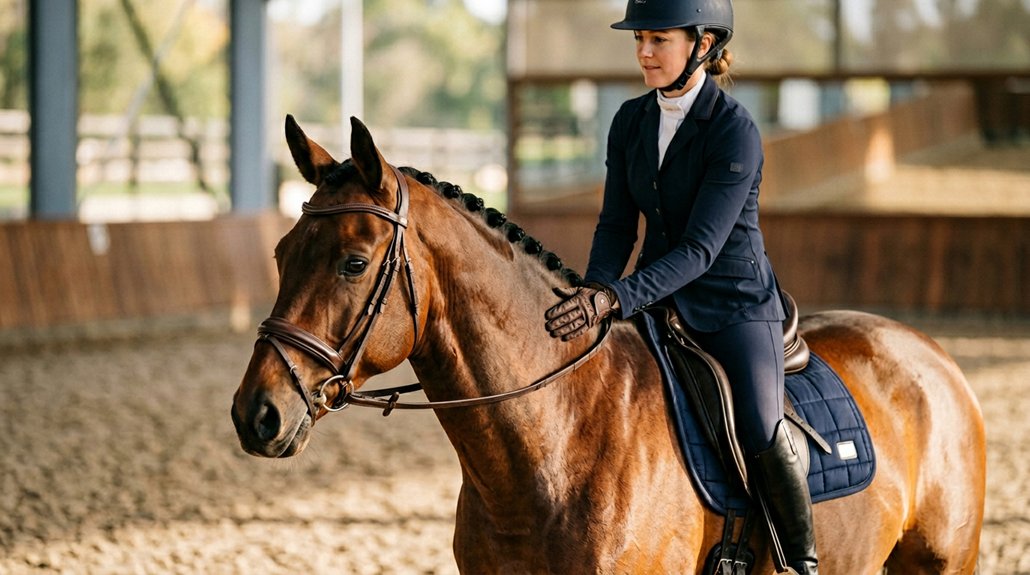
To build a strong rider-horse relationship, focus on understanding and trust. Start with respectful initial contact, paying attention to nonverbal cues like ear position and muscle tension. Prioritize gentle communication and establish a solid foundation through groundwork, using lunging exercises and consistent routines. Enhance emotional awareness and bond deeply by recognizing and respecting your horse’s unique personality. Incorporate praise effectively to reinforce positive behavior. By expanding your skills and reflecting on experiences, you’ll discover more ways to strengthen your partnership.
Key Takeaways
- Establish trust through consistent, gentle communication tailored to the horse’s personality and emotional cues.
- Focus on groundwork activities like lunging and leading to build mutual respect and understanding.
- Harness nonverbal communication skills to properly interpret the horse’s body language and emotional state.
- Engage in grooming and play activities to deepen emotional bonds and respect the horse’s boundaries.
- Reflect on lessons and interactions, continuously seeking feedback to improve the rider-horse relationship.
Understanding the Rider-Horse Bond
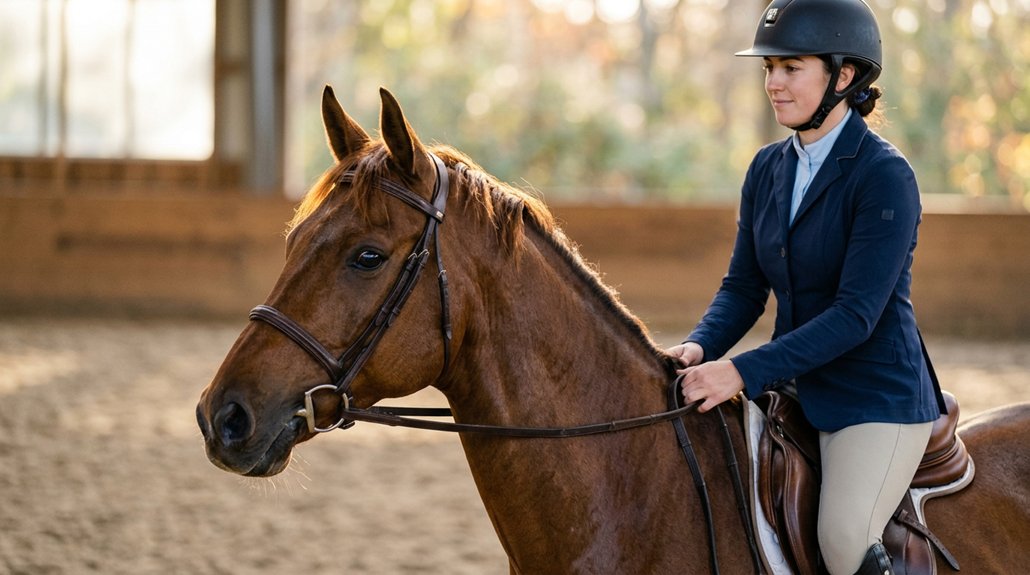
Understanding the rider-horse bond is paramount to achieving a successful and fulfilling partnership with your equine companion. By focusing on nonverbal cues, you’ll develop emotional intelligence that enables you to intently listen to what your horse is communicating. Recognizing subtle signals such as ear position, tail movement, and muscle tension allows you to respond appropriately, fostering trust. It’s crucial to approach this relationship with empathy; your horse relies on your patience and awareness to feel secure.
Investing time in groundwork and grooming isn’t just about training—it’s about building rapport and emotional connection. Prioritize your horse’s comfort and well-being with every interaction. Consistency in your considerate actions will demonstrate reliability, creating an environment where both horse and rider can thrive in harmony and understanding.
Start With Respectful Initial Contact
When you first approach your horse, focusing on mutual trust and gentle communication is key. By maintaining calm energy and respecting the horse’s personal space, you set the foundation for a positive bond. Always prioritize hands-on interaction over mechanical methods to build a genuine connection from the outset.
Establish Mutual Trust Early
While initiating a strong rider-horse relationship, ensuring mutual trust should be your foremost goal, starting with respectful initial contact. Effective empathy forms the core of your approach—recognize the horse’s unique personality before engaging. Adapt with an individualized approach to meet your horse’s specific needs, whether during grooming, saddling, or casual interactions. Groundwork exercises play a significant role—focus on leading exercises that reinforce respect and trust. Communicate verbally to ease nervousness, instill security, and foster a genuine connection. Treat your horse as a partner rather than a mechanical tool. By establishing mutual trust early, you create a bond that enhances your entire riding experience, encouraging a cooperative, respectful relationship that thrives on understanding and patience from both sides.
Prioritize Gentle Communication Methods
Establishing a gentle communication technique with your horse, even from the very first interaction, is fundamental to forming a lasting bond that encourages trust and cooperation. Start by implementing gentle cues, using your calming presence to reassure your horse. A soothing voice can bridge gaps, demonstrating your empathy and experience.
Participate in groundwork like grooming and leading, which respects their individuality and reduces tension. Remember that patience is key. Tailor your interactions to reflect the horse’s personality, integrating consistent communication to foster mutual understanding.
| Element | Action | Outcome |
|---|---|---|
| Verbal cues | Use soothing words | Eases tension, builds trust |
| Groundwork | Engage in grooming | Fosters connection |
| Patience | Respect personality | Promotes mutual understanding |
| Presence | Maintain calm demeanor | Guarantees secure environment |
| Consistency | Use gentle cues | Enhances emotional connection |
Your horse will appreciate the respectful effort, ultimately enhancing your riding experience.
Respect Horse’s Personal Space
Initiating contact with your horse requires an appreciation for their personal space and inherent social cues, establishing the foundation for effective communication. When you approach, pay attention to horse behavior, particularly how they react to your presence. Respecting their personal boundaries fosters empathy and understanding, vital for cultivating a positive relationship. Instead of mechanical interactions, engage in gentle activities like grooming, recognizing a horse’s comfort zone to establish trust. This respect for their space enhances your communication skills, allowing the horse to be more receptive as training advances. Remember, effective handling is a dialogue, not a command. Your sensitivity to personal boundaries creates a safe and harmonious environment, fundamental for a lasting rider-horse bond.
Master Groundwork for Strong Foundations
When you master groundwork, you’re laying the cornerstone for a strong and trusting relationship between you and your horse. Utilizing effective groundwork techniques like lunging exercises and leading is essential. These activities establish trust and respect by allowing your horse to learn cues in their comfort zone. Start with simple movements, gradually adding complexity as confidence builds.
Consistent routines help your horse become familiar with your intentions, enhancing their responsiveness during riding. Your role as a respected leader is reinforced, creating a pressure-free learning environment that fosters communication.
| Exercise | Benefit |
|---|---|
| Lunging | Builds communication without pressure |
| Leading | Reinforces respect and responsiveness |
| Consistent Routine | Enhances understanding of rider’s cues |
This groundwork foundation ultimately strengthens both training and your emotional bond.
Enhance Emotional Awareness and Connection
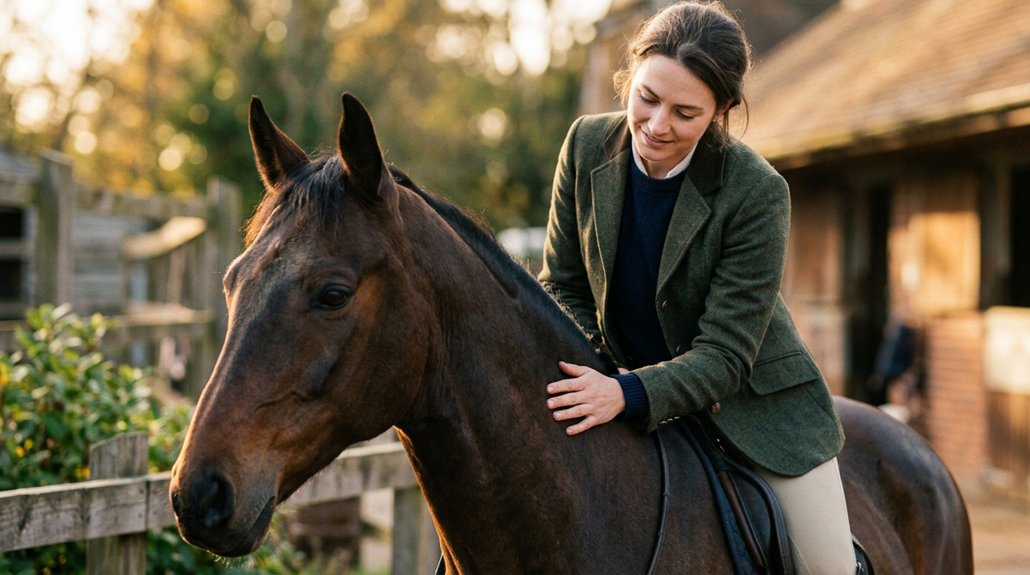
While building a strong rider-horse relationship, enhancing emotional awareness and connection serves as a crucial component. Engaging in verbal interaction establishes emotional communication, easing tension and fostering a powerful bond. Your horse responds positively when you communicate attentively, mirroring your self-awareness and emotional state. Calming techniques, such as maintaining calmness, are essential; horses naturally perceive and reflect your feelings. Incorporate quiet moments like hand grazing and grooming to reinforce shared experiences, nurturing the bond. Begin training exercises within your horse’s comfort zone, gradually expanding it with patient interaction to build trust. Constantly reflect on your horse’s body language and emotional cues. This improves your understanding of their needs and enriches your relationship, ensuring a mutually beneficial connection.
Be Patient and Flexible With Your Horse
To build an effective rider-horse relationship, patience and flexibility are essential components. Embrace patience practices, allowing the natural development of your partnership without pressure. Immediate results aren’t always indicators of future success; understand that a long-term commitment to training is vital. Each horse has unique personality traits; recognizing and adjusting to these will enhance your flexible training approach and foster trust. Offering young horses time off is beneficial; it helps them recharge and process experiences, supporting better future performances. Celebrate small achievements, reinforcing positive behaviors and adapting to the horse’s learning pace. This approach highlights the necessity of flexible training, enabling a stronger, more dynamic partnership. Remember, your journey is about growth, not perfection.
Use Praise to Strengthen Rider-Horse Bond
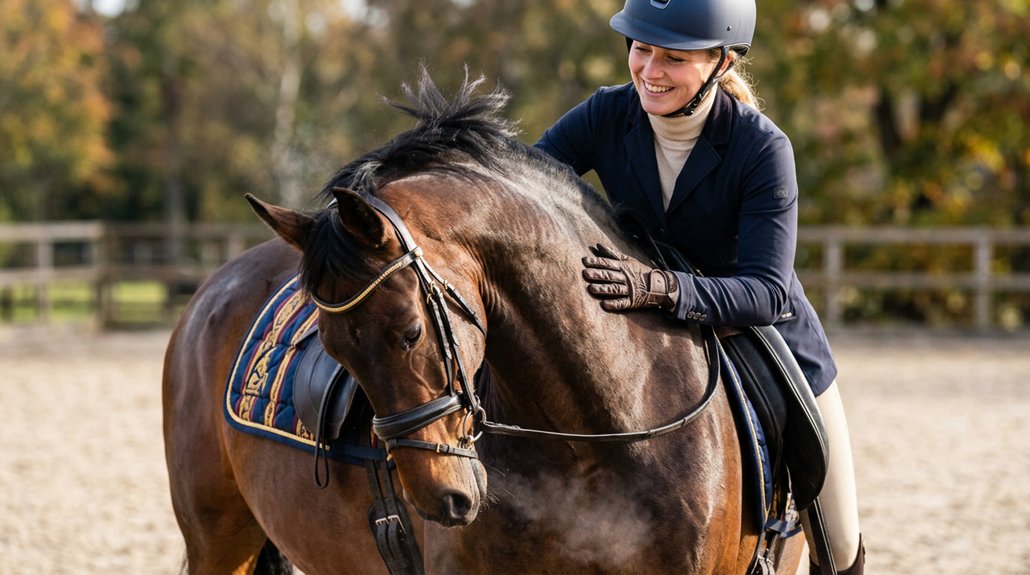
Although it might seem simple, using praise effectively can greatly impact the rider-horse bond. By mastering praise timing, you’re reinforcing positive behavior just as your horse exhibits it, enhancing their willingness to adapt and learn. Praise types, like gentle pats or soothing words, help your horse identify successful actions, fostering trust. Recognize even minor accomplishments; each success celebrated contributes to a supportive environment that boosts emotional well-being. This positive reinforcement shared during groundwork and riding strengthens your connection, encouraging your horse to face challenges with confidence.
Master praise to reinforce positive behavior, enhance trust, and strengthen the rider-horse bond.
- Practice praise timing by observing your horse’s cues.
- Use varied praise types to maintain engagement and clarity.
- Acknowledge incremental progress to build understanding.
- Prioritize consistent praise for efforts, not just results.
- Encourage mutual respect through genuine admiration.
Bond Beyond Riding
Creating a strong rider-horse relationship extends beyond just time in the saddle, requiring you to engage in activities that build trust when you’re not riding. By participating in ground activities like grooming and hand grazing, you can foster a deeper emotional connection with your horse, reinforcing the trust and communication established from the first interaction. Understanding and respecting your horse’s unique personality and boundaries during these non-riding activities is key to enhancing your bond and ensuring your horse feels relaxed and secure in your presence.
Building Trust Off-Saddle
While riding builds technical skills, establishing trust and bonding with your horse off-saddle lays the foundation for a deeper partnership. Engaging in grooming techniques promotes relaxation and understanding; it also helps you read your horse’s emotional signals. Start by approaching your horse calmly, letting them feel your empathy and patience. Spend time hand-grazing or just being present in their space, encouraging a sense of safety and reliability. Groundwork exercises like leading and practice commands reinforce trust and respect. Regular, pressure-free interactions cultivate a strong connection.
- Grooming techniques enhance relaxation and track emotional signals.
- Calm presence lays groundwork for empathy and trust.
- Hand-grazing nurtures a sense of safety.
- Groundwork exercises build respect and trust.
- Pressure-free time solidifies a supportive bond.
Enhancing Bond Through Activities
Beyond the fundamental trust built off-saddle, engaging in specific activities can further enhance your bond with your horse. Groundwork exercises like lunging and leading lay the groundwork for respect and connection, reinforcing this association. Regular grooming sessions, including brushing and untangling manes, foster mutual relaxation, easing tension for both of you. Hand grazing offers a serene setting where your horse grazes freely, strengthening trust without structured riding constraints.
Incorporating playful interactions, such as light-hearted games or treat rewards for positive behavior, can deepen your connection. Quiet, shared moments in your horse’s environment also enrich your bond, enhancing comfort and assurance.
Here’s a quick guide to activities that bond you with your horse:
| Activity | Benefit |
|---|---|
| Lunging & Leading | Builds trust and respect |
| Grooming Sessions | Promotes relaxation |
| Hand Grazing | Strengthens trust |
| Playful Interactions | Deepens connection |
Expand Your Skills Through Lessons and Reflection
To truly expand your skills as an equestrian, it’s important to engage in structured lessons where the emphasis is placed on developing both technical abilities and emotional connections with your horse. Through lesson reflection, you’ll gain insight into how your emotions impact your horse’s behavior. Cultivating emotional intelligence is key to appreciating each horse’s unique personality.
- Develop effective communication by interpreting your horse’s body language.
- Engage in groundwork exercises to reinforce trust and respect.
- Reflect on each session to understand your influence on your horse.
- Seek continuous feedback from instructors to enhance self-awareness.
- Focus on understanding your horse’s needs for a stronger partnership.
Integrating these practices will deepen the bond and improve the quality of your training sessions.
Frequently Asked Questions
What Is the 1/2/3 Rule for Horses?
The 1/2/3 Rule for horses is a three-month training plan focusing on horse body and equine communication. You’ll start with groundwork, build trust with consistent handling, and finally refine communication through sensitive riding adjustments.
What Is “I Love You” in Horse Language?
Actions speak louder than words in equine communication. When your horse nudges, nuzzles, or follows you, that’s its way of saying “I love you.” These behaviors signify emotional bonding, revealing that trust and affection are deeply rooted.
How to Build a Good Relationship With a Horse?
Start with trust building through effective communication techniques. Learn your horse’s body language to respond aptly. Invest time in groundwork and use positive reinforcement. Be patient and respect each horse’s individuality to cultivate a meaningful, lasting connection.
What Is the 20% Rule in Horse Riding?
The 20% Rule ironically suggests focusing only 20% on techniques and 80% on mutual respect and trust building. It encourages prioritizing the emotional bond with your horse, believing that real partnership outshines technical mastery in riding.
Conclusion
Building a strong rider-horse relationship is a journey that combines respect, communication, and mutual understanding. Have you considered how patience and flexibility can deepen your bond? Master the basics with groundwork and emotional awareness, and remember to use praise as a tool for connection. Strengthen your skills through lessons and reflection, and don’t forget to spend time bonding beyond riding. With dedication and care, you’ll cultivate a partnership that flourishes on and off the saddle.