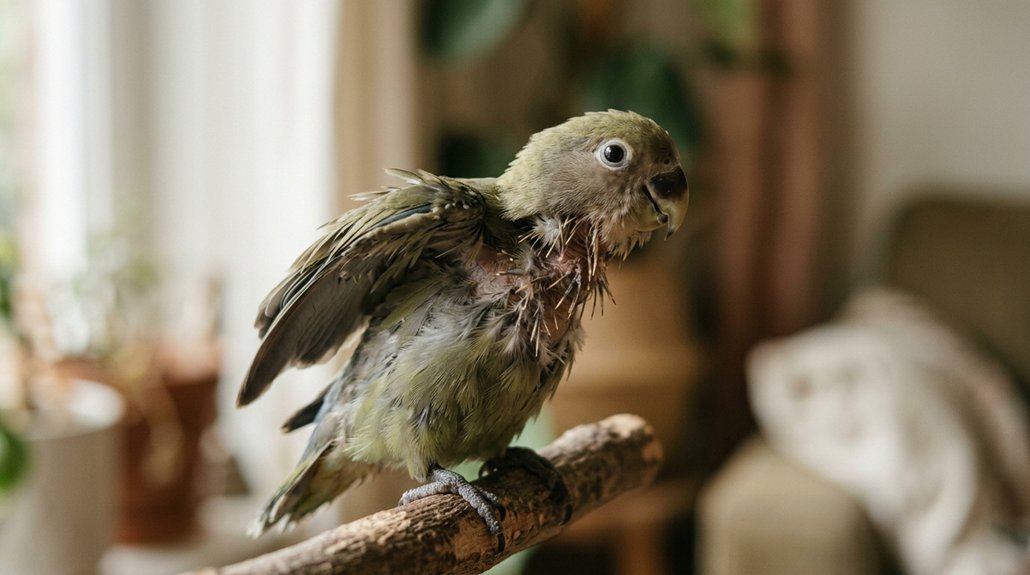
Your bird is likely plucking its feathers because of skin irritation, parasites, infection, nutritional deficiency, organ disease, stress, boredom, or hormonal stimulation. You may notice bald patches, broken feathers, scabs, or repeated picking that goes beyond normal preening. Environmental irritants like aerosols, scented products, or poor humidity can also play a role. If the plucking persists, spreads, or your bird seems lethargic, an avian vet should examine it, and there’s more to uncover about causes and treatment.
Key Takeaways
- Feather plucking can be caused by medical problems like infections, parasites, PBFD, organ disease, or nutritional deficiencies.
- Stress, boredom, isolation, and hormonal triggers often lead birds to pluck or over-groom their feathers.
- Environmental irritants such as aerosols, scented products, Teflon fumes, low humidity, and poor bathing can damage skin and feathers.
- Signs include bald patches, broken feathers, raw skin, scabs, and repetitive picking, especially if behavior keeps worsening.
- An avian veterinarian should check persistent plucking, since treatment often requires medical care, diet changes, and enrichment.
What Is Feather Plucking?
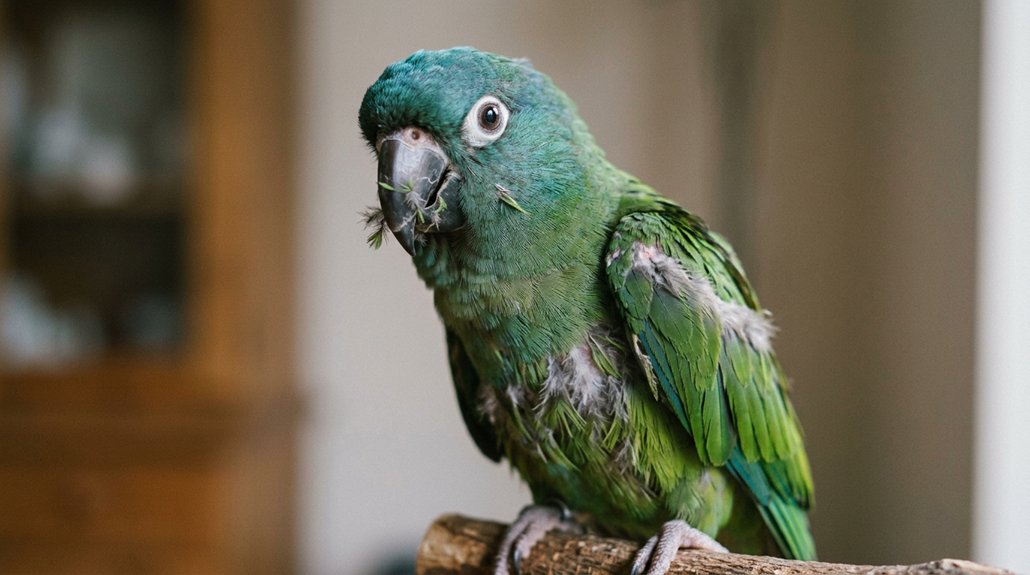
Feather plucking is a repetitive self-directed behavior in which a bird chews, bites, or pulls out its own feathers, ranging from mild feather damage to extensive bald patches and even self-inflicted skin wounds. In behavioral definition, you’re describing an abnormal grooming pattern, not normal preening. It affects about 10–15% of captive parrots, with African greys and cockatoos especially prone. Plucking often affects accessible areas such as the chest, underwings, neck, flanks, and inner thighs, and it usually involves contour and down feathers more than flight feathers. For clinical differentiation, you should distinguish it from molt, trauma, or other causes of feather loss. Because it can reflect medical disease, nutritional imbalance, or chronic stress, persistent or worsening feather loss needs avian veterinary evaluation.
Signs Your Bird Is Feather Plucking
You may notice localized bald patches or thinning, especially on the chest, under the wings, neck, inner thighs, or ventral wing area. Feathers can also look shortened, frayed, or uneven, which suggests active damage rather than normal preening. If the feather loss is spreading or not improving over weeks, your bird should be examined by an avian veterinarian.
Visible Feather Damage
Visible feather damage is often the most obvious sign that a bird is feather plucking, and it usually shows up as shortened or chewed feathers, broken shafts, or localized bald patches on the chest, under the wings, neck, inner thighs, or ventral wing area. When you examine feather texture, you may notice frayed edges, uneven wear, or feathers that look repeatedly damaged in one area. An underwing inspection is especially useful because concealed lesions can be missed during a quick look. If you see raw skin, scabs, or signs of infection beneath missing feathers, the problem’s more advanced and needs veterinary attention. Repetitive picking, focused grooming, and changes in activity can accompany these lesions. Normal preening is occasional; persistent damage isn’t.
Bald Patches And Thinning
Localized bald patches or thinning are classic signs that a bird is actively plucking its feathers, especially when they appear on the breast, under the wings, neck, inner thighs, or flank. You may also notice broken, shortened feathers, with small spots becoming larger areas of missing contour and down feathers.
| Finding | Meaning |
|---|---|
| Redness or scabs | Self-trauma and skin irritation |
| Lethargy or appetite loss | Possible medical cause |
| Spreading baldness | Abnormal, needs assessment |
If you see persistent thinning, it’s not normal preening. Occasional feather loss is expected, but ongoing baldness affects about 10–15% of captive parrots and should prompt an avian veterinary exam. Prompt evaluation helps identify infection, reduce discomfort, and support feather regrowth.
Common Causes of Feather Plucking
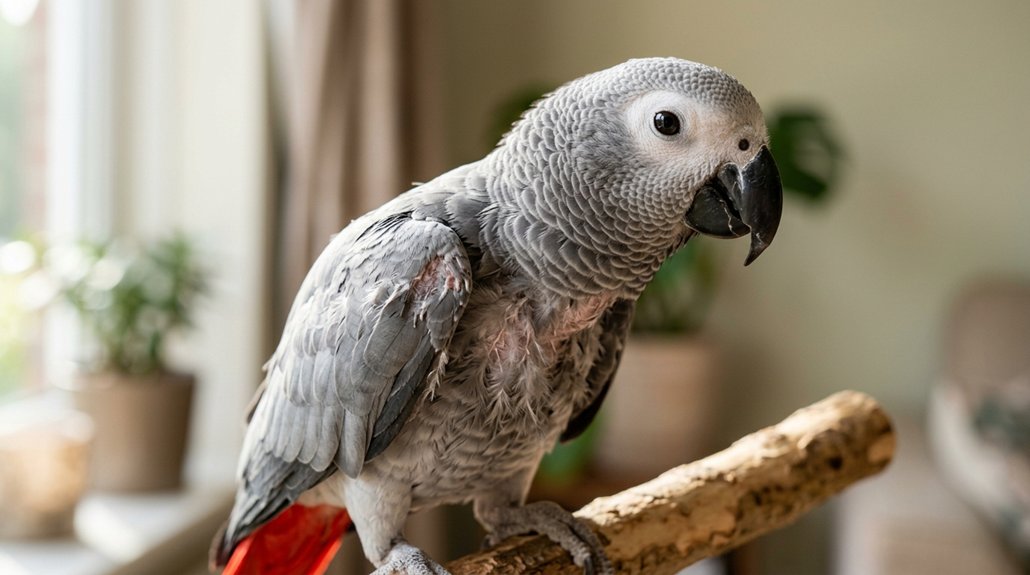
Feather plucking usually has more than one cause, and medical problems account for a large share of cases: skin infections, external parasites, internal disease affecting the liver, kidneys, or respiratory tract, viral illness such as psittacine beak and feather disease, and nutritional deficiencies—especially vitamin A and essential fatty acids—can all lead to itching or poor feather quality that prompts self-trauma. You should also consider avian boredom, dietary imbalance, and other behavioral drivers; feather-damaging behavior affects about 10–15% of captive parrots. Social isolation, separation anxiety, and compulsive routines can sustain the habit. Hormonal stimulation, especially during breeding season or with excessive petting, may worsen it. External causes, including barbering by cage-mates, insect bites, and contact with oils or chemicals, can damage feathers directly and trigger plucking.
Environmental and Behavioral Triggers
Environmental and behavioral factors can strongly influence feather plucking, especially when a bird’s daily life is understimulating or stressful. You may see it worsen with boredom, isolation, or inconsistent handling. Add foraging, noise reduction, and substrate variety to reduce triggers.
| Trigger | Effect |
|---|---|
| Boredom | Increases plucking |
| Isolation | Raises anxiety |
| Small cage | Limits movement |
| Loud noise | Elevates stress |
| Inappropriate touch | Can drive hormonal frustration |
You should also note that pipe feeders and other foraging devices can occupy time and lower feather-damaging behavior. Birds that’re kept near doors, in busy rooms, or on erratic routines may react with chronic stress. Social parrots, including African greys and cockatoos, often need regular contact, predictable schedules, and room to fly.
How Vets Diagnose Feather Plucking
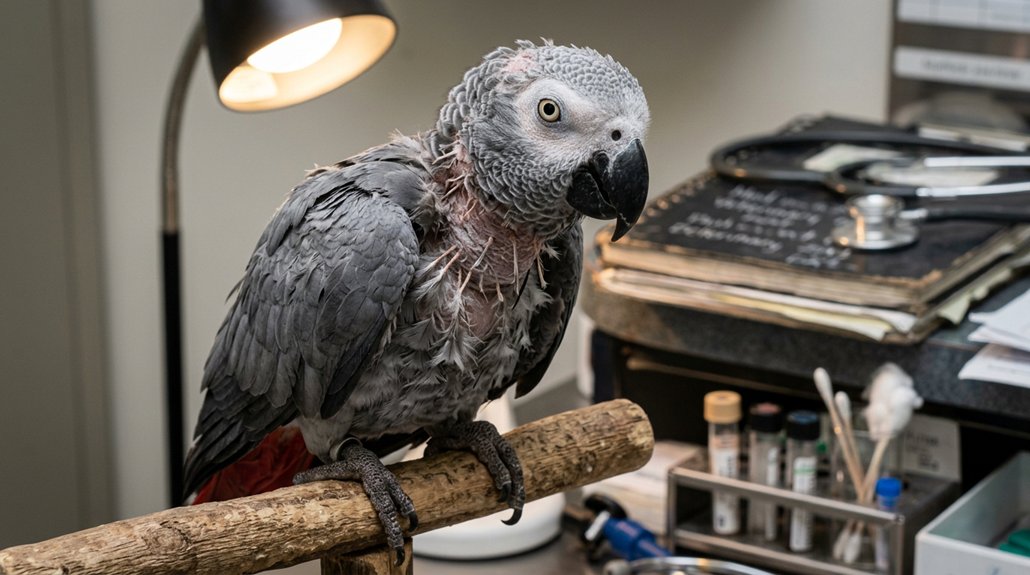
When a bird starts plucking, a veterinarian will first build a detailed history of the problem, including how long it’s been happening, any recent changes in routine, diet, housing, social contact, prior illnesses, and possible toxin or parasite exposure. Owner interviews help refine diagnostic algorithms and identify patterns that you might miss. A complete physical exam then checks feather-loss distribution, common sites like the chest, underwings, and inner thighs, plus skin lesions, feather shaft damage, parasites, and systemic signs. Routine tests often include hematology and biochemistry to assess liver, kidney, calcium, and nutritional status, with infectious disease testing when indicated. If the cause isn’t clear, your vet may use skin scrapings, cytology, cultures, radiographs, endoscopy, or a biopsy of skin and feather follicles, usually under anesthesia.
Treatment for Feather Plucking
Treatment for feather plucking starts with a full avian veterinary workup so you can identify and treat any underlying medical cause, including parasites, infection, nutritional deficiency, or organ disease. Once a diagnosis is made, you may need targeted therapies such as antibiotics, antifungals, antiparasitics, or nutritional supplementation, along with short-term physical barriers if self-trauma is severe. Long-term control usually depends on enrichment and prevention measures, including more foraging, better flight time, stable light-dark cycles, and reduced stress.
Veterinary Treatment Options
Veterinary treatment for feather plucking starts with a thorough avian exam and diagnostic workup, including history review, physical examination, blood testing, skin scrapings, viral screening such as PBFD testing, and imaging or endoscopy if an underlying systemic problem is suspected. | Finding | Common therapy | Goal |
| — | — | — |
|---|---|---|
| Infection | Antibiotics, antifungals, antiparasitics | Clear the cause |
| Nutritional deficit | Dietary supplementation, pelleted diet | Correct deficiencies |
| Behavioral component | Behavioral therapy | Reduce self-trauma |
If your bird has skin lesions, wound care matters too. Your vet may add omega-3s or multivitamins when bloodwork supports it, and may use a short-term collar or vest to protect regrowth. Psychotropic drugs such as clomipramine are reserved for multimodal cases, because medication alone rarely cures the problem.
Enrichment And Prevention
Even after medical causes are addressed, feather plucking often persists unless the bird’s environment and daily routine are corrected. You should increase daily foraging enrichment by 60–90 minutes with puzzle feeders, hidden food, and scatter feeding to reduce boredom-related plucking.
- Keep a stable light/dark cycle, with 10–12 hours of darkness and full-spectrum or natural sunlight exposure, to support normal hormone regulation.
- Provide a balanced pelleted diet plus fresh fruits, vegetables, and omega-3 sources, and control humidity at 40–60% with regular bathing to limit skin irritation.
- Rotate toys weekly, vary perches, and schedule several hours of supervised out-of-cage social interaction to meet cognitive and social needs.
Also remove aerosols, scented products, and Teflon fumes, since airborne irritants can trigger feather removal.
How to Prevent Feather Plucking
Preventing feather plucking starts with identifying and reducing the common triggers that drive the behavior. You should feed a balanced, species-appropriate pelleted diet, then add fresh fruits, vegetables, and omega-3 sources; nutritional supplements may be needed if your bird has vitamin A or fatty acid deficits. Increase daily out-of-cage time and provide foraging toys, puzzles, and varied perches to reduce boredom and destructive redirected behavior. Maintain 10–12 hours of light and dark, 40–60% humidity, and a quiet, stable location away from drafts, Teflon, aerosols, and strong scents. Support social bonding with predictable routines and regular interaction, but avoid handling that mimics sexual stimulation during breeding seasons. If plucking persists, spreads, or damages skin, schedule an avian veterinary exam promptly.
Frequently Asked Questions
How to Treat Feather Plucking in Birds?
You’ll treat feather plucking by first ruling out medical causes, then correcting diet, using environmental enrichment, behavioral therapy, and treating any infections or parasites; short-term barriers or specialist medication can help, but rarely alone.
How to Stop Birds From Feather Plucking?
You should stop feather plucking by scheduling an avian vet exam, improving diet with dietary supplements, and adding behavioral enrichment. Check for parasites, infection, or organ disease; then adjust lighting, handling, and sleep to reduce triggers.
Do Birds Feel Pain When Their Feathers Are Plucked?
Yes, they can feel bird pain when feathers are plucked, especially if follicles or skin are injured. You’ll see a neural response, and repeated plucking can cause inflammation, bleeding, and infection, worsening discomfort.
Do Birds Feathers Grow Back if They Are Plucked?
Usually, yes—your bird’s feathers can grow back. If the follicles aren’t damaged, feather regeneration typically occurs during molt; if you’ve got follicle damage, regrowth may be incomplete. For 1 bird, recovery can take months.
Conclusion
When you notice your bird pulling at its feathers, don’t ignore the message. Feather plucking can signal pain, stress, infection, or unmet behavioral needs, and the sooner you act, the better the outcome. With prompt veterinary care, a careful review of diet, environment, and routine, and consistent prevention, you can help your bird regain comfort. Like a storm settling after a long night, healthy feathers can return when the underlying cause is found and treated.