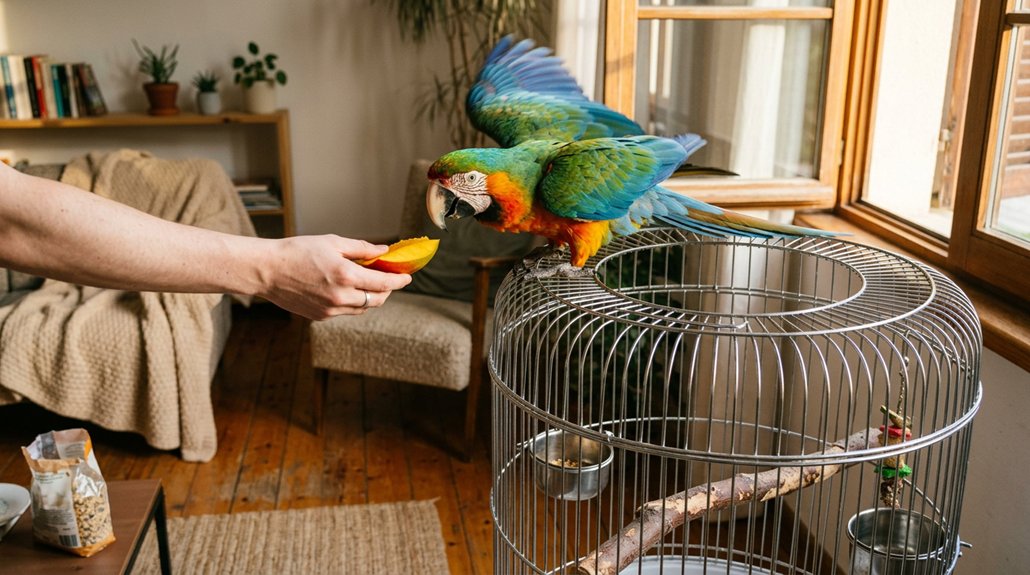
Owning a pet bird day to day means you build your schedule around dawn noise, feeding, cleaning, and social contact. You’ll usually provide fresh water, pellets, vegetables, and fruit at least twice daily, plus out-of-cage exercise, toys, and supervised interaction. You’ll also spot-clean droppings, wash dishes, and monitor behavior for stress or illness. The routine is repetitive but demanding, and the details matter more than most people expect, especially when you’re matching species needs.
Key Takeaways
- Birds are loudest at dawn and dusk, so expect daily noise bursts, contact calls, and a need for early morning care.
- Daily bird care includes twice-daily feeding, fresh water changes, and quick removal of messy food and droppings.
- Most pet birds need several hours of supervised out-of-cage time, social interaction, training, and foraging enrichment.
- A bird’s cage must stay clean, well-stocked with varied perches and toys, and rotated regularly to prevent boredom and foot problems.
- Owners must watch for illness, stress, aggression, or feather issues and seek an avian vet promptly when behavior changes.
What Owning a Pet Bird Feels Like
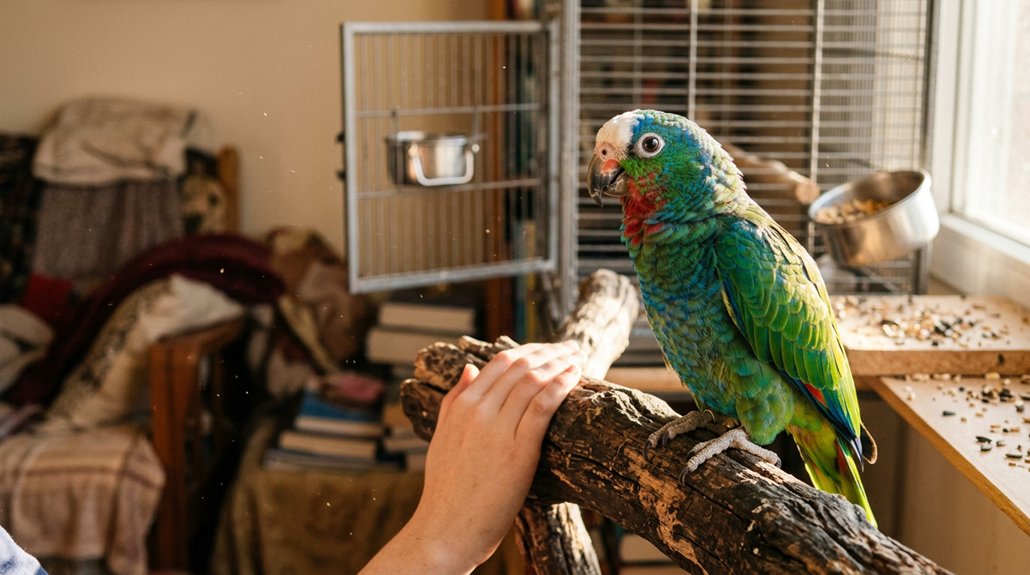
Owning a pet bird often feels like living with a highly intelligent, attention-seeking companion who needs daily interaction, fresh food and water, supervised exercise, and regular cage cleaning. You’re managing a social animal that may bond closely with one or more people, show a clear personality, and expect several hours of contact each day. If that need isn’t met, you may see boredom, noise, or feather-plucking. You’ll also learn to read body language, because a bird can be affectionate one moment and bite the next. Sensory enrichment and predictable sleep cycles help support stable behavior. The relationship can be rewarding, since many birds whistle, mimic, preen, and greet you with enthusiasm. It’s a long-term commitment that can last years, sometimes decades, and it changes as the bird matures.
Morning Routines, Noise, and Feeding
Mornings with a pet bird often start early, because many species are most active at sunrise and may vocalize loudly for 15–60 minutes unless the cage is covered with a light-blocking cloth overnight. Your sunrise rituals should include checking behavior, then removing the cover gradually if you use covering strategies to reduce dawn noise. Expect brief but intense activity: you’ll need to provide exercise and social time for 30–120 minutes, depending on species. Feed at least twice daily, ideally three times, using species-appropriate pellets with fresh fruits and vegetables, and offer clean water each feeding. Breakfast is usually messy, so clean trays and replace liners daily. Watch for alertness, clear eyes, smooth feathers, and normal vocalizing; puffed posture, discharge, or lethargy need veterinary attention.
Pet Bird Diet and Water Needs
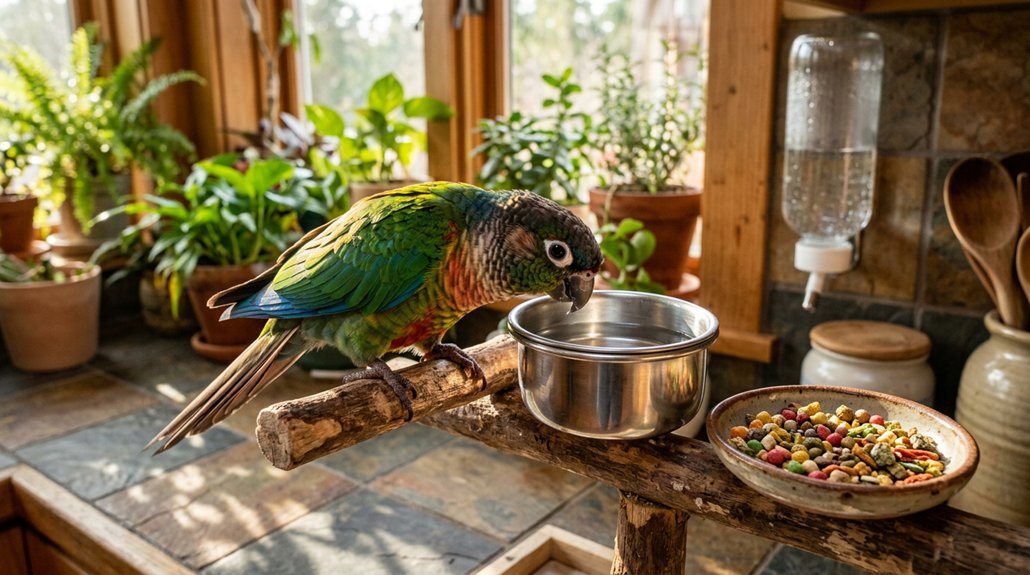
A proper pet bird diet should be built around species-appropriate pellets rather than seed alone, because pellets help provide balanced nutrition and reduce the risk of nutrient deficiencies. You should use Balanced pellets as the dietary base, then add fresh vegetables and fruits daily, with dark leafy greens, carrots, bell peppers, and small amounts of apple supplying vitamins and fiber. Treats like seeds, nuts, and human foods should stay under 5–10% of calories to prevent obesity and imbalance. You’ll need clean water several times a day; replace it at least twice daily and wash the dish each morning for good Water hygiene. If you change foods, shift slowly over 2–3 weeks. Consult an avian veterinarian for species-specific needs, breeding, young, senior, or unexpected weight loss.
Cage Setup and Daily Exercise
You should provide a cage that’s at least twice your bird’s wingspan in width and large enough for flapping, with perches of varying diameters and textures placed to support movement and foot health. Position safe toys and feeding areas so droppings don’t contaminate food or water, and keep the cage clean with daily liner changes and regular disinfection. Your bird also needs daily supervised out-of-cage exercise, or a suitably large flight cage or aviary, to meet its activity requirements.
Cage Size And Placement
For safe daily housing, choose a cage that permits at least one full wingbeat in every direction; wider is better than tall, and small parrots such as budgies or cockatiels need a minimum of about 30″ wide x 18″ deep x 18″ high, with larger species requiring substantially more space. You should place it at or above eye level in a well-lit room with natural light, but away from drafts, kitchens, and direct midday sun. Keep food, water, and a travel crate accessible without crowding the flight area. Provide several perches of varying diameters so your bird can move, hop, and exercise safely. You’ll also need supervised out-of-cage flight or play for several hours daily. Spot-clean droppings and dishes each day, and perform a full cage clean weekly to maintain hygiene and usable space.
Safe Perches And Toys
Multiple perches of varied diameter and material help keep your bird’s feet healthy and reduce pressure sores. You should build perch diversity with 4–6 sizes in natural wood, rope, and manzanita, placed at different heights. Keep one clear horizontal path so the cage isn’t obstructive.
| Item | Use | Care |
|---|---|---|
| Wood perch | Foot exercise | Replace if cracked |
| Rope perch | Grip variety | Replace if frayed |
| Toy rotation | Reduce boredom | Weekly swap |
Offer chew blocks, foraging puzzles, and non-toxic plastic or stainless steel toys. Practice toy sanitation weekly and remove any item with lead, zinc, Teflon, or toxic finishes. Install a stable play top or stand for supervised, out-of-cage time. Clean perches weekly and replace damaged parts immediately.
Daily Flight And Exercise
A well-designed cage supports daily movement, but it can’t replace free flight and exercise. You should provide a cage large enough for wing stretches and short flights; for small parrots, about 30″ wide × 18″ deep × 30″ high is the minimum, though bigger is better. Add varied perches, climbing toys, and safe foraging to promote movement. You’ll also need supervised out-of-cage time in a bird-proofed room for 2–4 hours daily, especially for social parrots. This flight enrichment reduces boredom and supports wing conditioning, muscle tone, and coordination. Clean play areas and cage bottoms each day, and keep a separate isolation cage for illness. Increase flight training gradually with positive reinforcement; only clip wings for safety if your avian vet advises it.
Cleaning Tasks That Keep Birds Healthy
You should change food and water twice daily, and remove uneaten fresh produce within a few hours to limit bacterial growth. Spot-clean droppings and debris every day, then disinfect the cage at least weekly with a bird-safe cleaner or diluted vinegar solution. Clean toys, perches, bowls, and nearby surfaces on a regular schedule to reduce feather dust, bacterial buildup, and respiratory risk.
Cage Cleaning Routine
Clean cages are essential to daily bird health, and a simple routine helps prevent bacterial growth, mold, and injury. Each day, you should remove droppings, soiled liner, and uneaten fresh food, then wipe food and water dishes and surrounding surfaces. If you use substrate alternatives, change them promptly when damp or contaminated. Use daily disinfecting only on bird-safe surfaces as needed, not on every item. Once a week, remove perches, toys, and trays, scrub them with hot water and a bird-safe disinfectant or a 10:1 water-vinegar mix, rinse well, and dry completely. Monthly, disassemble the cage, soak bars and grills in hot soapy water, clean crevices, and inspect for wear, sharp edges, or toxic paint chips. Keep separate tools for sick or new birds.
Fresh Food And Water
Fresh water should be offered twice daily, ideally in the morning and evening, with the bowl replaced each time and rinsed with hot water and bird-safe soap to limit bacterial growth. You should also provide a balanced daily diet: species-appropriate pellets, measured seed portions, and 1–2 tablespoons of chopped vegetables and fruit, adjusted by species, to prevent malnutrition. Remove uneaten fresh food after 2–4 hours, and discard moldy or discolored items immediately to avoid fungal toxins. In warm periods, monitor seasonal hydration closely. If you use foraging waterplays, keep them clean and shallow so they don’t harbor contaminants. Deep-clean dishes, perches, and stainless-steel toys weekly with bird-safe disinfectant or diluted bleach, then rinse well.
Feather Care And Hygiene
Feather care starts with daily hygiene, because clean plumage and a clean environment help prevent illness. You should support feather hygiene by:
- Spot-clean droppings and food debris from perches, trays, and the cage bottom every day to limit bacteria and ammonia.
- Offer a shallow bath or misting 2–3 times weekly; some species benefit from daily water access. This helps preserve waterproofing and remove excess oil from the preen gland.
- Check feathers and skin for loss, mites, discharge, odor, or injury, and book an avian vet exam if anything seems abnormal.
Each week, scrub the cage, dishes, toys, and perches with bird-safe cleaner, then replace substrate. Use grooming tools carefully, trim nails when needed, and leave wing or feather care to your vet.
Bonding, Social Time, and Boredom Prevention
Bonding with your bird requires regular, predictable social contact, not just occasional handling. Use trust building techniques: short, calm sessions several times daily, consistent cues, and gentle praise. | Need | Why | Action |
| — | — | — |
|---|---|---|
| Daily contact | Reduces anxiety | Schedule multiple brief sessions |
| Enrichment | Prevents boredom | Rotate toys and hide pellets |
| Supervised play | Supports tameness | Offer safe out-of-cage time |
With enrichment scheduling, you can prevent screaming, feather-plucking, and destructive chewing. Birds are flock animals, so routine matters; a single bird may need hours of attention, while a compatible pair still needs human interaction to stay tame. Watch for increased noise, repetitive movements, or aggression, and respond by adding social time, changing toys, or consulting an avian vet or behaviorist.
Bird Behavior You’ll See Every Day
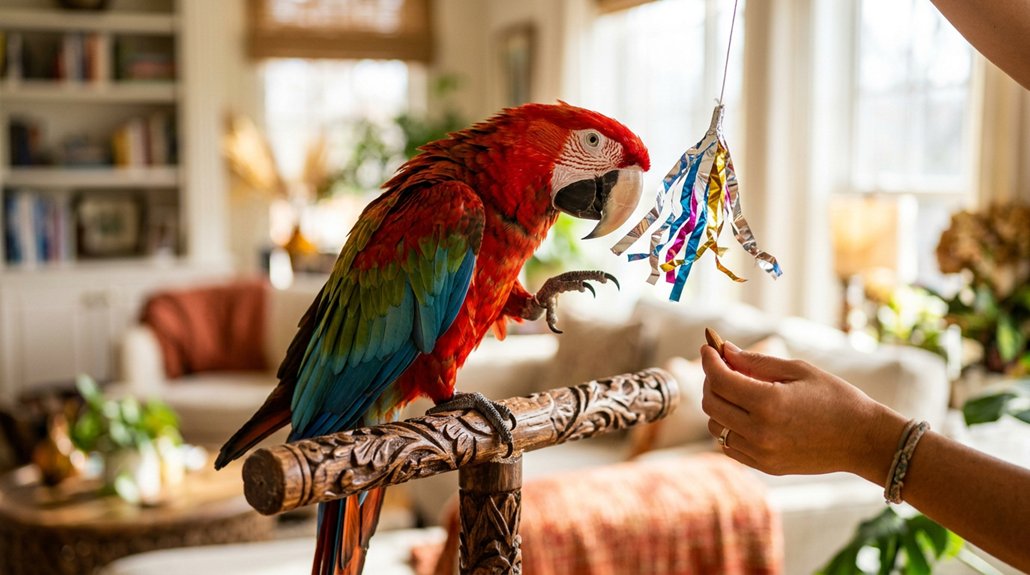
You’ll usually see your bird’s highest activity at dawn and dusk, when it’s likely to vocalize, fly, or play in short bursts. If you keep a social species, you’ll also notice flock-style behavior, including constant contact calls, mutual attention, and a strong need for daily interaction. Day-to-day noise, brief squabbles, and toy guarding are common, but persistent aggression or a sudden change in behavior can signal a problem.
Morning Energy Bursts
Near dawn, many pet birds become noticeably more active, often with loud vocalizations, hopping, and brief flights within 30–60 minutes of sunrise. These dawn bursts are predictable and usually reflect crepuscular activity plus auditory stimulation from early light changes. You’ll often see a short morning sequence that includes preening, bathing or misting, and wing-stretching for 10–30 minutes. Then, within the first hour you’re up, your bird may whistle, beg, tap its beak, or hop onto your hand for attention.
- Offer fresh water and food promptly.
- Include pellets plus fruit or vegetables.
- Give 30–120 minutes of out-of-cage time or enrichment if your bird’s highly social.
Social Flock Behavior
Because most pet birds are flock animals, they need daily social contact to stay behaviorally stable, and you should expect to spend at least 1–3 hours a day engaging, training, or supervising out-of-cage time. You’ll see constant communication through calls, whistles, tail flicking, fluffed feathers, and head bobbing, and these cues help you judge contentment, stress, or early illness. In single-bird homes, your bird may bond intensely to you and demand frequent attention; in groups, species hierarchy and communal preening often support calmer, species-specific interactions. If you don’t provide enough enrichment, routine, and foraging, you may see screaming, feather-plucking, or redirected aggression. Many species are most active at dawn and dusk, so plan key interaction periods around sunrise and sunset.
Daily Noise And Squabbles
Daily noise is part of normal bird ownership: many species are most vocal at dawn and dusk, with loud calls or screeches around sunrise and sunset, and larger parrots such as cockatoos and conures may be audible throughout a neighborhood. You’ll also hear budgies and cockatiels chatting, whistling, or mimicking words, while canaries and finches sing more softly. Territorial spikes can bring screaming, lunging, or feather-fluffing, especially during mating season or if your bird thinks there’s a rival.
- Expect brief cage-mate squabbles, including chasing or pecking.
- Reduce boredom with out-of-cage time, toys, and foraging.
- Check noise ordinances early to limit neighbor complaints.
If behavior escalates, separate birds promptly to prevent injury and assess triggers like excess attention or touch.
How to Choose the Right Pet Bird
Choosing the right pet bird starts with an honest match between the bird’s needs and your ability to meet them over time. You should use temperament matching to compare a species’ social drive, noise, and handling tolerance with your routine. For first-time owners, budgies, cockatiels, doves, lovebirds, and parrotlets are often more manageable, but they still need species-specific research. Check lifespan carefully: finches may live 4–5 years, parakeets up to 18, cockatiels often 16 or more, and larger parrots decades longer. If you can’t commit long term, don’t choose one. Plan for daily interaction, balanced nutrition, enrichment, annual avian exams, and higher specialist costs. Use space forecasting to make certain the bird’s housing, activity level, and noise profile fit your home and schedule realistically.
How Much Space and Noise Birds Need
Even a small pet bird needs more room than many new owners expect: its cage should be large enough for full wing-stretching and short flights, and a single cockatiel, for example, should have a cage at least 24″ x 18″ x 24″ plus several hours of supervised out-of-cage exercise each day. In practice, you’ll also need to assess apartment acoustics, because dawn-and-dusk calling can carry through walls. Larger parrots may scream; budgies are usually moderate, while finches and canaries are less intrusive. For households with more than one bird, give each bird its own cage and add a larger flight space if possible.
A bird’s cage should allow full wing-stretching, plus daily out-of-cage exercise, and noise can travel through walls.
- Place cages at or above eye level.
- Keep them away from drafts, kitchens, smoke, and Teflon.
- Use soundproofing tips if noise is a concern.
Vet Care and Long-Term Commitment
A bird’s care doesn’t stop after purchase, so you should schedule a thorough avian veterinary exam soon after acquisition and plan for annual wellness checks, or more frequent visits if the bird is sick or geriatric. Use an avian specialist familiar with your species, because psittacosis, PBFD, feather plucking, and nutritional deficiencies often need bird-specific diagnostics and treatment. Your veterinary budgeting should cover routine exams, bloodwork, fecal PCR, and emergency care, which can total hundreds to thousands of dollars over a bird’s lifetime. Preventive care lowers risk: feed a balanced pellet-heavy diet, avoid toxic fumes, maintain nail and wing trims, offer baths, and quarantine new birds. Lifespan planning matters, too; cockatiels, budgies, and larger parrots may live decades, so you’ll need long-term medical plans and possible rehoming contingencies.
Frequently Asked Questions
What Is the 3 3 3 Rule for Birds?
The 3-3-3 rule says your bird may need 3 days to decompress, 3 weeks to test boundaries, and 3 months to settle. You’ll see behavioral milestones and bonding rituals as it adjusts gradually.
Do Birds Like Being Kept as Pets?
Yes—many birds can like being pets if you provide social bonding, mental stimulation, space, and daily interaction. You’ll see contented behaviors like singing and preening; without care, they can show stress or aggression.
What Is the 60/40 Rule for Birds?
The 60/40 rule means you feed your bird about 60% pellets and 40% fresh fruits, vegetables, and occasional treats—why not support diet balance and environmental enrichment? You’ll usually shift gradually, then monitor weight and health.
Can Pet Birds Be Left Alone for a Week?
No, you shouldn’t leave pet birds alone for a week. You’ll need daily care for food, water, cleaning, social enrichment, and emergency planning. Arrange a trained sitter or avian boarding for safe coverage.
Conclusion
Owning a pet bird means you’re committing to daily routines, constant attention, and careful observation. You’ll manage feeding, cleaning, exercise, and noise, while also tracking behavior and health changes. If you choose wisely, set up the right space, and provide regular veterinary care, you can support a bird’s well-being for years. As the saying goes, “An ounce of prevention is worth a pound of cure.” With birds, that’s especially true.