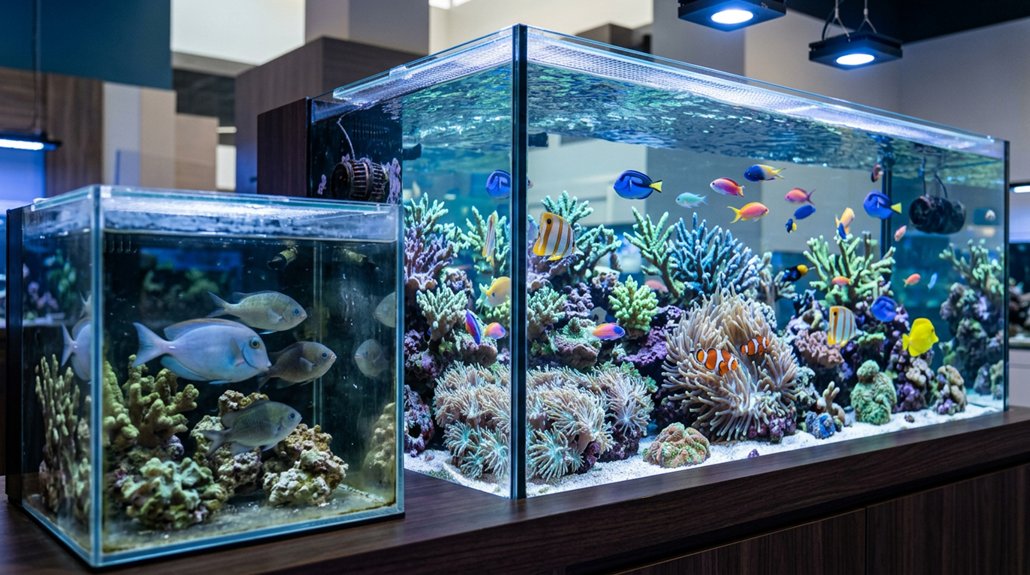
Tank size affects which fish you can keep together because more water buffers ammonia, nitrite, temperature, and pH swings, while also giving fish more swimming room and territory. You should size for adult fish, not juveniles, since cramped tanks raise stress and aggression, especially with cichlids, gouramis, and schooling species. Wider tanks also improve oxygen exchange and reduce conflict. In a properly sized aquarium, compatible fish act more naturally, and the best combinations start to make sense.
Key Takeaways
- Larger tanks stabilize water chemistry and temperature, making it easier to keep compatible fish together.
- Stock fish by adult size, not juvenile size, because many species outgrow small tanks and become incompatible.
- Wide tanks improve swimming space and oxygen exchange for schooling fish, reducing stress and conflict.
- Territorial species need more room and cover, since cramped tanks increase aggression and injury.
- Nano tanks suit only small, peaceful species; shrimp and micro fish do best with careful stocking and frequent maintenance.
How Tank Size Affects Fish Compatibility
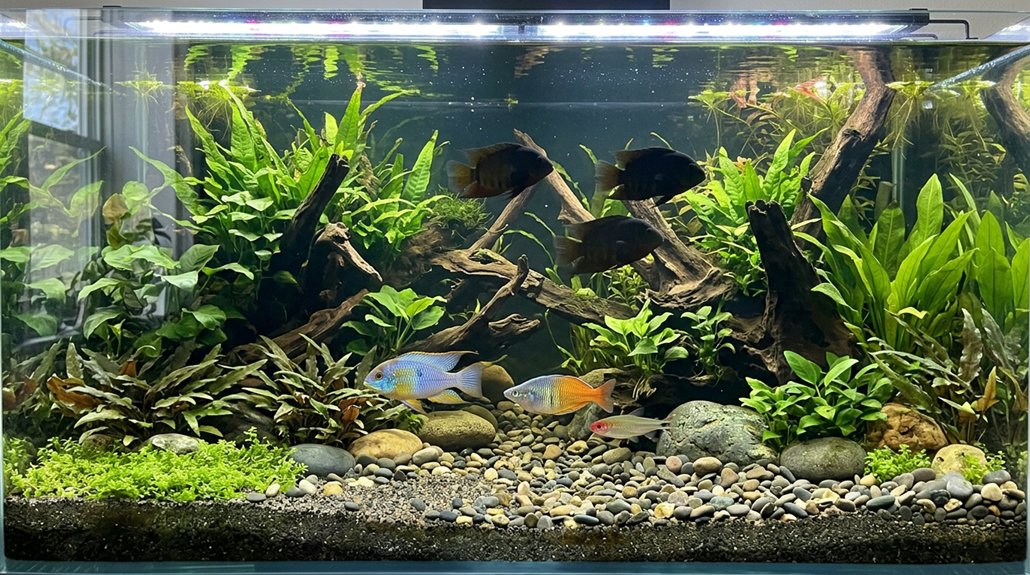
Tank size directly shapes which fish can coexist by influencing waste dilution, water stability, and available territory. In your tank, larger volumes—55 gallons or more—buffer ammonia, nitrite, and temperature swings, so mixed communities and semi-aggressive species like angelfish, loaches, and plecos can share space more safely. Schooling fish need room to move; tetras, danios, and rasboras do best in groups of six or more with a longer, wider footprint, not a tall layout. Nano tanks under 10 gallons restrict you to tiny, peaceful fish or invertebrates and require strict filtration needs and frequent maintenance. The one-inch-per-gallon rule is only a rough minimum. In larger setups, hiding places and lighting considerations help reduce aggression and protect shrimp or other cautious invertebrates.
Choose the Right Tank Size for Adult Fish
You should size the aquarium for the fish’s adult length, not its store size, because many species grow substantially after purchase. A single goldfish, for example, can reach 12 in (30 cm) and needs 75+ gallons (285+ L), so a 10–20 gallon starter tank isn’t adequate. For small peaceful fish, the one-inch-per-gallon rule is only a rough minimum, and you’ll need more space for schooling, active, or territorial species to maintain water quality and reduce aggression.
Adult Size Matters
Because fish keep growing after purchase, stocking decisions should always be based on adult size rather than what’s in the store. You need to evaluate adult growth, not juvenile length, when doing space planning. A 1-inch goldfish can reach 12 inches and may need 75+ gallons as an adult. Use the one inch of adult fish per net gallon rule only as a minimum, then expand capacity for territorial or deep-bodied species like angelfish and cichlids. Schooling fish such as tetras, danios, and rasboras should be grouped in six or more and sized for adult body length, which often pushes tanks to 20–30+ gallons. Large-mouthed predators, including bichirs and arowanas, need tank dimensions that support adult swimming space. Remember usable water volume is less than labeled capacity.
Plan For Growth
Planning for growth means sizing the aquarium for a fish’s adult length, not its size at purchase. You should assume future growth in every stocking decision, because many juveniles expand from 1 inch to 12 inches or more. The one-inch-per-net-gallon rule is only a rough minimum; territorial or large-bodied species, including a common goldfish, need far more water. If you keep tetras or danios, provide groups of six or more in 20+ gallons to support schooling behavior. Remember that substrate and décor reduce usable capacity, so calculate actual volume, not label size. Larger tanks are preferable because they stabilize chemistry, dilute waste, and buffer feeding adjustments as bioload rises. Use growth monitoring to time planned upgrades before crowding begins.
Why Aquarium Shape Matters for Fish Health
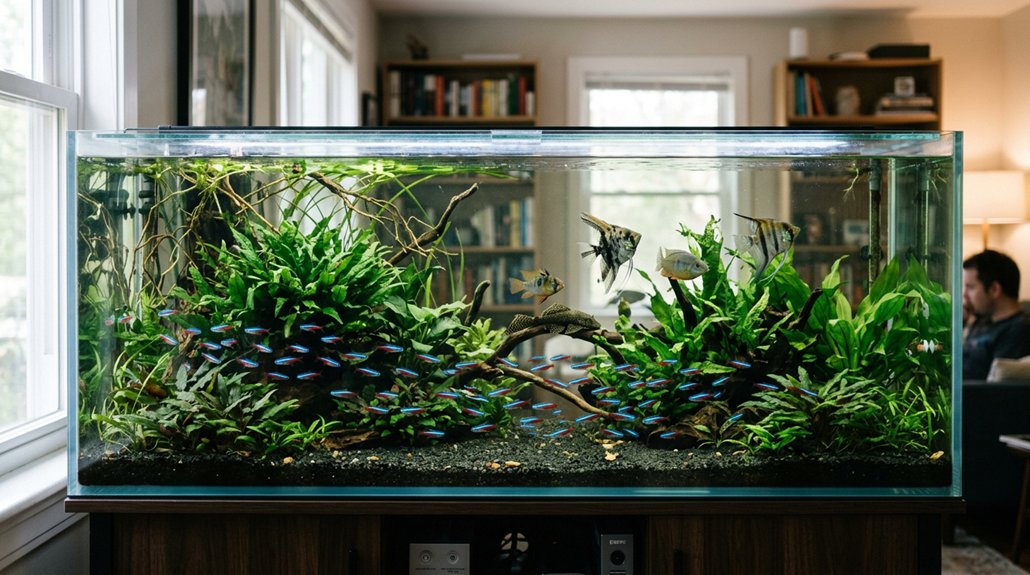
Aquarium shape affects fish health because it determines how much usable swimming space, surface area, and territorial structure the tank provides. If you choose a wider, low-profile tank, you increase horizontal swimming room and create clearer swimming lanes for active schooling fish like danios, tetras, and barbs. That layout also improves surface dynamics, since a larger water-air interface enhances oxygen uptake and CO2 removal; a 48 in aquarium will usually gas exchange better than a tall, narrow tank of equal volume. Tall tanks constrain lateral movement and suit vertically oriented species better. A larger footprint also lets you place décor and cover more effectively, creating distinct territories and hiding sites. In nano tanks, limited surface area and volume can destabilize conditions and restrict normal movement.
Match Tank Size to Fish Temperament
When you match tank size to fish temperament, you’re really matching space to behavior: territorial species such as many cichlids and male gouramis need far more room than the old “1 inch per gallon” rule suggests, with at least 20–30 gallons (80–120 L) for medium cichlids and 55+ gallons (200+ L) for large or especially aggressive adults. You should use territorial spacing to let each fish establish boundaries without constant contact, and larger volume helps dilute wastes while giving you room to reposition décor and break sightlines. For schooling species, schooling dynamics improve in longer, wider tanks stocked with at least six individuals, typically 20–30 gallons or more. That same volume also buffers stress for peaceful community fish and lowers conflict when temperaments don’t align, reducing chronic aggression and injury.
Best Fish for Small and Nano Tanks
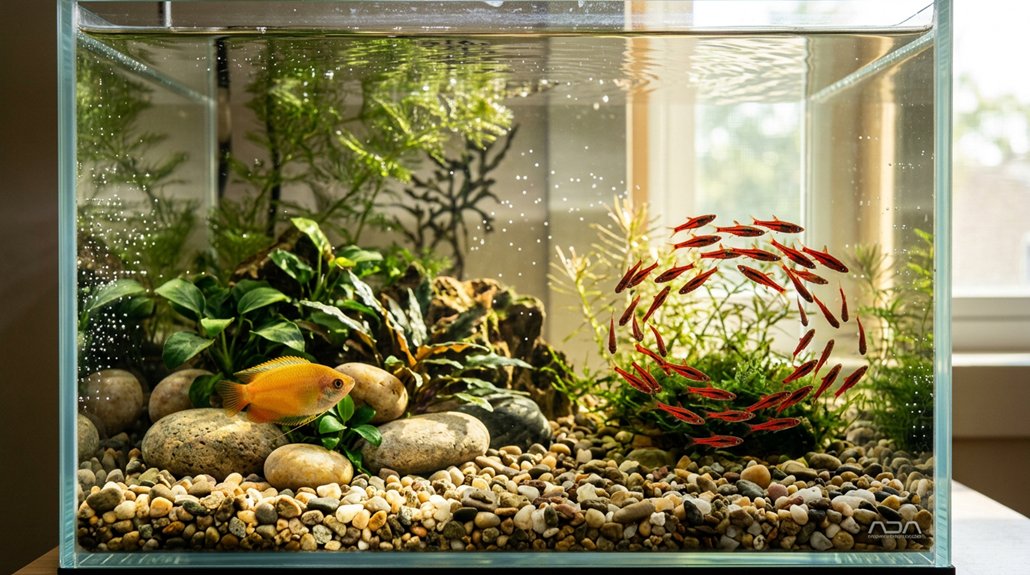
In a nano tank, you’re managing limited thermal and chemical buffering, so temperature, ammonia, and nitrate can shift quickly and stress fish. You’ll get the most stable results with very small, hardy species such as shrimp, nerite snails, pygmy corydoras, Endler’s livebearers, or micro rasboras, while avoiding larger schooling fish that need groups and more volume. Stock conservatively by adult size, not juvenile size, because even a small waste load can destabilize water quality and reduce long-term compatibility.
Nano Tank Challenges
Nano tanks can be rewarding, but they’re unforgiving: with less than 10 gallons of water, temperature and chemistry can shift quickly, so you’ll need frequent 20–30% water changes, daily monitoring, and conservative stocking to keep fish healthy. Expect temperature swings to amplify stress, especially in cramped systems with filtration limits and low error margins. Your safest approach is a planted balance with high surface area, stable flow, and species that stay under about 1–1.5 inches as adults. Avoid relying on the “one inch per gallon” rule; in nanos, territoriality and bio-load matter more than length. Even decorations and substrate reduce usable volume, so plan for the tank’s actual capacity. If you choose invertebrates or a single compatible fish, frequent monitoring remains essential.
Small Fish Choices
For nano tanks under 10 gallons, your safest fish choices are very small, peaceful species that reach only about 1–2 inches as adults, such as guppies, endlers, chili rasboras, ember tetras, and other pygmy or killifish species.
| Species type | Key note |
|---|---|
| Guppies/endlers | dwarf livebearers, active, small |
| Chili rasboras | micro schooling, very peaceful |
| Ember tetras | best in groups of six+ |
| Pygmy killifish | tiny, low-conflict option |
You should prioritize adult size over juvenile size, since cramped adults can’t self-separate. Micro schooling fish need conspecific groups to show normal behavior, but keep the bioload modest. Avoid territorial cichlids, loaches over 4–5 inches, plecos, and freshwater sharks because they exceed the tank’s footprint. Shrimp and small snails can work as clean-up crew if tankmates aren’t fin-nippers.
Stocking And Stability
Small fish are only part of the equation; stocking density and tank stability matter just as much in nano systems. In tanks under 10 gallons, you’ll need tighter monitoring because temperature and ammonia can shift fast, so water changes must be frequent. Follow stocking guidelines conservatively: 1 inch of adult fish per net gallon is a floor, not a target, and reduce further for territorial species. Prefer truly small, peaceful fish or invertebrates, and keep schooling species in groups of 6+ only if space allows. Avoid goldfish, cichlids, plecos, bichirs, and freshwater sharks under 30 gallons to protect water stability.
- Less stress
- Fewer losses
- Cleaner water
- Safer growth
Best Tank Sizes for Community, Cichlid, and Shrimp Tanks
Choosing the right tank size sets the stage for stable water chemistry, lower aggression, and healthier stocking levels. For peaceful community fish, you should target at least 29–30 gallons so schooling requirements can be met with groups of six or more, and ammonia, nitrate, and pH stay more consistent. Shrimp tanks do best at 10–20 gallons or larger, especially with plant dense refuges and hiding spaces; tanks under 10 gallons swing fast and can raise mortality. If you keep African cichlids, start at 55 gallons or more to provide territory and limit conflict. South and Central American cichlids usually need 40–75+ gallons, depending on adult size. When mixing shrimp with larger fish, choose 20–30 gallons minimum and add heavy cover.
Frequently Asked Questions
Does Tank Size Affect Fish Size?
Yes—tank size can affect your fish’s growth, not its genetics. In cramped tanks, tank stress and poor water quality create growth limits, causing stunting and deformities; larger tanks help them reach normal adult size.
Can I Put 2 Betta Fish in a 20 Gallon Tank?
No, you shouldn’t put two male bettas in a 20-gallon tank; they’ll usually fight. A male pairing isn’t recommended. A sorority setup uses females only, and even that needs careful planning and monitoring.
How Many Fish Can I Keep in a 200 Litre Tank?
You can keep about 52–53 inches of adult fish total, but practical stocking levels drop to 26–40 inches for territorial species; your water chemistry, filtration, and maintenance’ll decide whether that 200-litre tank thrives.
What Size Tank Do Most Fish Need?
Most fish need at least a 20- to 30-gallon tank, though adult size, activity, and temperament matter more than store size. You’ll also need adequate water flow and filtration capacity for stable, healthy conditions.
Conclusion
In the end, you learn the hard way that fish do not care about your décor choices—they care about swimming room, oxygen exchange, and not being bullied in a glass shoebox. Match tank size to adult length, body shape, and temperament, or you’ll create a miniature aquatic reality show. Bigger, appropriately shaped tanks usually mean fewer stress behaviors and better compatibility. Pick the right setup, and your fish can coexist without filing complaints.