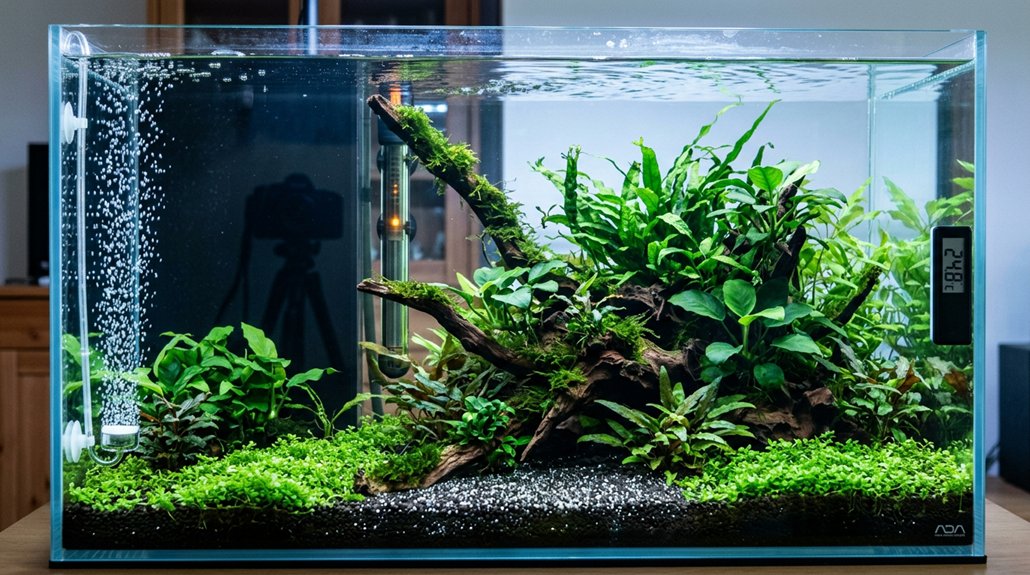
You need a heater for most freshwater tanks if you keep tropical fish. Species like bettas, guppies, neon tetras, and gouramis usually do best around 75–80°F, and unstable room temperatures below about 60–65°F can stress them. You may skip a heater for true coldwater fish, such as goldfish, White Cloud minnows, or some danios. If your room swings several degrees day to night, heating is usually the safer choice, and the details matter.
Key Takeaways
- Tropical freshwater fish usually need a heater to keep water around 75–80°F and avoid stress.
- Coldwater species like goldfish and White Cloud minnows often do fine without supplemental heating.
- Room temperature stability matters; tanks below 60–65°F or with big daily swings usually need heating.
- Match the heater to the least tolerant species in mixed tanks, not the hardiest one.
- Use a thermometer daily, and size the heater conservatively with good water flow and redundancy.
Do You Need a Heater for Your Fish Tank?
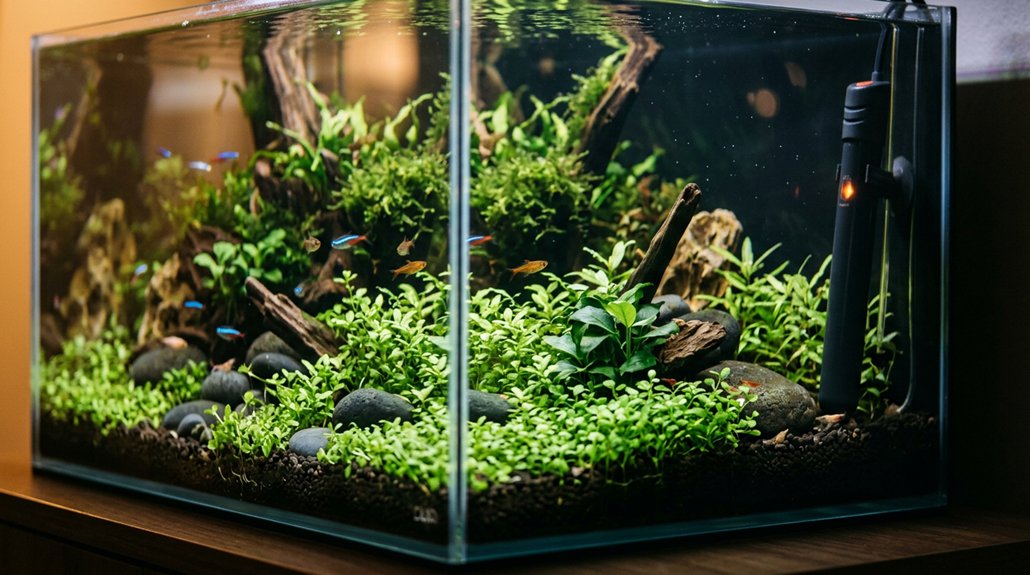
Whether you need a heater depends on the fish you keep: most tropical species, including bettas, tetras, and many livebearers, need stable water around 75–78°F (24–26°C), while true coldwater fish such as goldfish can usually tolerate lower temperatures and often don’t need one. If your room stays above about 60–65°F (15–18°C) and you keep coldwater-tolerant fish, you may not need heating. But if you keep tropical fish, you’ll want controlled warmth to prevent stress, disease, and behavioral changes. Heaters also reduce seasonal adjustments and daily swings, especially near drafts, exterior walls, or doors. If you run a tank unheated, check temperature daily and keep a spare heater ready. For heated setups, size equipment conservatively, about 3–5 watts per US gallon, and consider redundancy.
Which Fish Need Aquarium Heaters?
Tropical fish almost always need aquarium heaters because they thrive in stable water around 74–80°F (23–27°C); this includes neon tetras, guppies, most gouramis, and bettas. You should also heat tanks for sensitive species such as discus and breeding livebearers, where breeding stability depends on keeping temperature within 1–2°F. If your room drops below 60–65°F (15–18°C) or swings sharply overnight, a heater reduces stress and supports temperature acclimation. Coldwater fish like common goldfish, white cloud mountain minnows, and many loaches usually don’t need one in a temperate home because they prefer cooler water around 60–72°F (15–22°C). In mixed-species aquariums, set the heater to the needs of the least tolerant fish; the tank’s temperature has to suit every inhabitant.
Which Fish Can Live Without One?
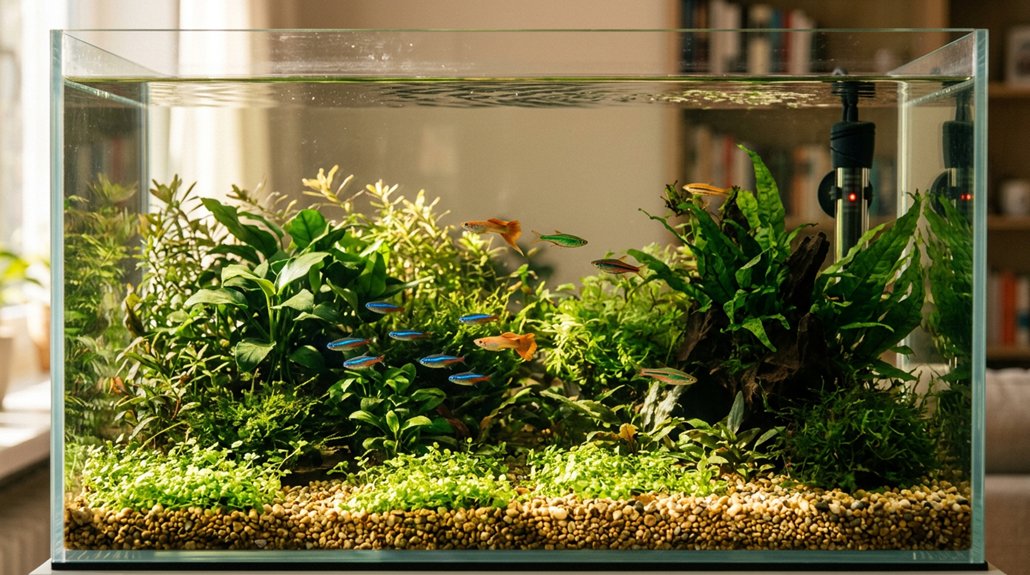
You can keep true coldwater species, such as common goldfish and white cloud mountain minnows, without a heater if your tank stays near 60–72°F (15–22°C). Some hardy livebearers and community fish, including certain platies, endlers, and danios, can also tolerate unheated rooms above about 60°F (15°C), but their growth and breeding often decline as temperatures fall below ~72°F (22°C). In contrast, tropical fish like bettas, neon tetras, and discus usually need stable water around 75–80°F (24–27°C), so you’ll need a heater to prevent chronic stress.
Coldwater Fish Choices
True coldwater fish can often live comfortably without a heater, but only when their species-specific temperature range matches your home’s ambient conditions. You can keep common or fancy goldfish at about 60–74°F (15–23°C), and many White Cloud Mountain minnows or danios at roughly 64–72°F (18–22°C) if room temperature stays stable. Coolwater loaches, including many hillstream loaches, usually don’t need supplemental heat either. Coldwater-tolerant shrimp and snails may also work, though lower temperatures can slow metabolism, growth, and coldwater breeding. For reliable results, check the care sheet’s min–max range, then compare it with your home’s lowest overnight temperature before you omit a heater. Seasonal acclimation matters, because gradual temperature shifts reduce stress and help you confirm the tank will remain within safe limits.
Tropical Fish Needs
Because most tropical freshwater fish need stable warmth, species such as tetras, many gouramis, and bettas usually require a heater to hold the tank near 24–28°C (75–82°F) in typical homes. You should match temperature preferences closely, because chronic cooling limits thermal acclimation and raises stress.
- A neon tetra drifting in warm water
- A betta hovering beside a heater guard
- Gouramis cruising under steady light
- Endlers flashing in a cooler planted tank
- Corydoras sifting sand at mild room temperature
You can sometimes skip a heater for hardy platies, endlers, or corydoras if your room stays above 20°C (68°F) with little nightly drop, but monitor daily. Below about 24°C, bettas and small tetras become vulnerable. For breeding and long-term health, use a heater rated 3–5 watts per gallon.
What Room Temperature Is Safe?
For most tropical freshwater fish, a tank temperature of about 24–27°C (75–80°F) is the target, so a room that stays above roughly 20°C (68°F) may still be only marginally safe for some species. Your key variable is ambient variability, not just the average. | Room condition | Risk level |
| — | — |
|---|---|
| 20–22°C steady | Borderline |
| 15–18°C steady | Acceptable for goldfish |
| >3°C daily swing | High |
If your room drops below 16°C (60°F) or swings several degrees day to night, temperature-sensitive fish can experience chronic stress. Use insulation strategies like tank placement away from drafty doors, exterior walls, and direct sun. Monitor both room and water with thermometers; if water differs from target by 2–3°C (4–6°F) regularly, your room isn’t holding stable enough.
When Is a Heater Worth Adding?
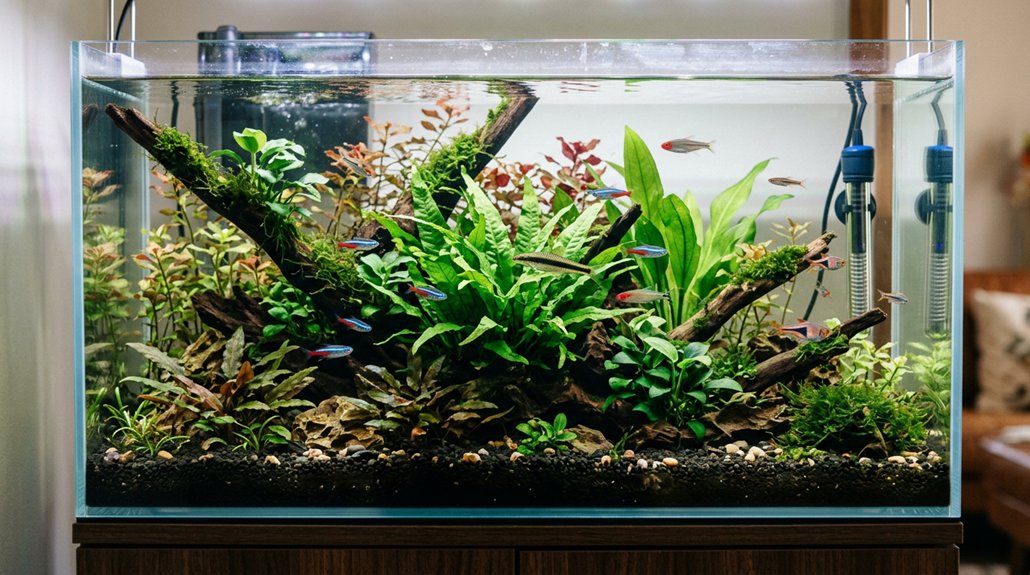
You should add a heater when your fish need a stable 24–28°C (75–82°F), which is typical for tropical species like bettas, tetras, gouramis, and many livebearers. If your room drops below about 15–18°C (59–64°F) or swings near doors and windows, a heater helps prevent temperature fluctuations that can stress fish and suppress normal behavior. For sizing, use about 3–5 W per gallon (0.8–1.3 W per litre), and consider a second heater or spare for large tanks or valuable stock.
Tank Temperature Stability
Tank temperature stability matters more than a single “ideal” number, since many tropical community fish can do well without a heater if the room stays consistently around 20–26°C (68–79°F) with no sudden drops. Your tank’s thermal inertia helps buffer minor changes, but draft prevention still matters near windows, doors, or exterior walls. If nighttime or winter lows slip below 18–20°C (64–68°F), add heat. Use multiple lower-wattage heaters in larger systems for redundancy; under 55 gallons, about 5 W per gallon is a practical rule.
- steady room air
- cold glass pane
- protected tank corners
- thermometer reading daily
- spare heater nearby
If you run heater-free, track temperature closely and replace a failing heater fast.
Species Heating Needs
Even with stable room conditions, whether a heater’s worth adding depends mainly on the species you’re keeping. Tropical freshwater fish such as tetras, guppies, bettas, and discus usually need 24–28°C (75–82°F), so you’ll typically need heating to keep metabolic rates in the proper range and avoid chronic stress. Coldwater species like common goldfish and many danios usually tolerate 18–22°C (64–72°F) and often don’t need one. In mixed tanks, set the heater for the most temperature-sensitive fish, not the hardiest. Stable warmth also supports growth and can act as one of several breeding triggers in species that respond to seasonal cues. As a practical guide, use about 3–5 W per US gallon, place the heater near filter flow, and keep a thermometer in the tank.
Room Conditions Matter
Room temperature is a major factor in deciding whether a heater is necessary, because stable ambient conditions can be enough for some species while others still need active temperature control. If your room stays above 18°C (64°F), you can often keep hardy temperate fish unheated, but verify species-specific limits first. For tropical fish, aim for 24–28°C (75–82°F); if your room dips below that, a heater’s worth adding.
- Tank beside a window
- Cold air leaking under a door
- Uninsulated exterior wall
- Heater wiring near the filter
- Spare heater on a shelf
Your room layout should avoid seasonal drafts and cold spots, since localized swings stress fish even in a warm house. In 15–18°C rooms, use a correctly sized heater, about 5 W/US gallon, or dual units for redundancy, especially if you’ll be away.
How Can You Warm a Tank Without a Heater?
Without a dedicated heater, you can still reduce heat loss by placing the aquarium in a consistently warm room—ideally above about 18°C/64°F for many tropical species—while keeping it away from exterior walls, doors, and drafts. Use a tight-fitting hood and add foam-sheet or bubble-wrap insulation to the back and side panels; this helps retain ambient warmth and can improve insulated lighting efficiency. If possible, set the tank near a radiator or heating vent, or in indirect sun for several hours, but watch algae in planted systems. For short-term corrections, do water changes with pre-warmed water and use sealed temporary bottles only as an emergency buffer. Keep the filter outlet or pump moving water evenly, and check a reliable thermometer daily so you can spot harmful temperature swings early.
Where Should You Place an Aquarium Heater?
For the most even heating, place the aquarium heater in a zone of strong water flow—ideally near the filter inlet or outlet, or beside a circulation pump—so warmed water is quickly mixed throughout the tank. Your heater placement should also match the model: submersible units usually work best vertically near the bottom or horizontally in the lower third, fully immersed and exposed to current. Keep it clear of substrate, rocks, and dense plants, with a few centimeters of open water around it. Put the thermometer location on the opposite side of the tank to avoid reading a local hot spot. If you’re using two heaters, space them at opposite ends.
- filter current
- open water
- lower third
- opposite side
- balanced heat
How Do You Choose the Right Heater Size?
Choose heater size by matching wattage to tank volume: a reliable rule of thumb is about 5 watts per US gallon (roughly 1 watt per litre) for tanks up to around 55 gallons, then closer to 3 watts per gallon for larger tanks because bigger volumes retain heat better. You can verify the estimate with a wattage calculator, then round up if your room is cool or the tank sits on an exterior wall. For medium-to-large setups, use heater redundancy by splitting the total wattage across two units, which limits temperature drop if one fails. Place the heater near strong circulation so output spreads evenly. If you use an in-line heater, size it to tank volume and pump flow, and keep the pump running whenever it’s on. Undersizing makes heaters run continuously and fail sooner.
Which Heater Type Works Best?
Which heater type works best depends on tank size, layout, and how much control you want. For most freshwater tanks up to about 55 gallons, a submersible glass or quartz heater near the filter outlet gives direct, even heat with good energy efficiency. If you want tighter regulation, choose a digital plastic-bodied heater; it’s pricier, but the display and finer control reduce guesswork.
- Clear glass tube beside the filter flow
- Sleek digital body with crisp readout
- Hidden inline unit inside tubing
- Heavy titanium core for big systems
- Two smaller heaters in separate zones
For large or hard-working setups, titanium or external in-line heaters offer better durability and corrosion resistance. In-line units stay hidden and heat uniformly, but they need constant flow, so they’re best paired with safety cutoffs. For redundancy, two smaller heaters often beat one large unit.
How Do You Monitor Tank Temperature?
A reliable aquarium thermometer is the simplest way to keep freshwater temperatures on target, and you should check it daily to verify the tank stays within about ±1–2°C (±2–4°F) of your goal. For accurate thermometer placement, mount it opposite the heater and near mid-depth. | Tool | Strength | Limitation |
| — | — | — |
|---|---|---|
| Stick-on LCD | Cheap | Less precise |
| Digital probe | Accurate | Needs calibration |
| Glass | Stable | Fragile |
Compare a budget strip against a digital or glass unit periodically; replace any cracked, foggy, or inconsistent device. Use data logging, manually or with a smart logger, over several days to identify day-night or seasonal swings. If readings drift beyond safe limits, you may need insulation, a heater, or an alarm-capable controller. Keeping a spare heater adds redundancy and reduces risk if equipment fails unexpectedly.
Frequently Asked Questions
What Freshwater Fish Can Live Without a Heater?
You can keep coldwater species like goldfish and weather loaches unheated; White Cloud Mountain minnows and some danios also work if your room stays above 60°F. Check seasonal tolerance, since temperatures lower can stress them.
How Warm Does a Freshwater Tank Need to Be?
You’ll usually keep a freshwater tank in the tropical range, 24–28°C (75–82°F), unless you’re keeping coldwater species. Aim for about 26°C, with minimal seasonal variation and no swings over 2–3°C.
How Do I Keep My Fish Tank Warm Without a Heater?
You can keep it warm by room placement in a stable 24–26°C room; about 1°C temperature loss can occur per draft. Add insulation, seasonal adjustments, pre-warmed water changes, and circulation so you don’t get cold spots.
Can You Cycle a Fish Tank Without a Heater?
Yes, you can cycle a fish tank without a heater if temperatures stay stable. With seasonal cycling, temperature fluctuations slow nitrifying bacteria, so you’ll need more time and close testing of ammonia, nitrite, and nitrate.
Conclusion
In the end, you need a heater if your freshwater tank holds tropical species or if your room temperature swings more than a few degrees. You can often skip one for hardier fish in a stable, cool room, but only if you verify temperatures with a reliable thermometer. When you do add heat, size and place the heater correctly. As the adage goes, “An ounce of prevention is worth a pound of cure” when it comes to fish stress.