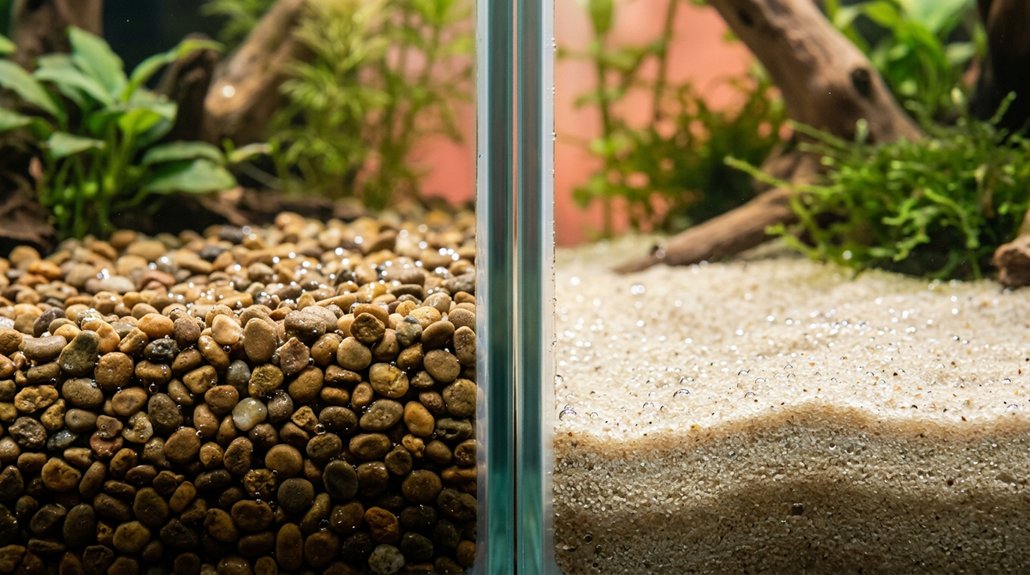
Sand is usually better if you keep corys, plecos, geophagus, or other bottom-feeders, because its fine grains let them sift safely and protect barbels. Gravel is usually better if you want rooted plants, since it anchors roots and allows better water flow through the substrate. Coarse sand can split the difference by reducing compaction and keeping maintenance easier. Your best choice depends on your fish, plants, and how much cleaning you’re willing to do, and there’s more to compare.
Key Takeaways
- Sand is best for corys, plecos, and Geophagus because it protects barbels and supports natural digging and sifting.
- Gravel is better for planted tanks because it anchors roots and improves water and nutrient flow around them.
- Fine sand looks natural and keeps waste visible on top, while gravel hides debris between particles and needs deeper vacuuming.
- Coarse sand or smooth small gravel can be a balanced choice, reducing compaction, abrasion, and cloudiness.
- Choose substrate based on fish and maintenance: sand for diggers, gravel for plants, and raise intakes to avoid clogging.
Sand vs Gravel: Which Fits Your Tank?
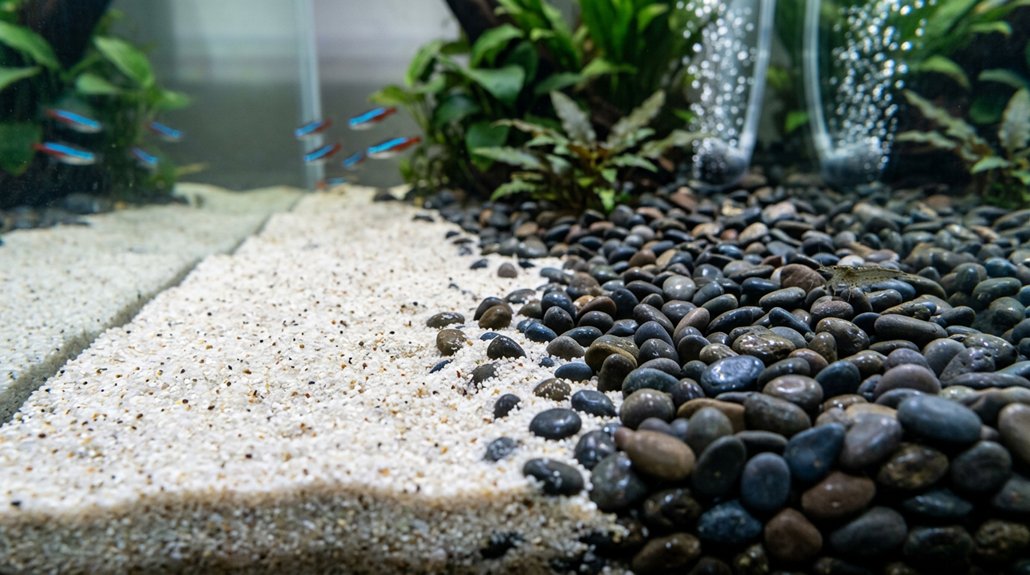
Choosing between sand and gravel comes down to how your tank is stocked and maintained. If you keep corys, catfish, or Geophagus, sand usually matches their fish preference because its fine grain size lets them dig and sift safely. You’ll get a natural, smooth substrate, but you’ll need to siphon gently, watch filter intakes, and stir it occasionally so it doesn’t compact or form anaerobic pockets. Gravel suits planted tanks better because it anchors roots and improves circulation, though you’ll need regular deep gravel-vacuuming to pull waste from between pieces. If you want a middle ground, coarse pool filter sand or blasting media can give sand’s look while reducing compaction and keeping debris on top for easier removal.
How Sand and Gravel Look in a Tank
You’ll usually see sand give your tank a smooth, natural look that makes fish colors pop, especially if you choose light or fine grades. Gravel gives a more classic, textured riverbed feel, with extra color and size options that can either blend in or stand out. If you want a cleaner, more dramatic display, darker sand or gravel can sharpen contrast and help hide debris better.
Natural Sand Appearance
Sand gives a tank a smooth, natural riverbed look that often makes fish and plants stand out more, especially when you use darker or more uniform substrates like river sand or pool filter sand. You get a clean riverbed texture and a matte finish that makes colors pop without distracting glare. If you choose light playsand, though, detritus and debris show up quickly, so the tank can look dirty sooner between cleanings. Coarser sand can also help create a South American biotope feel, especially with corydoras or Geophagus. The uniform surface lets you see digging, sifting, and other fish activity clearly, while mixed sizes can add subtle visual depth without losing that natural look.
Classic Gravel Look
Gravel gives a fish tank that classic riverbed look, with varied shapes and colors that feel familiar and easy to live with in many setups. You get strong riverbed nostalgia, and it can suit a vintage aquarium without looking staged. Gravel’s uneven surface often hides detritus between particles, so the tank can seem cleaner from a distance, even if you still need regular maintenance. Sand, by contrast, gives you a smoother, more natural foreground that shows off fish and plants but makes waste easy to spot on top. If you want a practical compromise, mix sand in front with gravel paths or accent stones. That adds contrast, supports hardscape, and keeps the layout grounded while preserving the classic look.
Color And Texture Options
Color and texture change the whole feel of a tank, and the substrate you choose can either spotlight your fish or quietly fade into the background. Sand gives you a smooth, uniform look that feels natural, and fine or pool filter sand can really boost fish and plant color. Light sand shows detritus faster, though. Gravel offers far more texture variety, with many sizes, shapes, and colors, including dyed epoxy-coated styles, so you can create a bright jellybean look or a riverbed scene. Dark sand or black gravel adds strong color contrast and hides waste better than pale substrates. If you want balance, try a thin sand cap over gravel or mix coarse sand with accent stones for depth, stability, and a cleaner, more intentional layout.
When Gravel Is Better for Fish Safety
When you’re prioritizing fish safety, gravel can be the better choice in several setups. Choose smooth, rounded grains, because sharp edges can damage fins and threaten juvenile safety. Coarser gravel resists compaction, so you’re less likely to get anaerobic pockets and harmful gas build-up that can stress fish. It also anchors plants and decorations more securely, reducing uprooted hardscape and floating debris. In tanks with strong filtration, gravel’s larger particles are less apt to reach intakes or HOBs, helping prevent clogs and gill-harming fines. For small diggers, pea-sized gravel can support natural movement without the dense, sealing effect of very fine substrates. It can also offer mild temperature buffering and behavioral enrichment. In busy community tanks, it hides waste between grains, reducing surface disturbance.
Sand vs Gravel for Bottom-Feeders
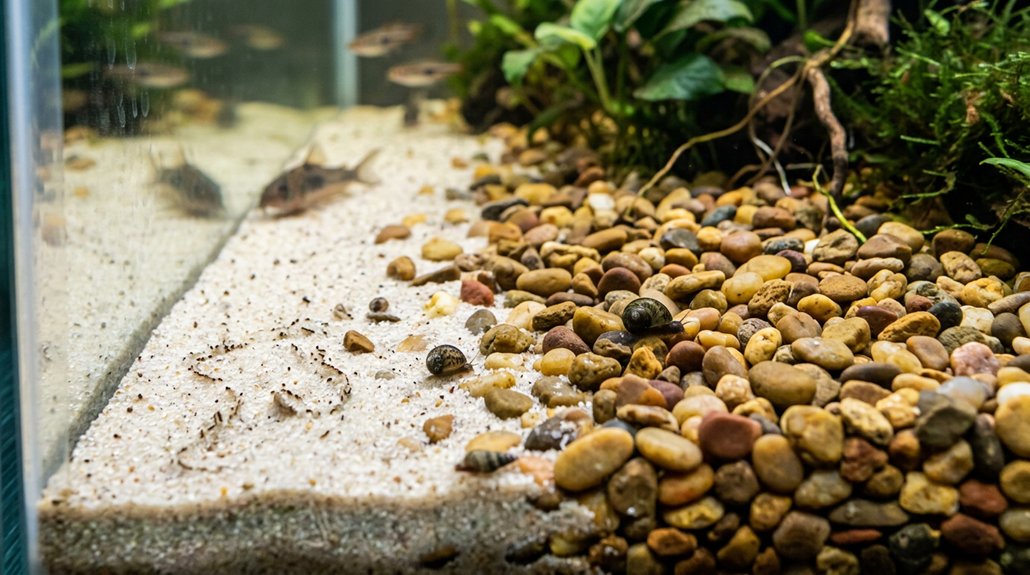
For bottom-feeders, substrate choice matters as much for comfort as it does for safety. If you keep Corydoras, plecos, or Geophagus, fine to medium sand usually supports natural sifting behavior and protects barbel health better than sharp gravel.
| Substrate | Bottom-feeder impact |
|---|---|
| Fine sand | Easy sifting, gentle on mouths |
| Coarse sand | Safer than gravel, less compaction |
| Sharp gravel | Can abrade barbels and trap debris |
Gravel’s gaps can hide waste where your fish can’t reach it, while sand keeps detritus exposed for feeding. Just don’t ignore compaction: very fine sand can form anaerobic pockets if it isn’t stirred. A coarse sand blend is often the best compromise, giving you cleaner flow, safer digging, and less risk than jagged gravel.
How Sand and Gravel Affect Plants
If you’re planning a planted tank, gravel generally gives roots better access to oxygen and lets water and nutrients move through the substrate more easily, which is why it’s often the easier choice for rooted plants. It supports strong root oxygenation and nutrient circulation, especially when you tuck in root tabs with tweezers. 1. Gravel suits heavy root feeders better. 2. Sand works for Anubias and Java fern, since they attach to hardscape. 3. Fine sand can compact, limiting gas exchange and forming anaerobic pockets. 4. Coarse sand or small gravel offers a middle ground, with a natural look and steadier support. If you want fastest growth, aquarium soil still wins because it feeds plants directly.
Which Substrate Is Easier to Clean?
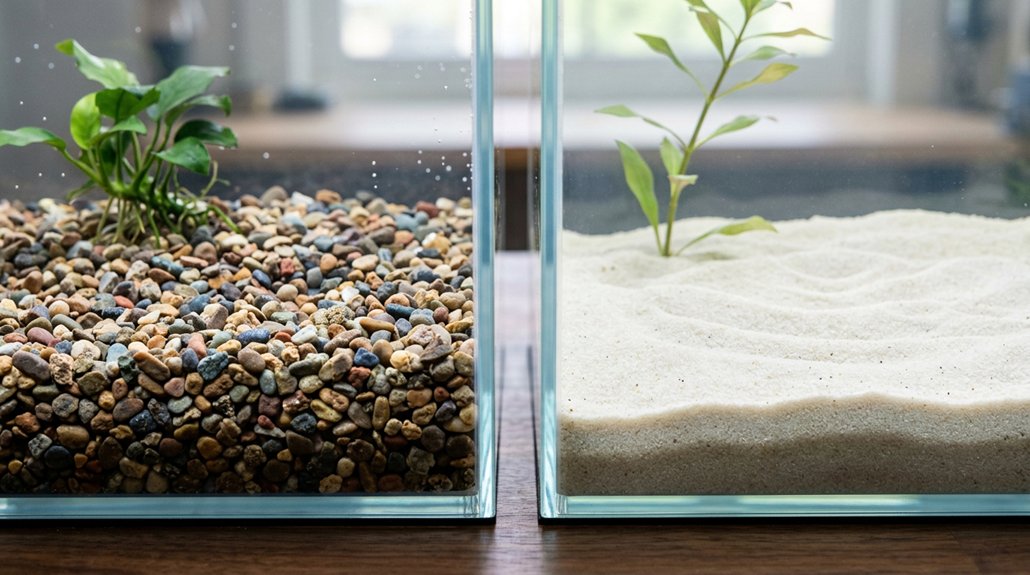
Maintenance is the next big difference between sand and gravel. With sand, debris stays on the surface, so you can usually skim it off with gentle siphoning before it sinks in. That makes waste easy to see, but you’ll need to be careful not to pull up the substrate. Gravel hides detritus between grains, so it often looks cleaner than it is until you gravel-vacuum deeper. That’s effective for removing trapped waste, but it takes more effort because you must work through the gaps. Fine sand can also compact, so occasional stirring helps with anaerobic prevention by breaking up gas pockets. If you want simpler routine cleaning, coarser sand can be a smart middle ground: it resists compaction while still keeping debris visible.
How Sand Affects Your Filter and Flow
When you use sand, keep an eye on your filter intake, because fine grains can compact and get sucked in, especially if the intake sits right at substrate level. You’ll also notice that sand changes how waste moves: good flow keeps debris on top where you can siphon it off, while weak flow lets it settle and build up. Strong circulation can kick sand into suspension, so choosing coarser sand and positioning your intake a bit higher can help keep your water clearer and your filter running more efficiently.
Filter Intake Care
Sand can be tougher on filter intakes than gravel, especially with HOB filters, because fine grains can get pulled into the intake and damage the impeller. You can reduce that risk with intake prefilters and smart vertical intake positioning.
- Raise the intake a few inches above the sand.
- Fit a sponge prefilter or guard to catch grit.
- Keep canister intakes off the substrate.
- Clean sponges and media often after setup.
Canister filters handle stray sand better than HOB units, but they still wear faster if they ingest particles. Don’t place intakes directly on compacted beds, since trapped debris can release suddenly. Also, avoid blasting the substrate with strong flow; that can suspend sand and make maintenance harder.
Flow And Waste Movement
Waste behaves very differently in sand than it does in gravel: with fine sand, detritus usually stays on the surface where you can see and siphon it, while gravel lets debris slip between particles and disappear until you do a deeper vacuuming. That changes waste dynamics in your tank, because you’re cleaning what you can see rather than digging through layers. Sand also compacts over time, slowing vertical flow and sometimes creating anaerobic pockets, so a little stirring helps. Strong current patterns can lift sand into the water column, making your filter work harder; canister filters handle this better than HOB intakes. Keep intakes slightly above the substrate, and aim circulation toward them. Coarser sand resists compaction and stays easier to manage overall.
Sand In Suspension
With sand, the question isn’t just how waste settles, but how much of it gets lifted back into the water by your flow and your fish. Fine sand can compact, trap detritus, and feed anaerobic pockets, so you’ll want stirring or steady flow to keep debris moving toward the intake.
- Use coarse sand if you want less suspension.
- Raise HOB or canister intakes a few inches.
- Add prefilters when fish dig or sift.
- Aim currents away from bare sand.
Bottom feeders like Corydoras will cause brief visual turbidity, but good filtration clears it fast. Too much direct flow can keep fine grains airborne, stressing filters and creating persistent cloudiness. Keep sand moving just enough to avoid microbial blooms, not so much that it becomes a storm.
What Sand Works Best in Aquariums?
When you’re choosing sand for an aquarium, the best options are usually pool filter sand or coarse aquarium blasting sand because their uniform, heavier grains don’t get sucked up as easily during cleaning and still feel comfortable for bottom-dwellers like Corydoras. Their grain size also supports good fish comfort without creating a dusty mess. If you want a more natural look, river sand or Caribsea Peace River-style sand can give you cream-to-tan tones while staying practical to maintain. Avoid very fine play sand unless you’re fine with more frequent surface cleaning, since it shows detritus and shifts easily. For most tanks, stick with inert silica sand. Only use reactive sands if you need higher pH and hardness. In planted setups, a coarser layer can help roots stay anchored.
What Gravel Works Best in Aquariums?
You’ll usually do best with small, smooth aquarium gravel in the 2–5 mm range, since it lets water move around roots and stays gentle on fish like Corydoras. Rounded quartz or crushed granite is a solid choice because it’s inert, durable, and less likely to compact or trap debris than very fine gravel; if you’re planting, pair it with root tabs or a nutrient layer underneath. For easier upkeep, pick natural, pre-washed, non-toxic gravel with slightly coarser or mixed grains so waste sits on top and vacuuming’s simpler.
Best Gravel Types
For most aquariums, small rounded river gravel or aquarium-grade gravel in the 2–5 mm range is the safest all-purpose choice because it promotes water flow, anchors plant roots, and minimizes the sharp edges that can bother bottom-dwellers. If you want a low-maintenance bed, inert quartz and pea gravel in the 3–5 mm range are durable, resist compaction, and vacuum easily. Choose carefully:
- Inert silica/quartz: pH-neutral and fish-safe.
- Pea gravel: smooth, practical, and easy to clean.
- Coated decorative gravel: use only if the epoxy stays intact.
- Larger 4–8 mm gravel: useful for hardscape stability and fewer dead spots.
Avoid calcareous gravel unless you’re keeping African cichlids or marine fish.
Plant-Friendly Gravel
Plant-friendly gravel should give roots room to breathe while still holding plants in place, and small rounded aquarium gravel in the 1–3 mm range is usually the best balance for most planted tanks. You’ll get solid water flow around roots, which supports root feeding when you add root tabs. If you want a finer option, 0.5–1.5 mm gravel can help delicate roots spread while resisting compaction better than sand. Coarse gravel can anchor larger plants and hardscape, but it may leave gaps that trap debris. Inert quartz or riverstone won’t change water chemistry, so you’ll rely more on liquid fertilizers and periodic tabs. Skip coated decorative gravels; choose natural, aquarium-safe substrate for the best gravel benefits.
Easy Gravel Maintenance
When maintenance is the priority, small to medium quartz or river gravel in the 2–5 mm range is usually the best choice because it anchors plants and hardscape well while still letting water move through the substrate. You’ll get easier upkeep if you follow a simple gravel cleaning routine and keep the bed uniform. 1. Vacuum weekly during your 20–30% water change. 2. Keep depth at 2–3 cm for nano tanks or 4–6+ cm for planted setups. 3. Add root tabs for inert gravel, since it offers no nutrients. 4. Choose rounded, sub-5 mm grains for Corydoras or plecos. This setup also improves substrate odor control by limiting trapped detritus and ammonia spikes.
How to Choose the Right Substrate
Choosing the right substrate starts with your tank’s purpose: aquarium soil is best for heavily planted setups because it’s nutrient-rich and supports fast root growth, sand fits natural-looking tanks and species that dig or sift like cichlids, Corydoras, and Geophagus, and gravel works well when you need stable décor, reliable hardscape support, and easier plant anchoring with root tabs. Check substrate chemistry, because it can influence pH, buffering, and microbial colonization. For planted tanks, choose nutrient-rich material or supplement inert gravel with root tabs. Use coarse sand, 0.5–2 mm, if you want less compaction and better flow. Match grain size to your fish: smooth sand protects barbels, while gravel suits stable layouts. Also plan maintenance, since sand vacuums differently and gravel traps detritus.
Frequently Asked Questions
Do Fish Prefer Gravel or Sand?
You’ll usually find fish prefer sand, especially bottom-dwellers, because substrate texture feels gentler and suits feeding behavior. However, you should match it to species; some fish do fine on smooth, rounded gravel, too.
Do Tetras Prefer Sand or Gravel?
Tetras usually do fine with either, but you’ll often see them thrive on fine sand, since it better matches their tetras habitat. Keep substrate depth shallow, maintain circulation, and you’ll need to vacuum visible debris more often.
What Goes First, Sand or Gravel?
Sand usually goes first if you want a smooth, natural base; gravel goes first for stability or mixed setups. Use your layering technique by matching particle size, rinsing both, and building a clean, compact, smart substrate.
Can Aquarium Plants Survive in Just Gravel?
Yes, they can, if you’re using fine gravel, adequate substrate depth, and nutrient supplementation. You’ll get decent plant growth and root anchoring with root tabs, liquid dosing, and plants that aren’t heavy root feeders.
Conclusion
So, after all the grand debate, you’ll find the “best” substrate is the one your tank actually needs—not the one that looks nicest in a store aisle. If your fish like gentle digging, sand may suit them; if you want easier cleanup and sturdier planting, gravel might win. You’ve got to balance safety, flow, and maintenance. Choose wisely, and your aquarium won’t become a tiny, muddy courtroom.