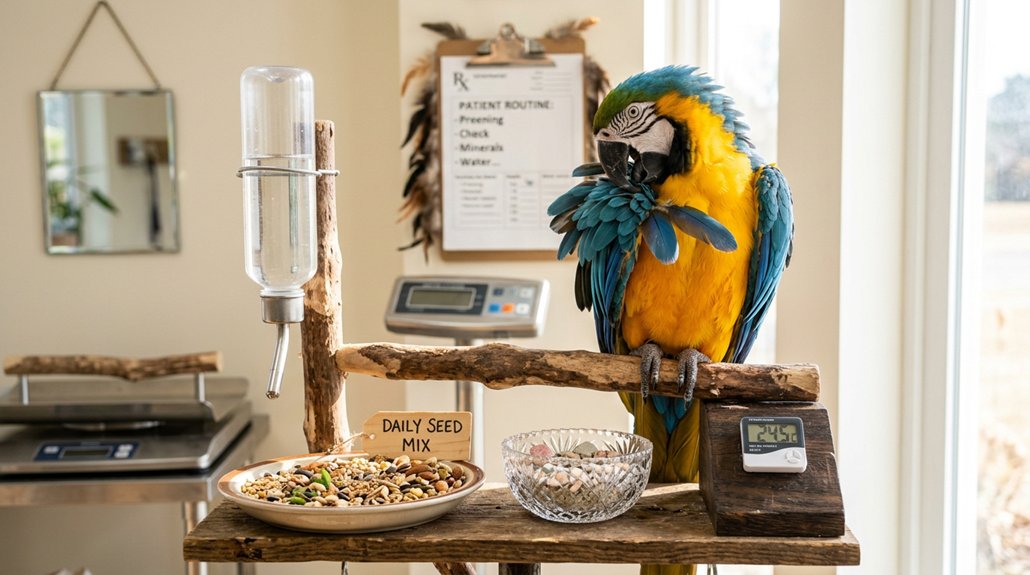
Take your bird to an avian vet soon after adoption, then keep regular checkups and parasite screening. House it in a secure cage with proper bar spacing, varied perches, and a warm, draft-free spot. Feed mostly pellets, plus washed vegetables and limited treats, with fresh water daily. Clean dishes and liners every day, quarantine new birds for 30 days, and weigh your bird weekly. Watch droppings, breathing, and appetite closely; there’s more to cover.
Key Takeaways
- Schedule an initial avian vet exam, then follow species-specific checkups, parasite screening, and preventive care recommendations.
- Feed a pellet-based diet with vegetables and limited treats; provide fresh, clean water daily and transition diet changes gradually.
- Use a secure, properly sized cage with varied perches, appropriate bar spacing, and a warm, draft-free location.
- Clean food dishes daily, deep-clean cage items weekly, and wash hands before and after handling your bird or supplies.
- Monitor weight, droppings, breathing, and behavior daily, and contact an avian vet promptly if any abnormal signs appear.
Pet Bird Care Basics
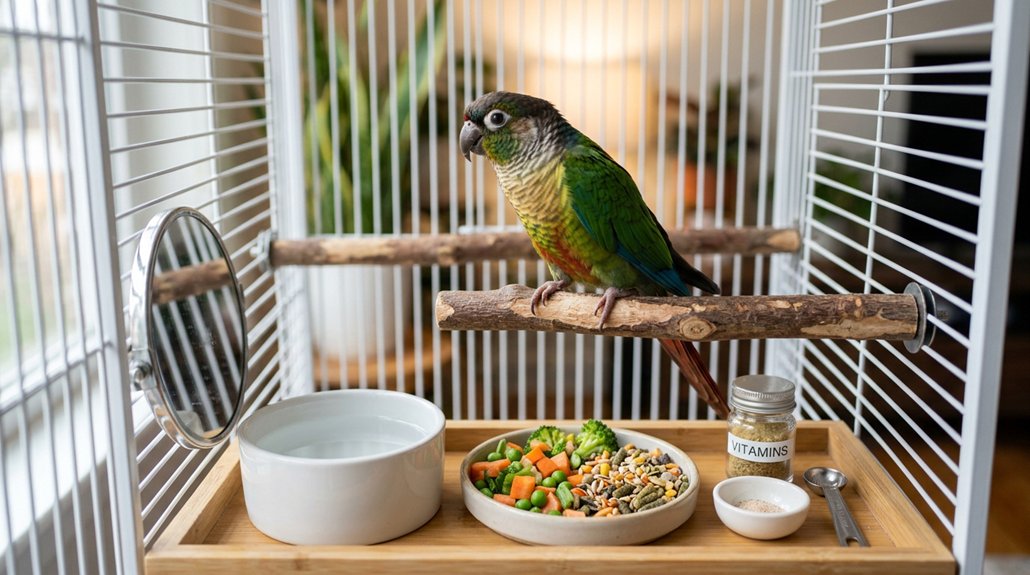
Before you bring a pet bird home, have an initial avian veterinary exam soon after adoption, then schedule regular checkups to monitor health and get species-specific care guidance, including beak, nail, or wing trims when recommended. You should house your bird in a secure, properly sized cage that lets it fully stretch its wings and fit 2–3 perches, toys, and food and water dishes. Place it in a warm, draft-free, bright area away from kitchens and direct sun. Feed high-quality pellets as the diet base, add vegetables, and limit fruit treats; avoid avocado, chocolate, and excess seeds or nuts. Practice hygiene daily, and provide social enrichment and noise management through consistent handling, cleaning, and monitoring. Contact your avian veterinarian if illness signs appear.
Choose the Right Pet Bird and Vet
Choosing the right bird starts with matching the species to your lifestyle and capacity for care. You should compare lifespan, noise, and species temperament before adoption; a budgerigar may fit a shorter commitment, while many parrots need decades of care. Verify legal considerations with state, local, and property rules so the species is permitted where you live. Then establish an avian veterinarian before purchase or adoption; look for AAV membership or ABVP-avian diplomate credentials.
- Schedule a wellness exam soon after arrival.
- Follow recommended preventive care, including parasite screening.
- Ask when nail or wing trims are indicated.
- Plan a 30-day quarantine with separate equipment.
Set Up Safe Pet Bird Housing
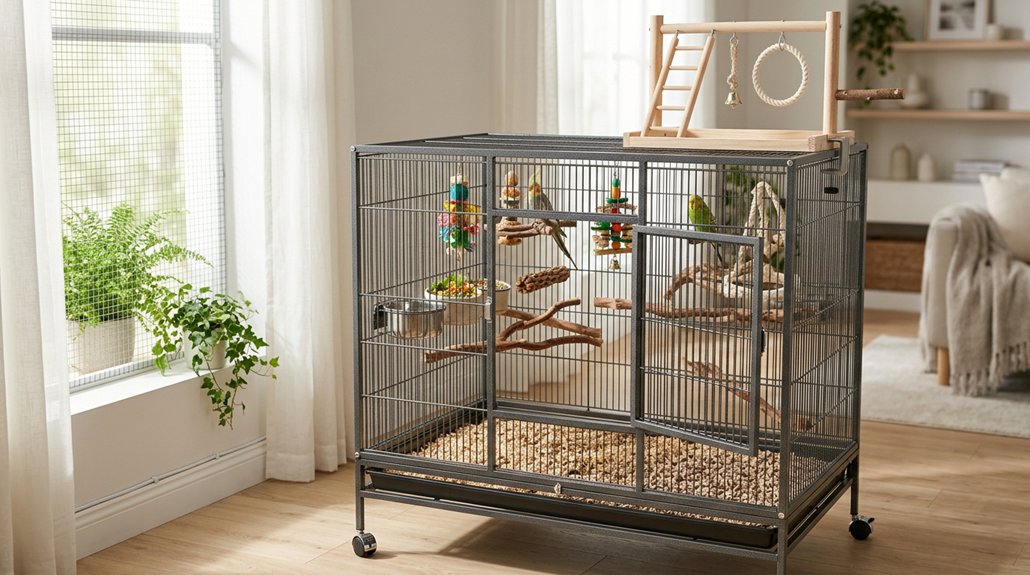
A safe cage is the foundation of good bird care. You should choose the largest, sturdy, lockable enclosure your space allows, with bar spacing matched to species so your bird can’t escape or catch its head. Place it in a bright, draft-free area at least 68°F, with careful window placement to avoid direct sun, vents, and overheating. Add two to three perches of varied diameter and texture, preferably natural pesticide-free wood, positioned so your bird can move without striking the sides. Keep housing out of kitchens. Use removable liners for daily cleaning, then deep-clean weekly with hot, soapy water and disinfection. For noise reduction, select a stable location. Quarantine new birds 30 days in separate housing, supplies, and equipment.
Feed a Balanced Pet Bird Diet
Build your bird’s diet around a commercially formulated pellet food, which should make up about 60–80% of daily intake for most species, often 75–80% for many parrots, to help prevent nutritional deficiencies. During a pellet transition period, move gradually and monitor intake closely. Supplement with 15–20% fresh vegetables and fruit, using seasonal produce that’s washed, chopped to size, and free of seeds or pits.
- Offer variety; don’t depend on seeds or nuts.
- Keep treats under 10% to reduce obesity risk.
- Provide clean, fresh, chlorine-free water every day.
- Remove uneaten fresh food within a few hours.
A balanced diet also supports calcium metabolism when paired with UVA/UVB exposure from direct sunlight or full-spectrum lighting, since window glass blocks UV.
Clean Bird Cages and Supplies Safely
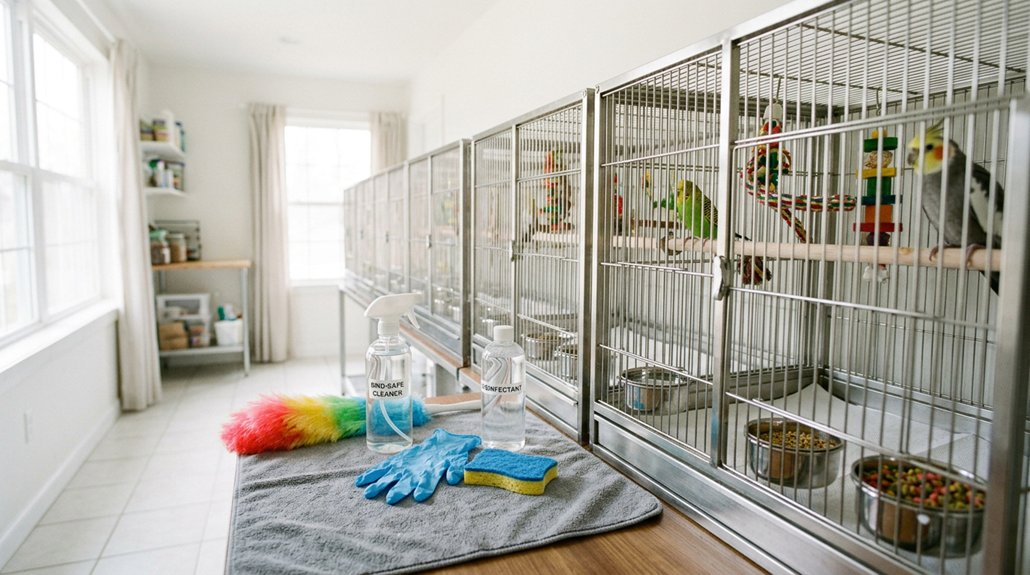
Wash your hands with soap and water before and after handling your bird’s cage, perches, dishes, and other supplies to reduce germ spread between birds and people. Clean food and water dishes daily, and once weekly wash the cage with hot, soapy water, then disinfect and rinse thoroughly before reuse. You shouldn’t clean bird equipment in kitchen sinks used for food prep; use an outdoor area, laundry sink, or bathtub, then disinfect that surface afterward. Wear gloves or use tools for droppings removal, and keep hand sanitizer nearby if soap isn’t available. After illness, death, or before reusing equipment for another pet, complete disinfection is required. Follow safe disposal practices for waste and maintain ventilation maintenance during cleaning to support bird health.
Prevent Bites, Scratches, and Germs
Although pet birds can be affectionate, their beaks and nails can cause serious bites or scratches, so you should supervise all child-bird interactions closely to reduce injury and germ transmission. Use strict child supervision whenever your bird is on a hand, shoulder, or lap, and keep handling brief and controlled. Wash your hands with soap and water after contact with birds, droppings, or supplies; keep sanitizer near the enclosure for guests. Avoid bare-hand cleanup of droppings, and don’t wash cages or equipment in kitchen sinks, where cross-contamination can occur. Clean and disinfect reusable items before sharing them with another pet.
Supervise child-bird interactions closely, and wash hands after contact to reduce injury and germ transmission.
- Seek prompt wound care for deep bites or scratches
- Tell providers the injury came from a bird
- Get medical review if the bird seemed sick
- Update tetanus if overdue by more than 5 years
Spot Pet Bird Illness Early
Watch your bird daily for small changes that can signal illness early. Weigh your bird on a gram scale and compare it with baseline; even a 1–2% weekly loss matters. Inspect droppings each day for abnormal color, consistency, or frequency: watery, yellow-green, or bloody stool can point to GI, liver, or systemic disease. Watch for respiratory signs such as sneezing, nasal discharge, open-beak breathing, or tail bobbing; these need prompt veterinary care. Track behavioral changes, including lethargy, reduced appetite, less vocalization, and fluffed feathers. Also assess feather condition for ruffling, loss, or chewing. Early detection depends on consistent observation, because subtle deviations often appear before obvious illness. If patterns persist, contact your avian veterinarian promptly for evaluation and treatment.
Quarantine New Birds and Follow Up
When you bring home a new bird, quarantine it for 30 days in a separate room with no shared airspace, food, water, toys, or equipment so you don’t expose your other birds to hidden pathogens. Follow strict isolation protocols: use separate cage, perches, dishes, towels, and cleaning tools, and disinfect them before any reuse. Schedule post adoption screenings promptly, then repeat as your avian veterinarian recommends during quarantine to detect infectious disease early.
- Check daily for sluggishness or ruffled feathers.
- Watch for abnormal breathing, discharge, diarrhea, or feather loss.
- Call your avian veterinarian immediately if signs appear.
- If illness or death occurs within one month, notify the seller and delay adding birds until evaluation and disinfection are complete.
Frequently Asked Questions
What Is the 3 3 3 Rule for Birds?
You’ll use the 3-3-3 rule: 3 days for stress, 3 weeks for behavioral cues and routine emergence, and 3 months for bonding and settling. Watch feather maintenance, eating, droppings, and activity closely.
How to Properly Care for a Pet Bird?
You’ll care for your bird with a species-appropriate diet, diet enrichment, spacious housing, clean water, daily cleaning, and socialization routines. Schedule avian vet exams, monitor weight, and quarantine newcomers 30 days to protect health.
What Is the 60 40 Rule for Birds?
It’s a diet ratio: you feed 60–70% quality pellets and 30–40% fresh produce plus a few seeds. You’ll support Feather molting, Weight monitoring, and avoid obesity; 1 in 2 pet birds eat poorly.
How Do You Say “Hi” in Bird Language?
You say “hi” in bird language with species-specific bird greetings: soft chirps, contact calls, head-bobs, or gentle beak grinding. You can also use vocal mimicry—your bird may answer with whistles, squawks, or learned words.
Conclusion
By following these preventative care tips, you give your bird the best chance to thrive. Choose the right veterinarian, keep housing safe, and maintain a balanced diet and clean environment. Handle your bird carefully, watch for early signs of illness, and quarantine new arrivals to reduce risk. Like a well-tuned aviary in a natural history study, your care supports long-term health, comfort, and longevity. Stay consistent, and your feathered companion will thank you.