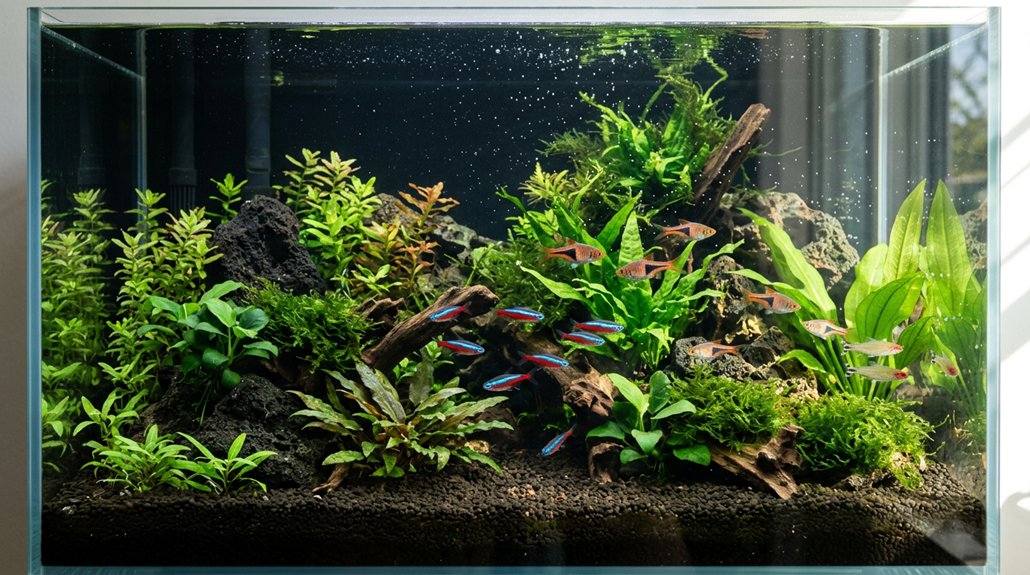
You keep aquarium water clear and healthy by controlling organic load, light, and nutrient buildup before they drive cloudiness or blooms. Feed only what fish eat in 2–5 minutes, remove waste and uneaten food quickly, and vacuum the substrate during weekly 20–50% water changes. Maintain ammonia and nitrite at 0 ppm, and keep nitrate below 20–40 ppm. Use layered filtration and 6–8 hour lighting, and you’ll see how each cloudiness type responds in practice.
Key Takeaways
- Feed sparingly and remove uneaten food within 2–3 minutes to prevent excess waste and cloudy water.
- Perform weekly 20–50% water changes and gravel vacuuming to remove detritus and dissolved organics.
- Maintain strong filtration and flow, using layered mechanical media and avoiding overcleaning beneficial biofilters.
- Keep ammonia and nitrite at 0 ppm, and nitrate below 20–40 ppm through regular testing and maintenance.
- Control light and nutrients, and use healthy plants to outcompete algae and keep water clear.
Identify the Type of Cloudy Water
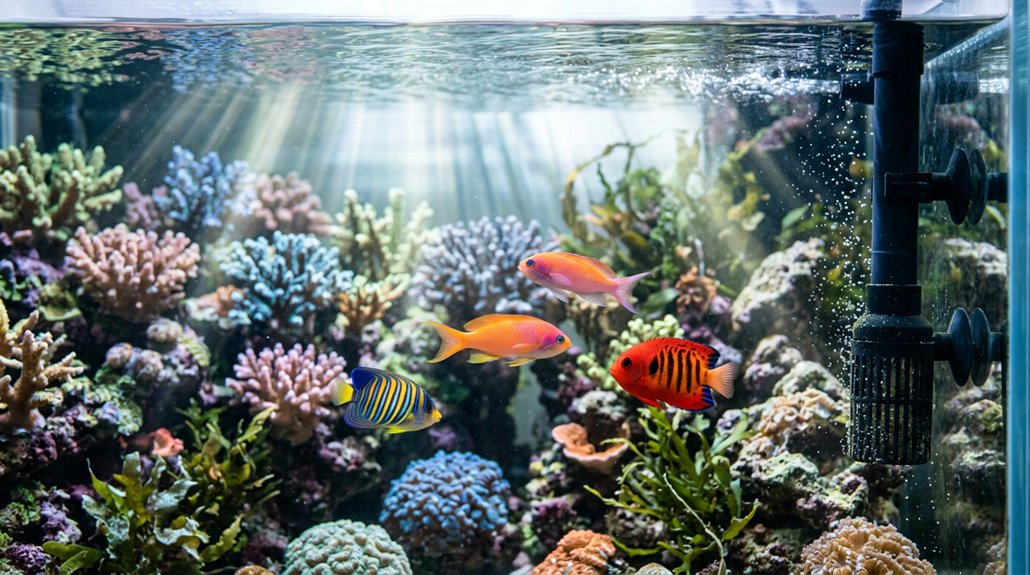
Before you can fix cloudy water, you need to pin down what kind of haze you’re seeing. Use visual clarity and sensory cues to classify it. Milky-white, particle-free cloudiness usually signals a bacterial bloom in a new or recently disturbed tank; it often resolves in 7–14 days as nitrifying bacteria stabilize. A uniform green tint indicates free-floating algae, typically driven by excess light and nutrients. Fine suspended specks or floating debris after substrate, fish, or feeding events point to mechanical particulates. Brown or tea-colored water without true cloudiness suggests tannins from wood or botanicals. If the haze is only on the glass or panels, you’re seeing film algae or mineral deposits, not water-column cloudiness. Identify the pattern first, then choose the correct intervention.
What Causes Cloudy Aquarium Water
Cloudy aquarium water usually results from excess organic waste, disturbed substrate, or leached compounds that increase suspended particles and disrupt water chemistry. When nutrient levels rise, you can also get microbial or algal blooms, including milky bacterial haze or green free-floating algae, driven by imbalances in light, ammonia, nitrite, nitrate, or phosphate. In some cases, tannins from wood and botanicals discolor the water without indicating a biological problem.
Common Cloudiness Causes
Cloudiness in aquarium water usually traces back to one of a few identifiable sources: excess organic waste from uneaten food, fish feces, and decaying plant material, which increases ammonia, nitrate, and phosphate while also adding fine suspended particles. In new tanks, or after a filter’s been cleaned, you may see a milky bacterial bloom from suspended heterotrophs; it often resolves as biological filtration matures. If the water turns green, free-floating algae are likely, driven by excess light and nutrients, so lighting control matters. Dusty substrate can release silt that clouds water until mechanical filtration captures it. Brown or yellow tint from tannins isn’t true cloudiness, but driftwood or botanicals can still alter water chemistry and should be managed with carbon or dilution.
Nutrient Imbalances And Blooms
Excess dissolved nutrients, especially nitrates above about 20–40 ppm and phosphates above 0.5 ppm, can fuel bacterial and algal blooms that leave aquarium water visibly cloudy. You’re usually seeing a response to overfeeding, fish waste, or decaying plant matter. Milky-white bacterial blooms often appear in new or recently cleaned tanks when nitrifying biofiltration hasn’t stabilized; they typically resolve within 7–14 days. Green water indicates free-floating algae, driven by high light and elevated nutrients. You can reduce both by cutting feeding, removing uneaten food, vacuuming substrate, and limiting light to under 8–10 hours. Avoid large water changes or aggressive filter cleaning that disrupt bacteria. Strong biofiltration, nutrient sequestration, plant competition, and, if needed, UV sterilization help maintain clarity.
How to Clear Cloudy Water Fast
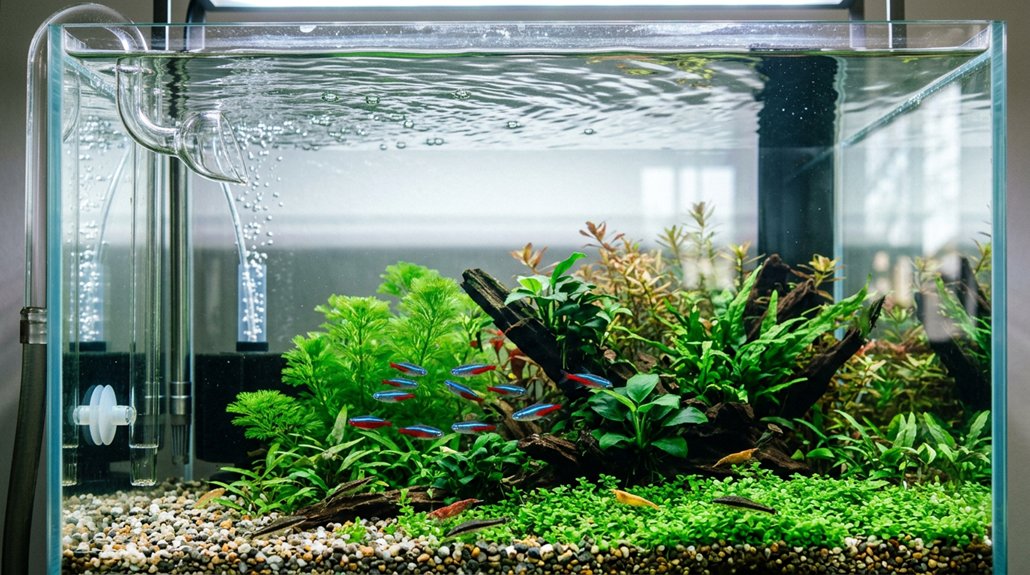
To clear cloudy water fast, you’ve got to identify the cause first, since bacterial blooms, suspended silt, and green-water algae each need different corrections. Then you should boost filtration and flow with fine mechanical media, while removing waste, uneaten food, and dissolved tannins that elevate the organic load. If needed, use targeted water changes and chemical media to accelerate clarification without compromising biological filtration.
Identify Cloudy Water Cause
If your aquarium water suddenly looks cloudy, the fastest fix depends on the cause: milky-white water with no visible particles usually points to a bacterial bloom in an immature or disrupted biofilter, so avoid heavy cleaning and let the system stabilize over 7–14 days; fine suspended debris responds best to stronger mechanical filtration and repeated 20–50% water changes; bright green water indicates an algal bloom and needs reduced light, less feeding, and often a large water change or UV sterilization; brown tint from tannins isn’t usually harmful and can be reduced with activated carbon, Purigen, or water changes; and before treating the water, make sure the “cloudiness” isn’t just film on the glass. Do water testing for ammonia, nitrite, and nitrate, and use lighting control to separate bacterial, particulate, algal, and chemical causes accurately.
Boost Filtration And Flow
Boost filtration and increase flow immediately, because higher turnover is the fastest way to strip suspended particles and stabilize water quality. You should target at least 10× tank volume per hour, so a 10-gallon aquarium needs about 100 GPH. Make filter upgrades by adding a HOB, canister, or sponge filter if your current unit can’t sustain that rate. Use layered mechanical media: coarse sponge first, then fine floss or poly-fill, then a polishing pad to trap smaller debris. Rinse or replace the fine media weekly. Add more biological surface area with sponge blocks, ceramic rings, or a small sump. After substrate disturbance, fit a prefilter sponge and run repeated 25–50% water changes. If free-floating algae is the cause, use a correctly sized UV sterilizer or reduce light and nutrients.
Remove Waste And Tannins
Even with strong filtration and high flow, cloudy water often persists when suspended waste and dissolved organics keep entering the system. For rapid waste removal, change 30–50% of the water, then vacuum the substrate to extract particulates, uneaten food, and decaying organics. Remove loose driftwood and leaf litter, and use activated carbon or Seachem Purigen for tannin management.
| Action | Target | Effect |
|---|---|---|
| Water change | 30–50% | Dilutes cloudiness |
| Vacuum substrate | Detritus | Removes particulates |
| Carbon/Purigen | Dissolved humics | Reduces brown tint |
| Skim debris | Daily | Limits loading |
| Media rinse | Floss, sponge | Preserves flow |
If driftwood leaches tannins, pre-soak or boil it, then repeat changes. Feed only what’s consumed in 2–5 minutes, and rinse mechanical media in tank water.
Fix Cloudy Water From Particles
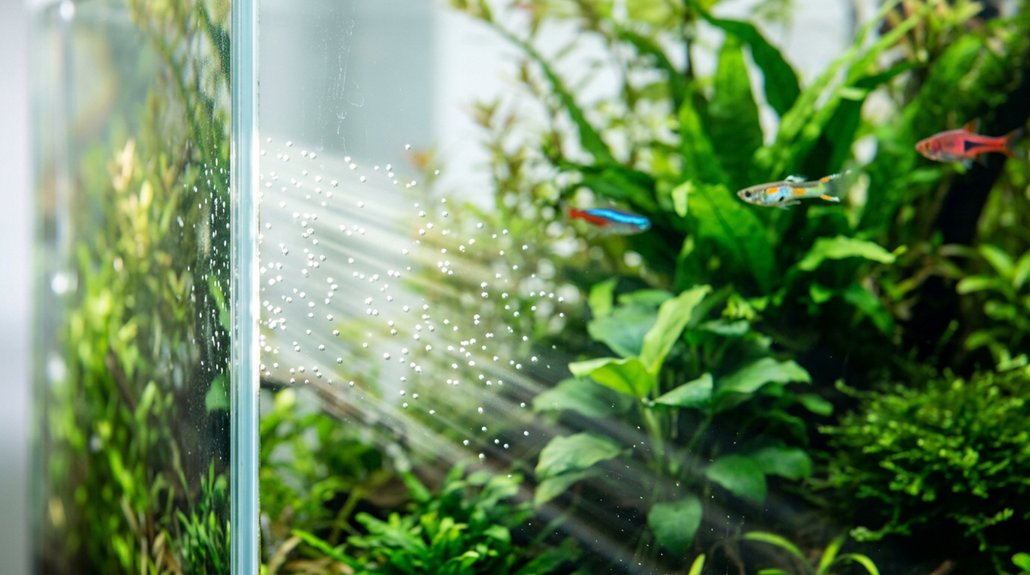
Cloudy water caused by suspended particles usually clears fastest when you physically remove the debris rather than trying to “wait it out.” Load your filter with fine mechanical media such as filter floss, poly-fill, or water-polishing pads to trap sub-micron particulates, and rinse or replace that media regularly as it clogs. Use this filter media with an intake modification, like a fine mesh prefilter sponge, to capture solids before they recirculate. Vacuum the substrate weekly with a siphon, and keep water changes near 20–30% in lightly stocked tanks, up to 50% if detritus is heavy. If new gravel or planting leaves silt, rinse the substrate or do several large water changes. Short bursts of high flow can improve capture. A clarifier can help once, but it isn’t a substitute.
Fix Bacterial Blooms in Aquarium Water
A milky-white bacterial bloom usually reflects a surge of suspended heterotrophic bacteria fueled by excess organic load after overfeeding, new stocking, or disturbance of the filter biofilm. You should treat it with bacterial management, not panic: stop feeding for 24–48 hours, remove decaying debris, vacuum substrate, and clean pre-filter media in old tank water. Avoid aggressive water changes, UV sterilizers, or antibiotics at first; they can prolong the bloom by disrupting competing biofilms. Stabilize filtration with more surface-area media or a sponge filter, and target at least 10× turnover per hour in small tanks. Test ammonia and nitrite, keeping both at 0 ppm, and nitrate below 20–40 ppm. If spikes occur, do modest 20–30% changes and add bottled nitrifying bacteria. This supports bloom prevention.
Prevent Cloudy Aquarium Water Long Term
Once the bloom has cleared, preventing cloudy aquarium water long term depends on controlling the inputs that drive suspended organics, bacteria, and algae. Your long term maintenance should include 20–50% weekly water changes, with 30% as a target in lightly stocked tanks, plus gravel vacuuming.
Prevent cloudy aquarium water long term with weekly water changes, gravel vacuuming, and careful control of organic inputs.
- Match filtration to at least 10× tank volume per hour and use layered media.
- Practice strict substrate management by siphoning detritus and uneaten food within 2–3 minutes of feeding.
- Apply light scheduling at 6–8 hours daily, and test nitrate and phosphate routinely.
- Use plant selection to outcompete algae; if haze persists, add UV or polishing media, but don’t overclean biofilters.
Frequently Asked Questions
What Can I Put in My Fish Tank to Keep the Water Clear?
Put activated carbon in your filter to adsorb dissolved organics, and add aquatic plants to compete for nutrients. Pair them with fine filter floss, beneficial bio-media, and regular maintenance, so you’ll keep water clearer.
How Can I Make My Fish Tank Water Crystal Clear?
Run strong filtration, do weekly water changes, and avoid overfeeding; add live plants and a protein skimmer to remove nutrients, then keep lighting low and substrate clean. You’ll suppress blooms and maintain crystal clarity.
How Do I Stop My Fish Tank Water From Being Cloudy?
You stop cloudiness by reducing feeding, improving mechanical filtration, and performing partial water changes. For milky blooms, support bacterial cycling; for green water, apply algae management. Don’t overclean media, or you’ll destabilize bacteria and worsen turbidity.
How Do I Keep the Water in My Fish Tank Clear?
You’ll keep your tank clear by combining water testing with weekly partial changes, strong mechanical-biological filtration, restrained feeding, substrate vacuuming, and aquarium plants that absorb nutrients and reduce suspended wastes, while rinsing media in tank water.
Conclusion
Keeping your aquarium water clear and healthy means you must first identify the cloudiness type, then correct the cause. If you see suspended particles, improve filtration and reduce disturbance. If a bacterial bloom is driving the haze, stabilize the nitrogen cycle and avoid overfeeding. As the adage says, “An ounce of prevention is worth a pound of cure.” With routine testing, maintenance, and proper stocking, you’ll maintain stable, transparent water long term.