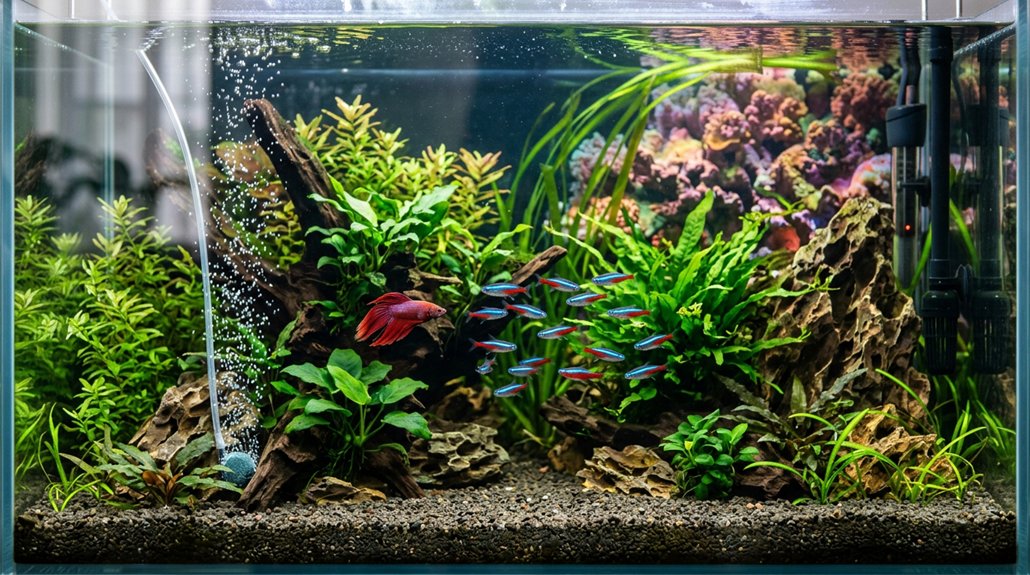
Yes, you usually need a filter for your aquarium because it provides the surface area and water flow that beneficial bacteria use to convert toxic ammonia into nitrite and nitrate. It also helps trap debris, improve circulation, and support oxygen exchange. Some heavily planted or very low-bio-load tanks can run without one, but you’ll need close testing and frequent water changes. If your tank needs less flow, there are ways to make it work better.
Key Takeaways
- Most aquariums with fish need a filter to process ammonia, nitrite, and nitrate safely.
- Filters also provide water flow, oxygenation, and mechanical removal of waste before it decomposes.
- Some heavily planted or filterless tanks can work, but they require frequent water changes and testing.
- Match filter size to tank needs, usually around 4–6 times the tank volume per hour.
- Sponge, HOB, and canister filters suit different tank sizes, bioloads, and flow requirements.
Do You Really Need an Aquarium Filter?
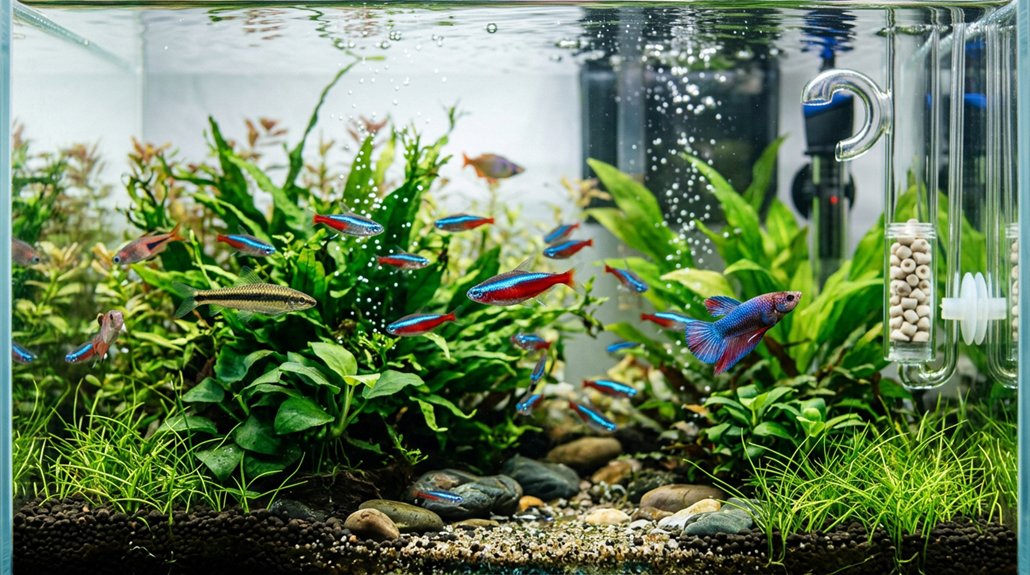
Yes—if you keep fish, you usually do need a filter, because it gives the tank the biological surface area and water flow nitrifying bacteria need to convert toxic ammonia into nitrite and then nitrate. In most setups, that’s the main reason the benefits debate favors filtration over maintenance myths that say a clean-looking tank is enough. You’ll also get better circulation and surface agitation, which helps gas exchange and keeps waste from settling. A practical target is about 4–6 times tank volume per hour. Some hardy species or densely planted tanks can go filter-less, but you’ll need frequent water changes, close testing, and often extra plant uptake. If you downsize or remove a filter, do it gradually and watch ammonia, nitrite, and nitrate closely to avoid a crash.
What Aquarium Filters Do
An aquarium filter does more than just “clean” the water: it provides biological surface area for nitrifying bacteria to convert toxic ammonia into nitrite and then nitrate, helping keep water chemistry stable in most stocked tanks. You’re also getting mechanical filtration, where sponges, floss, or pre-filters trap detritus before it decomposes and raises waste. Chemical media like activated carbon can adsorb dissolved organics, discoloration, and some medications, but they’re best used short-term. Good filtration improves water movement and surface agitation, so gas exchange and oxygenation stay adequate. For effective bacterial colonization, size your filter for about 4–6x tank turnover per hour, then match your maintenance schedule to rinse media without stripping beneficial biofilm or flow.
What Happens in a Filter-Free Tank?
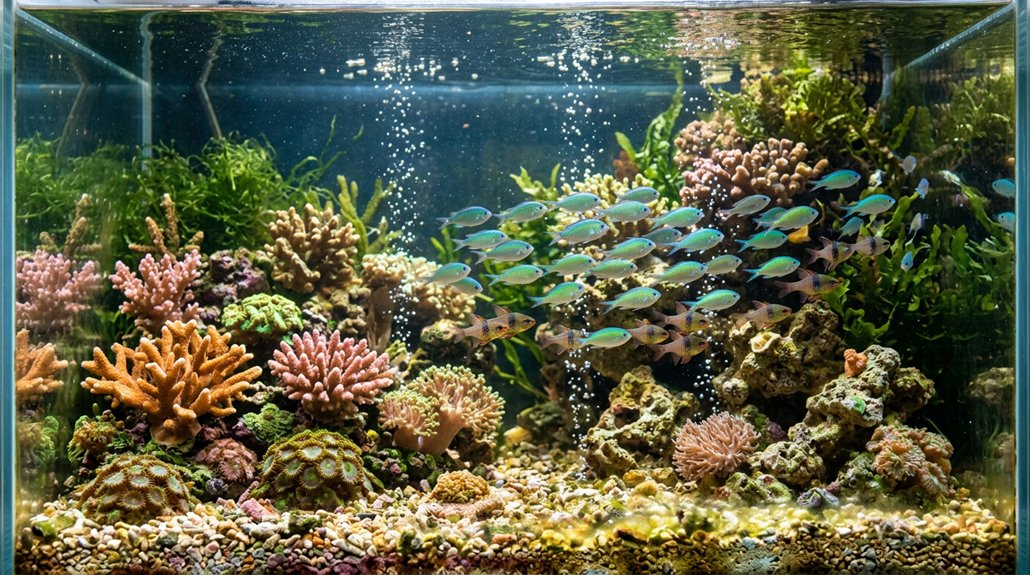
If you run an aquarium without a filter, you’re asking the tank itself to handle waste processing, and that usually means the bioload has to stay very low. In practice, ammonia from fish waste and decaying debris is converted only by bacteria in the substrate and by plants, so you need light stocking and strong plant benefits to avoid toxic spikes. Because there’s no mechanical stage to trap solids, you’ll depend on large water changes, often 25–50% weekly or more, plus frequent checks of ammonia, nitrite, and nitrate. Live plants, snails, and roots can lower nitrates, but they can’t replace particulate removal. Good oxygen circulation and surface agitation still matter to prevent dead zones and support nitrification in these compact systems.
Which Aquarium Filter Type Is Best?
Choosing the best aquarium filter depends on your tank’s size, stocking level, and how much flow you want. For under 20 gallons, or breeding and quarantine tanks, sponge filters are ideal because they’re cheap, fry-safe, and add gentle biofiltration with simple sponge maintenance.
| Filter type | Best use |
|---|---|
| Sponge | Small tanks, fry, shrimp |
| HOB | 10–75+ gallon community tanks |
| Canister | Large, planted, hidden setups |
HOB filters give you easy media access and balanced turnover. Canisters work best when you want canister customization, stronger throughput, and discreet hardware. For heavy bioloads, wet/dry or fluidized-bed filters offer maximum biological capacity. Match the filter to roughly 4–6x tank volume per hour, and consider two smaller units for redundancy and better flow distribution.
How to Lower Aquarium Filter Flow
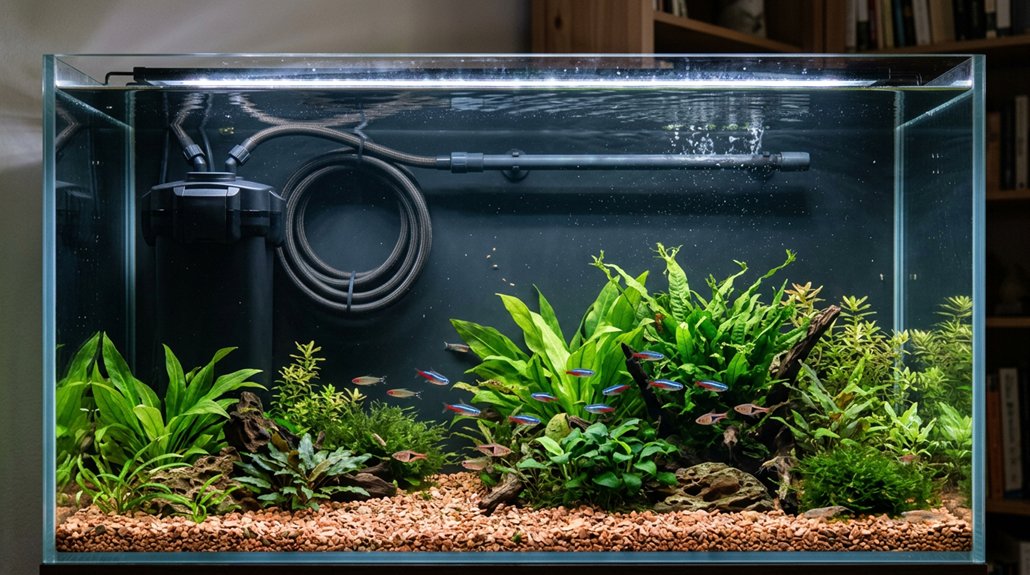
Too much current can stress fish, so dial your filter back gradually over several days by partially covering the outflow, closing an adjustable valve, or adding sponge pre-filtration. If your unit has variable speed, lower it in small steps, then watch fish behavior and surface agitation for 24–48 hours. Aim for about 4–6x tank volume per hour in most community tanks; for bettas or planted setups, target 2–3x. Use spraybars, directional flow deflectors, or directional return elbows to spread water across the surface instead of blasting one area. If you add a sponge prefilter to slow flow, clean it only in tank water so you don’t kill bacteria. Check ammonia and nitrite after each change, especially if your filter can’t be adjusted.
Frequently Asked Questions
Is It Okay to Have a Fish Tank Without a Filter?
Yes, you can keep a tank without a filter, but you’ll need strong circulation, heavy planting, and frequent water changes. Compared with filtered setups, the benefits comparison favors stability; maintenance myths ignore ammonia risks.
Can Fish Survive Without a Filter for a Day?
Yes, your fish can usually survive a day without a filter if the tank’s established, lightly stocked, and you maintain oxygen levels with surface agitation. Watch for fish stress, especially in crowded tanks or sensitive species.
How Long Can a Filter Be off in a Fish Tank?
Usually, you can’t leave it off long. In a power outage, your filter downtime is safest under 24 hours in stocked tanks; lightly stocked, planted tanks may manage 24–72 hours if you test, aerate, and skip feeding.
Do I Need to Clean My Fish Tank if I Have a Filter?
Yes—you still need to clean it. Your filter helps, but you should do regular water changes and gravel vacuuming to remove waste, plus rinse mechanical media and gently clean biological media so bacteria stay healthy.
Conclusion
So, do you need a filter for your aquarium? In most cases, yes. A filter isn’t just about clearer water; it supports beneficial bacteria that break down toxic waste. The theory that a well-planted tank can run filter-free is partly true, but only in lightly stocked, carefully balanced setups. For most aquariums, a filter gives you more stable water quality, less maintenance, and a safer environment for your fish.